Gwynne William D, Hallett Robin M, Girgis-Gabardo Adele, Bojovic Bojana, Dvorkin-Gheva Anna, Aarts Craig, Dias Kay, Bane Anita, Hassell John A
Department of Biochemistry and Biomedical Sciences, McMaster University, Canada.
Department of Pathology and Molecular Medicine, McMaster University, Canada.
Oncotarget. 2017 May 9;8(19):32101-32116. doi: 10.18632/oncotarget.16646.
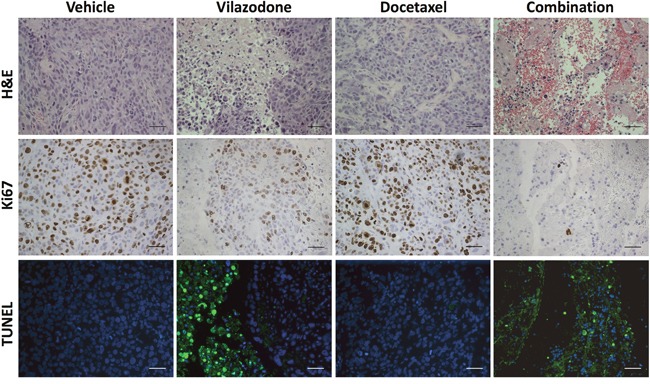
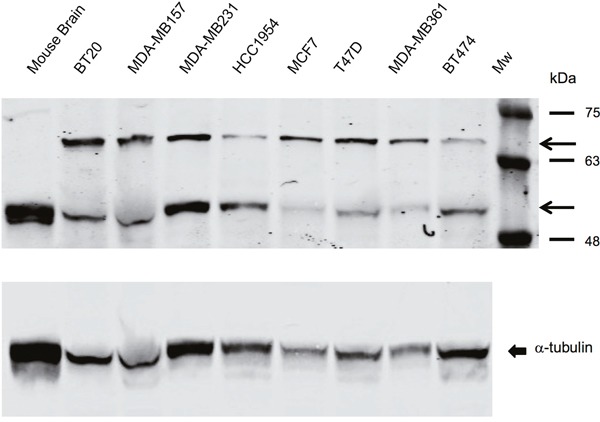
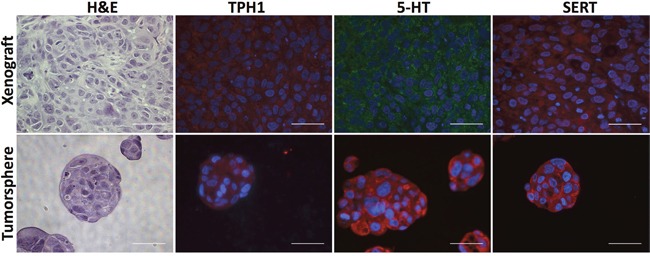
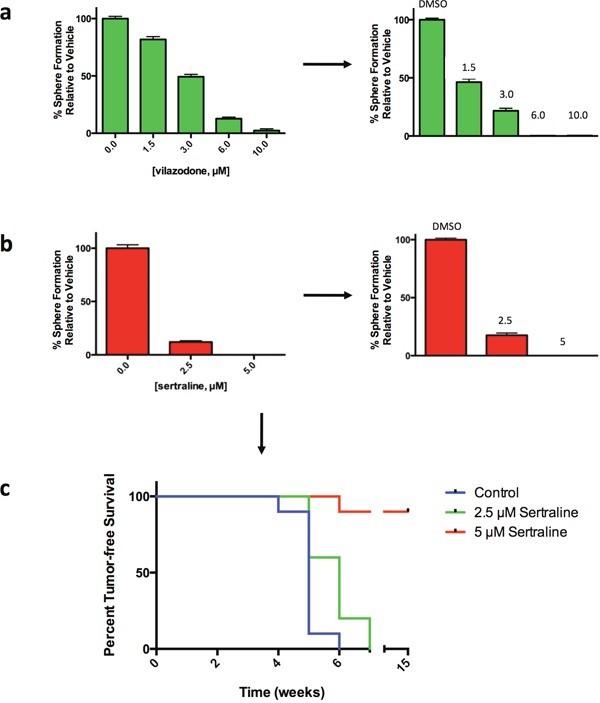
Breast tumors comprise an infrequent tumor cell population, termed breast tumor initiating cells (BTIC), which sustain tumor growth, seed metastases and resist cytotoxic therapies. Hence therapies are needed to target BTIC to provide more durable breast cancer remissions than are currently achieved. We previously reported that serotonergic system antagonists abrogated the activity of mouse BTIC resident in the mammary tumors of a HER2-overexpressing model of breast cancer. Here we report that antagonists of serotonin (5-hydroxytryptamine; 5-HT) biosynthesis and activity, including US Federal Food and Drug Administration (FDA)-approved antidepressants, targeted BTIC resident in numerous breast tumor cell lines regardless of their clinical or molecular subtype. Notably, inhibitors of tryptophan hydroxylase 1 (TPH1), required for 5-HT biosynthesis in select non-neuronal cells, the serotonin reuptake transporter (SERT) and several 5-HT receptors compromised BTIC activity as assessed by functional sphere-forming assays. Consistent with these findings, human breast tumor cells express TPH1, 5-HT and SERT independent of their molecular or clinical subtype. Exposure of breast tumor cells ex vivo to sertraline (Zoloft), a selective serotonin reuptake inhibitor (SSRI), reduced BTIC frequency as determined by transplanting drug-treated tumor cells into immune-compromised mice. Moreover, another SSRI (vilazodone; Viibryd) synergized with chemotherapy to shrink breast tumor xenografts in immune-compromised mice by inhibiting tumor cell proliferation and inducing their apoptosis. Collectively our data suggest that antidepressants in combination with cytotoxic anticancer therapies may be an appropriate treatment regimen for testing in clinical trials.
乳腺肿瘤包含一种罕见的肿瘤细胞群体,称为乳腺肿瘤起始细胞(BTIC),它维持肿瘤生长、引发转移并抵抗细胞毒性疗法。因此,需要靶向BTIC的疗法,以实现比目前更持久的乳腺癌缓解。我们之前报道过,血清素能系统拮抗剂消除了驻留在HER2过表达乳腺癌模型乳腺肿瘤中的小鼠BTIC的活性。在此我们报道,血清素(5-羟色胺;5-HT)生物合成和活性的拮抗剂,包括美国食品药品监督管理局(FDA)批准的抗抑郁药,可靶向存在于众多乳腺肿瘤细胞系中的BTIC,无论其临床或分子亚型如何。值得注意的是,色氨酸羟化酶1(TPH1)抑制剂(在特定非神经元细胞中5-HT生物合成所必需)、血清素再摄取转运体(SERT)以及几种5-HT受体,通过功能性成球试验评估,均损害了BTIC活性。与这些发现一致,人乳腺肿瘤细胞表达TPH1、5-HT和SERT,与它们的分子或临床亚型无关。将乳腺肿瘤细胞离体暴露于选择性血清素再摄取抑制剂(SSRI)舍曲林(左洛复),通过将经药物处理的肿瘤细胞移植到免疫缺陷小鼠中确定,可降低BTIC频率。此外,另一种SSRI(维拉唑酮;维思通)与化疗协同作用,通过抑制肿瘤细胞增殖并诱导其凋亡,使免疫缺陷小鼠中的乳腺肿瘤异种移植物缩小。我们的数据总体表明,抗抑郁药与细胞毒性抗癌疗法联合使用可能是一种适合在临床试验中进行测试的治疗方案。