Department of Embryology, Carnegie Institution for Science, Baltimore, Maryland, United States of America.
New York University Long Island School of Medicine, Mineola, New York, United States of America.
PLoS Genet. 2020 Aug 6;16(8):e1008941. doi: 10.1371/journal.pgen.1008941. eCollection 2020 Aug.
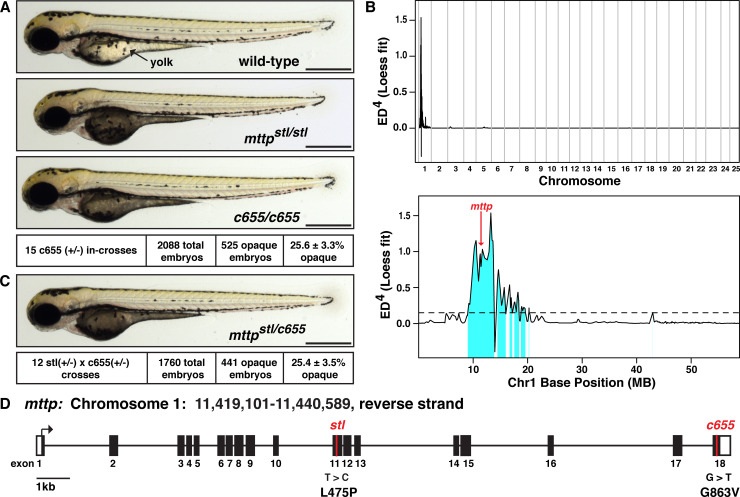
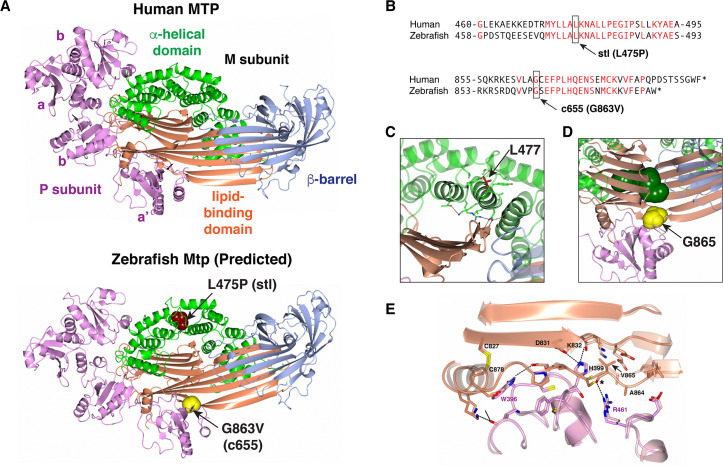
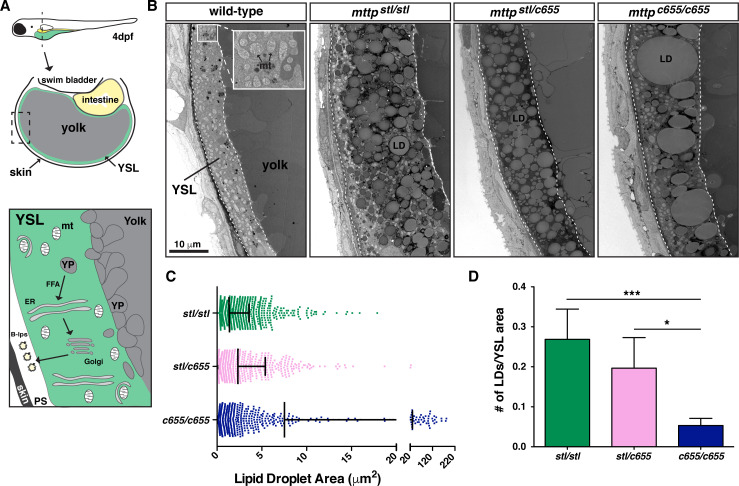
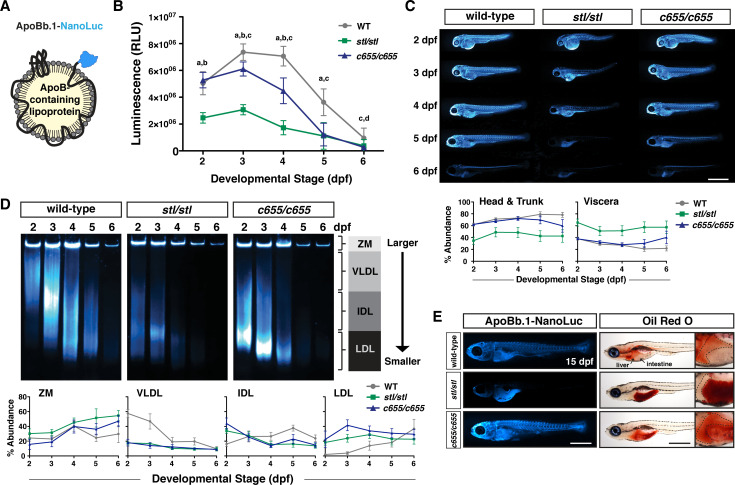
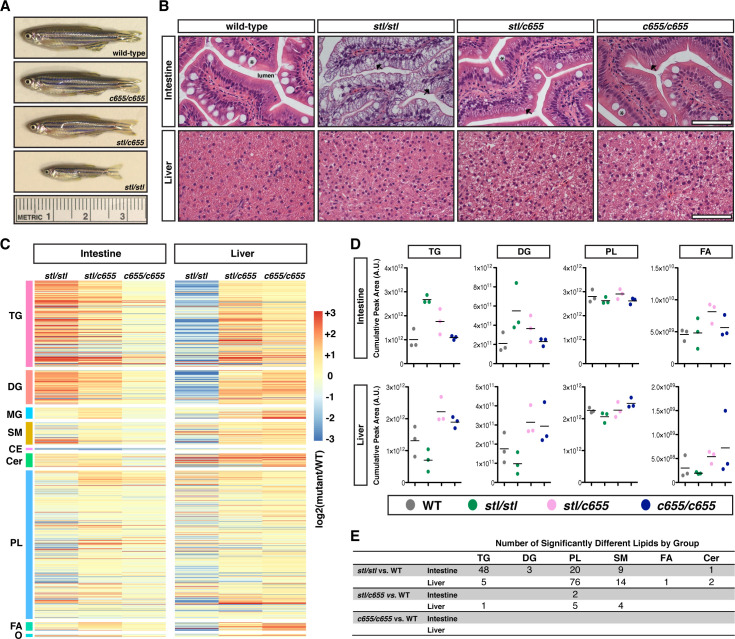
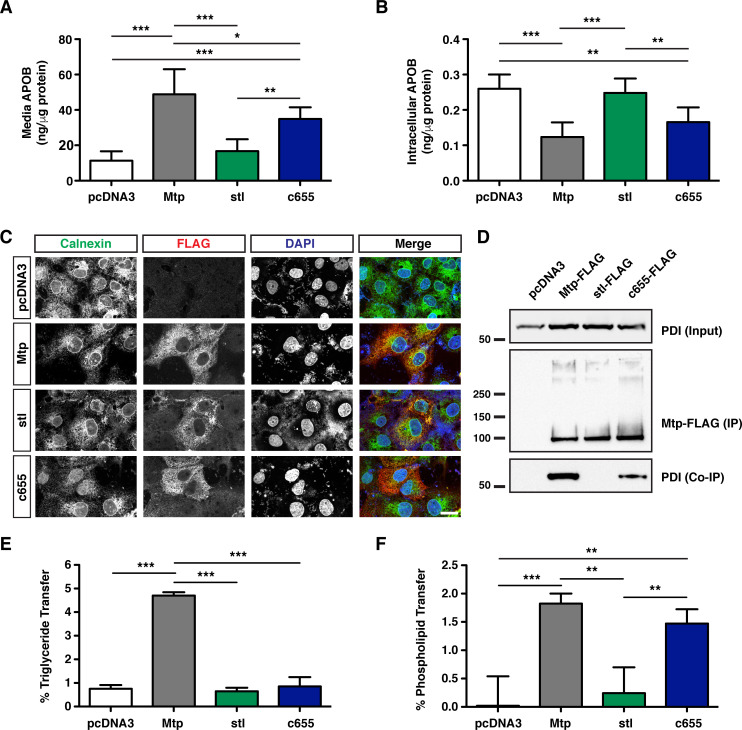
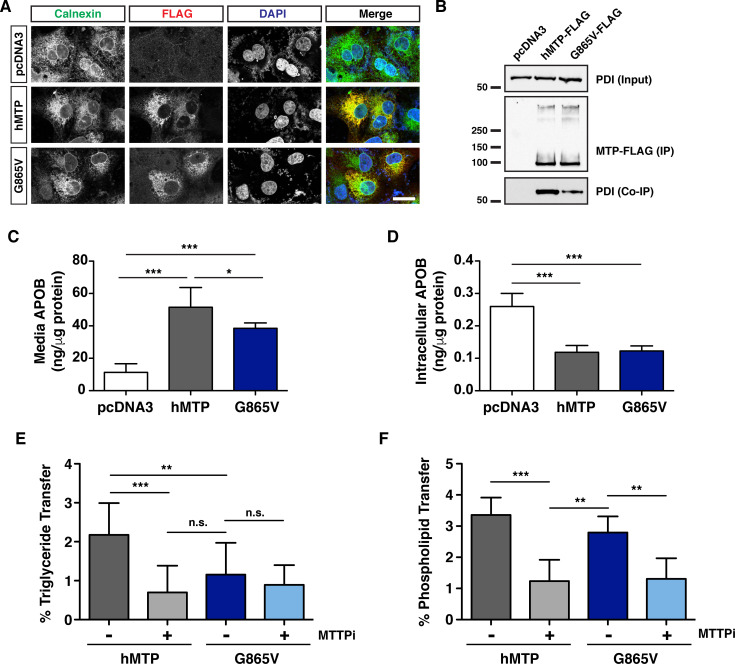
Apolipoprotein B-containing lipoproteins (B-lps) are essential for the transport of hydrophobic dietary and endogenous lipids through the circulation in vertebrates. Zebrafish embryos produce large numbers of B-lps in the yolk syncytial layer (YSL) to move lipids from yolk to growing tissues. Disruptions in B-lp production perturb yolk morphology, readily allowing for visual identification of mutants with altered B-lp metabolism. Here we report the discovery of a missense mutation in microsomal triglyceride transfer protein (Mtp), a protein that is essential for B-lp production. This mutation of a conserved glycine residue to valine (zebrafish G863V, human G865V) reduces B-lp production and results in yolk opacity due to aberrant accumulation of cytoplasmic lipid droplets in the YSL. However, this phenotype is milder than that of the previously reported L475P stalactite (stl) mutation. MTP transfers lipids, including triglycerides and phospholipids, to apolipoprotein B in the ER for B-lp assembly. In vitro lipid transfer assays reveal that while both MTP mutations eliminate triglyceride transfer activity, the G863V mutant protein unexpectedly retains ~80% of phospholipid transfer activity. This residual phospholipid transfer activity of the G863V mttp mutant protein is sufficient to support the secretion of small B-lps, which prevents intestinal fat malabsorption and growth defects observed in the mttpstl/stl mutant zebrafish. Modeling based on the recent crystal structure of the heterodimeric human MTP complex suggests the G865V mutation may block triglyceride entry into the lipid-binding cavity. Together, these data argue that selective inhibition of MTP triglyceride transfer activity may be a feasible therapeutic approach to treat dyslipidemia and provide structural insight for drug design. These data also highlight the power of yolk transport studies to identify proteins critical for B-lp biology.
载脂蛋白 B 脂蛋白(B-lps)是脊椎动物通过血液循环转运疏水性膳食和内源性脂质所必需的。斑马鱼胚胎在卵黄合胞层(YSL)中产生大量的 B-lps,以将脂质从卵黄转移到生长组织中。B-lp 产生的中断会扰乱卵黄形态,很容易识别出 B-lp 代谢改变的突变体。在这里,我们报告了在微粒体甘油三酯转移蛋白(Mtp)中发现了一个错义突变,该蛋白对于 B-lp 的产生是必不可少的。这种保守甘氨酸残基突变为缬氨酸(斑马鱼 G863V,人类 G865V)会降低 B-lp 的产生,并导致卵黄不透明度,因为细胞质脂质滴在 YSL 中异常积累。然而,这种表型比以前报道的 L475P 乳石(stl)突变要轻。MTP 将包括甘油三酯和磷脂在内的脂质转移到 ER 中的载脂蛋白 B 上,用于 B-lp 的组装。体外脂质转移实验表明,虽然这两种 MTP 突变都消除了甘油三酯转移活性,但 G863V 突变蛋白出人意料地保留了约 80%的磷脂转移活性。G863V mttp 突变蛋白的这种残留磷脂转移活性足以支持小 B-lps 的分泌,从而防止 mttpstl/stl 突变体斑马鱼中观察到的肠道脂肪吸收不良和生长缺陷。基于最近的人源 MTP 异二聚体晶体结构的建模表明,G865V 突变可能阻止甘油三酯进入脂质结合腔。这些数据共同表明,选择性抑制 MTP 甘油三酯转移活性可能是治疗血脂异常的可行治疗方法,并为药物设计提供结构见解。这些数据还突出了卵黄转运研究在鉴定对 B-lp 生物学至关重要的蛋白质方面的强大功能。