Department of Genetics, University of Cambridge, Cambridge, United Kingdom.
Department of Biochemistry, Cambridge Centre for Proteomics, University of Cambridge, Cambridge, United Kingdom.
PLoS One. 2020 Aug 6;15(8):e0236679. doi: 10.1371/journal.pone.0236679. eCollection 2020.
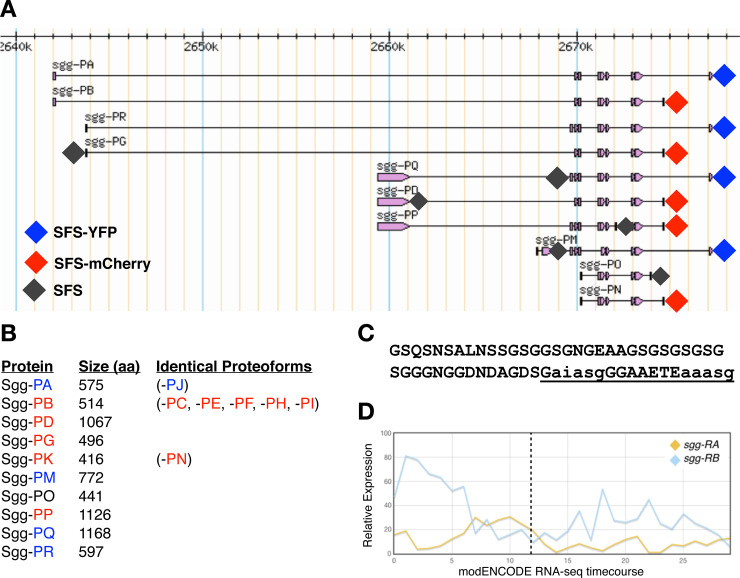
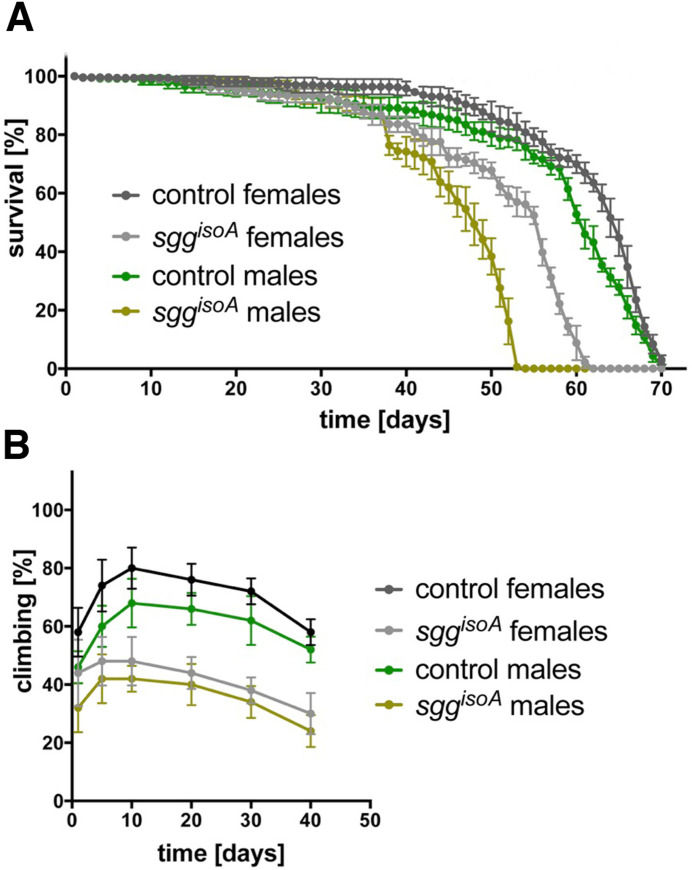
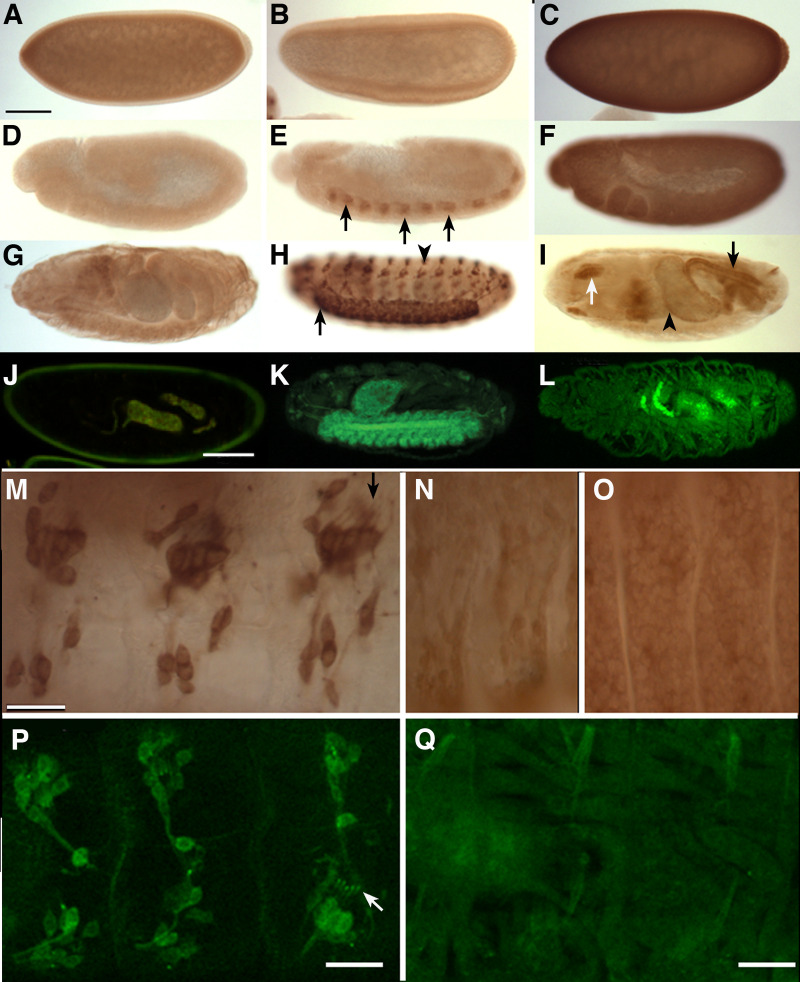
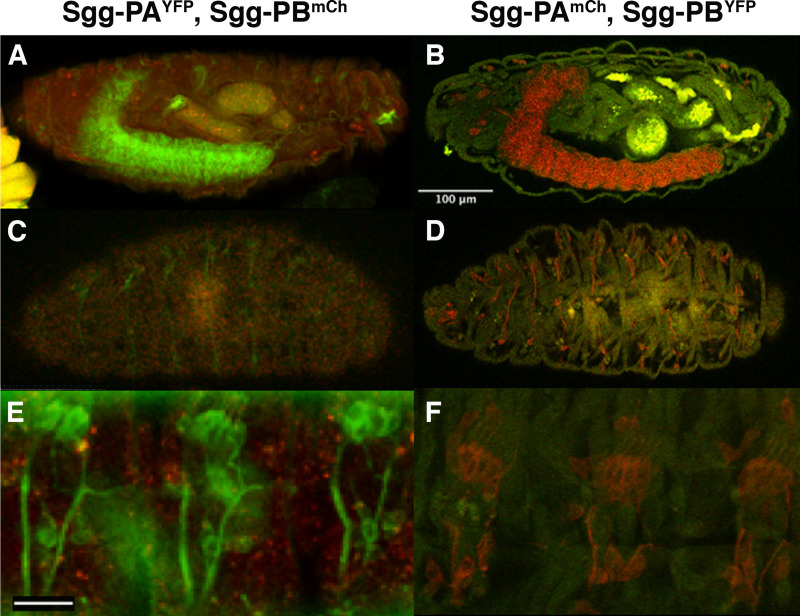
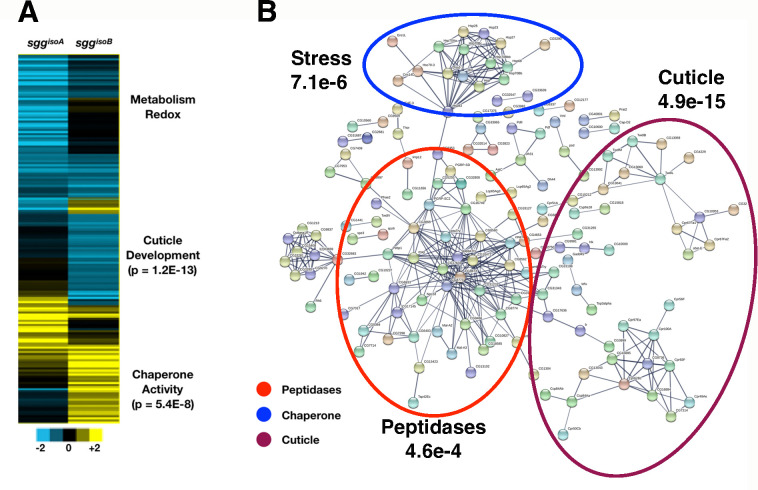
The Drosophila shaggy gene (sgg, GSK-3) encodes multiple protein isoforms with serine/threonine kinase activity and is a key player in diverse developmental signalling pathways. Currently it is unclear whether different Sgg proteoforms are similarly involved in signalling or if different proteoforms have distinct functions. We used CRISPR/Cas9 genome engineering to tag eight different Sgg proteoform classes and determined their localization during embryonic development. We performed proteomic analysis of the two major proteoform classes and generated mutant lines for both of these for transcriptomic and phenotypic analysis. We uncovered distinct tissue-specific localization patterns for all of the tagged proteoforms we examined, most of which have not previously been characterised directly at the protein level, including one proteoform initiating with a non-standard codon. Collectively, this suggests complex developmentally regulated splicing of the sgg primary transcript. Further, affinity purification followed by mass spectrometric analyses indicate a different repertoire of interacting proteins for the two major proteoforms we examined, one with ubiquitous expression (Sgg-PB) and one with nervous system specific expression (Sgg-PA). Specific mutation of these proteoforms shows that Sgg-PB performs the well characterised maternal and zygotic segmentations functions of the sgg locus, while Sgg-PA mutants show adult lifespan and locomotor defects consistent with its nervous system localisation. Our findings provide new insights into the role of GSK-3 proteoforms and intriguing links with the GSK-3α and GSK-3β proteins encoded by independent vertebrate genes. Our analysis suggests that different proteoforms generated by alternative splicing are likely to perform distinct functions.
果蝇 shaggy 基因(sgg,GSK-3)编码具有丝氨酸/苏氨酸激酶活性的多种蛋白异构体,是多种发育信号通路的关键参与者。目前尚不清楚不同的 Sgg 蛋白异构体是否同样参与信号转导,或者不同的蛋白异构体是否具有不同的功能。我们使用 CRISPR/Cas9 基因组工程标记了 8 种不同的 Sgg 蛋白异构体,并确定了它们在胚胎发育过程中的定位。我们对两种主要的蛋白异构体进行了蛋白质组学分析,并为这两种蛋白异构体生成了突变系,用于转录组和表型分析。我们发现我们研究的所有标记的蛋白异构体都具有独特的组织特异性定位模式,其中大多数以前没有在蛋白质水平上直接进行过特征描述,包括一种起始于非标准密码子的蛋白异构体。总的来说,这表明 sgg 初级转录物的剪接受到复杂的发育调控。此外,亲和纯化后进行质谱分析表明,我们研究的两种主要蛋白异构体具有不同的相互作用蛋白谱,一种具有广泛表达(Sgg-PB),另一种具有神经系统特异性表达(Sgg-PA)。这些蛋白异构体的特异性突变表明,Sgg-PB 执行了 sgg 基因座中已被充分描述的母体和合子分割功能,而 Sgg-PA 突变体则表现出与神经系统定位一致的成虫寿命和运动缺陷。我们的发现为 GSK-3 蛋白异构体的作用提供了新的见解,并与独立的脊椎动物基因编码的 GSK-3α 和 GSK-3β 蛋白之间存在有趣的联系。我们的分析表明,通过选择性剪接产生的不同蛋白异构体可能具有不同的功能。