Neuroregeneration Institute, McLean Hospital / Harvard Medical School, Belmont, MA, USA.
Current address: Department of Neurology, Brigham and Women's Hospital, Boston, MA, USA.
Acta Neuropathol Commun. 2020 Aug 6;8(1):127. doi: 10.1186/s40478-020-01004-6.
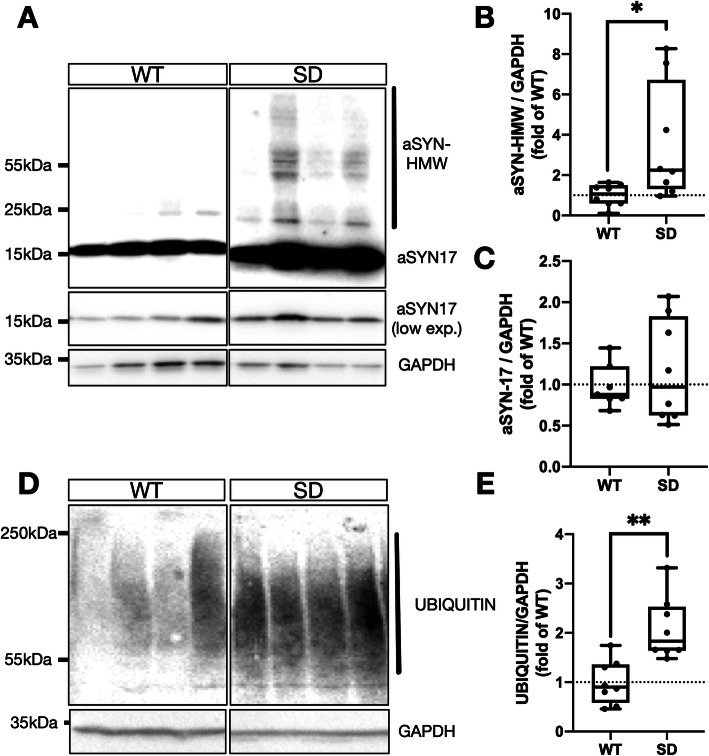
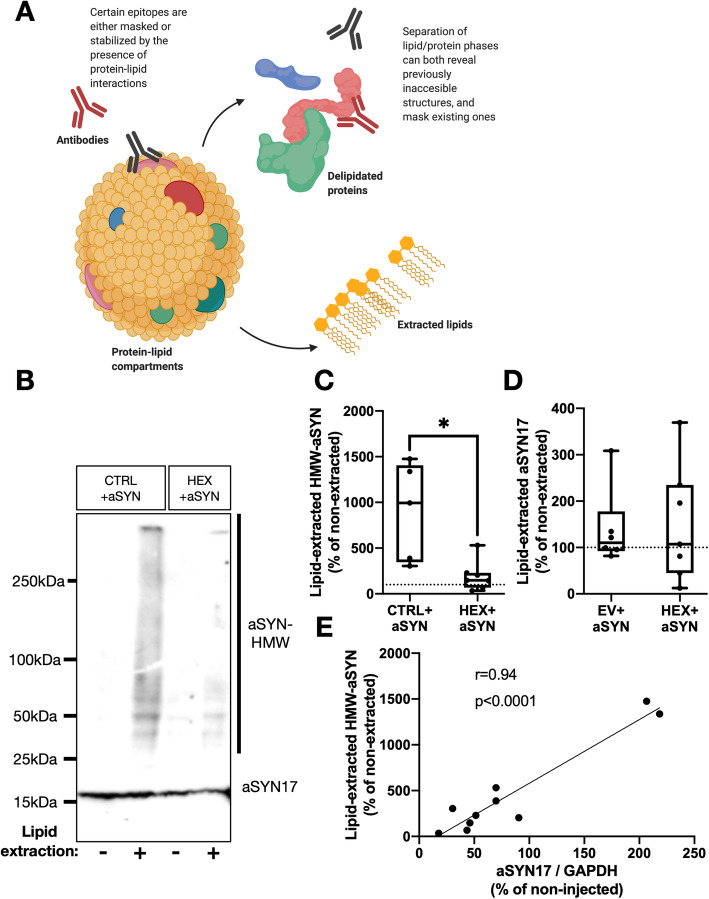
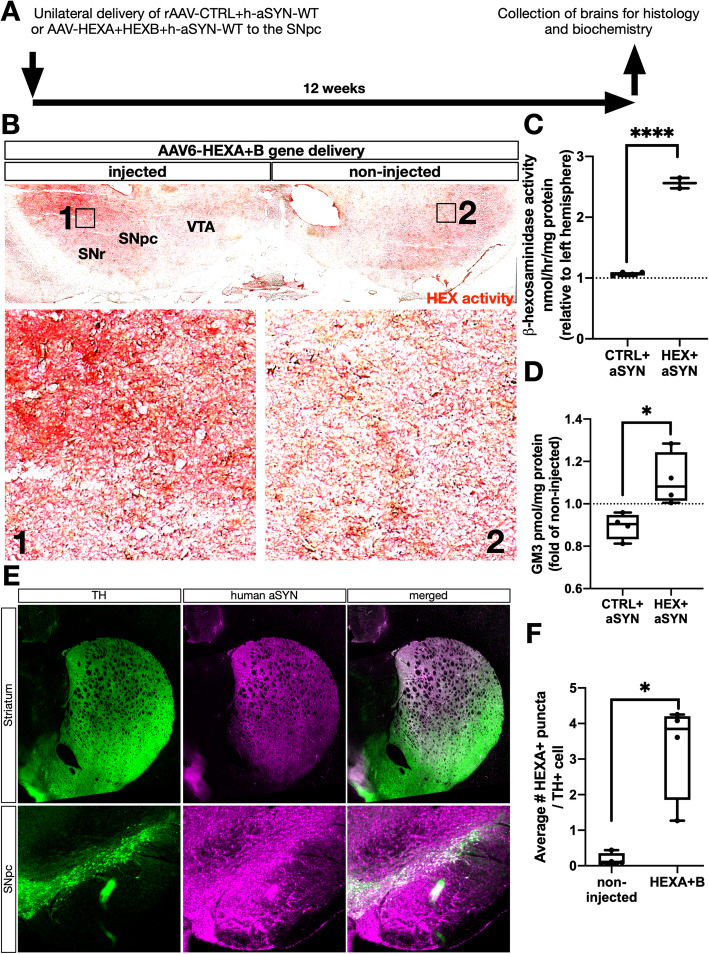
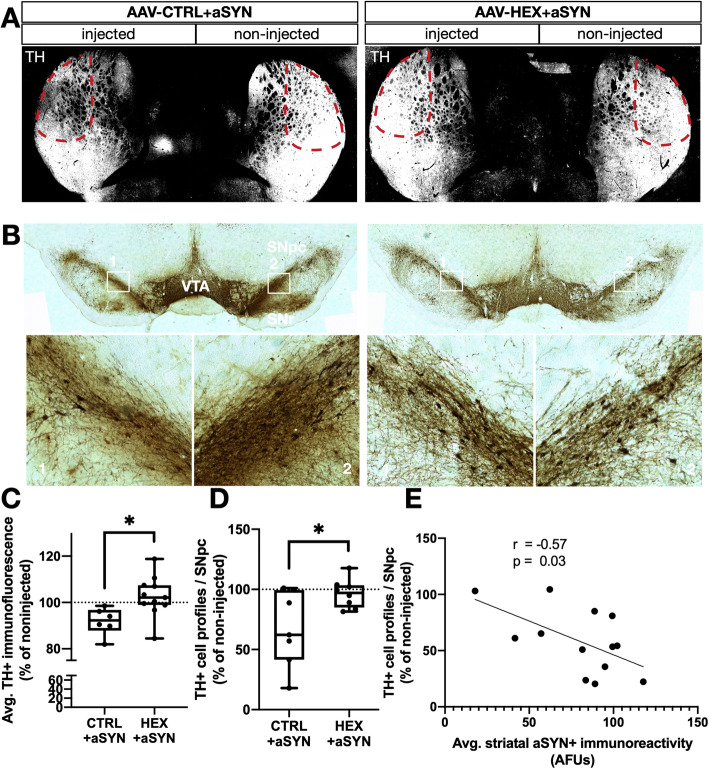
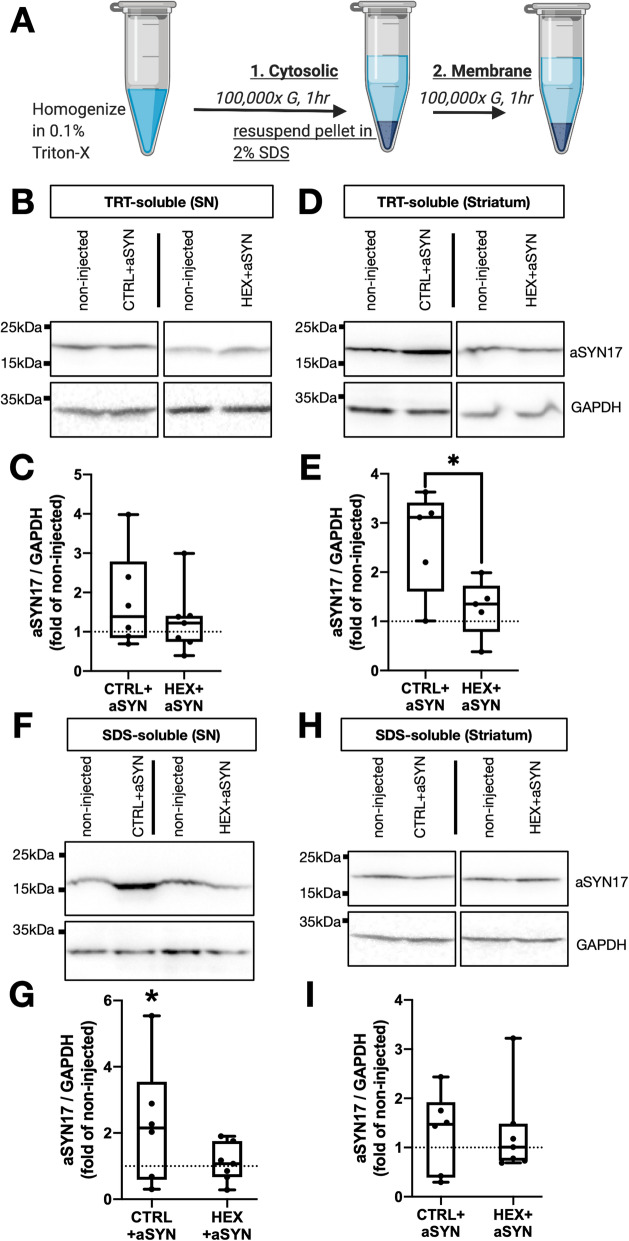
Sandhoff disease (SD) is a lysosomal storage disease, caused by loss of β-hexosaminidase (HEX) activity resulting in the accumulation of ganglioside GM2. There are shared features between SD and Parkinson's disease (PD). α-synuclein (aSYN) inclusions, the diagnostic hallmark sign of PD, are frequently found in the brain in SD patients and HEX knockout mice, and HEX activity is reduced in the substantia nigra in PD. In this study, we biochemically demonstrate that HEX deficiency in mice causes formation of high-molecular weight (HMW) aSYN and ubiquitin in the brain. As expected from HEX enzymatic function requirements, overexpression in vivo of HEXA and B combined, but not either of the subunits expressed alone, increased HEX activity as evidenced by histochemical assays. Biochemically, such HEX gene expression resulted in increased conversion of GM2 to its breakdown product GM3. In a neurodegenerative model of overexpression of aSYN in rats, increasing HEX activity by AAV6 gene transfer in the substantia nigra reduced aSYN embedding in lipid compartments and rescued dopaminergic neurons from degeneration. Overall, these data are consistent with a paradigm shift where lipid abnormalities are central to or preceding protein changes typically associated with PD.
桑德霍夫病(SD)是一种溶酶体贮积病,由β-己糖胺酶(HEX)活性丧失引起,导致神经节苷脂 GM2 的积累。SD 和帕金森病(PD)之间存在共同特征。α-突触核蛋白(aSYN)包涵体是 PD 的诊断标志,在 SD 患者和 HEX 敲除小鼠的大脑中经常发现,并且 PD 中的黑质中 HEX 活性降低。在这项研究中,我们从生物化学角度证明了小鼠中的 HEX 缺乏会导致大脑中高相对分子质量(HMW)aSYN 和泛素的形成。根据 HEX 酶学功能的要求,HEXA 和 B 的体内过表达,而不是单独表达的任何亚基,如组织化学测定所示,增加了 HEX 活性。从生物化学角度来看,这种 HEX 基因表达导致 GM2 向其降解产物 GM3 的转化增加。在大鼠中过表达 aSYN 的神经退行性模型中,通过 AAV6 基因转移增加黑质中的 HEX 活性,减少了 aSYN 在脂质隔室中的嵌入,并挽救了多巴胺能神经元免于退化。总体而言,这些数据与一种范式转变一致,其中脂质异常是 PD 相关的蛋白质变化的核心或先行因素。