Mukherjee Nabanita, Amato Carol M, Skees Jenette, Todd Kaleb J, Lambert Karoline A, Robinson William A, Van Gulick Robert, Weight Ryan M, Dart Chiara R, Tobin Richard P, McCarter Martin D, Fujita Mayumi, Norris David A, Shellman Yiqun G
Department of Dermatology, School of Medicine, University of Colorado Anschutz Medical Campus, Mail Stop 8127, Aurora, CO 80045, USA.
Division of Medical Oncology, School of Medicine, University of Colorado Anschutz Medical Campus, Mail Stop 8117, Aurora, CO 80045, USA.
Cancers (Basel). 2020 Aug 5;12(8):2182. doi: 10.3390/cancers12082182.
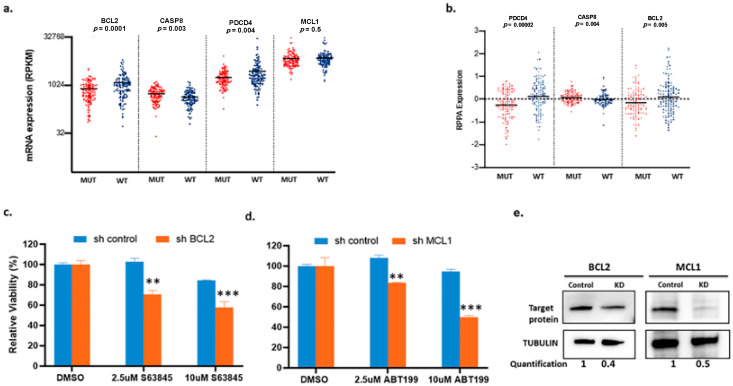
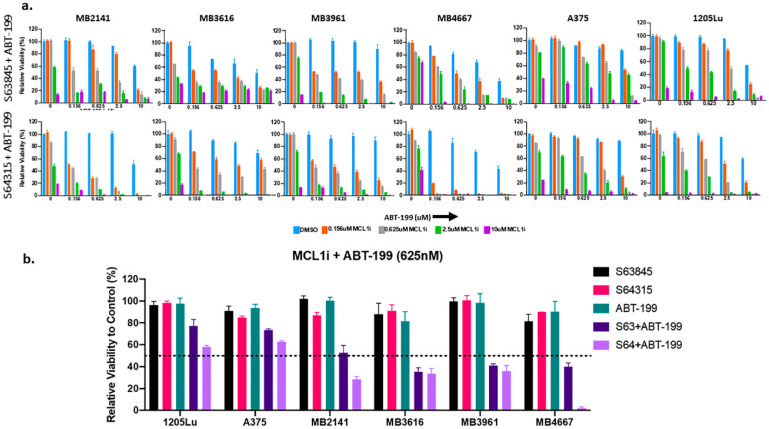
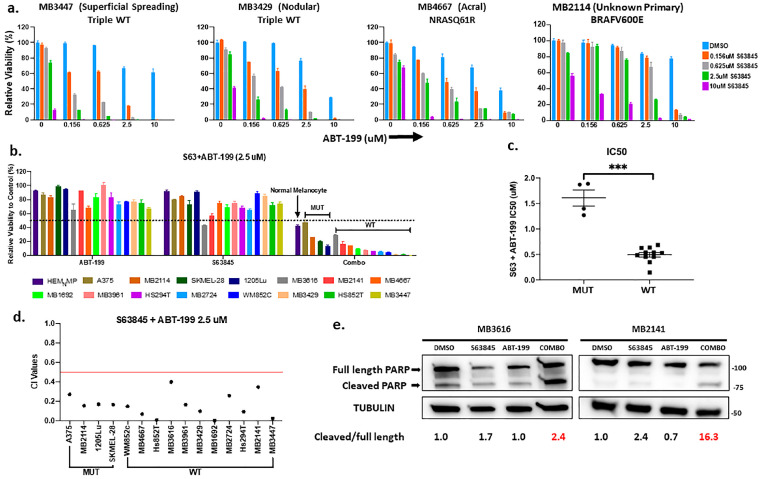
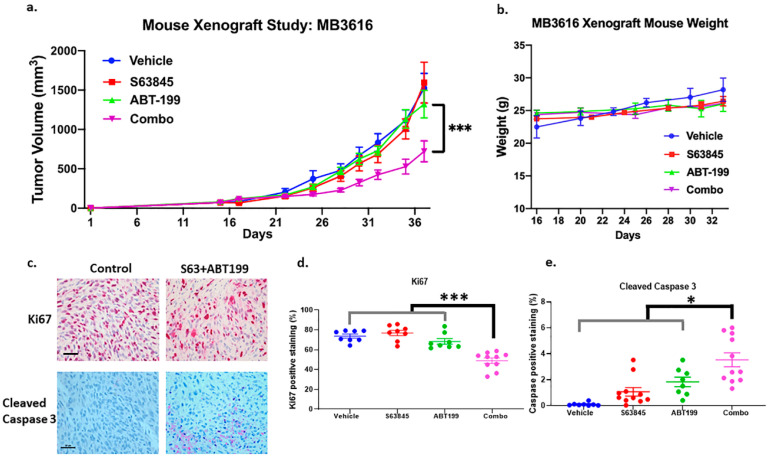
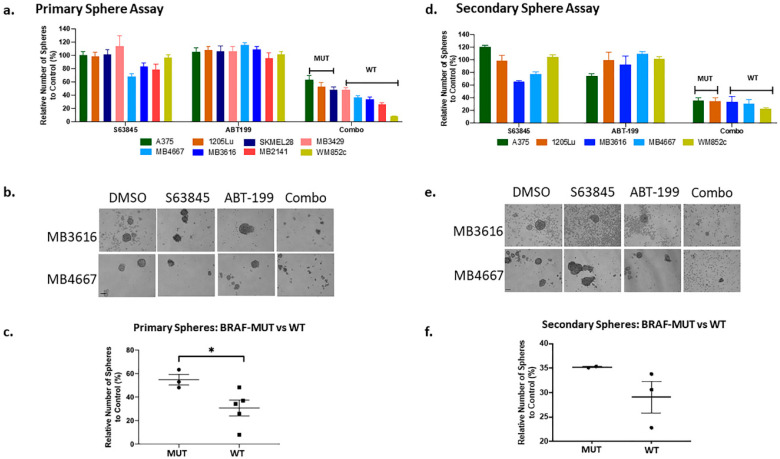
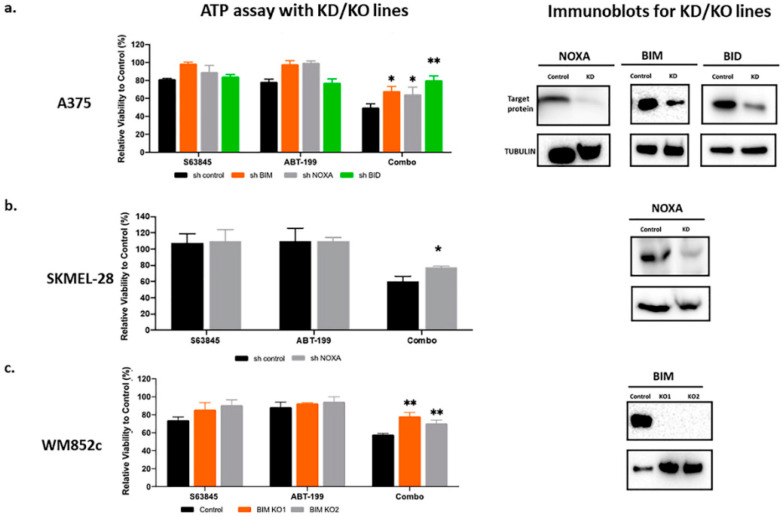
There is an urgent need to develop treatments for patients with melanoma who are refractory to or ineligible for immune checkpoint blockade, including patients who lack BRAF-V600E/K mutations. This is often the case in patients diagnosed with rare melanoma subtypes such as mucosal and acral melanoma. Here, we analyzed data from the cutaneous melanoma The Cancer Genome Atlas Network (TCGA) transcriptomic and proteomic databases for differential expression of apoptosis molecules between melanomas with or without BRAF hotspot mutations. Our data indicated higher B-cell CLL/lymphoma 2 (BCL2) expression in melanoma without BRAF hotspot mutations, suggesting that BH3 mimetics, such as ABT-199 (venetoclax, a small molecule against BCL2), may be a potential therapeutic option for these patients. We explored the efficacy of combining two BH3 mimetics, ABT-199 and a myeloid cell leukemia sequence 1 (MCL1) inhibitor (S63845 or S64315/MIK665) in cutaneous, mucosal and acral melanomas, in vitro and in vivo. Our data indicate this combination induced cell death in a broad range of melanoma cell lines, including melanoma initiating cell populations, and was more potent in melanoma cells without BRAF-V600E/K mutations. Our knockdown/knockout experiments suggest that several pro-apoptotic BCL2 family members, BCL2-like 11 (apoptosis facilitator) (BIM), phorbol-12-myristate-13-acetate-induced protein 1 (NOXA) or BID, play a role in the combination-induced effects. Overall, our study supports the rationale for combining an MCL1 inhibitor with a BCL2 inhibitor as a therapeutic option in patients with advanced melanoma.
迫切需要为对免疫检查点阻断难治或不符合条件的黑色素瘤患者开发治疗方法,包括缺乏BRAF-V600E/K突变的患者。在诊断为罕见黑色素瘤亚型(如黏膜和肢端黑色素瘤)的患者中,情况通常如此。在这里,我们分析了来自皮肤黑色素瘤癌症基因组图谱网络(TCGA)转录组和蛋白质组数据库的数据,以比较有或没有BRAF热点突变的黑色素瘤之间凋亡分子的差异表达。我们的数据表明,在没有BRAF热点突变的黑色素瘤中,B细胞淋巴瘤/白血病-2(BCL2)表达较高,这表明BH3模拟物,如ABT-199(维奈托克,一种针对BCL2的小分子),可能是这些患者的潜在治疗选择。我们在体外和体内探索了联合使用两种BH3模拟物ABT-199和髓样细胞白血病序列1(MCL1)抑制剂(S63845或S64315/MIK665)治疗皮肤、黏膜和肢端黑色素瘤的疗效。我们的数据表明,这种联合用药在广泛的黑色素瘤细胞系中诱导细胞死亡,包括黑色素瘤起始细胞群体,并且在没有BRAF-V600E/K突变的黑色素瘤细胞中更有效。我们的敲低/敲除实验表明,几种促凋亡BCL2家族成员,如BCL2样蛋白11(凋亡促进因子)(BIM)、佛波醇-12-肉豆蔻酸酯-13-乙酸酯诱导蛋白1(NOXA)或BH3结构域凋亡诱导蛋白(BID),在联合用药诱导的效应中发挥作用。总体而言,我们的研究支持将MCL1抑制剂与BCL2抑制剂联合作为晚期黑色素瘤患者治疗选择的理论依据。