Zhou Fachen, Wang Jin, Chi Xinming, Zhou Xin, Wang Zhou
Department of Thoracic Surgery, Shandong Provincial Hospital Affiliated with Shandong University, Jinan, Shandong, People's Republic of China.
Department of Thoracic Surgery, The First Affiliated Hospital of Dalian Medical University, Dalian, Liaoning, People's Republic of China.
Cancer Manag Res. 2020 Jul 7;12:5527-5536. doi: 10.2147/CMAR.S254072. eCollection 2020.
Metastasis is a crucial cause of the high mortality in patients with lung cancer. Long non-coding RNAs (lncRNAs) are emerging as important players in the development and progression of human cancers. Here, we aimed to identify metastasis-associated lncRNA and to study its roles in the migration and invasion of lung cancer cells.
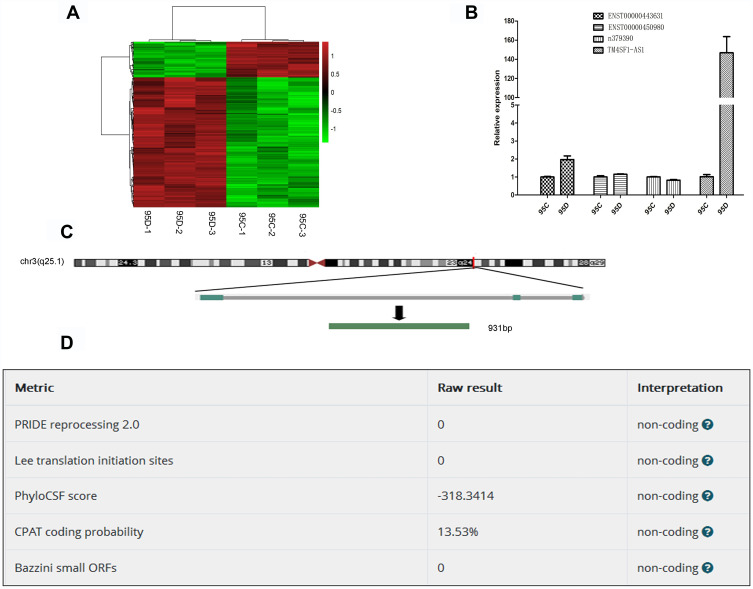
We screened differentially expressed lncRNAs between high- and low-metastatic lung cancer cell lines by using microarray and identified the target lncRNA TM4SF1-AS1. The effect of the TM4SF1-AS1 on the invasion and migration was evaluated through the wound healing experiment and transwell assay. The expression of related genes was assessed by RNA sequence and Western blotting.
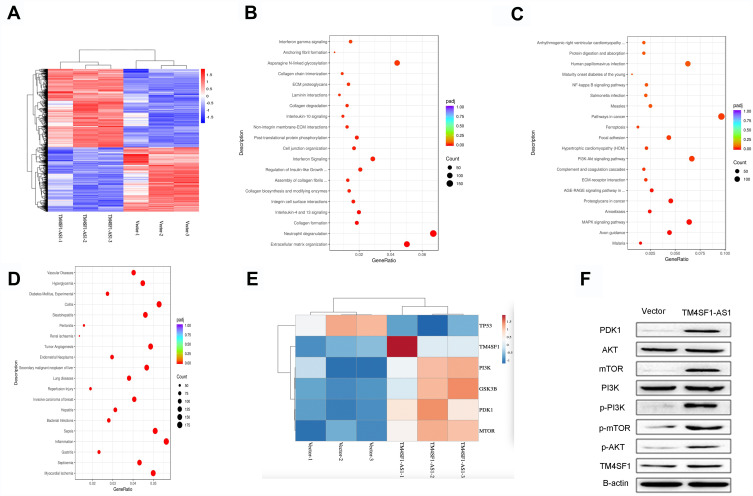
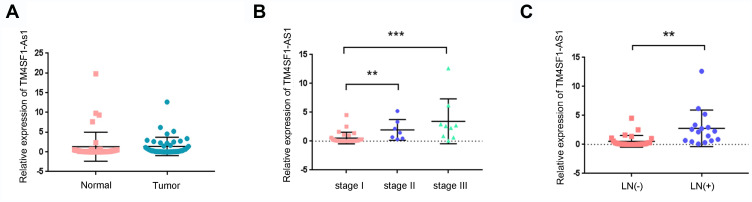
TM4SF1-AS1 was highly expressed in high metastatic lung cancer cell line, and it was also significantly up-regulated in lymph node metastatic lung cancer and was associated with lymph node metastasis. Overexpression of TM4SF1-AS1 promoted the migration and invasion of lung cancer cells. Overexpression of TM4SF1-AS1 decreased the expression of E-Cadherin and increased the expression of Vimentin, Snail and Twist, while knockdown of TM4SF1-AS1 exhibited the opposite trend. Furthermore, RNA sequence analysis revealed that some signaling pathways, including PI3K/AKT signaling pathway, were enriched upon TM4SF1-AS1 overexpression. Western blotting further confirmed that the PI3K/AKT signaling pathway was activated by TM4SF1-AS1.
This study illustrates that TM4SF1-AS1 promotes the migration and invasion of lung cancer cells by activating the PI3K/AKT signaling pathway. TM4SF1-AS1 might be a novel target of molecular treatment for lung cancer.
转移是肺癌患者高死亡率的关键原因。长链非编码RNA(lncRNAs)正成为人类癌症发生和发展中的重要因素。在此,我们旨在鉴定与转移相关的lncRNA,并研究其在肺癌细胞迁移和侵袭中的作用。
我们使用微阵列筛选高转移和低转移肺癌细胞系之间差异表达的lncRNAs,并鉴定出靶lncRNA TM4SF1-AS1。通过伤口愈合实验和Transwell实验评估TM4SF1-AS1对侵袭和迁移的影响。通过RNA测序和蛋白质免疫印迹法评估相关基因的表达。
TM4SF1-AS1在高转移肺癌细胞系中高表达,在淋巴结转移肺癌中也显著上调,且与淋巴结转移相关。TM4SF1-AS1的过表达促进了肺癌细胞的迁移和侵袭。TM4SF1-AS1的过表达降低了E-钙黏蛋白的表达,增加了波形蛋白、Snail和Twist的表达,而敲低TM4SF1-AS1则呈现相反的趋势。此外,RNA测序分析显示,包括PI3K/AKT信号通路在内的一些信号通路在TM4SF1-AS1过表达时富集。蛋白质免疫印迹法进一步证实PI3K/AKT信号通路被TM4SF1-AS1激活。
本研究表明,TM4SF1-AS1通过激活PI3K/AKT信号通路促进肺癌细胞的迁移和侵袭。TM4SF1-AS1可能是肺癌分子治疗的新靶点。