Song Peng, Yang Dongliang, Cui Xiaoxia, Wang Hanping, Si Xiaoyan, Zhang Xiaotong, Zhang Li
Department of Respiratory Medicine, Peking Union Medical College Hospital, Chinese Academy of Medical Science & Peking Union Medical College, Beijing, People's Republic of China.
Department of General Education Courses, Cangzhou Medical College, Beijing, People's Republic of China.
Cancer Manag Res. 2020 Jul 17;12:5975-5985. doi: 10.2147/CMAR.S257967. eCollection 2020.
Currently in China, many immune checkpoint inhibitors (ICIs) have been approved for the treatment of non-small cell lung cancer (NSCLC). Some patients can not benefit from ICIs, and approximately 50% of patients have immunotherapy-related toxicity. Therefore, it is necessary to monitor carefully the selection of immunotherapy population using biomarkers to maximize the benefit of patients with NSCLC.
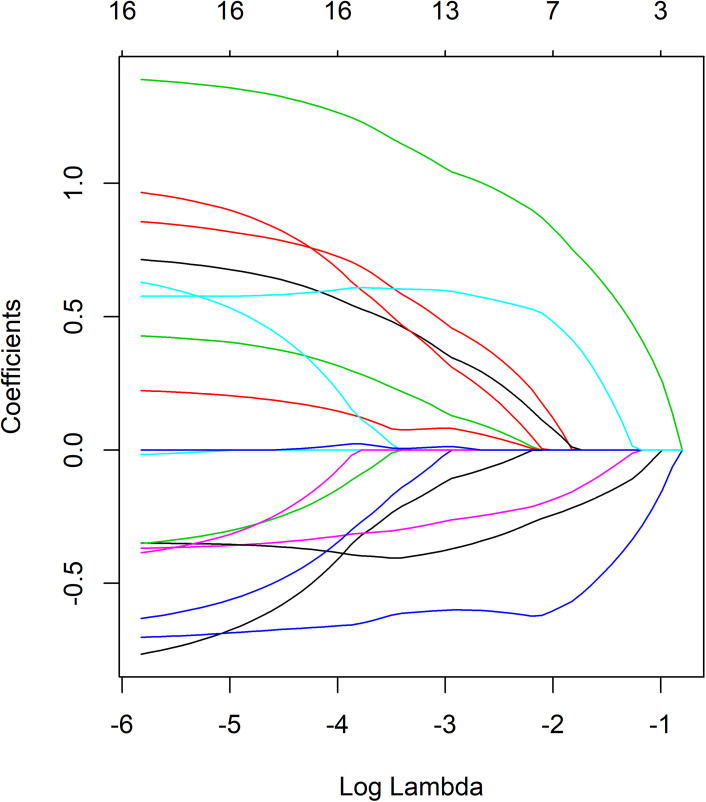
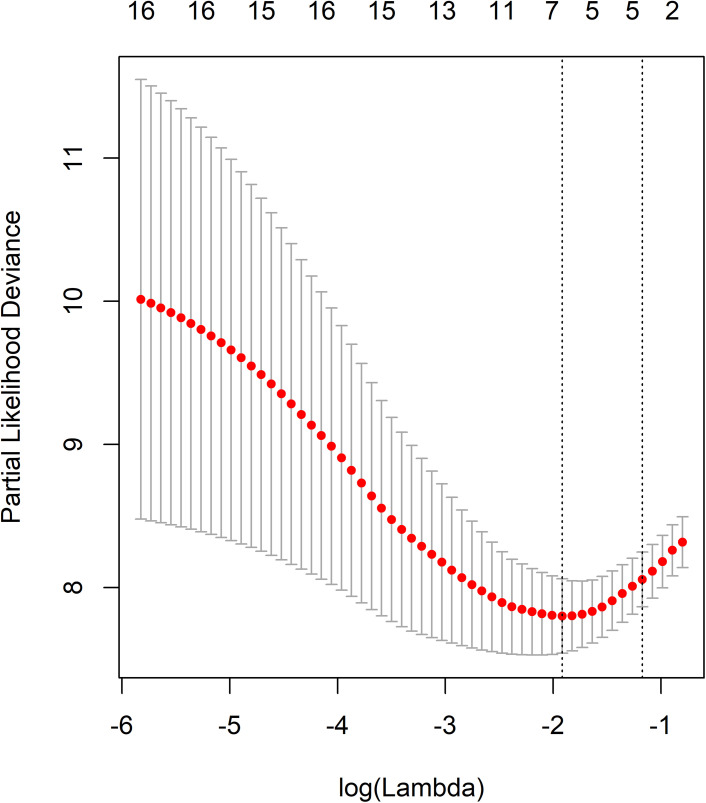
A prospective analysis was performed on patients with advanced NSCLC who were treated with ICIS at our hospital from March 2018 to June 2019, up to the follow-up deadline of December 31, 2019. The primary end points were overall survival (OS) and progression-free survival (PFS), and the secondary end points were objective response rate and disease control rate. A lasso regression was used for the univariate analysis, and Cox regression analysis was used for the multivariate analysis. An efficacy prediction line chart was developed.
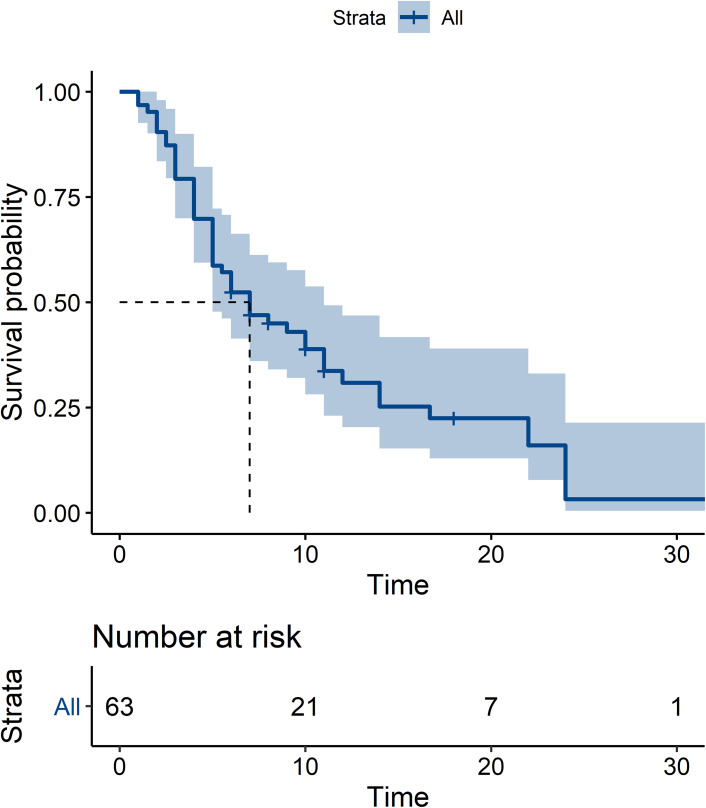
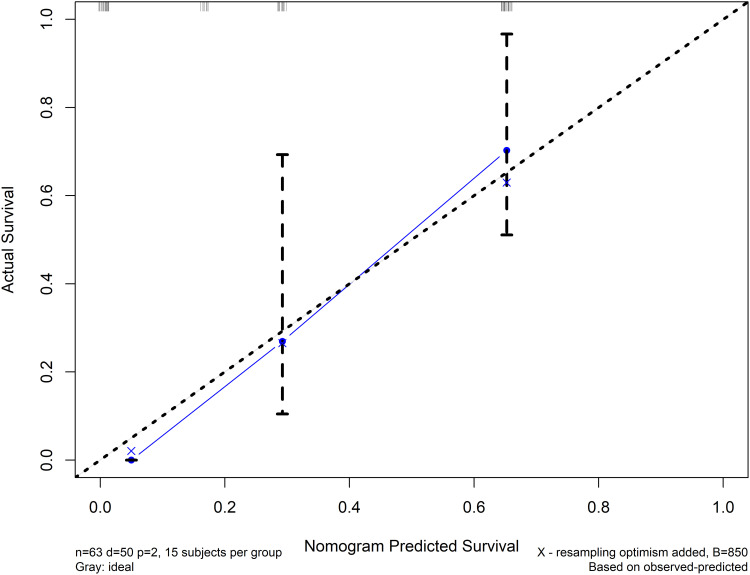
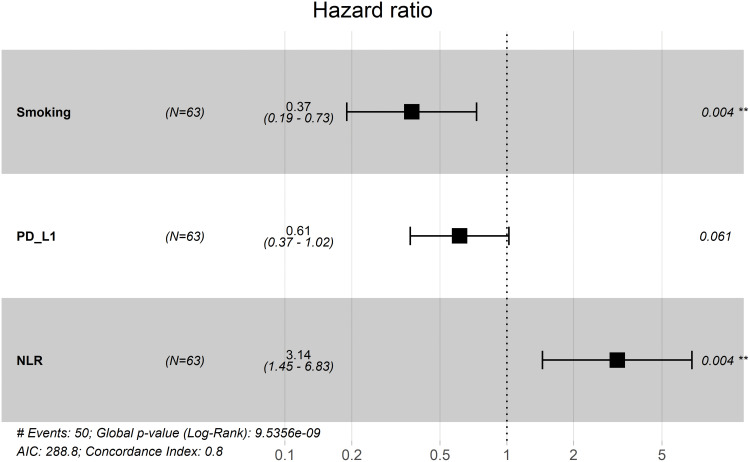
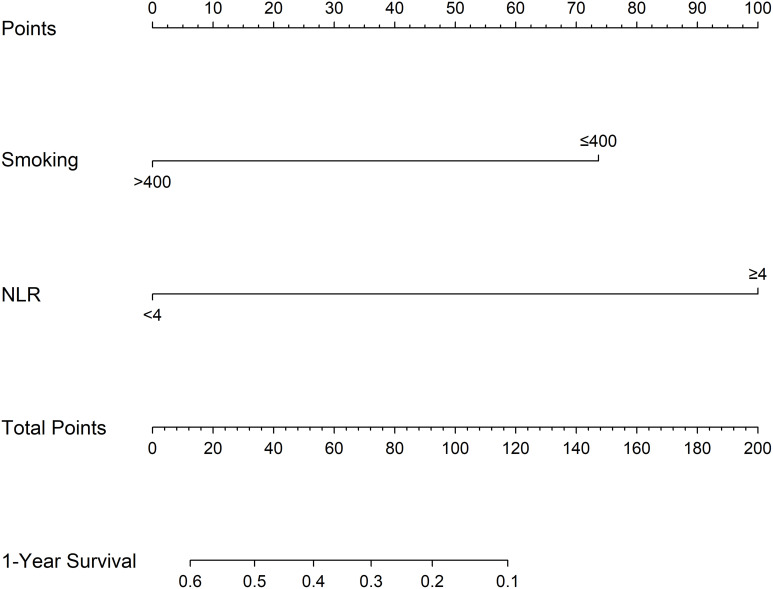
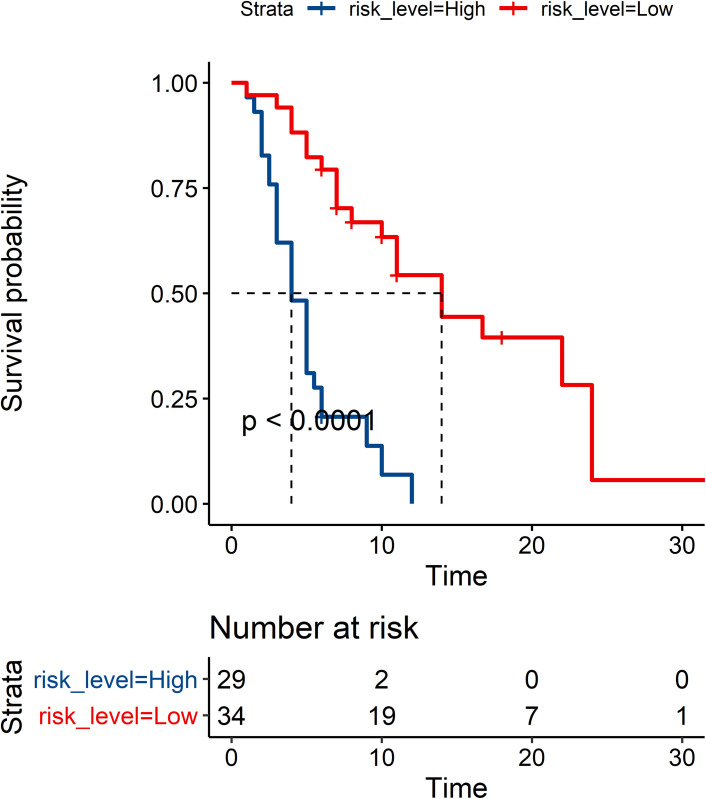
A total of 63 patients were included in the study. The median PFS was 7.0 months (95% CI, 5.0-11.0) and did not reach the median OS. According to the lasso regression, significant univariate factors were smoking index, PD-ligand 1 expression, and neutrophil to lymphocyte ratio (NLR). According to the multivariate analysis, the Cox proportional hazards model showed that smoking index and NLR are independent predictors of PFS in immunotherapy. A model comprised of independent predictors was developed based on a multivariate logical analysis of the main cohort-non-small cell lung cancer immunotherapy prognosis score. This model is shown as a nomogram with a C-index of 0.801 (95% CI, 0.744, 0.858), which has high prediction accuracy.
This predictive model, including NLR and smoking index, can achieve a 1-year PFS in immunotherapy of patients. PD-1 inhibitors have been demonstrated to be effective and safe in the clinical treatment of patients with NSCLC.
目前在中国,许多免疫检查点抑制剂(ICI)已被批准用于治疗非小细胞肺癌(NSCLC)。一些患者无法从ICI中获益,且约50%的患者存在免疫治疗相关毒性。因此,有必要通过生物标志物仔细监测免疫治疗人群的选择,以使NSCLC患者的获益最大化。
对2018年3月至2019年6月在我院接受ICI治疗的晚期NSCLC患者进行前瞻性分析,随访截止至2019年12月31日。主要终点为总生存期(OS)和无进展生存期(PFS),次要终点为客观缓解率和疾病控制率。采用套索回归进行单因素分析,采用Cox回归分析进行多因素分析。绘制疗效预测线图。
本研究共纳入63例患者。中位PFS为7.0个月(95%CI,5.0 - 11.0),中位OS未达到。根据套索回归,显著的单因素为吸烟指数、程序性死亡配体1(PD - ligand 1)表达和中性粒细胞与淋巴细胞比值(NLR)。根据多因素分析结果,Cox比例风险模型显示吸烟指数和NLR是免疫治疗中PFS的独立预测因素。基于主要队列——非小细胞肺癌免疫治疗预后评分的多因素逻辑分析,构建了一个由独立预测因素组成的模型。该模型以列线图形式呈现,C指数为0.801(95%CI,0.744,0.858),具有较高的预测准确性。
该预测模型,包括NLR和吸烟指数,可实现对患者免疫治疗1年的PFS预测。程序性死亡受体1(PD - 1)抑制剂在NSCLC患者的临床治疗中已被证明有效且安全。