Cuningham Will, Anderson Lorraine, Bowen Asha C, Buising Kirsty, Connors Christine, Daveson Kathryn, Martin Joanna, McNamara Stacey, Patel Bhavini, James Rodney, Shanks John, Wright Kerr, Yarwood Trent, Tong Steven Yc, McVernon Jodie
Menzies School of Health Research, Charles Darwin University, Darwin, Northern Territory, Australia.
Kimberley Aboriginal Medical Services, Kimberley, Western Australia, Australia.
PeerJ. 2020 Jul 22;8:e9409. doi: 10.7717/peerj.9409. eCollection 2020.
The high burden of infectious disease and associated antimicrobial use likely contribute to the emergence of antimicrobial resistance in remote Australian Aboriginal communities. We aimed to develop and apply context-specific tools to audit antimicrobial use in the remote primary healthcare setting.
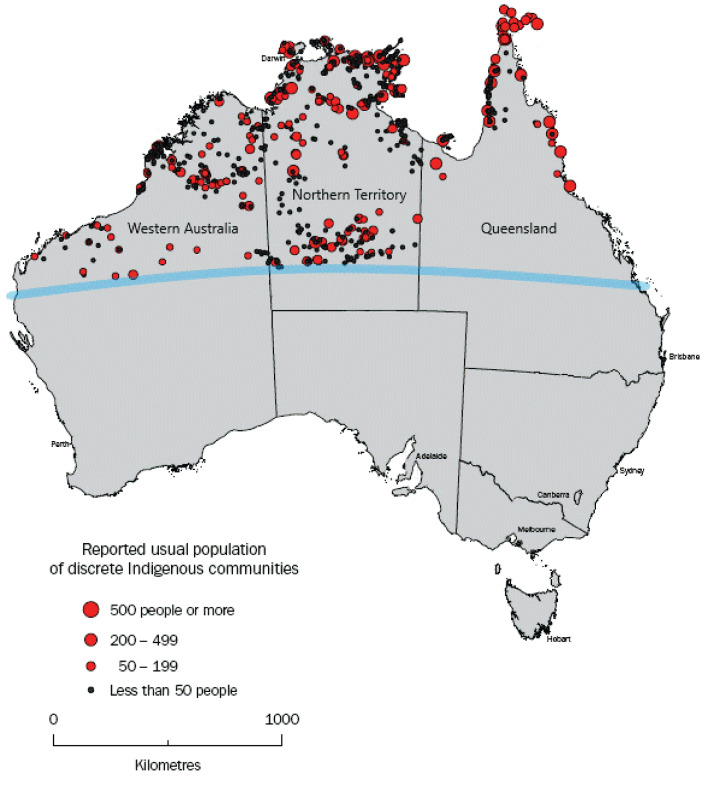
We adapted the General Practice version of the National Antimicrobial Prescribing Survey (GP NAPS) tool to audit antimicrobial use over 2-3 weeks in 15 remote primary healthcare clinics across the Kimberley region of Western Australia (03/2018-06/2018), Top End of the Northern Territory (08/2017-09/2017) and far north Queensland (05/2018-06/2018). At each clinic we reviewed consecutive clinic presentations until 30 presentations where antimicrobials had been used were included in the audit. Data recorded included the antimicrobials used, indications and treating health professional. We assessed the appropriateness of antimicrobial use and functionality of the tool.
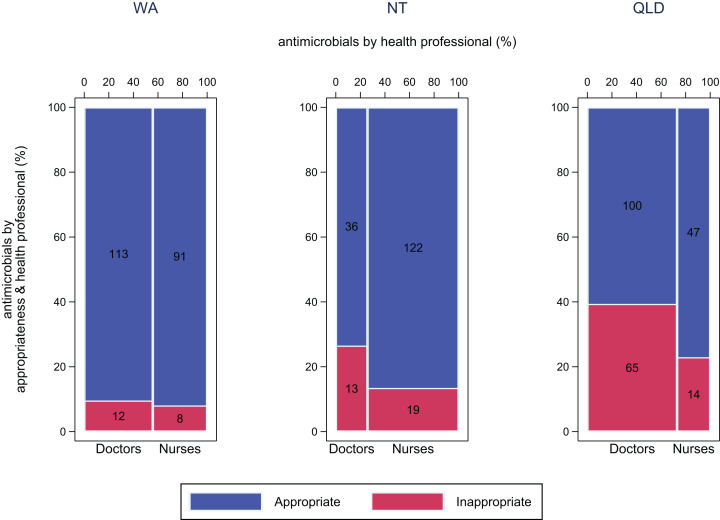
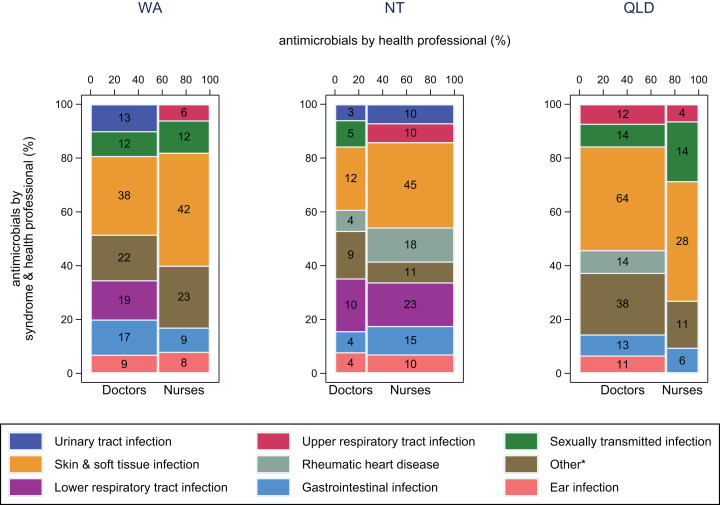
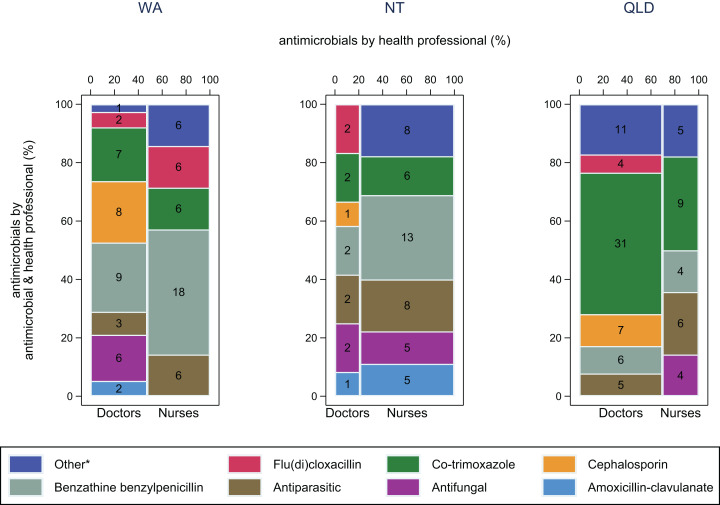
We audited the use of 668 antimicrobials. Skin and soft tissue infections were the dominant treatment indications (WA: 35%; NT: 29%; QLD: 40%). Compared with other settings in Australia, narrow spectrum antimicrobials like benzathine benzylpenicillin were commonly given and the appropriateness of use was high (WA: 91%; NT: 82%; QLD: 65%). While the audit was informative, non-integration with practice software made the process manually intensive.
Patterns of antimicrobial use in remote primary care are different from other settings in Australia. The adapted GP NAPS tool functioned well in this pilot study and has the potential for integration into clinical care. Regular stewardship audits would be facilitated by improved data extraction systems.
传染病的高负担以及相关抗菌药物的使用可能促使澳大利亚偏远原住民社区出现抗菌药物耐药性。我们旨在开发并应用针对具体情况的工具,以审核偏远地区基层医疗环境中的抗菌药物使用情况。
我们对国家抗菌药物处方调查(GP NAPS)工具的全科医疗版本进行了调整,以审核西澳大利亚金伯利地区(2018年3月至2018年6月)、北领地顶端地区(2017年8月至2017年9月)以及昆士兰远北地区(2018年5月至2018年6月)15家偏远基层医疗诊所2至3周内的抗菌药物使用情况。在每家诊所,我们查阅连续的门诊记录,直至纳入30例使用了抗菌药物的门诊记录进行审核。记录的数据包括使用的抗菌药物、用药指征以及治疗的医疗专业人员。我们评估了抗菌药物使用的合理性以及该工具的功能。
我们审核了668例抗菌药物的使用情况。皮肤及软组织感染是主要的治疗指征(西澳大利亚:35%;北领地:29%;昆士兰:40%)。与澳大利亚的其他环境相比,苄星青霉素等窄谱抗菌药物使用普遍,且使用合理性较高(西澳大利亚:91%;北领地:82%;昆士兰:65%)。虽然审核提供了信息,但由于未与实践软件集成,使得该过程人工操作强度大。
偏远基层医疗中的抗菌药物使用模式与澳大利亚的其他环境不同。在这项试点研究中,经过调整的GP NAPS工具运行良好,并且有整合到临床护理中的潜力。改进的数据提取系统将有助于定期开展管理审核。