Cao Qiongjie, Xu Weiwei, Chen Weiwei, Peng Dewei, Liu Qi, Dong Jing, Reinach Peter S, Yan Dongsheng
School of Ophthalmology and Optometry, Eye Hospital, Wenzhou Medical University, 270 Xueyuan Road, Wenzhou, 325027 Zhejiang China.
State Key Laboratory of Ophthalmology, Optometry and Visual Science, Wenzhou, Zhejiang China.
Eye Vis (Lond). 2020 Aug 1;7:35. doi: 10.1186/s40662-020-00202-6. eCollection 2020.
MicroRNAs (miRNAs) play critical roles in corneal development and functional homeostasis. Our previous study identified miR-184 as one of the most highly expressed miRNAs in the corneal epithelium. Even though its expression level plummeted dramatically during corneal epithelial wound healing (CEWH), its precise role in mediating corneal epithelial renewal was unresolved. The present study aimed to reveal the function and mechanism of miR-184 in regulating CEWH.
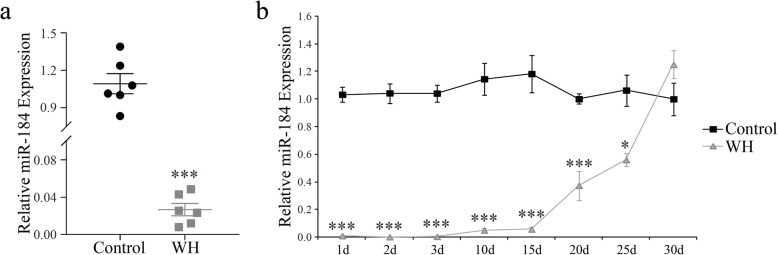
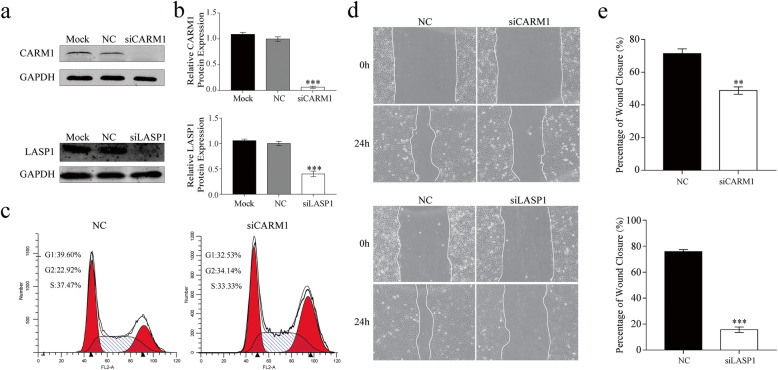
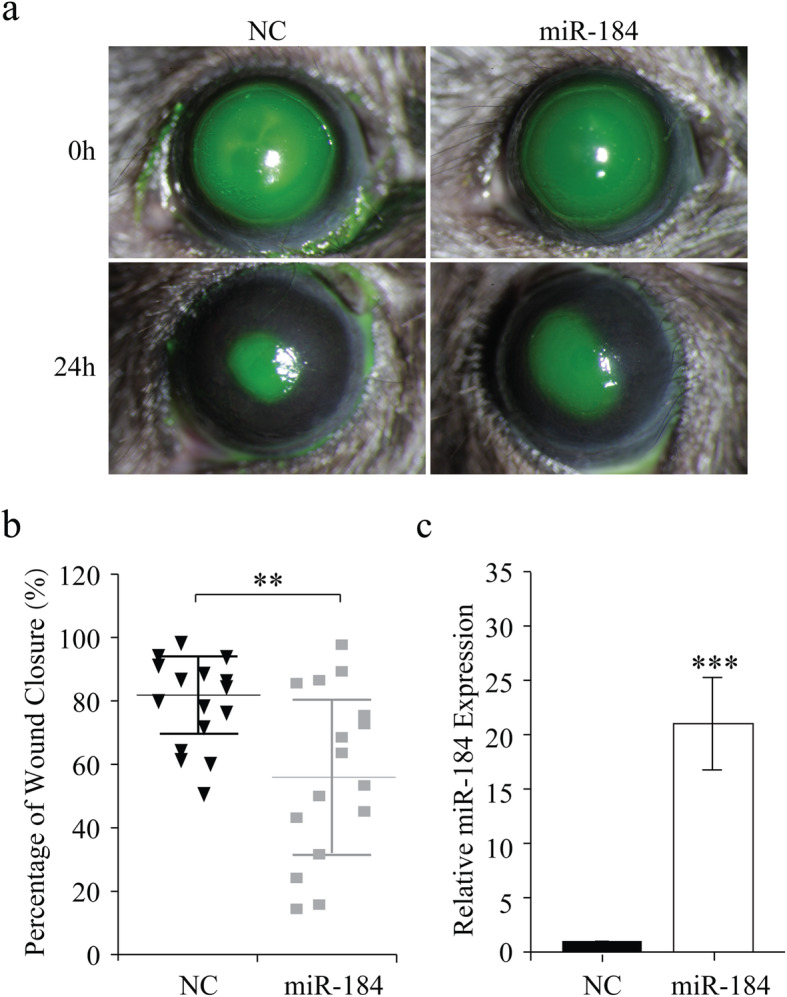
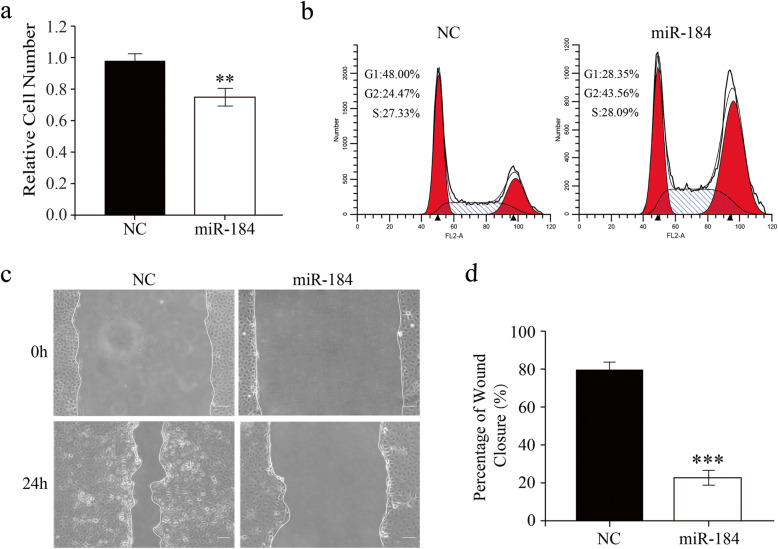
Quantitative RT-PCR analysis characterized the miR-184 expression pattern during CEWH in mice. Ectopic miR-184 injection determined its effect on this process in vivo. We evaluated the effects of miR-184 and its target genes on the proliferation, cell cycle, and migration of human corneal epithelial cells (HCECs) using MTS, flow cytometry, and wound-healing assay, respectively. Bioinformatic analysis, in conjunction with gene microarray analysis and cell-based luciferase assays, pinpointed gene targets of miR-184 contributing to CEWH.
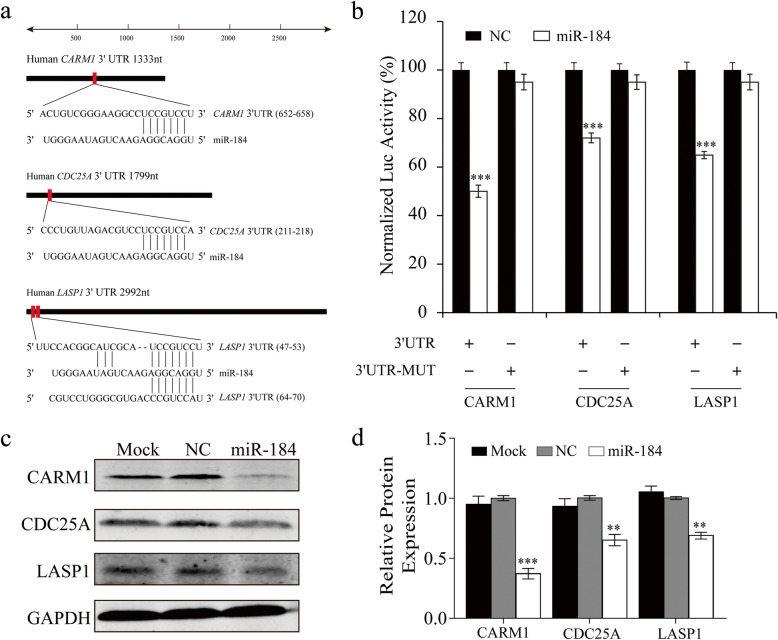
MiR-184 underwent marked downregulation during mouse CEWH. Ectopic miR-184 overexpression delayed this process in mice. Furthermore, miR-184 transfection into HCECs significantly inhibited cell proliferation, cell cycle progression, and cell migration. MiR-184 directly targeted , , and , and downregulated their expression in HCECs. CARM1 downregulation inhibited both HCEC proliferation and migration, whereas a decrease in LASP1 gene expression only inhibited migration.
Our results demonstrate that miR-184 inhibits corneal epithelial cell proliferation and migration via targeting , , and , suggesting it acts as a negative modulator during CEWH. Therefore, identifying strategies to suppress miR-184 expression levels has the potential to promote CEWH.
微小RNA(miRNA)在角膜发育和功能稳态中发挥关键作用。我们之前的研究确定miR-184是角膜上皮中表达最高的miRNA之一。尽管其表达水平在角膜上皮伤口愈合(CEWH)过程中急剧下降,但其在介导角膜上皮更新中的精确作用仍未明确。本研究旨在揭示miR-184在调节CEWH中的功能和机制。
定量逆转录-聚合酶链反应(RT-PCR)分析确定了小鼠CEWH过程中miR-184的表达模式。异位注射miR-184确定其在体内对该过程的影响。我们分别使用MTS、流式细胞术和伤口愈合试验评估了miR-184及其靶基因对人角膜上皮细胞(HCEC)增殖、细胞周期和迁移的影响。生物信息学分析结合基因芯片分析和基于细胞的荧光素酶测定,确定了miR-184参与CEWH的基因靶点。
在小鼠CEWH过程中,miR-184显著下调。异位过表达miR-184会延迟小鼠的这一过程。此外,将miR-18转染到HCEC中可显著抑制细胞增殖、细胞周期进程和细胞迁移。miR-184直接靶向 、 和 ,并下调它们在HCEC中的表达。CARM1下调抑制HCEC增殖和迁移,而LASP1基因表达降低仅抑制迁移。
我们的结果表明,miR-184通过靶向 、 和 抑制角膜上皮细胞增殖和迁移,提示其在CEWH过程中起负调节作用。因此,确定抑制miR-184表达水平的策略有可能促进CEWH。