Nuclear Medicine Unit, Department of Medicine (DIMED), University of Padova, Via Giustiniani 2, 35128, Padua, Italy.
Surgery Unit, Department of Surgery, University of Padova, Padua, Italy.
Ann Nucl Med. 2020 Sep;34(9):601-619. doi: 10.1007/s12149-020-01507-1. Epub 2020 Aug 7.
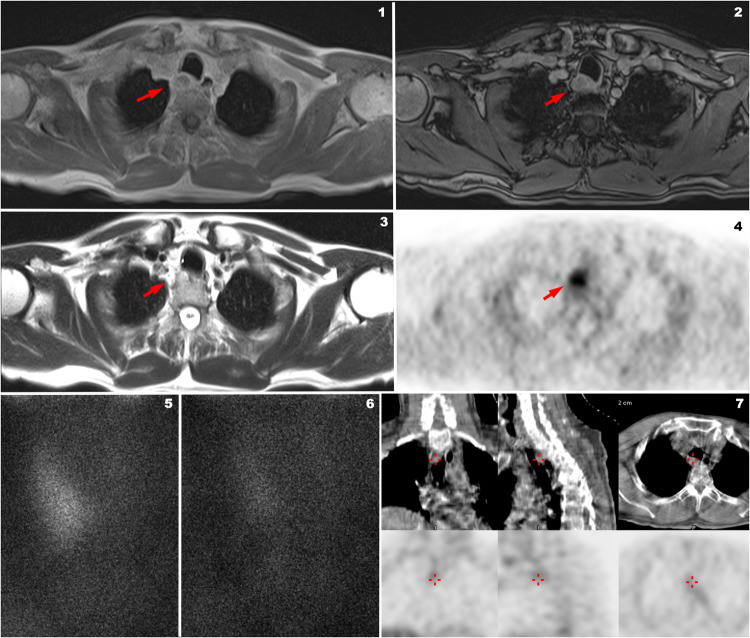
The aims of the present systematic review were to: (1) assess the role of F-fluorocholine (FCH) positron emission tomography (PET) with computed tomography (CT) and PET with magnetic resonance imaging (MRI) in patients with biochemically known hyperparathyroidism; (2) compare the diagnostic performance of FCH PET/CT or PET/MRI with conventional morphological and functional imaging. A literature search until December 2019 was performed in the PubMed, Scopus and Web of Science databases, using the terms "choline" AND "PET" AND "hyperparathyroidism". The search was conducted with and without the addition of filters (e.g., language: English only; type of article: original article; subjects: humans only) and selecting only articles published in the last 5 years. Twenty-three articles and 1112 patients were considered. Different FCH PET/CT acquisition protocols were adopted across the studies, using dynamic, early or delayed scans. FCH PET/CT proved more accurate than ultrasonography (US) or 99mTc-sestamibi single-photon emission tomography (SPET). PET/MRI also seemed to be more accurate than MRI alone in detecting benign parathyroid lesions. FCH PET/CT is more accurate than conventional morphological and functional imaging modalities (US or SPET) for the detection of benign parathyroid lesions. It could, therefore, be a reliable tool in both primary and recurrent hyperparathyroidism.
(1)评估 F-氟代胆碱(FCH)正电子发射断层扫描(PET)与计算机断层扫描(CT)和 PET 与磁共振成像(MRI)在生化明确的甲状旁腺功能亢进症患者中的作用;(2)比较 FCH PET/CT 或 PET/MRI 与传统形态和功能成像的诊断性能。在 PubMed、Scopus 和 Web of Science 数据库中,使用“choline”和“PET”和“hyperparathyroidism”等术语,进行了截至 2019 年 12 月的文献检索。检索时使用了和未使用过滤器(例如,语言:仅英语;文章类型:原始文章;主题:仅限人类),仅选择最近 5 年发表的文章。共考虑了 23 篇文章和 1112 名患者。在研究中采用了不同的 FCH PET/CT 采集方案,使用动态、早期或延迟扫描。FCH PET/CT 比超声(US)或 99mTc-甲氧基异丁基异腈单光子发射断层扫描(SPET)更准确。与单独使用 MRI 相比,PET/MRI 似乎在检测良性甲状旁腺病变方面也更准确。FCH PET/CT 比传统的形态和功能成像方式(US 或 SPET)更准确地检测良性甲状旁腺病变。因此,它可能是原发性和复发性甲状旁腺功能亢进症的可靠工具。