Laboratory of Molecular Gerontology, National Institute on Aging, National Institutes of Health, Baltimore, MD, 21224, USA.
Department of Molecular Biology and Genetics, Cornell University, Ithaca, NY, 14850, USA.
Nat Commun. 2020 Aug 7;11(1):3951. doi: 10.1038/s41467-020-17449-1.
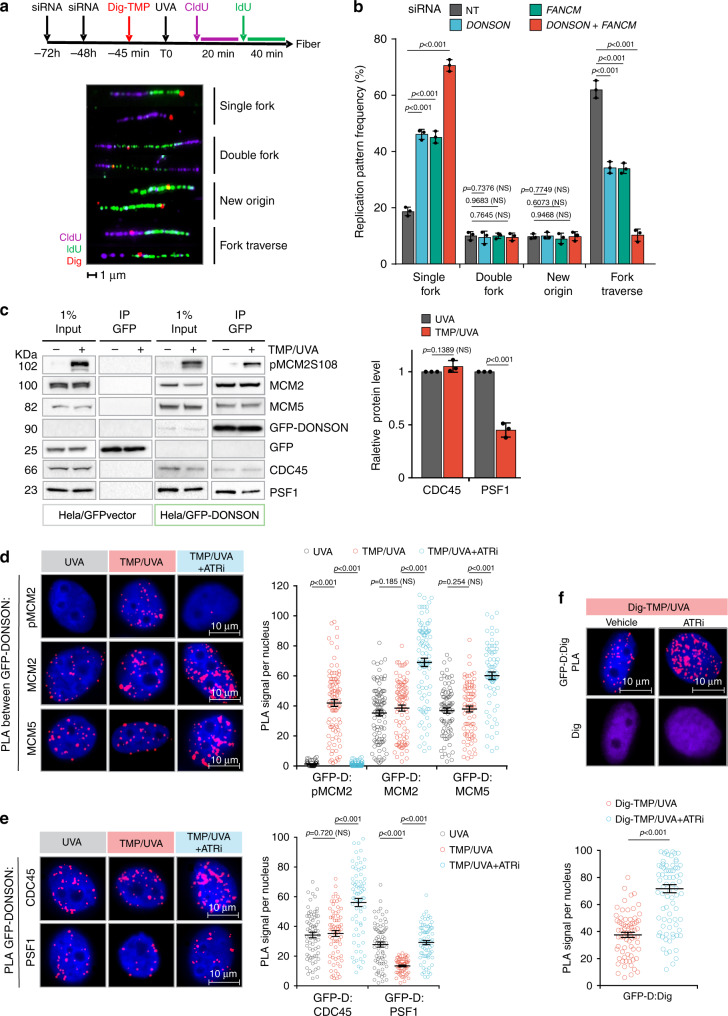
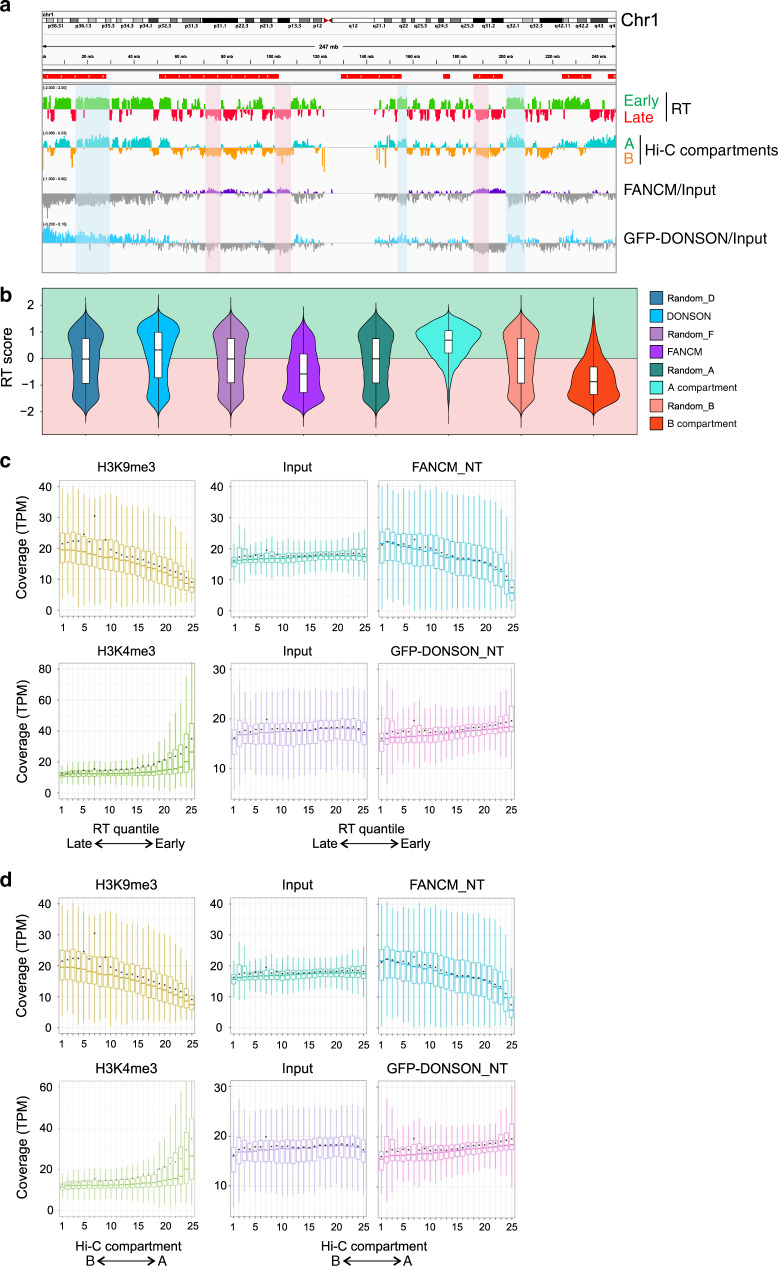
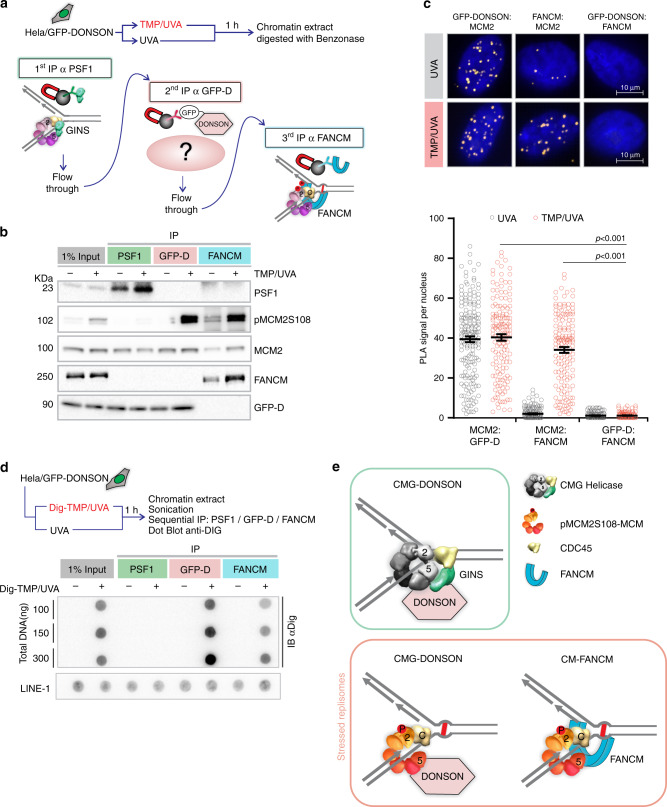
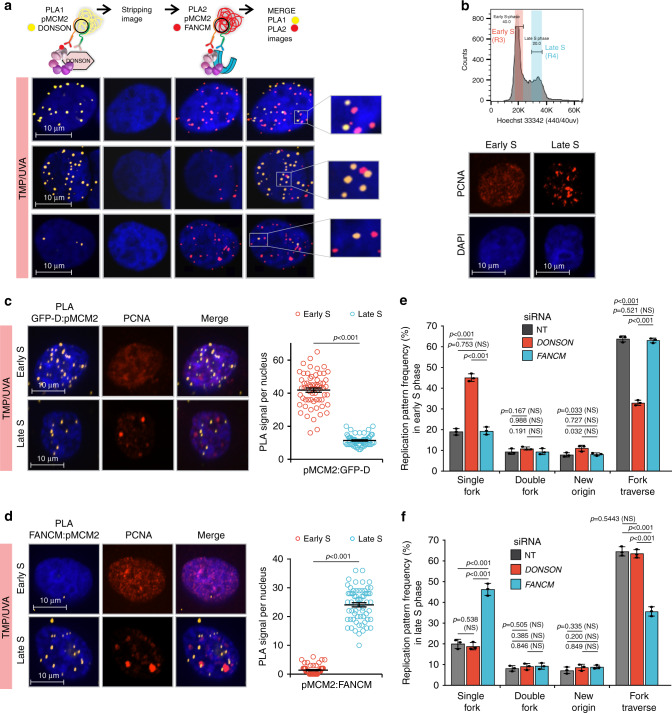
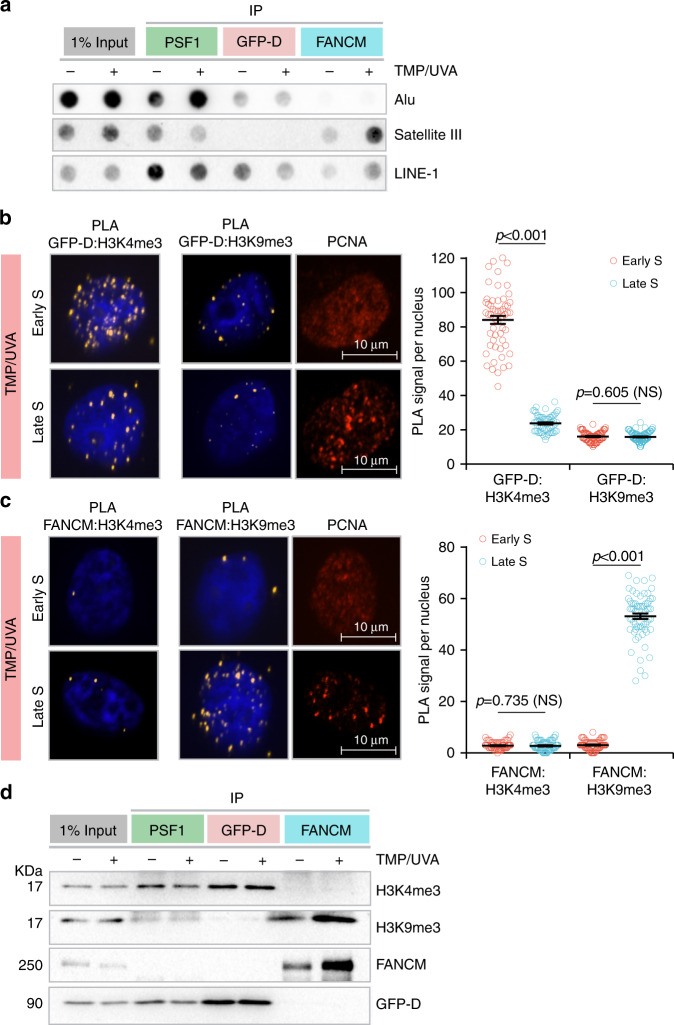
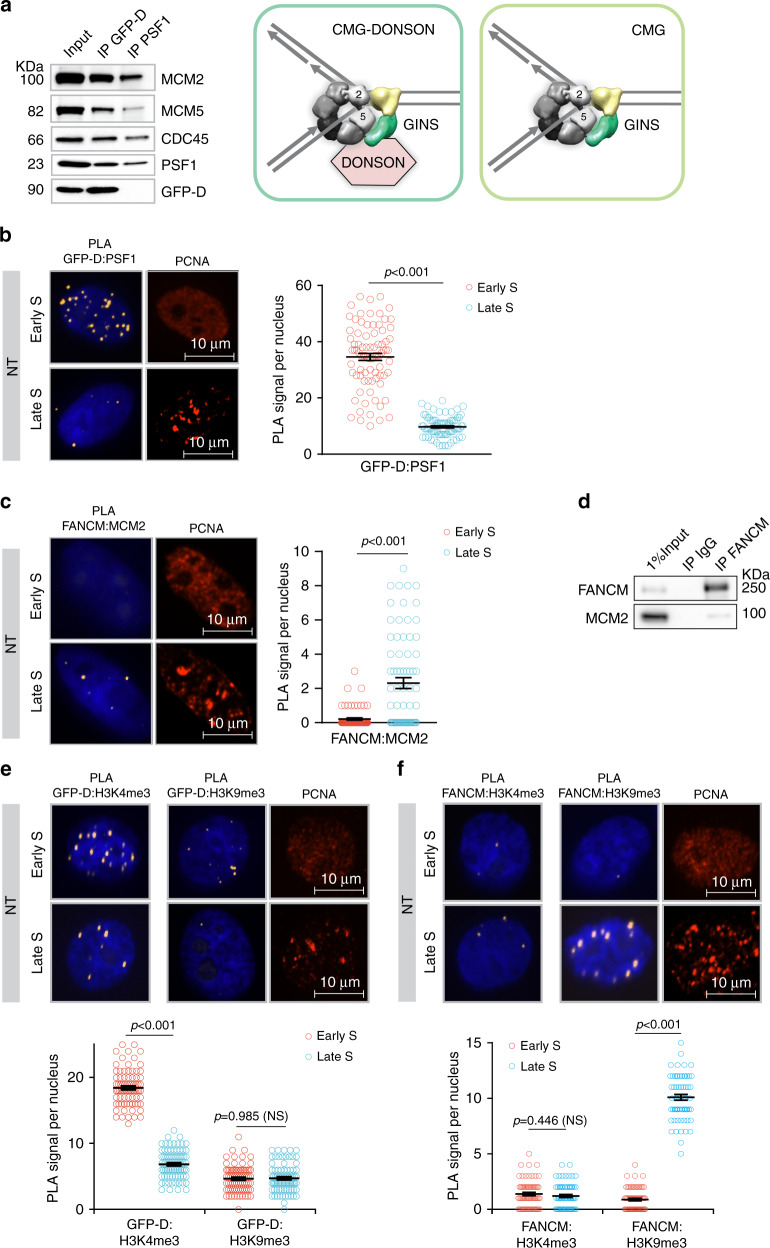
Duplication of mammalian genomes requires replisomes to overcome numerous impediments during passage through open (eu) and condensed (hetero) chromatin. Typically, studies of replication stress characterize mixed populations of challenged and unchallenged replication forks, averaged across S phase, and model a single species of "stressed" replisome. Here, in cells containing potent obstacles to replication, we find two different lesion proximal replisomes. One is bound by the DONSON protein and is more frequent in early S phase, in regions marked by euchromatin. The other interacts with the FANCM DNA translocase, is more prominent in late S phase, and favors heterochromatin. The two forms can also be detected in unstressed cells. ChIP-seq of DNA associated with DONSON or FANCM confirms the bias of the former towards regions that replicate early and the skew of the latter towards regions that replicate late.
哺乳动物基因组的复制需要复制体在穿过开放(常染色质)和浓缩(异染色质)染色质时克服许多障碍。通常,复制应激的研究以 S 期的平均值为特征,对受到挑战和未受到挑战的复制叉的混合群体进行描述,并对单一类型的“应激”复制体进行建模。在这里,在含有有效复制障碍的细胞中,我们发现了两种不同的损伤近端复制体。一种由 DONSON 蛋白结合,在 S 期早期更常见,在常染色质标记的区域。另一种与 FANCM DNA 转位酶相互作用,在 S 期晚期更为突出,并且偏爱异染色质。这两种形式也可以在未受应激的细胞中检测到。与 DONSON 或 FANCM 相关的 DNA 的 ChIP-seq 证实了前者向早期复制的区域的偏向性,以及后者向晚期复制的区域的偏向性。