Human Genetics and Cognitive Functions, CNRS UMR 3571 « Genes, Synapses and Cognition », Université de Paris, Institut Pasteur, Paris, France.
Integrative Neurobiology of Cholinergic Systems, CNRS UMR 3571 « Genes, Synapses and Cognition », Institut Pasteur, Paris, France.
Sci Rep. 2020 Aug 7;10(1):13315. doi: 10.1038/s41598-020-70056-4.
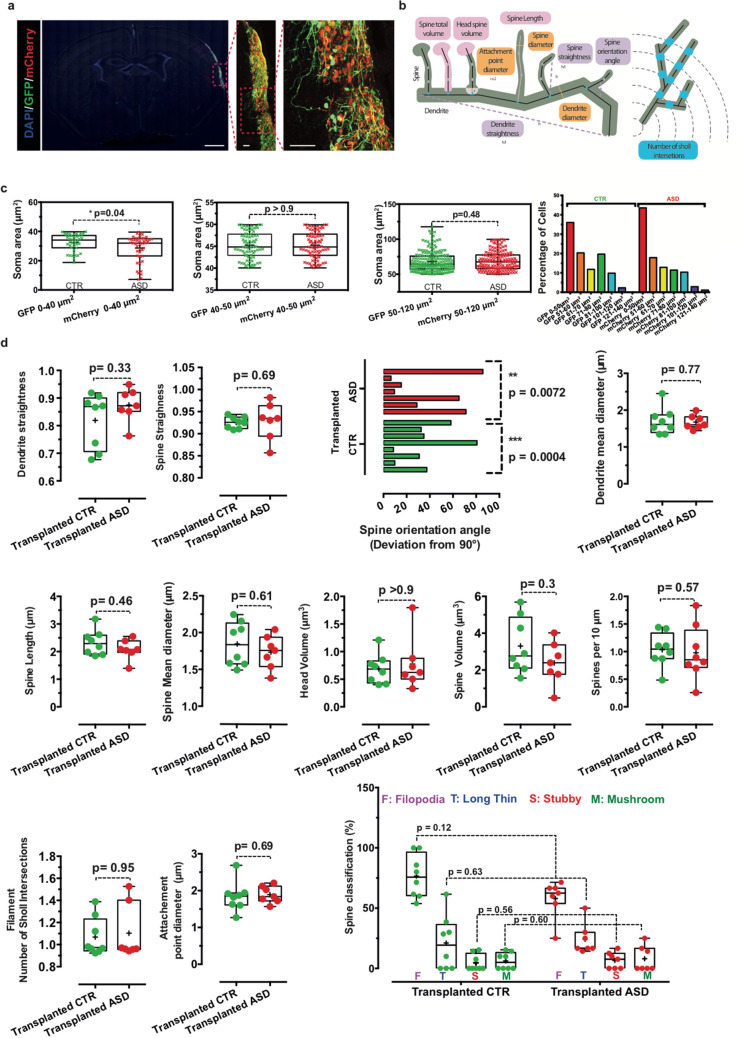
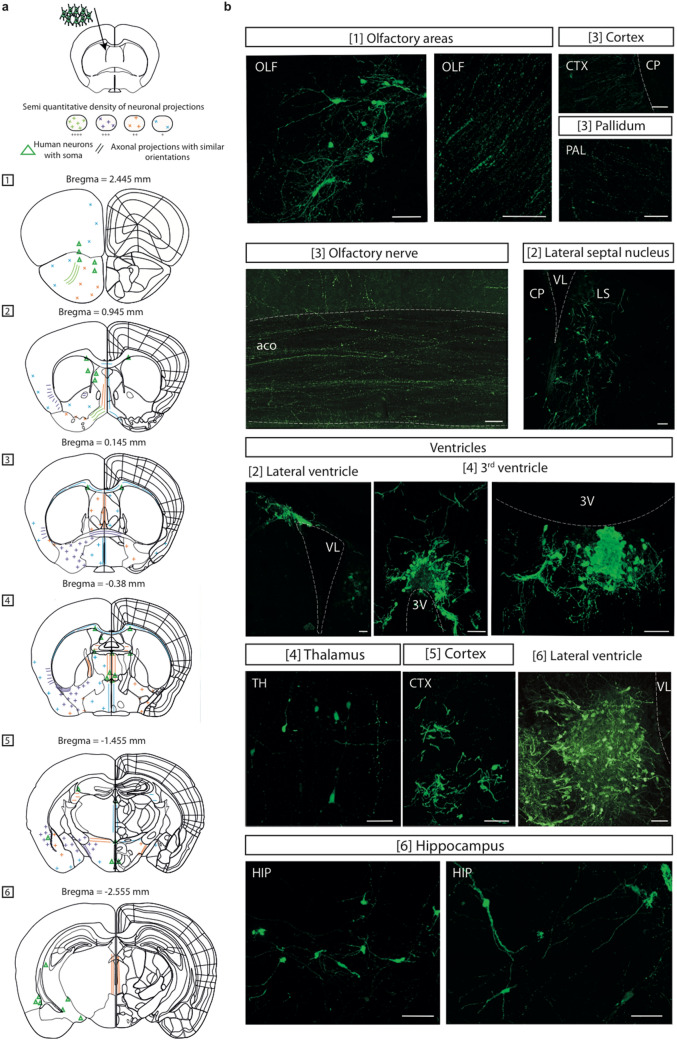
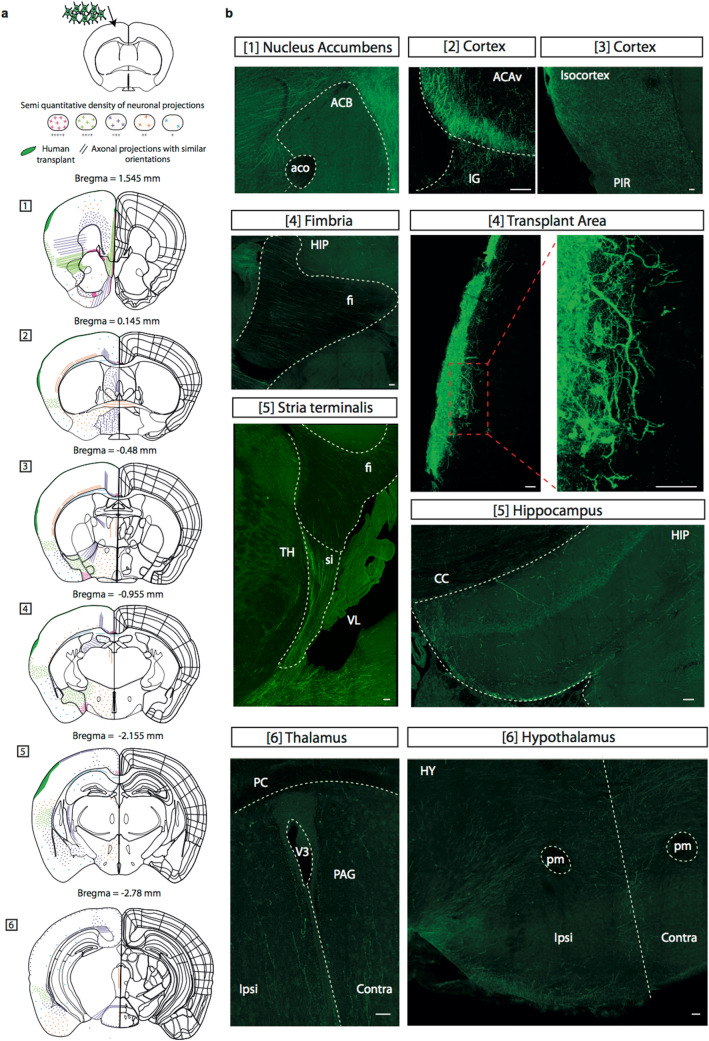
Using human induced pluripotent stem cells (iPSC), recent studies have shown that the events underlying autism spectrum disorders (ASD) can occur during neonatal development. We previously analyzed the iPSC-derived pyramidal cortical neurons of a subset of patients with ASD carrying de novo heterozygous mutations in postsynaptic SHANK3 protein, in culture. We reported altered spinogenesis of those neurons. The transplantation of human iPSC-derived neuronal precursors into mouse brain represents a novel option for in vivo analysis of mutations affecting the human brain. In this study, we transplanted the neuronal precursor cells (NPC) into the cortex of newborn mice to analyze their integration and maturation at early stages of development and studied axonal projections of transplanted human neurons into adult mouse brain. We then co-transplanted NPC from a control individual and from a patient carrying a de novo heterozygous SHANK3 mutation. We observed a reduction in cell soma size of selective neuronal categories and in axonal projections at 30 days post-transplantation. In contrast to previous in vitro studies, we did not observe any alteration in spinogenesis at this early age. The humanized chimeric mouse models offer the means to analyze ASD-associated mutations further and provide the opportunity to visualize phenotypes in vivo.
利用人类诱导多能干细胞(iPSC),最近的研究表明,自闭症谱系障碍(ASD)的潜在事件可以在新生儿发育期间发生。我们之前在培养中分析了一组携带突触后 SHANK3 蛋白新生杂合突变的 ASD 患者的 iPSC 衍生的锥体皮层神经元。我们报告了这些神经元的 spinogenesis 发生改变。将人类 iPSC 衍生的神经元前体细胞移植到老鼠大脑中,为分析影响人类大脑的突变提供了一种新的体内分析选择。在这项研究中,我们将神经元前体细胞(NPC)移植到新生小鼠的皮层中,以分析它们在早期发育阶段的整合和成熟情况,并研究移植的人类神经元在成年小鼠大脑中的轴突投射。然后,我们共同移植了来自对照个体和携带新生杂合 SHANK3 突变的患者的 NPC。我们观察到移植后 30 天选择性神经元类别的细胞体大小和轴突投射减少。与之前的体外研究不同,我们在这个早期阶段没有观察到任何 spinogenesis 的改变。人类化嵌合小鼠模型提供了进一步分析 ASD 相关突变的手段,并提供了在体内可视化表型的机会。