Sungura Richard Erasto, Spitsbergen John Martin, Mpolya Emmanuel Abraham, Sauli Elingarami, Vianney John-Mary
Department of Health and Biomedical Sciences, School of Life Science and Bioengineering, Nelson Mandela-African Institution of Science and Technology, Arusha, Tanzania.
Department of Biological Sciences, Western Michigan University, Michigan, United State of America.
Pan Afr Med J. 2020 May 21;36:25. doi: 10.11604/pamj.2020.36.25.22515. eCollection 2020.
The loss of parenchymal brain volume per normative age comparison is a distinctive feature of brain atrophy. While the condition is the most prevalent to elderly, it has also been observed in pediatric ages. Various causes such as trauma, infection, and malnutrition have been reported to trigger the loss of brain tissues volume. Despite this literature based knowledge of risk factors, the magnitude of brain atrophy in pediatric age group is scantly addressed in most developing countries including Tanzania. The current study aims to understand the magnitude of brain atrophy in children residing in Northern Zone, Tanzania.
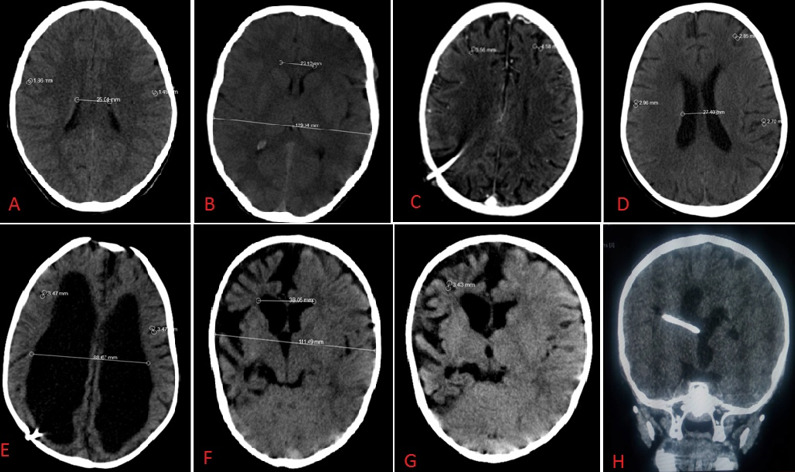
A cross-sectional hospital survey was performed in which 455 children who were presented with various brain pathologies from the year 2013 to 2019 and whose brains examined by Computerized tomography (CT)-Scanners were recruited in the study. The brain statuses were examined using three linear radiological methods including the measure of sulcal-width, Evans index, and lateral ventricular body width.
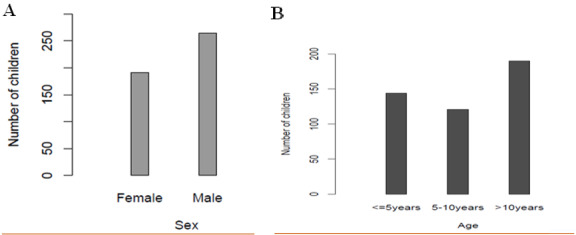
Results showed a significant number of atrophied brains among children in Northern Tanzania and that the condition was observed to have a 1:1 male to female ratio. The prevalence of pediatric brain atrophy was found to be 16.04%.
The cortical subtype of brain atrophy presented as the most prevalent type of brain volume loss. The findings of this study suggest existence of considerable trends of brain atrophy in children which need special attention and mitigation plans.
按标准年龄比较,脑实质体积的减少是脑萎缩的一个显著特征。虽然这种情况在老年人中最为普遍,但在儿童期也有发现。据报道,各种原因如创伤、感染和营养不良会引发脑组织体积的减少。尽管有基于文献的危险因素知识,但在包括坦桑尼亚在内的大多数发展中国家,儿童年龄组脑萎缩的程度很少得到关注。本研究旨在了解坦桑尼亚北部地区儿童脑萎缩的程度。
进行了一项横断面医院调查,研究招募了2013年至2019年期间因各种脑部病变就诊且脑部经计算机断层扫描(CT)检查的455名儿童。使用三种线性放射学方法检查脑状态,包括脑沟宽度测量、埃文斯指数和侧脑室体部宽度测量。
结果显示坦桑尼亚北部儿童中存在大量脑萎缩病例,且该情况在男女中的比例为1:1。儿童脑萎缩的患病率为16.04%。
脑萎缩的皮质亚型是最常见的脑体积减少类型。本研究结果表明儿童中存在相当程度的脑萎缩趋势,需要特别关注和缓解计划。