Department of Health and Biomedical Sciences, School of Life Science, Nelson Mandela-African Institution of Science and Technology, Arusha, Tanzania.
Department of Neuroscience, Western Michigan University, Kalamazoo, MI, USA.
Sci Rep. 2022 Aug 4;12(1):13437. doi: 10.1038/s41598-022-17062-w.
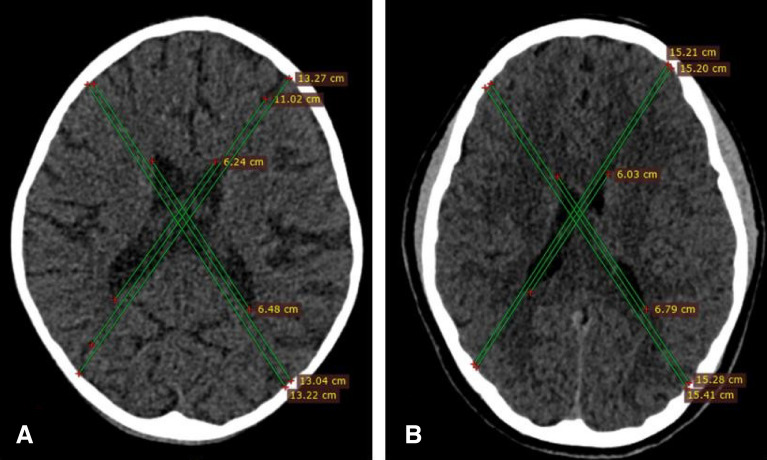
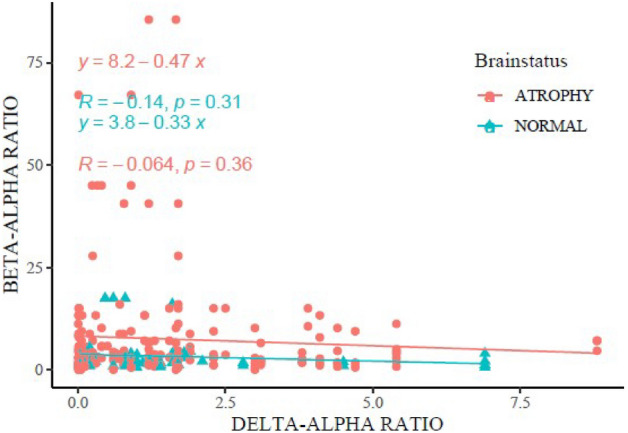
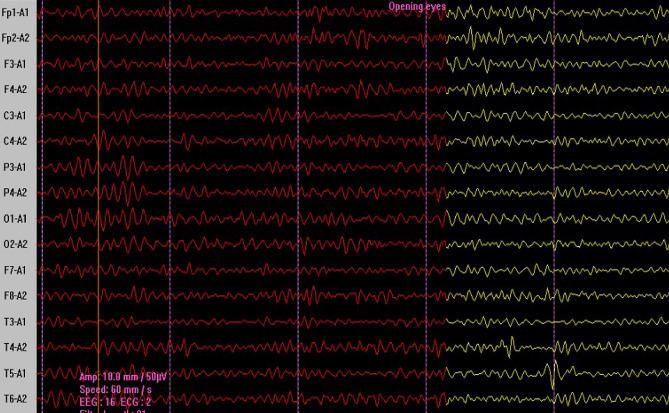
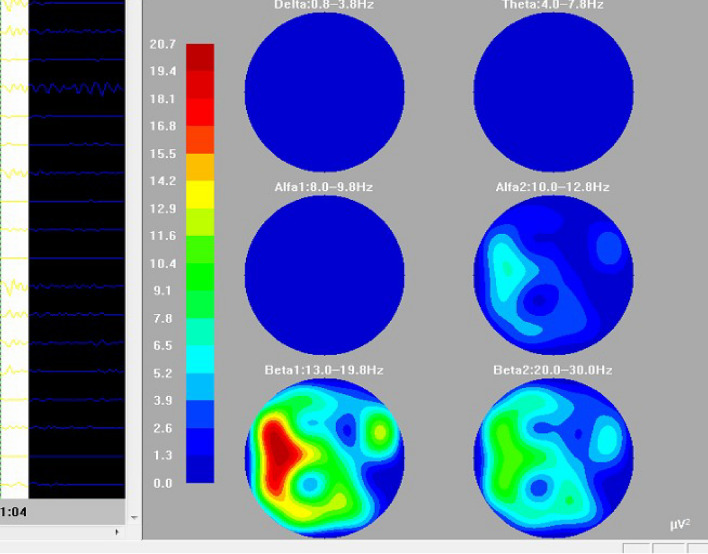
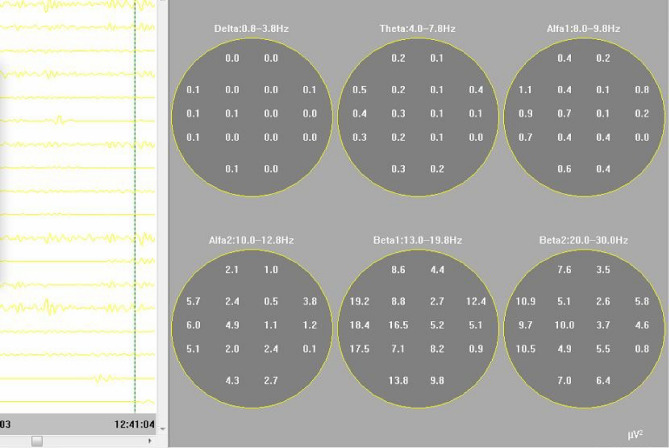
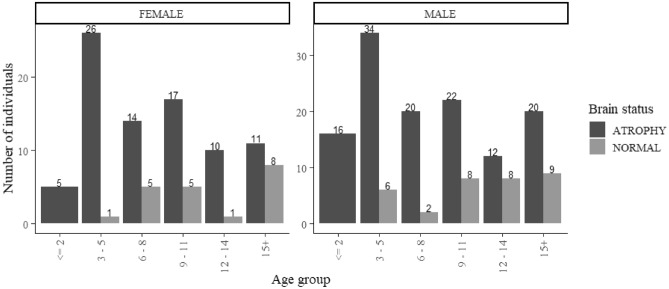
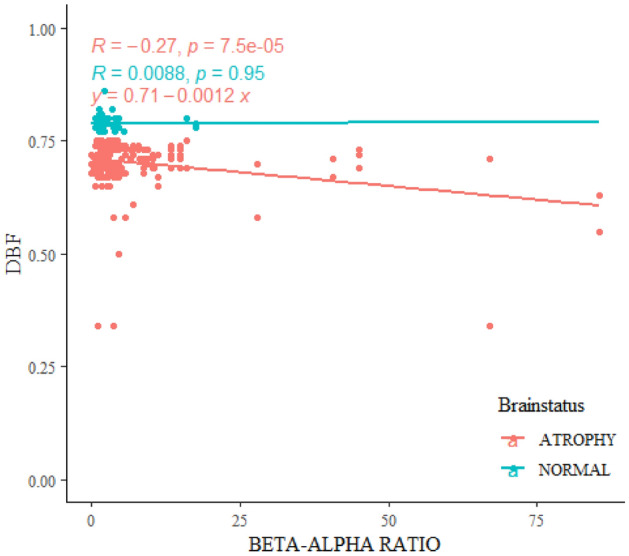
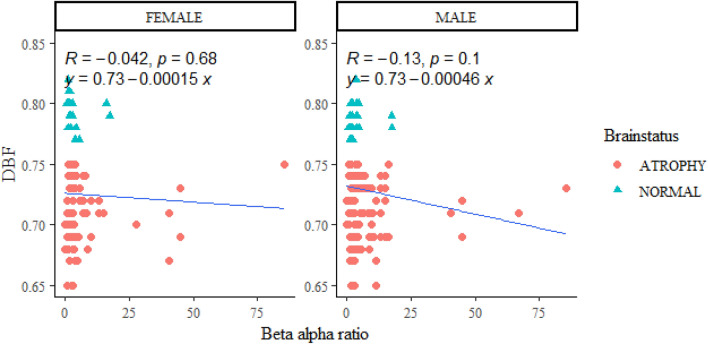
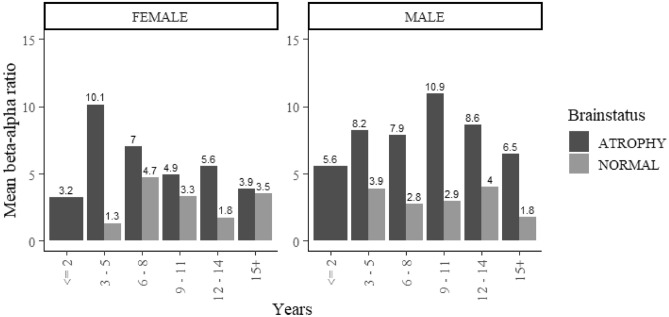
Although it is a normal involution process in advanced age, brain atrophy-also termed atrophic encephalopathy-can also occur prematurely in childhood as a consequential effect of brain tissues injury through trauma or central nervous system infection, though in both normal and premature occurrences this condition always presents with loss of volume relative to the skull. A common tool for the functional study of brain activities is an electroencephalogram, but analyses of this have reportedly identified mismatches between qualitative and quantitative forms, particularly in the use of Delta-alpha ratio (DAR) indices, meaning that the values may be case dependent. The current study thus examines the value of Focused Occipital Beta-Alpha Ratio (FOBAR) as a modified biomarker for evaluating brain functional changes resulting from brain atrophy. This cross-sectional design study involves 260 patients under 18 years of age. Specifically, 207 patients with brain atrophy are compared with 53 control subjects with CT scan-proven normal brain volume. All the children underwent digital electroencephalography with brain mapping. Results show that alpha posterior dominant rhythm was present in 88 atrophic children and 44 controls. Beta as posterior dominant rhythm was present in an overwhelming 91.5% of atrophic subjects, with 0.009 p-values. The focused occipital Beta-alpha ratio correlated significantly with brain volume loss presented in diagonal brain fraction. The FOBAR and DAR values of the QEEG showed no significant correlation. This work concludes that QEEG cerebral dysfunctional studies may be etiologically and case dependent from the nature of the brain injury. Also, the focused Beta-alpha ratio of the QEEG is a prospective and potential biomarker of consideration in studying childhood atrophic encephalopathy.
虽然脑萎缩-也称为萎缩性脑病-是老年人的正常退行性过程,但在儿童时期,由于创伤或中枢神经系统感染导致脑组织损伤,也可能会提前发生。尽管在正常和提前发生的情况下,这种情况总是表现为相对于颅骨的体积损失。一种用于研究大脑活动的常见功能工具是脑电图,但据报道,对其分析发现了定性和定量形式之间的不匹配,特别是在使用 Delta-alpha 比(DAR)指数方面,这意味着这些值可能取决于具体情况。因此,本研究检查了聚焦枕部 Beta-Alpha 比(FOBAR)作为评估脑萎缩引起的大脑功能变化的改良生物标志物的价值。这项横断面设计研究涉及 260 名 18 岁以下的患者。具体来说,将 207 名脑萎缩患者与经 CT 扫描证实大脑体积正常的 53 名对照受试者进行比较。所有儿童均接受数字脑电图和脑图检查。结果显示,88 名萎缩儿童和 44 名对照者存在 alpha 后优势节律。91.5%的萎缩患者存在压倒性的 Beta 后优势节律,p 值为 0.009。焦点枕部 Beta-alpha 比与对角脑分数中表现出的脑体积损失显著相关。QEEG 的 FOBAR 和 DAR 值无显著相关性。本研究得出结论,QEEG 脑功能障碍研究可能与脑损伤的病因和病例有关。此外,QEEG 的焦点 Beta-alpha 比是研究儿童萎缩性脑病的潜在生物标志物。