Sehgal Kartik, Piper-Vallillo Andrew J, Viray Hollis, Khan Adeel M, Rangachari Deepa, Costa Daniel B
Department of Medicine, Division of Medical Oncology, Beth Israel Deaconess Medical Center, Harvard Medical School, Boston, MA, USA.
Precis Cancer Med. 2020 Jun;3. doi: 10.21037/pcm-2020-potb-02. Epub 2020 Jun 15.
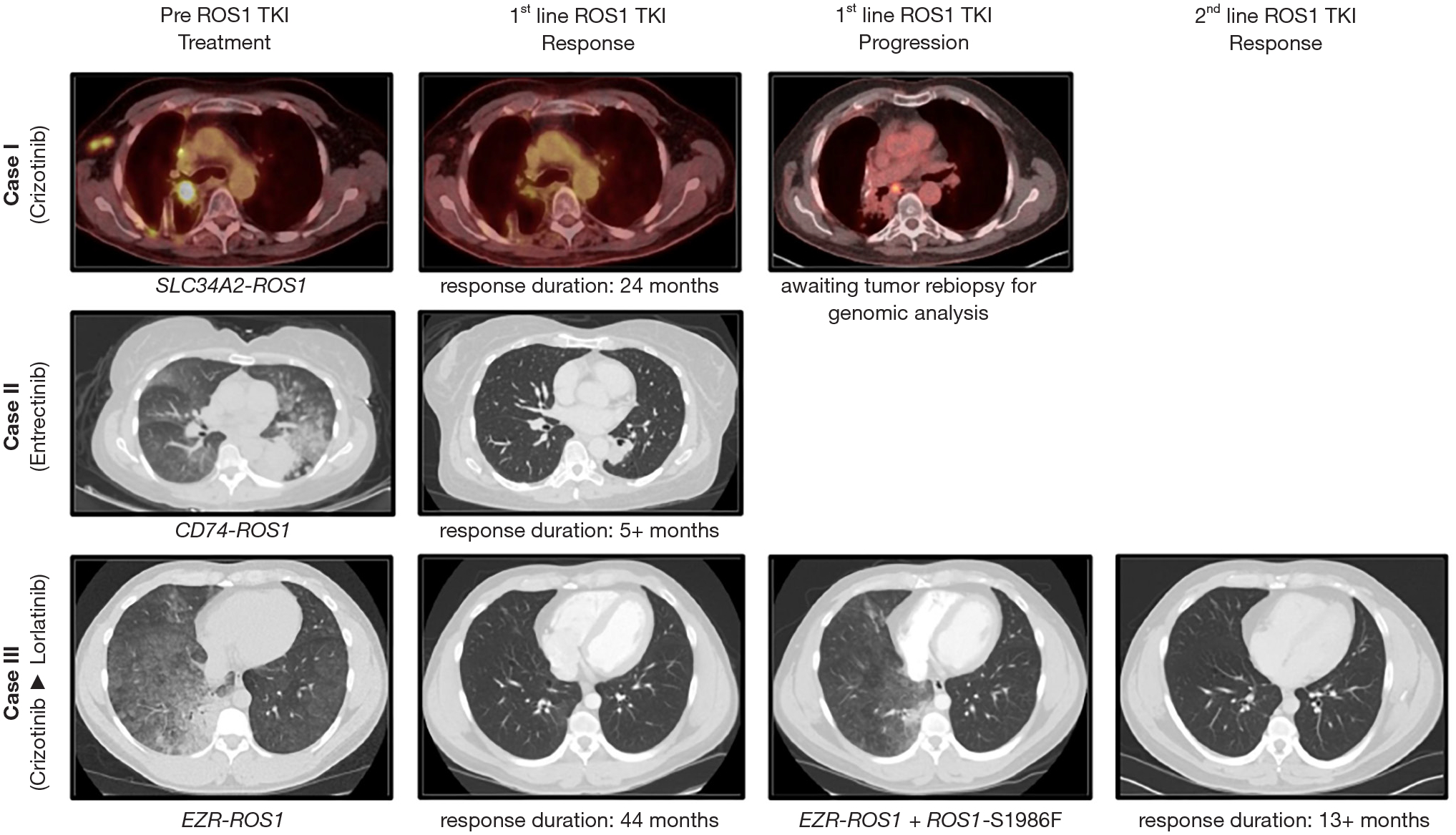
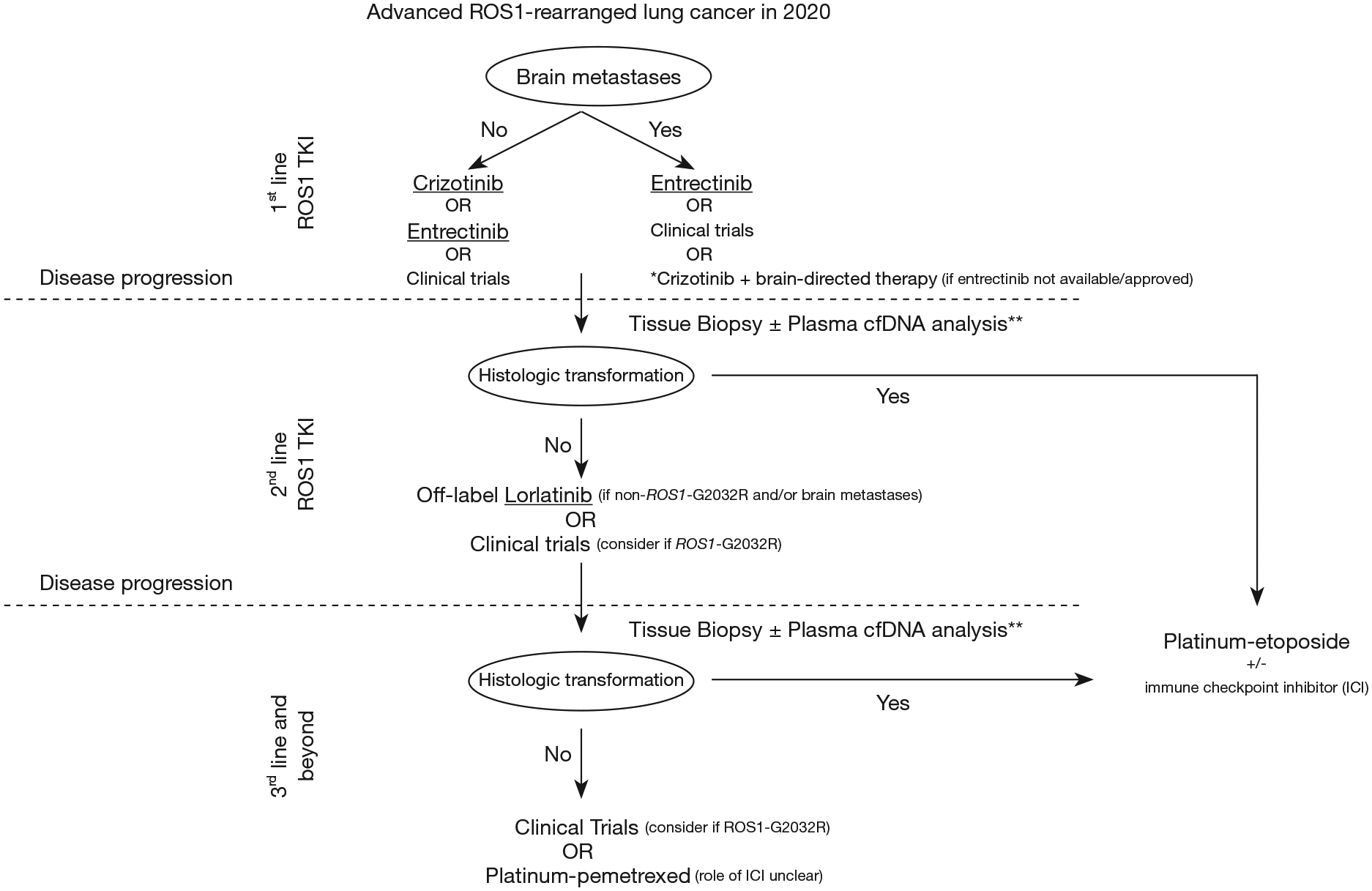
-rearranged (also known as fusion-positive) non-small-cell lung cancer is an uncommon but distinct molecular subgroup seen in approximately 1-2% of cases. Oncogene addiction due to constitutive ROS1 tyrosine kinase activation has allowed development of molecularly targeted therapies with remarkable anti-tumor activity. Both crizotinib and entrectinib, multitargeted tyrosine kinase inhibitors (TKIs) have now received approval by the FDA for treatment of patients with advanced -rearranged lung cancers; however, the clinical efficacy and safety of these drugs have been derived from expansion cohorts of single-arm phase I or basket clinical trials with relatively small populations of this clinically and molecularly distinct subgroup. Both drugs lead to high objective response rates (approximately 70-80%) and have manageable side effects, although only entrectinib has potent intracranial efficacy. Lorlatinib is an oral brain-penetrant ALK/ROS1 TKI with activity in both TKI-naïve and some crizotinib-resistant settings (albeit with limited potency against the crizotinib/entrectinib-resistant -G2032R mutation). We describe cases of advanced -rearranged lung cancer receiving crizotinib, entrectinib, and/or lorlatinib in first and later line treatment settings to dissect the current state of evidence supporting management decisions for these patients. The next generation ROS1 TKIs (repotrectinib and DS-6051b), owing to their broad activity against kinase mutations including -G2032R in preclinical studies, hold promise to transform the current treatment paradigm and permit even further gains with regards to long-term outcomes in this subset of patients.
重排(也称为融合阳性)非小细胞肺癌是一种罕见但独特的分子亚组,约占病例的1%-2%。由于组成型ROS1酪氨酸激酶激活导致的癌基因成瘾,使得具有显著抗肿瘤活性的分子靶向治疗得以发展。克唑替尼和恩曲替尼这两种多靶点酪氨酸激酶抑制剂(TKIs)现已获得美国食品药品监督管理局(FDA)批准,用于治疗晚期重排肺癌患者;然而,这些药物的临床疗效和安全性来自单臂I期或篮子临床试验的扩大队列,该亚组在临床和分子方面都较为独特,研究人群相对较少。这两种药物都能带来较高的客观缓解率(约70%-80%),且副作用可控,不过只有恩曲替尼具有强大的颅内疗效。劳拉替尼是一种口服的可穿透血脑屏障的ALK/ROS1 TKI,在初治以及部分对克唑替尼耐药的情况下均有活性(尽管对克唑替尼/恩曲替尼耐药的G2032R突变活性有限)。我们描述了晚期重排肺癌患者在一线及后续治疗中接受克唑替尼、恩曲替尼和/或劳拉替尼治疗的病例,以剖析支持这些患者治疗决策的现有证据状况。下一代ROS1 TKIs(瑞波替尼和DS-6051b),由于其在临床前研究中对包括G2032R在内的激酶突变具有广泛活性,有望改变当前的治疗模式,并在该亚组患者的长期预后方面取得更大进展。