Departments of Surgery, University of South Florida Morsani College of Medicine, MDC-4024, 12901 Bruce B. Downs Blvd, Tampa, FL, 33612, USA.
Molecular Pharmacology and Physiology, University of South Florida Morsani College of Medicine, Tampa, FL, 33612, USA.
Mol Neurobiol. 2020 Nov;57(11):4692-4703. doi: 10.1007/s12035-020-02012-2. Epub 2020 Aug 10.
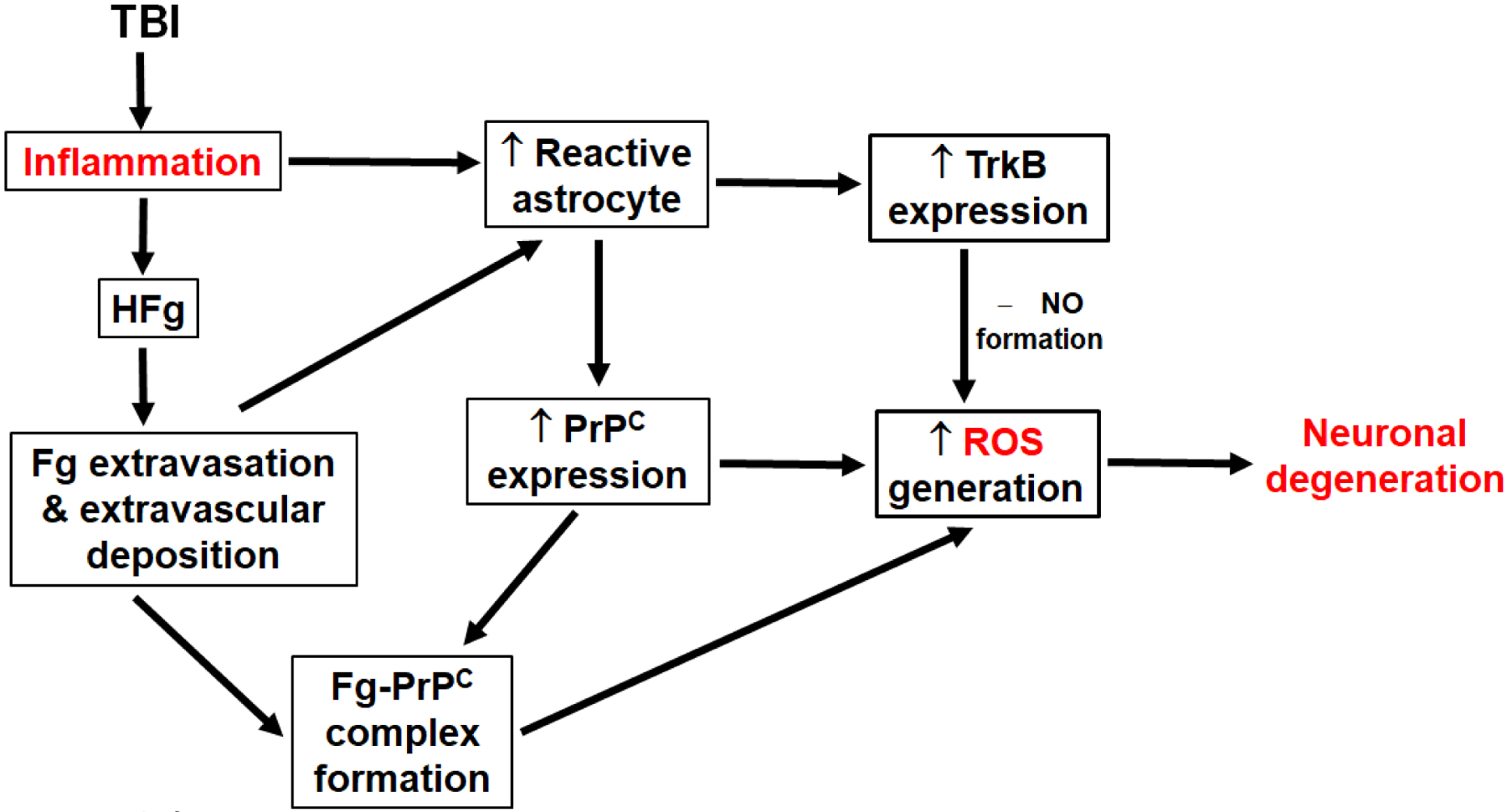
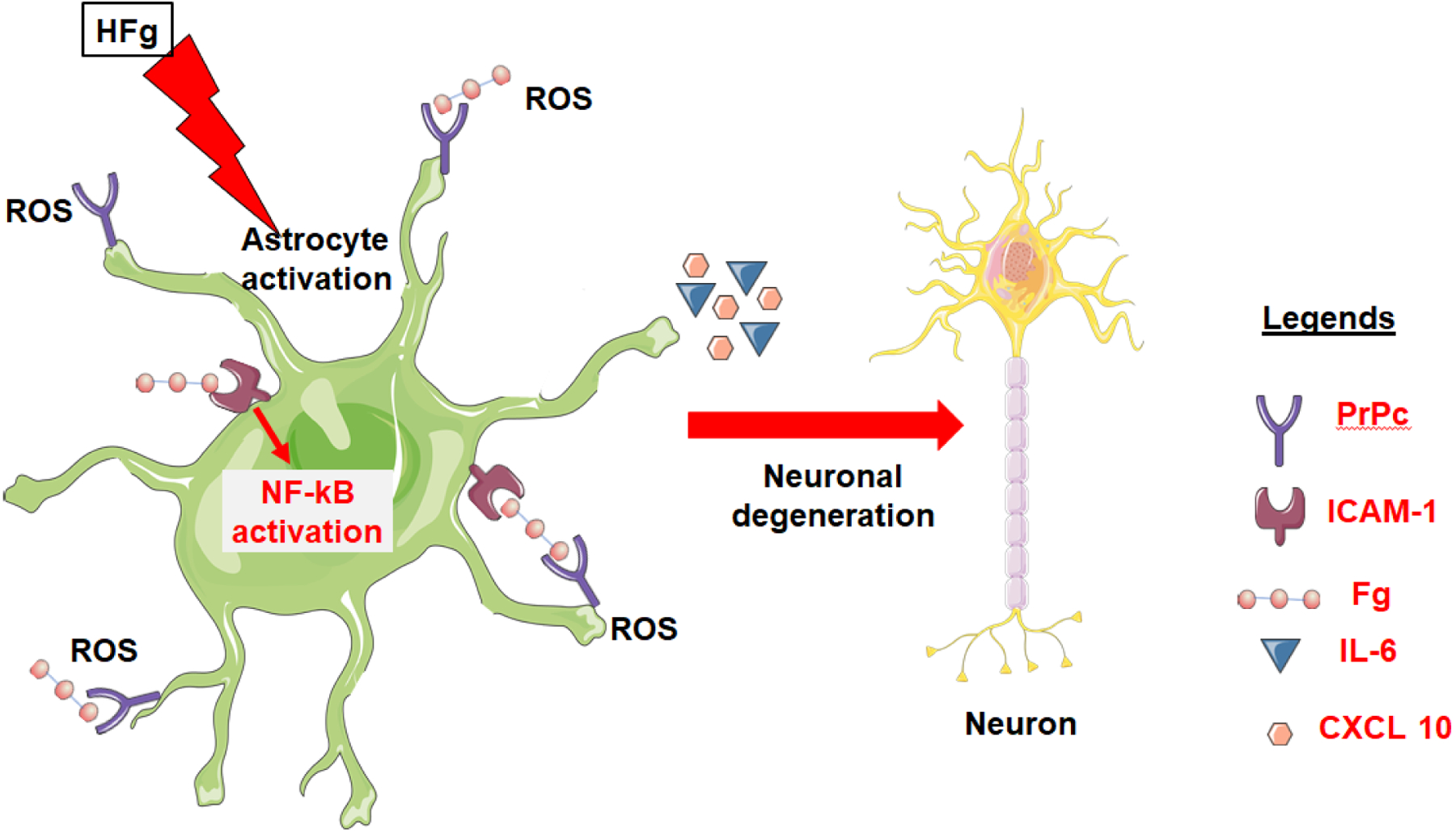
Many neurodegenerative diseases such as Alzheimer's disease (AD), multiple sclerosis, and traumatic brain injury (TBI) are associated with systemic inflammation. Inflammation itself results in increased blood content of fibrinogen (Fg), called hyperfibrinogenemia (HFg). Fg is not only considered an acute phase protein and a marker of inflammation, but has been shown that it can cause inflammatory responses. Fibrin deposits have been associated with memory reduction in neuroinflammatory diseases such as AD and TBI. Reduction in short-term memory has been seen during the most common form of TBI, mild-to-moderate TBI. Fibrin deposits have been found in brains of patients with mild-to-moderate TBI. The vast majority of the literature emphasizes the role of fibrin-activated microglia as the mediator in the neuroinflammation pathway. However, the recent discovery that astrocytes, which constitute approximately 30% of the cells in the mammalian central nervous system, manifest different reactive states warrants further investigations in the causative role of HFg in astrocyte-mediated neuroinflammation. Our previous study showed that Fg deposited in the vasculo-astrocyte interface-activated astrocytes. However, little is known of how Fg directly affects astrocytes and neurons. In this review, we summarize studies that show the effect of Fg on different types of cells in the vasculo-neuronal unit. We will also discuss the possible mechanism of HFg-induced neuroinflammation during TBI.
许多神经退行性疾病,如阿尔茨海默病(AD)、多发性硬化症和创伤性脑损伤(TBI),都与全身炎症有关。炎症本身会导致纤维蛋白原(Fg)的血液含量增加,称为高纤维蛋白血症(HFg)。Fg 不仅被认为是一种急性期蛋白和炎症标志物,而且已经表明它可以引起炎症反应。纤维蛋白沉积物与 AD 和 TBI 等神经炎症性疾病的记忆减少有关。在最常见的 TBI 形式——轻度至中度 TBI 中,已经观察到短期记忆的减少。在轻度至中度 TBI 患者的大脑中发现了纤维蛋白沉积物。绝大多数文献强调了纤维蛋白激活的小胶质细胞作为神经炎症途径中介的作用。然而,最近的发现表明,星形胶质细胞构成了哺乳动物中枢神经系统中约 30%的细胞,表现出不同的反应状态,这使得进一步研究 HFg 在星形胶质细胞介导的神经炎症中的因果作用变得更加重要。我们之前的研究表明,沉积在血管-星形胶质细胞界面的 Fg 激活了星形胶质细胞。然而,人们对 Fg 如何直接影响星形胶质细胞和神经元知之甚少。在这篇综述中,我们总结了表明 Fg 对血管-神经元单元中不同类型细胞的影响的研究。我们还将讨论 TBI 期间 HFg 诱导的神经炎症的可能机制。