Cui Tie Jun, Li Lianlin, Liu Shuo, Ma Qian, Zhang Lei, Wan Xiang, Jiang Wei Xiang, Cheng Qiang
State Key Laboratory of Millimeter Waves, Southeast University, Nanjing 210096, China.
State Key Laboratory of Advanced Optical Communication Systems and Networks, Department of Electronics, Peking University, Beijing 100871, China.
iScience. 2020 Aug 21;23(8):101403. doi: 10.1016/j.isci.2020.101403. Epub 2020 Jul 23.
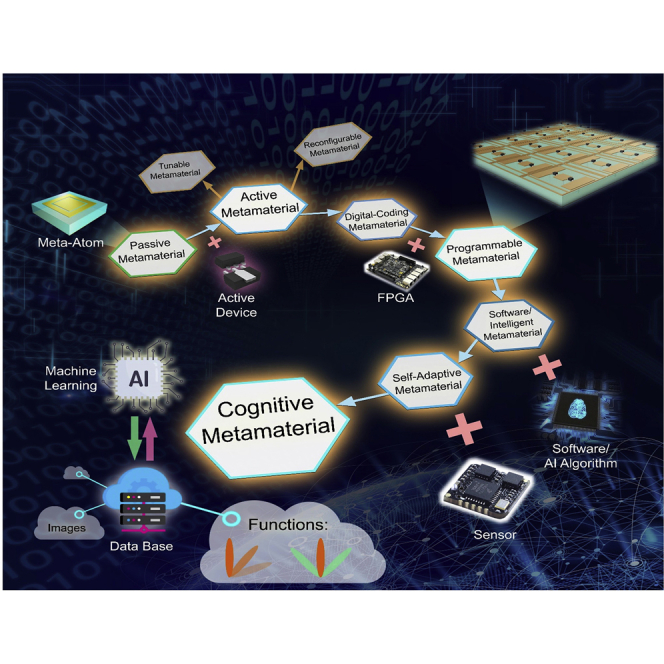
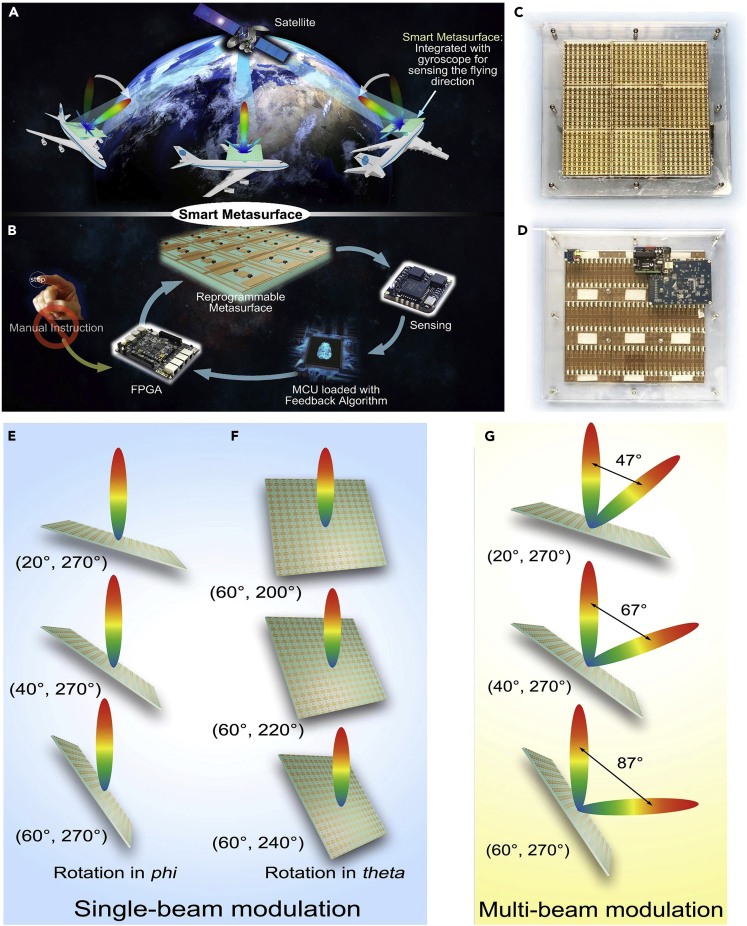
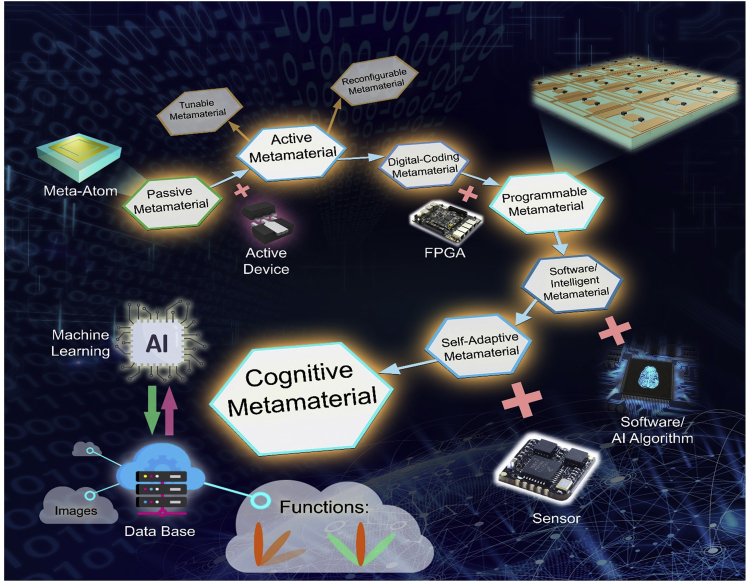
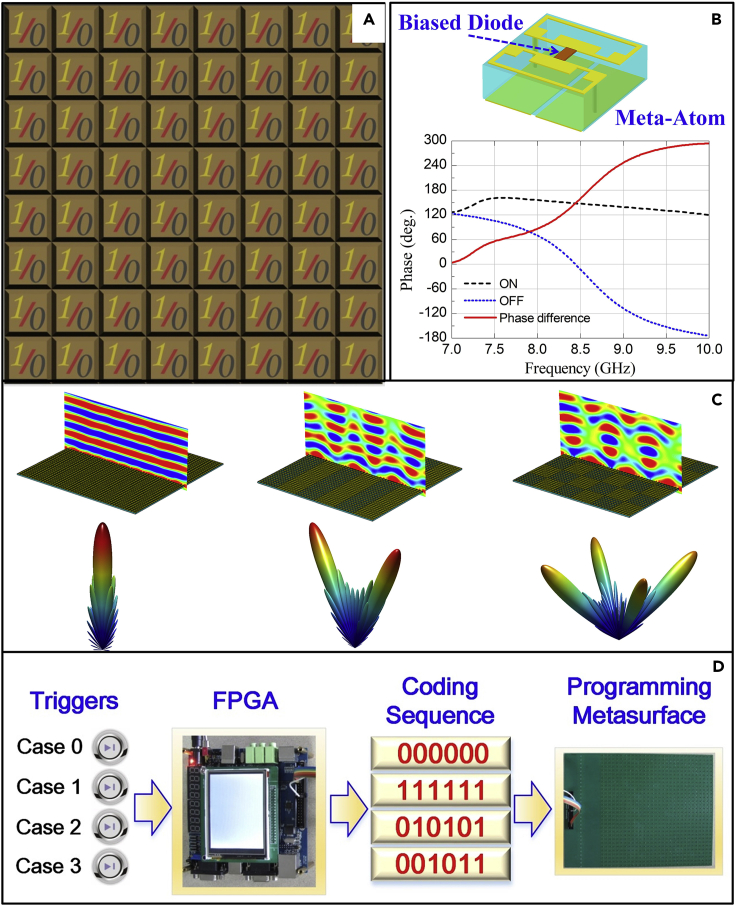
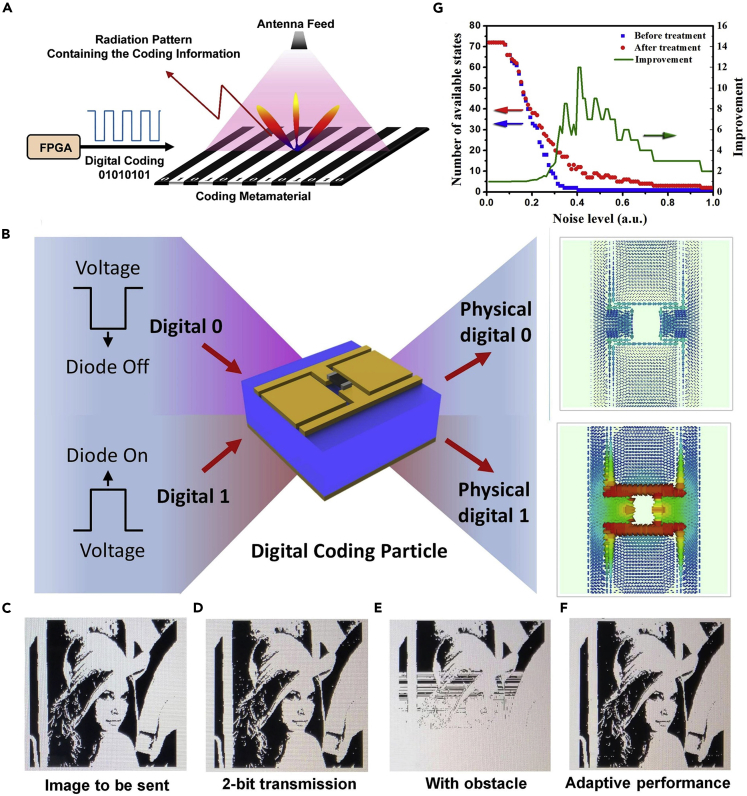
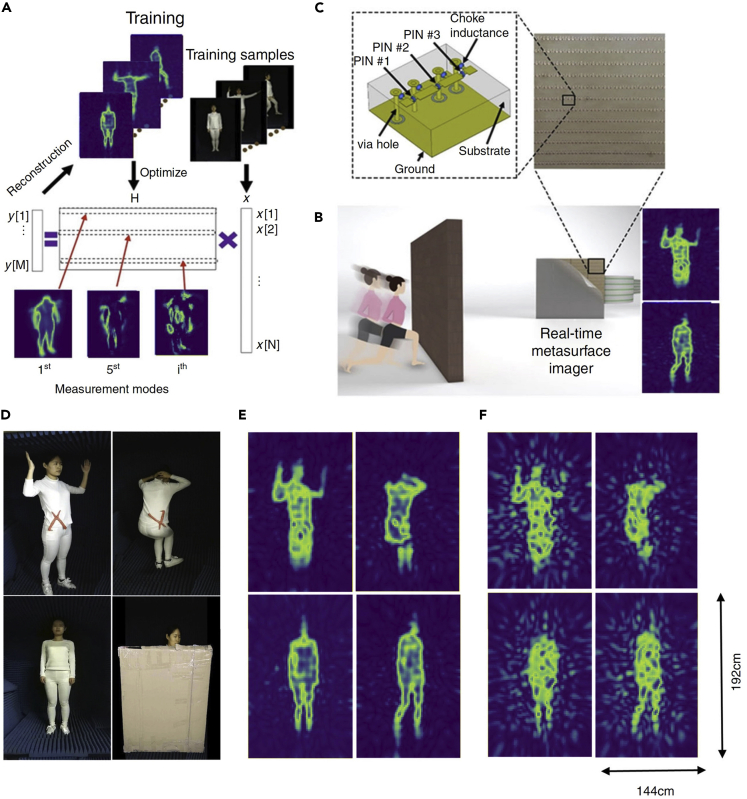
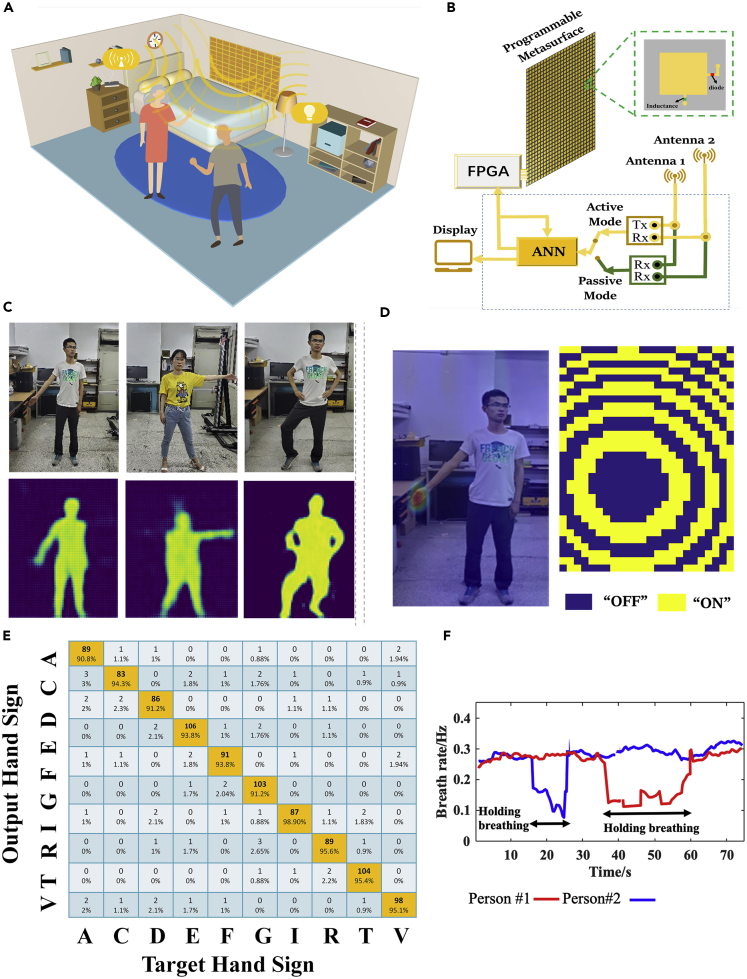
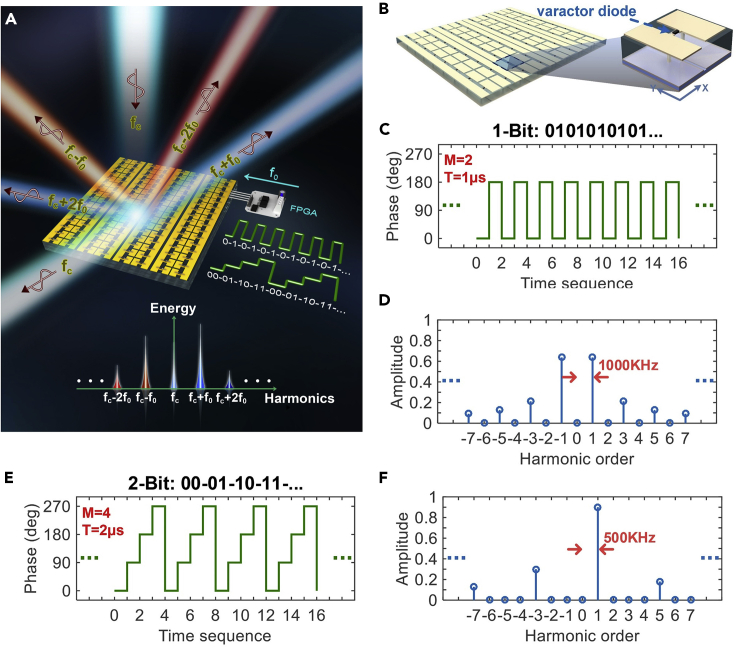
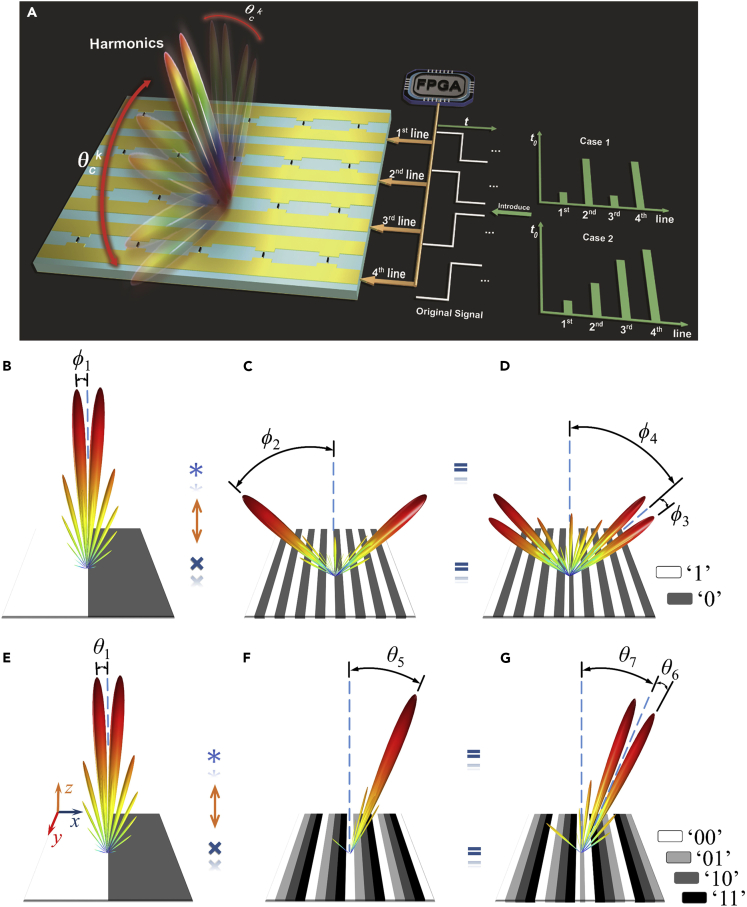
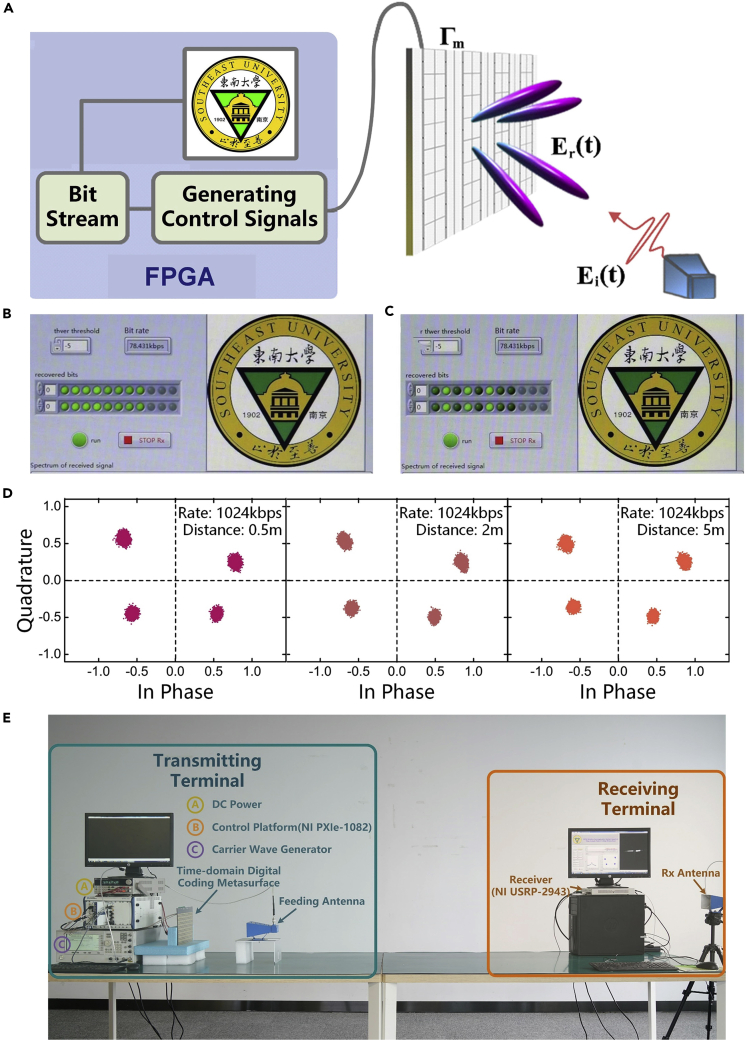
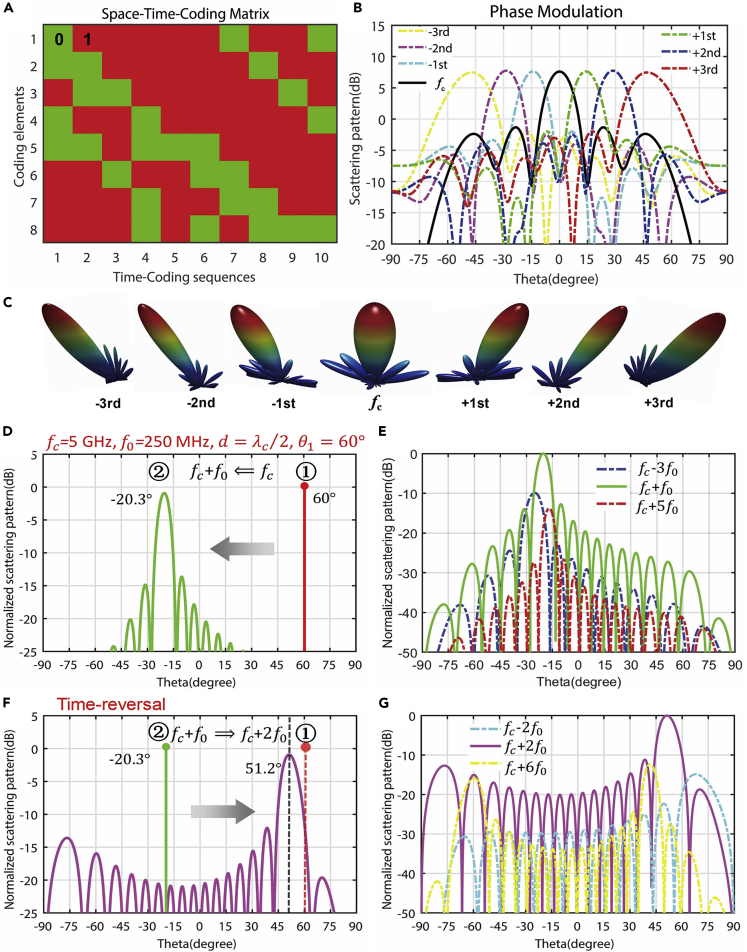
Metamaterials have great capabilities and flexibilities in controlling electromagnetic (EM) waves because their subwavelength meta-atoms can be designed and tailored in desired ways. However, once the structure-only metamaterials (i.e., passive metamaterials) are fabricated, their functions will be fixed. To control the EM waves dynamically, active devices are integrated into the meta-atoms, yielding active metamaterials. Traditionally, the active metamaterials include tunable metamaterials and reconfigurable metamaterials, which have either small-range tunability or a few numbers of reconfigurability. Recently, a special kind of active metamaterials, digital coding and programmable metamaterials, have been presented, which can realize a large number of distinct functionalities and switch them in real time with the aid of field programmable gate array (FPGA). More importantly, the digital coding representations of metamaterials make it possible to bridge the digital world and physical world using the metamaterial platform and make the metamaterials process digital information directly, resulting in information metamaterials. In this review article, we firstly introduce the evolution of metamaterials and then present the concepts and basic principles of digital coding metamaterials and information metamaterials. With more details, we discuss a series of information metamaterial systems, including the programmable metamaterial systems, software metamaterial systems, intelligent metamaterial systems, and space-time-coding metamaterial systems. Finally, we introduce the current progress and predict the future trends of information metamaterials.
超材料在控制电磁波方面具有很强的能力和灵活性,因为其亚波长超原子可以按照预期方式进行设计和定制。然而,一旦仅由结构组成的超材料(即无源超材料)被制造出来,其功能就会固定下来。为了动态控制电磁波,需将有源器件集成到超原子中,从而产生有源超材料。传统上,有源超材料包括可调谐超材料和可重构超材料,它们要么具有小范围的可调谐性,要么具有少量的可重构性。最近,一种特殊的有源超材料,即数字编码和可编程超材料被提出,它借助现场可编程门阵列(FPGA)能够实现大量不同的功能并实时切换这些功能。更重要的是,超材料的数字编码表示使得利用超材料平台连接数字世界和物理世界成为可能,并使超材料能够直接处理数字信息,从而产生信息超材料。在这篇综述文章中,我们首先介绍超材料的发展历程,然后阐述数字编码超材料和信息超材料的概念及基本原理。更详细地,我们讨论一系列信息超材料系统,包括可编程超材料系统、软件超材料系统、智能超材料系统和时空编码超材料系统。最后,我们介绍信息超材料的当前进展并预测其未来趋势。