Estación Experimental de Zonas Áridas (EEZA-CSIC), Almería, Spain.
Research Unit Modeling Nature, Universidad de Granada, Granada, Spain.
Nat Commun. 2020 Aug 11;11(1):4019. doi: 10.1038/s41467-020-17875-1.
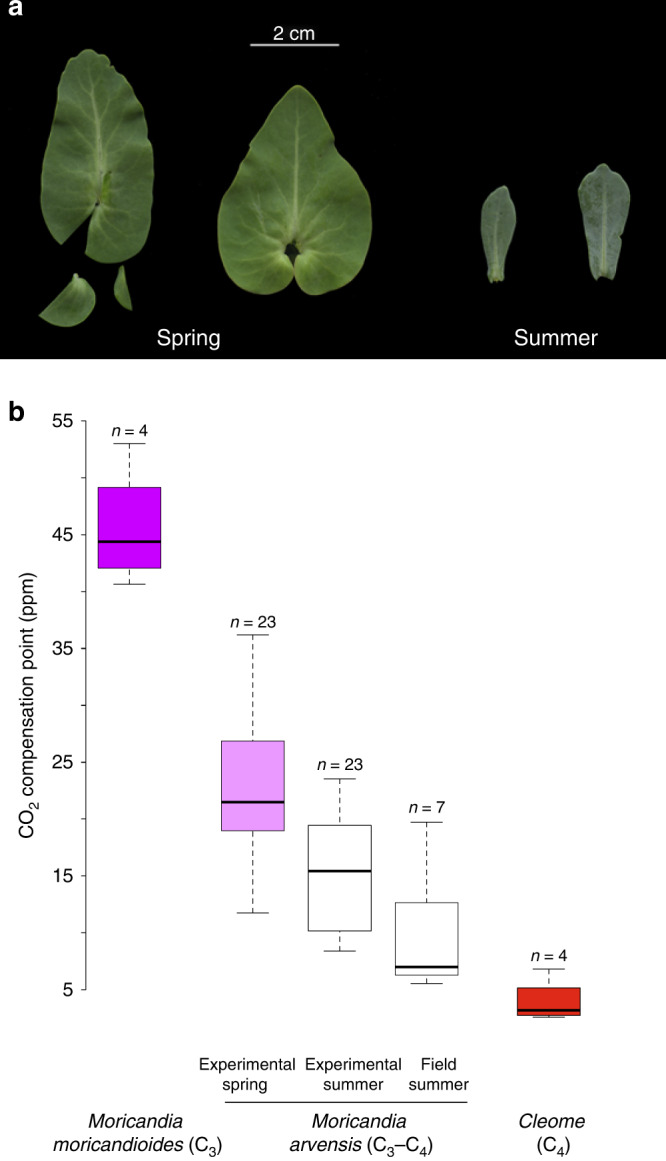
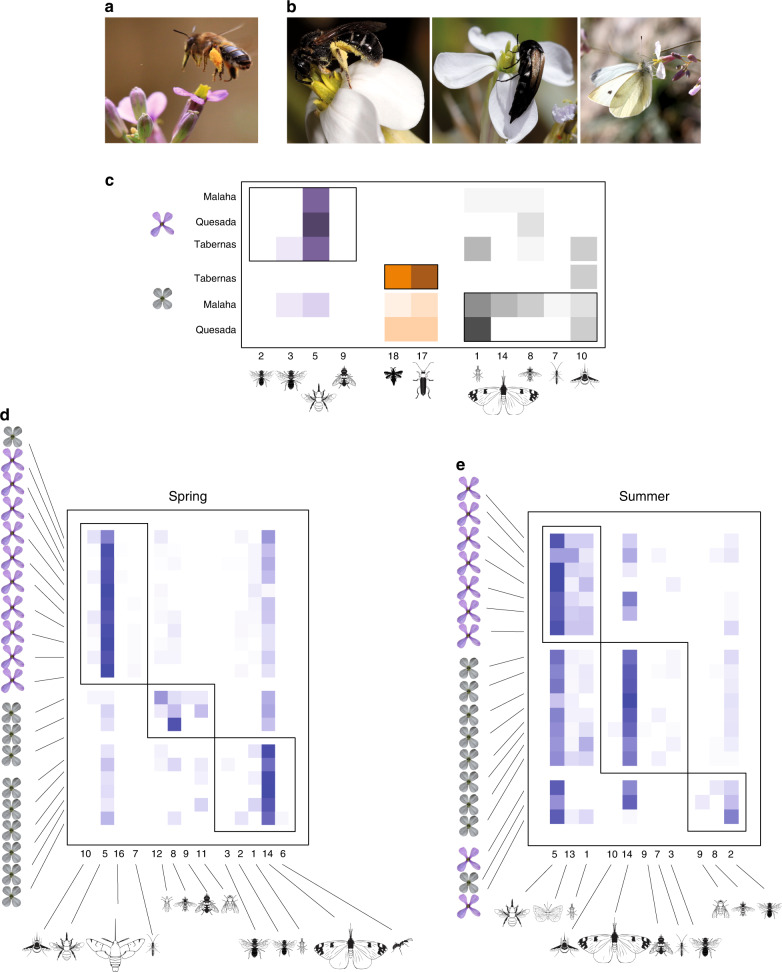
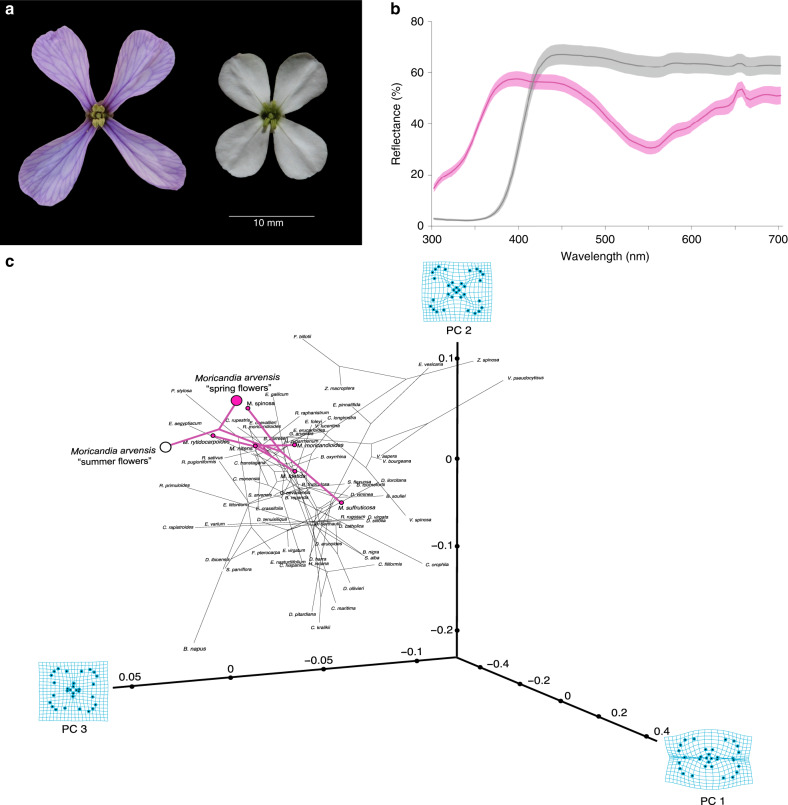
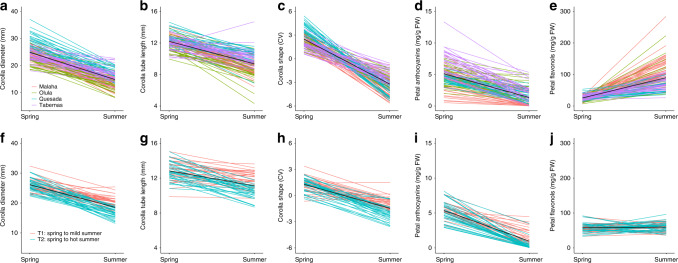
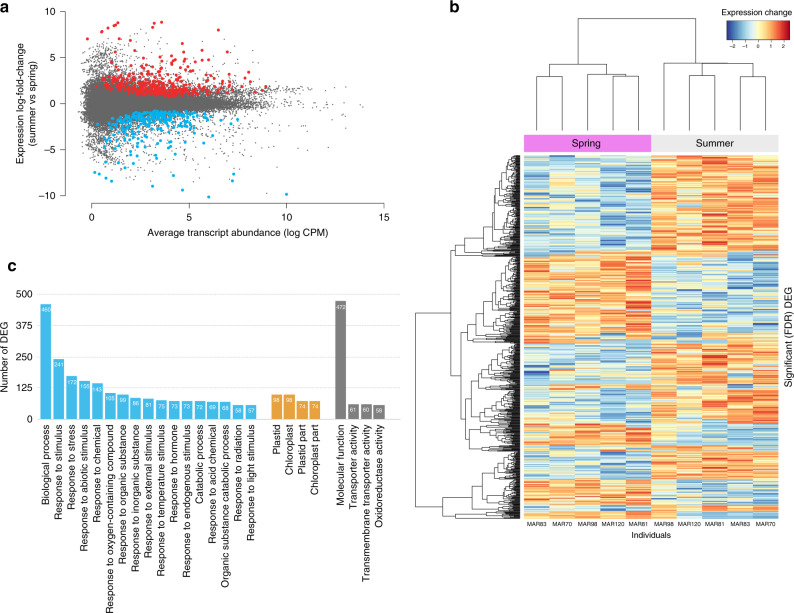
Phenotypic plasticity, the ability of a genotype of producing different phenotypes when exposed to different environments, may impact ecological interactions. We study here how within-individual plasticity in Moricandia arvensis flowers modifies its pollination niche. During spring, this plant produces large, cross-shaped, UV-reflecting lilac flowers attracting mostly long-tongued large bees. However, unlike most co-occurring species, M. arvensis keeps flowering during the hot, dry summer due to its plasticity in key vegetative traits. Changes in temperature and photoperiod in summer trigger changes in gene expression and the production of small, rounded, UV-absorbing white flowers that attract a different assemblage of generalist pollinators. This shift in pollination niche potentially allows successful reproduction in harsh conditions, facilitating M. arvensis to face anthropogenic perturbations and climate change.
表型可塑性,即基因型在暴露于不同环境时产生不同表型的能力,可能会影响生态相互作用。我们在这里研究个体内的可塑性如何改变 Moricandia arvensis 花的授粉生态位。在春季,这种植物会开出大的、十字形的、紫外线反射的淡紫色花朵,主要吸引长舌的大型蜜蜂。然而,与大多数共存的物种不同,由于其关键营养性状的可塑性,M. arvensis 在炎热干燥的夏季仍会开花。夏季温度和光照周期的变化会引发基因表达的变化,并产生吸引不同组合的一般性传粉者的小而圆的、紫外线吸收的白色花朵。这种授粉生态位的转变可能使植物在恶劣条件下成功繁殖,从而使 M. arvensis 能够应对人为干扰和气候变化。