Maharajgunj Medical Campus, Institute of Medicine, Kathmandu, Nepal.
Department of Neurology, Tribhuvan University Teaching Hospital, Kathmandu, Nepal.
Brain Behav. 2020 Oct;10(10):e01793. doi: 10.1002/brb3.1793. Epub 2020 Aug 12.
We aim to review the literature to collate and describe features of encephalitides arising from autoantibodies against leucine-rich glioma-inactivated 1 (LGI1), gamma aminobutyric acid receptor (GABABR), and contactin-associated protein-like 2 (CASPR2) in Asian populations and compare them with findings of Western studies.
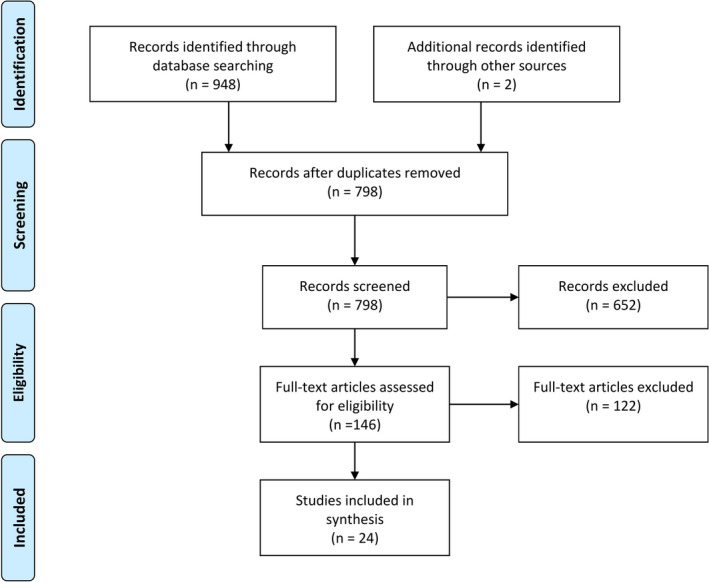
Peer-reviewed articles published till 24 May 2020 were searched, and original, full-text studies from Asia with serum/CSF antibody-based diagnosis and at least 2 patients were selected. Twenty-four studies with 263 patients (139 anti-LGI1, 114 anti-GAGABR, and 10 anti-CASPR2) were included. Data were pooled to produce descriptive information on demographics, clinical characteristics, diagnostics, treatments, and outcome.
The mean age was 54.2 (anti-LGI1), 55.2 (anti-GABABR), and 47.7 years (anti-CASPR2), with an overall male predominance of 62.0%. Commonest clinical features across all types were seizures (87.5%), memory deficits (80.7%), psychiatric disturbances (75.9%), and altered consciousness (52.9%). Four anti-LGI1, 40 anti-GABABR, and 1 anti-CASPR2 patients had tumors. CSF, MRI, and EEG were abnormal in 33.3%, 54.1%, and 75% patients in anti-LGI1; 60.0%, 49.6%, and 85.7% in anti-GABABR; and 50%, 44.4%, and 100% in anti-CASPR2 patients, respectively. 95.6% patients received first-line therapy alone (steroids/IVIG/Plasma therapy), and 4.4% received second-line therapy (rituximab/cyclophosphamide). 91.7%, 63.6%, and 70% of patients had favorable outcomes (modified Rankin Score 0-2) with mortality rates at 2.5%, 23.2%, and 0% in the three types, respectively.
Our findings suggest that these disorders present in Asian patients at a relatively young age often with features of seizures, memory deficits, and psychiatric disturbances and usually demonstrate a favorable clinical outcome.
我们旨在回顾文献,整理并描述在亚洲人群中由抗亮氨酸丰富胶质瘤失活 1(LGI1)、γ-氨基丁酸受体(GABABR)和接触蛋白相关蛋白 2(CASPR2)自身抗体引起的脑炎的特征,并与西方研究的结果进行比较。
检索截止到 2020 年 5 月 24 日的同行评审文章,并选择来自亚洲的、基于血清/CSF 抗体诊断且至少有 2 名患者的原始全文研究。共纳入 24 项研究,包含 263 名患者(139 名抗 LGI1、114 名抗 GABABR 和 10 名抗 CASPR2)。汇总数据以提供人口统计学、临床特征、诊断、治疗和结局的描述性信息。
LGI1、GABABR 和 CASPR2 患者的平均年龄分别为 54.2 岁、55.2 岁和 47.7 岁,总体上男性占 62.0%。所有类型中最常见的临床特征是癫痫发作(87.5%)、记忆障碍(80.7%)、精神障碍(75.9%)和意识改变(52.9%)。4 名抗 LGI1、40 名抗 GABABR 和 1 名抗 CASPR2 患者存在肿瘤。LGI1 患者中,CSF、MRI 和 EEG 异常分别占 33.3%、54.1%和 75%;GABABR 患者分别占 60.0%、49.6%和 85.7%;抗 CASPR2 患者分别占 50%、44.4%和 100%。95.6%的患者接受一线单独治疗(类固醇/IVIG/血浆治疗),4.4%的患者接受二线治疗(利妥昔单抗/环磷酰胺)。三种类型中,91.7%、63.6%和 70%的患者预后良好(改良 Rankin 评分 0-2),死亡率分别为 2.5%、23.2%和 0%。
我们的研究结果表明,这些疾病在亚洲患者中发病年龄相对较轻,常伴有癫痫发作、记忆障碍和精神障碍等特征,通常具有良好的临床结局。