Walters William A, Reyes Faviola, Soto Giselle M, Reynolds Nathanael D, Fraser Jamie A, Aviles Ricardo, Tribble David R, Irvin Adam P, Kelley-Loughnane Nancy, Gutierrez Ramiro L, Riddle Mark S, Ley Ruth E, Goodson Michael S, Simons Mark P
Max Planck Institute for Developmental Biology, Tuebingen, Germany.
Asociacion Benefica PRISMA, San Miguel, Peru.
PLoS One. 2020 Aug 12;15(8):e0236703. doi: 10.1371/journal.pone.0236703. eCollection 2020.
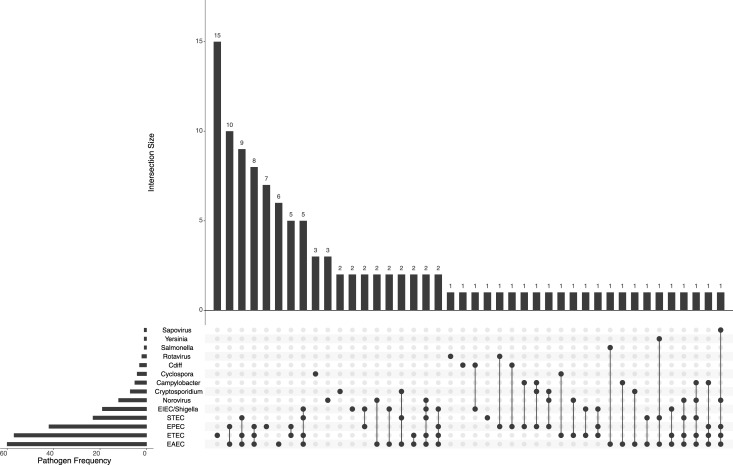
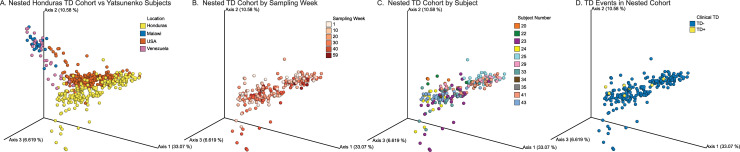
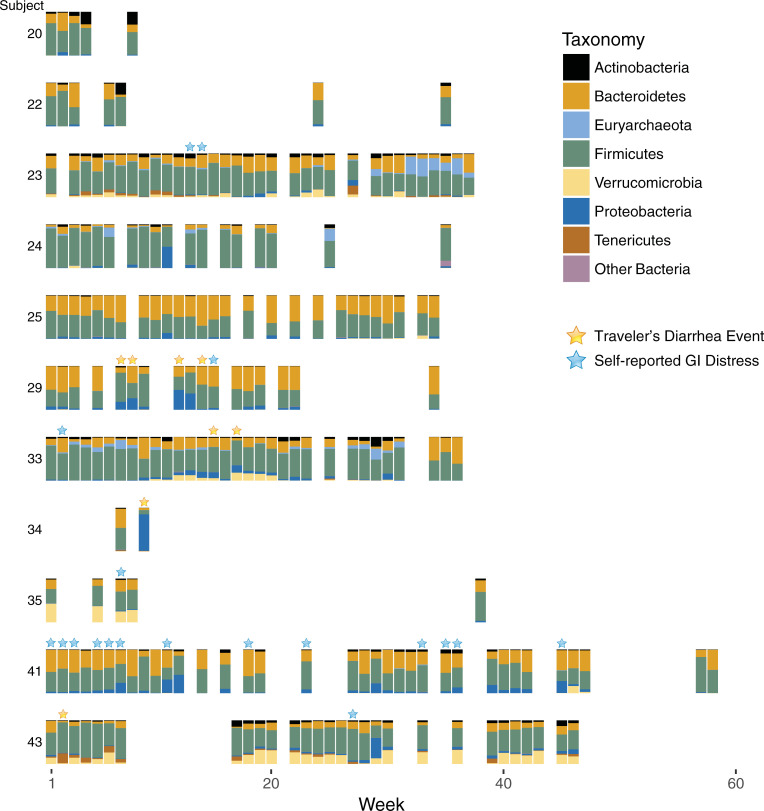
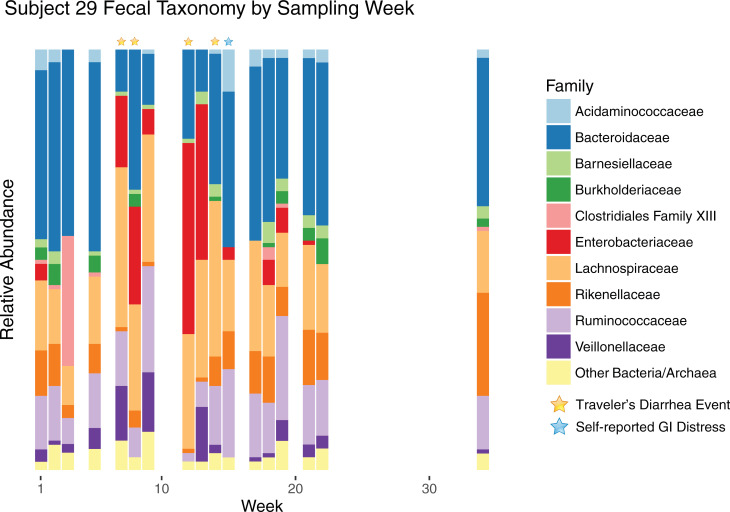
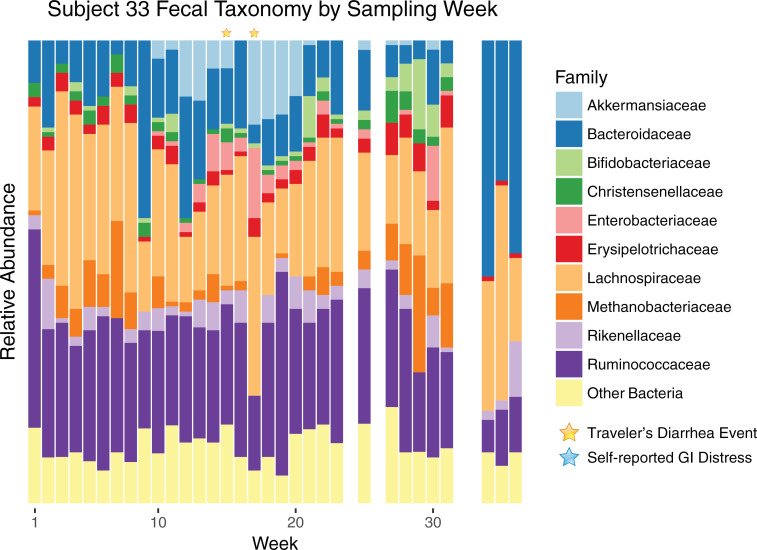
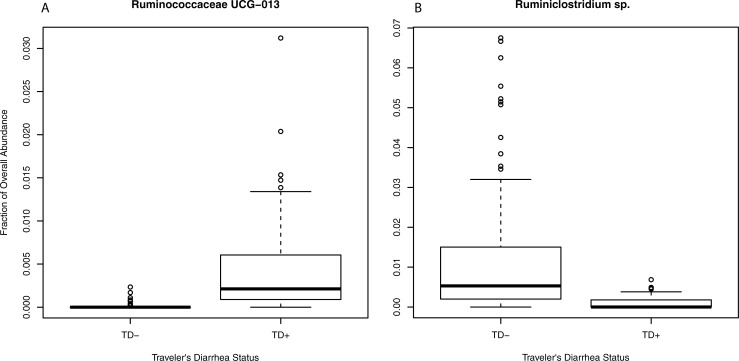
Travelers' diarrhea (TD) is the most prevalent illness encountered by deployed military personnel and has a major impact on military operations, from reduced job performance to lost duty days. Frequently, the etiology of TD is unknown and, with underreporting of cases, it is difficult to accurately assess its impact. An increasing number of ailments include an altered or aberrant gut microbiome. To better understand the relationships between long-term deployments and TD, we studied military personnel during two nine-month deployment cycles in 2015-2016 to Honduras. To collect data on the prevalence of diarrhea and impact on duty, a total of 1173 personnel completed questionnaires at the end of their deployment. 56.7% reported reduced performance and 21.1% reported lost duty days. We conducted a passive surveillance study of all cases of diarrhea reporting to the medical unit with 152 total cases and a similar pattern of etiology. Enteroaggregative E. coli (EAEC, 52/152), enterotoxigenic E. coli (ETEC, 50/152), and enteropathogenic E. coli (EPEC, 35/152) were the most prevalent pathogens detected. An active longitudinal surveillance of 67 subjects also identified diarrheagenic E. coli as the primary etiology (7/16 EPEC, 7/16 EAEC, and 6/16 ETEC). Eleven subjects were recruited into a nested longitudinal substudy to examine gut microbiome changes associated with deployment. A 16S rRNA amplicon survey of fecal samples showed differentially abundant baseline taxa for subjects who contracted TD versus those who did not, as well as detection of taxa positively associated with self-reported gastrointestinal distress. Disrupted microbiota was also qualitatively observable for weeks preceding and following the incidents of TD. These findings illustrate the complex etiology of diarrhea amongst military personnel in deployed settings and its impacts on job performance. Potential factors of resistance or susceptibility can provide a foundation for future clinical trials to evaluate prevention and treatment strategies.
旅行者腹泻(TD)是部署的军事人员最常遇到的疾病,对军事行动有重大影响,从工作表现下降到缺勤天数增加。通常,TD的病因不明,而且由于病例报告不足,很难准确评估其影响。越来越多的疾病包括肠道微生物群的改变或异常。为了更好地了解长期部署与TD之间的关系,我们在2015 - 2016年对部署到洪都拉斯的军事人员进行了两个为期九个月的部署周期研究。为了收集腹泻患病率和对职责影响的数据,共有1173名人员在部署结束时完成了问卷调查。56.7%的人报告工作表现下降,21.1%的人报告有缺勤天数。我们对向医疗单位报告的所有腹泻病例进行了被动监测研究,共有152例病例,病因模式相似。检测到的最常见病原体是聚集性大肠杆菌(EAEC,52/152)、产肠毒素大肠杆菌(ETEC,50/152)和致病性大肠杆菌(EPEC,35/152)。对67名受试者进行的主动纵向监测也确定致泻性大肠杆菌为主要病因(EPEC为7/16,EAEC为7/16,ETEC为6/16)。11名受试者被纳入嵌套纵向子研究,以检查与部署相关的肠道微生物群变化。对粪便样本的16S rRNA扩增子调查显示,患TD的受试者与未患TD的受试者相比,基线分类群丰度存在差异,同时还检测到与自我报告的胃肠道不适呈正相关的分类群。在TD事件发生之前和之后的几周内,微生物群的破坏在定性上也是可观察到的。这些发现说明了部署环境中军事人员腹泻的复杂病因及其对工作表现的影响。抗性或易感性的潜在因素可为未来评估预防和治疗策略的临床试验提供基础。