• 文献检索
  • 文档翻译
  • 深度研究
  • 学术资讯
  • Suppr Zotero 插件Zotero 插件
  • 邀请有礼
  • 套餐&价格
  • 历史记录
应用&插件
Suppr Zotero 插件Zotero 插件浏览器插件Mac 客户端Windows 客户端微信小程序
定价
高级版会员购买积分包购买API积分包
服务
文献检索文档翻译深度研究API 文档MCP 服务
关于我们
关于 Suppr公司介绍联系我们用户协议隐私条款
关注我们

Suppr 超能文献

核心技术专利:CN118964589B侵权必究
粤ICP备2023148730 号-1Suppr @ 2026

文献检索

告别复杂PubMed语法,用中文像聊天一样搜索,搜遍4000万医学文献。AI智能推荐,让科研检索更轻松。

立即免费搜索

文件翻译

保留排版,准确专业,支持PDF/Word/PPT等文件格式,支持 12+语言互译。

免费翻译文档

深度研究

AI帮你快速写综述,25分钟生成高质量综述,智能提取关键信息,辅助科研写作。

立即免费体验

社交媒体文本挖掘框架在药物滥用中的应用:一项发展与验证研究——以阿片危机案例分析为例。

Social Media Text Mining Framework for Drug Abuse: Development and Validation Study With an Opioid Crisis Case Analysis.

机构信息

Supply Chain and Information Management Group, D'Amore-McKim School of Business, Northeastern University, Boston, MA, United States.

College of Business and Information Systems, Dakota State University, Madiosn, SD, United States.

出版信息

J Med Internet Res. 2020 Aug 13;22(8):e18350. doi: 10.2196/18350.

DOI:10.2196/18350
PMID:32788147
原文链接:https://pmc.ncbi.nlm.nih.gov/articles/PMC7446758/
Abstract

BACKGROUND

Social media are considered promising and viable sources of data for gaining insights into various disease conditions and patients' attitudes, behaviors, and medications. They can be used to recognize communication and behavioral themes of problematic use of prescription drugs. However, mining and analyzing social media data have challenges and limitations related to topic deduction and data quality. As a result, we need a structured approach to analyze social media content related to drug abuse in a manner that can mitigate the challenges and limitations surrounding the use of such data.

OBJECTIVE

This study aimed to develop and evaluate a framework for mining and analyzing social media content related to drug abuse. The framework is designed to mitigate challenges and limitations related to topic deduction and data quality in social media data analytics for drug abuse.

METHODS

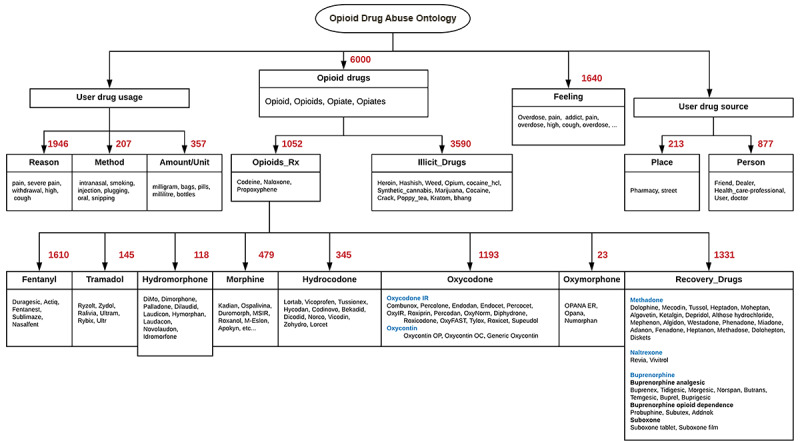
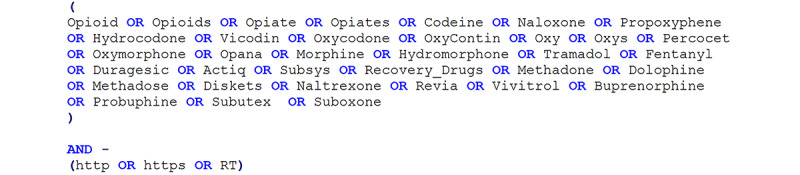
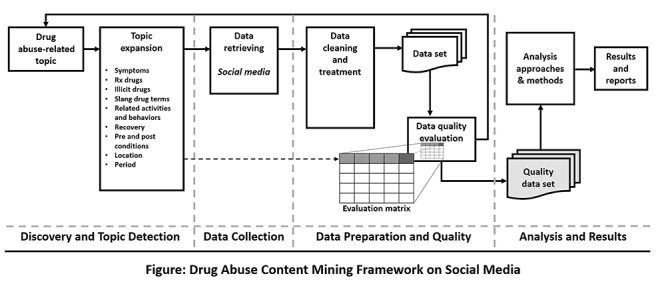
The proposed framework started with defining different terms related to the keywords, categories, and characteristics of the topic of interest. We then used the Crimson Hexagon platform to collect data based on a search query informed by a drug abuse ontology developed using the identified terms. We subsequently preprocessed the data and examined the quality using an evaluation matrix. Finally, a suitable data analysis approach could be used to analyze the collected data.

RESULTS

The framework was evaluated using the opioid epidemic as a drug abuse case analysis. We demonstrated the applicability of the proposed framework to identify public concerns toward the opioid epidemic and the most discussed topics on social media related to opioids. The results from the case analysis showed that the framework could improve the discovery and identification of topics in social media domains characterized by a plethora of highly diverse terms and lack of a commonly available dictionary or language by the community, such as in the case of opioid and drug abuse.

CONCLUSIONS

The proposed framework addressed the challenges related to topic detection and data quality. We demonstrated the applicability of the proposed framework to identify the common concerns toward the opioid epidemic and the most discussed topics on social media related to opioids.

摘要

背景

社交媒体被认为是获取各种疾病状况和患者态度、行为和用药信息的有前途且可行的数据源。它们可用于识别处方药物滥用的交流和行为主题。然而,挖掘和分析社交媒体数据在主题推导和数据质量方面存在挑战和限制。因此,我们需要一种结构化的方法来分析与药物滥用相关的社交媒体内容,以减轻围绕使用此类数据的挑战和限制。

目的

本研究旨在开发和评估一种挖掘和分析与药物滥用相关的社交媒体内容的框架。该框架旨在减轻与社交媒体数据分析中与主题推导和数据质量相关的挑战和限制,以用于药物滥用。

方法

所提出的框架首先定义了与关键词、类别和感兴趣主题的特征相关的不同术语。然后,我们使用 Crimson Hexagon 平台根据使用已识别术语开发的药物滥用本体论所告知的搜索查询来收集数据。随后,我们预处理了数据并使用评估矩阵检查了数据质量。最后,可以使用合适的数据分析方法来分析收集的数据。

结果

该框架使用药物滥用案例分析(如阿片类药物流行)进行了评估。我们证明了该框架能够识别公众对阿片类药物流行的关注以及与阿片类药物相关的社交媒体上讨论最多的话题。案例分析的结果表明,该框架可以改善对社交媒体领域中存在大量高度多样化术语且社区缺乏常用字典或语言的主题的发现和识别,如阿片类药物和药物滥用的情况。

结论

所提出的框架解决了主题检测和数据质量方面的挑战。我们证明了该框架能够识别公众对阿片类药物流行的关注以及与阿片类药物相关的社交媒体上讨论最多的话题。
https://cdn.ncbi.nlm.nih.gov/pmc/blobs/c73c/7446758/ca6f506d5c56/jmir_v22i8e18350_fig9.jpg
https://cdn.ncbi.nlm.nih.gov/pmc/blobs/c73c/7446758/78d929b4e5bc/jmir_v22i8e18350_fig1.jpg
https://cdn.ncbi.nlm.nih.gov/pmc/blobs/c73c/7446758/addcd0e0221b/jmir_v22i8e18350_fig2.jpg
https://cdn.ncbi.nlm.nih.gov/pmc/blobs/c73c/7446758/1e4af492caad/jmir_v22i8e18350_fig3.jpg
https://cdn.ncbi.nlm.nih.gov/pmc/blobs/c73c/7446758/753fd02179c8/jmir_v22i8e18350_fig4.jpg
https://cdn.ncbi.nlm.nih.gov/pmc/blobs/c73c/7446758/f8af6fc550af/jmir_v22i8e18350_fig5.jpg
https://cdn.ncbi.nlm.nih.gov/pmc/blobs/c73c/7446758/dfed9fb73d0d/jmir_v22i8e18350_fig6.jpg
https://cdn.ncbi.nlm.nih.gov/pmc/blobs/c73c/7446758/d764aa0320b2/jmir_v22i8e18350_fig7.jpg
https://cdn.ncbi.nlm.nih.gov/pmc/blobs/c73c/7446758/9671489c425d/jmir_v22i8e18350_fig8.jpg
https://cdn.ncbi.nlm.nih.gov/pmc/blobs/c73c/7446758/ca6f506d5c56/jmir_v22i8e18350_fig9.jpg
https://cdn.ncbi.nlm.nih.gov/pmc/blobs/c73c/7446758/78d929b4e5bc/jmir_v22i8e18350_fig1.jpg
https://cdn.ncbi.nlm.nih.gov/pmc/blobs/c73c/7446758/addcd0e0221b/jmir_v22i8e18350_fig2.jpg
https://cdn.ncbi.nlm.nih.gov/pmc/blobs/c73c/7446758/1e4af492caad/jmir_v22i8e18350_fig3.jpg
https://cdn.ncbi.nlm.nih.gov/pmc/blobs/c73c/7446758/753fd02179c8/jmir_v22i8e18350_fig4.jpg
https://cdn.ncbi.nlm.nih.gov/pmc/blobs/c73c/7446758/f8af6fc550af/jmir_v22i8e18350_fig5.jpg
https://cdn.ncbi.nlm.nih.gov/pmc/blobs/c73c/7446758/dfed9fb73d0d/jmir_v22i8e18350_fig6.jpg
https://cdn.ncbi.nlm.nih.gov/pmc/blobs/c73c/7446758/d764aa0320b2/jmir_v22i8e18350_fig7.jpg
https://cdn.ncbi.nlm.nih.gov/pmc/blobs/c73c/7446758/9671489c425d/jmir_v22i8e18350_fig8.jpg
https://cdn.ncbi.nlm.nih.gov/pmc/blobs/c73c/7446758/ca6f506d5c56/jmir_v22i8e18350_fig9.jpg

相似文献

1
Social Media Text Mining Framework for Drug Abuse: Development and Validation Study With an Opioid Crisis Case Analysis.社交媒体文本挖掘框架在药物滥用中的应用:一项发展与验证研究——以阿片危机案例分析为例。
J Med Internet Res. 2020 Aug 13;22(8):e18350. doi: 10.2196/18350.
2
Scaling Up Research on Drug Abuse and Addiction Through Social Media Big Data.通过社交媒体大数据扩大药物滥用和成瘾研究
J Med Internet Res. 2017 Oct 31;19(10):e353. doi: 10.2196/jmir.6426.
3
Reactions to the opioid epidemic: A text-mining analysis of tweets.阿片类药物泛滥的反应:对推特的文本挖掘分析。
J Addict Dis. 2021 Apr-Jun;39(2):183-188. doi: 10.1080/10550887.2020.1834812. Epub 2020 Oct 26.
4
Patterns of Routes of Administration and Drug Tampering for Nonmedical Opioid Consumption: Data Mining and Content Analysis of Reddit Discussions.非医疗阿片类药物消费的给药途径和药物篡改模式:Reddit 讨论的数据分析和内容分析。
J Med Internet Res. 2021 Jan 4;23(1):e21212. doi: 10.2196/21212.
5
PREDOSE: a semantic web platform for drug abuse epidemiology using social media.前置:一个利用社交媒体进行药物滥用流行病学研究的语义网平台。
J Biomed Inform. 2013 Dec;46(6):985-97. doi: 10.1016/j.jbi.2013.07.007. Epub 2013 Jul 25.
6
A text-mining analysis of the public's reactions to the opioid crisis.对公众对阿片类药物危机反应的文本挖掘分析。
Subst Abus. 2018;39(2):129-133. doi: 10.1080/08897077.2017.1356795. Epub 2017 Sep 1.
7
Using Twitter to Surveil the Opioid Epidemic in North Carolina: An Exploratory Study.利用 Twitter 监测北卡罗来纳州的阿片类药物流行:一项探索性研究。
JMIR Public Health Surveill. 2020 Jun 24;6(2):e17574. doi: 10.2196/17574.
8
Opportunities for Exploring and Reducing Prescription Drug Abuse Through Social Media.通过社交媒体探索和减少处方药滥用的机会。
J Addict Dis. 2015;34(2-3):178-84. doi: 10.1080/10550887.2015.1059712.
9
Drug Abuse Ontology to Harness Web-Based Data for Substance Use Epidemiology Research: Ontology Development Study.药物滥用本体论利用基于网络的数据进行物质使用流行病学研究:本体论开发研究。
JMIR Public Health Surveill. 2022 Dec 23;8(12):e24938. doi: 10.2196/24938.
10
Top Concerns of Tweeters During the COVID-19 Pandemic: Infoveillance Study.新冠疫情期间推特用户的主要担忧:信息监测研究
J Med Internet Res. 2020 Apr 21;22(4):e19016. doi: 10.2196/19016.

引用本文的文献

1
Pharmacovigilance in the digital age: gaining insight from social media data.数字时代的药物警戒:从社交媒体数据中获取见解
Exp Biol Med (Maywood). 2025 May 27;250:10555. doi: 10.3389/ebm.2025.10555. eCollection 2025.
2
Which social media platforms facilitate monitoring the opioid crisis?哪些社交媒体平台有助于监测阿片类药物危机?
PLOS Digit Health. 2025 Apr 28;4(4):e0000842. doi: 10.1371/journal.pdig.0000842. eCollection 2025 Apr.
3
Digital Epidemiology of Prescription Drug References on X (Formerly Twitter): Neural Network Topic Modeling and Sentiment Analysis.

本文引用的文献

1
Global trends, local harms: availability of fentanyl-type drugs on the dark web and accidental overdoses in Ohio.全球趋势,地方危害:暗网上芬太尼类药物的可得性与俄亥俄州的意外过量用药情况
Comput Math Organ Theory. 2019 Mar;25(1):48-59. doi: 10.1007/s10588-018-09283-0. Epub 2018 Oct 25.
2
A Collaborative Framework Based for Semantic Patients-Behavior Analysis and Highlight Topics Discovery of Alcoholic Beverages in Online Healthcare Forums.基于协作框架的语义患者行为分析及在线医疗保健论坛中酒类话题发现
J Med Syst. 2020 Apr 7;44(5):101. doi: 10.1007/s10916-020-01547-0.
3
Utility of social media and crowd-intelligence data for pharmacovigilance: a scoping review.
X(前身为 Twitter)上处方药引用的数字流行病学:神经网络主题建模和情感分析。
J Med Internet Res. 2024 Aug 23;26:e57885. doi: 10.2196/57885.
4
Examining the Gateway Hypothesis and Mapping Substance Use Pathways on Social Media: Machine Learning Approach.审视社交媒体上的通路假说并绘制物质使用途径:机器学习方法
JMIR Form Res. 2024 May 7;8:e54433. doi: 10.2196/54433.
5
Citizens' digital footprints to support health promotion at the local level-PUHTI study, Finland.利用公民数字足迹支持芬兰地方层面的健康促进——PUHTI研究
Eur J Public Health. 2024 Aug 1;34(4):676-681. doi: 10.1093/eurpub/ckae053.
6
GLP-1 Receptor Agonists and Related Mental Health Issues; Insights from a Range of Social Media Platforms Using a Mixed-Methods Approach.胰高血糖素样肽-1受体激动剂及相关心理健康问题:采用混合方法从一系列社交媒体平台获得的见解
Brain Sci. 2023 Oct 24;13(11):1503. doi: 10.3390/brainsci13111503.
7
The evolution of Big Data in neuroscience and neurology.神经科学与神经病学中大数据的发展
J Big Data. 2023;10(1):116. doi: 10.1186/s40537-023-00751-2. Epub 2023 Jul 10.
8
Exploring substance use disorder discussions in Native American communities: a retrospective Twitter infodemiology study.探索美国原住民社区中的物质使用障碍讨论:一项回顾性的推特信息流行病学研究。
Harm Reduct J. 2022 Dec 14;19(1):141. doi: 10.1186/s12954-022-00728-z.
9
Demystifying the Dark Web Opioid Trade: Content Analysis on Anonymous Market Listings and Forum Posts.揭开暗网阿片类药物交易的神秘面纱:对匿名市场列表和论坛帖子的内容分析
J Med Internet Res. 2021 Feb 17;23(2):e24486. doi: 10.2196/24486.
10
Social Media as a Research Tool (SMaaRT) for Risky Behavior Analytics: Methodological Review.社交媒体作为风险行为分析的研究工具(SMaaRT):方法学综述。
JMIR Public Health Surveill. 2020 Nov 30;6(4):e21660. doi: 10.2196/21660.
社交媒体和众包数据在药物警戒中的应用:范围综述。
BMC Med Inform Decis Mak. 2018 Jun 14;18(1):38. doi: 10.1186/s12911-018-0621-y.
4
Representations of Codeine Misuse on Instagram: Content Analysis.Instagram上可待因滥用的呈现:内容分析
JMIR Public Health Surveill. 2018 Mar 20;4(1):e22. doi: 10.2196/publichealth.8144.
5
Examining Thematic Similarity, Difference, and Membership in Three Online Mental Health Communities from Reddit: A Text Mining and Visualization Approach.审视来自Reddit的三个在线心理健康社区的主题相似性、差异性及成员关系:一种文本挖掘与可视化方法。
Comput Human Behav. 2018 Jan;78:98-112. doi: 10.1016/j.chb.2017.09.001. Epub 2017 Sep 6.
6
Scaling Up Research on Drug Abuse and Addiction Through Social Media Big Data.通过社交媒体大数据扩大药物滥用和成瘾研究
J Med Internet Res. 2017 Oct 31;19(10):e353. doi: 10.2196/jmir.6426.
7
What Patients Can Tell Us: Topic Analysis for Social Media on Breast Cancer.患者能告诉我们什么:乳腺癌社交媒体话题分析
JMIR Med Inform. 2017 Jul 31;5(3):e23. doi: 10.2196/medinform.7779.
8
A text-mining analysis of the public's reactions to the opioid crisis.对公众对阿片类药物危机反应的文本挖掘分析。
Subst Abus. 2018;39(2):129-133. doi: 10.1080/08897077.2017.1356795. Epub 2017 Sep 1.
9
Systematic review of surveillance by social media platforms for illicit drug use.社交媒体平台监测非法药物使用的系统评价。
J Public Health (Oxf). 2017 Dec 1;39(4):763-776. doi: 10.1093/pubmed/fdx020.
10
Strategies and policies to address the opioid epidemic: A case study of Ohio.应对阿片类药物流行的策略与政策:以俄亥俄州为例
J Am Pharm Assoc (2003). 2017 Mar-Apr;57(2S):S148-S153. doi: 10.1016/j.japh.2017.01.001. Epub 2017 Feb 8.