Centre for Biomolecular Interactions Bremen, Faculty 2 (Biology/Chemistry), University of Bremen, P.O. Box 330440, 28334, Bremen, Germany.
Centre for Environmental Research and Sustainable Technology, University of Bremen, Bremen, Germany.
Neurochem Res. 2020 Oct;45(10):2442-2455. doi: 10.1007/s11064-020-03104-0. Epub 2020 Aug 13.
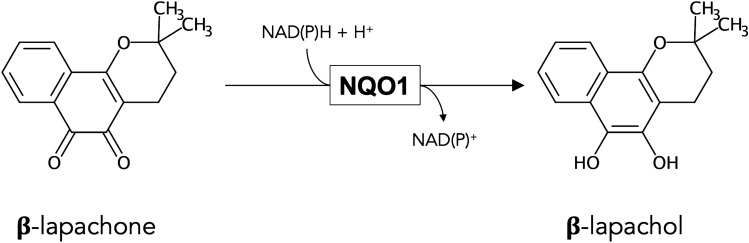
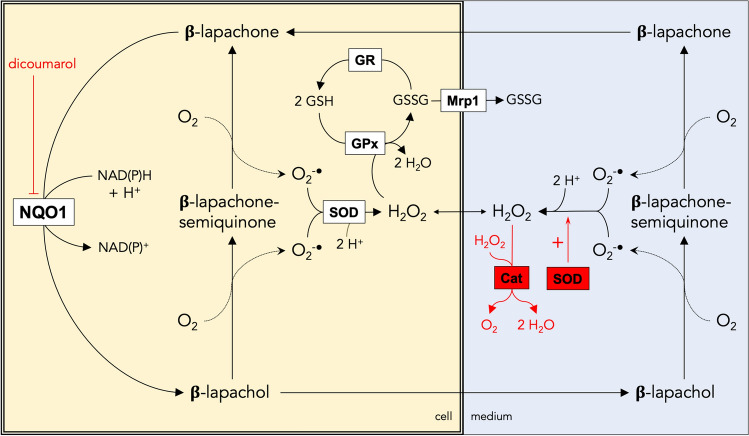
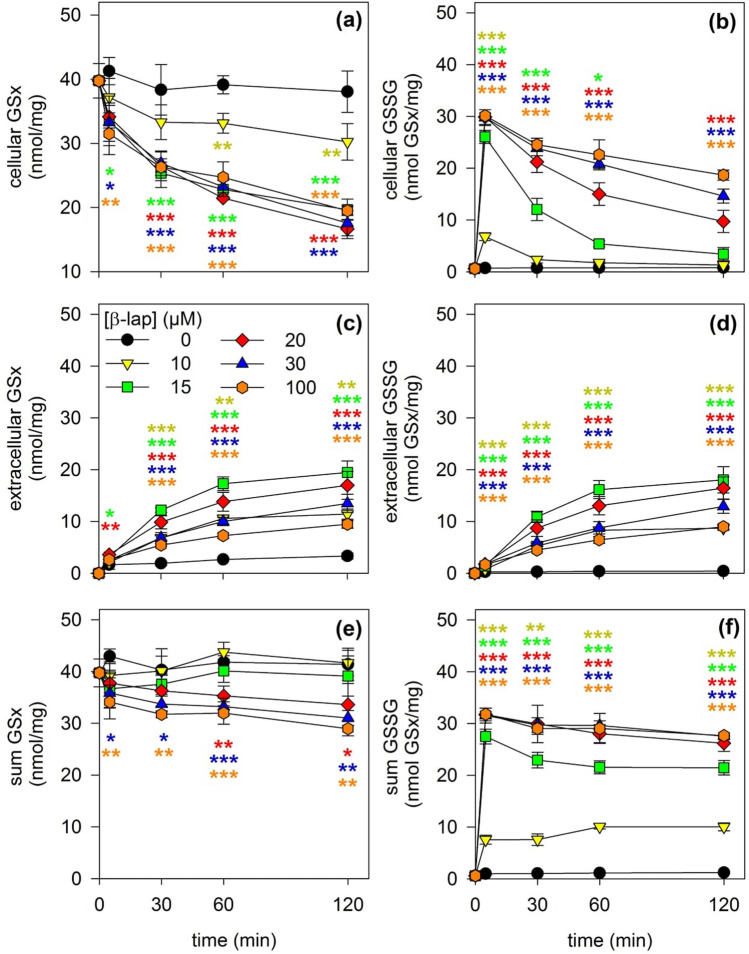
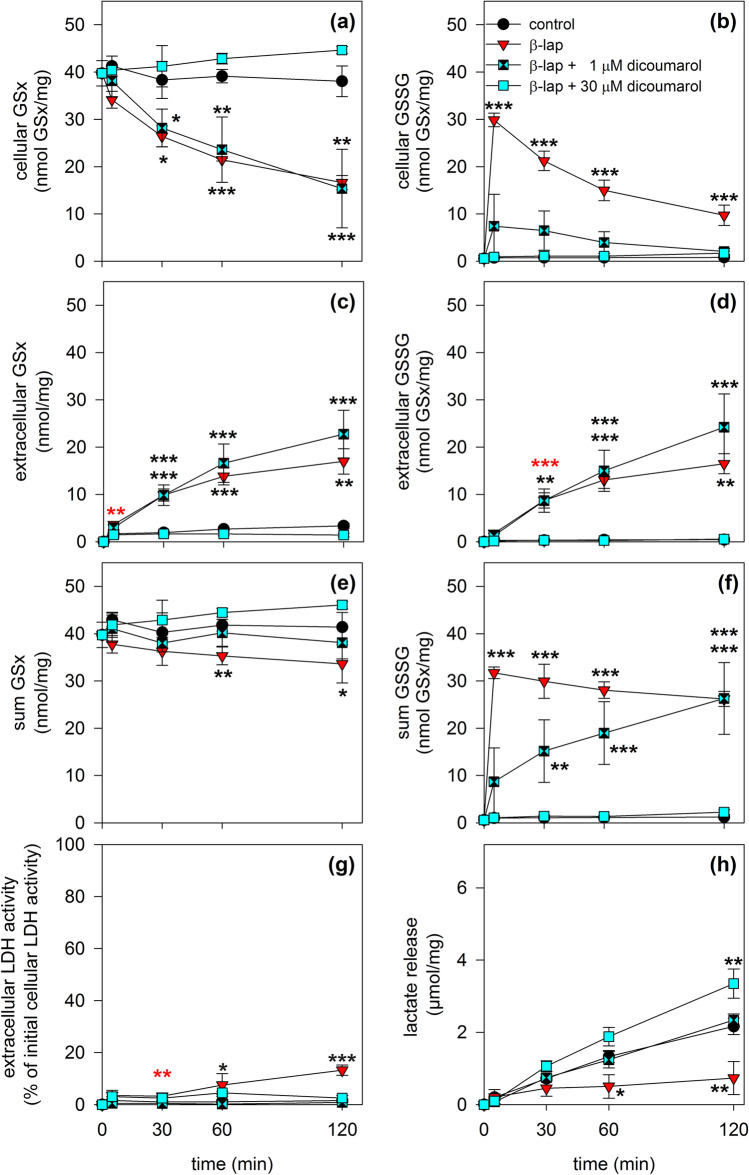
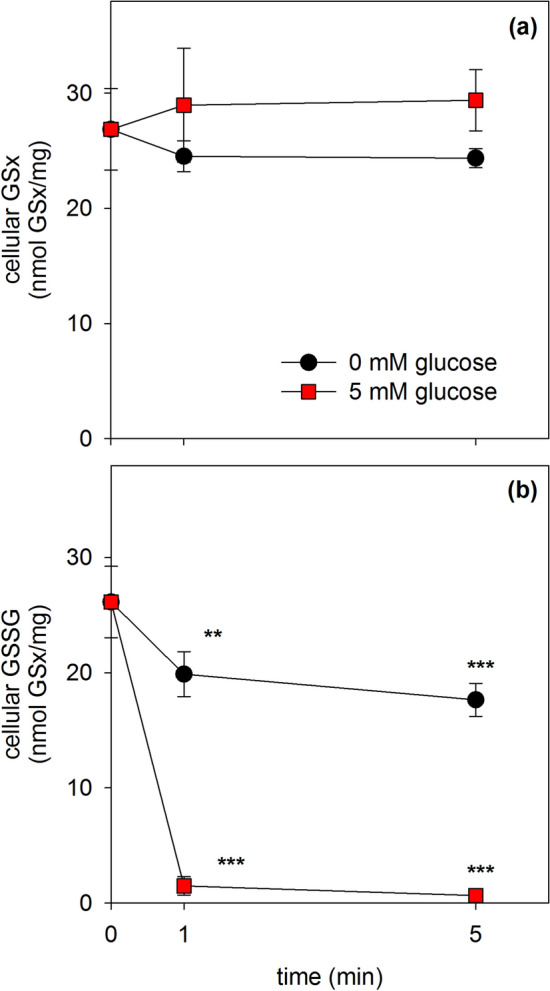
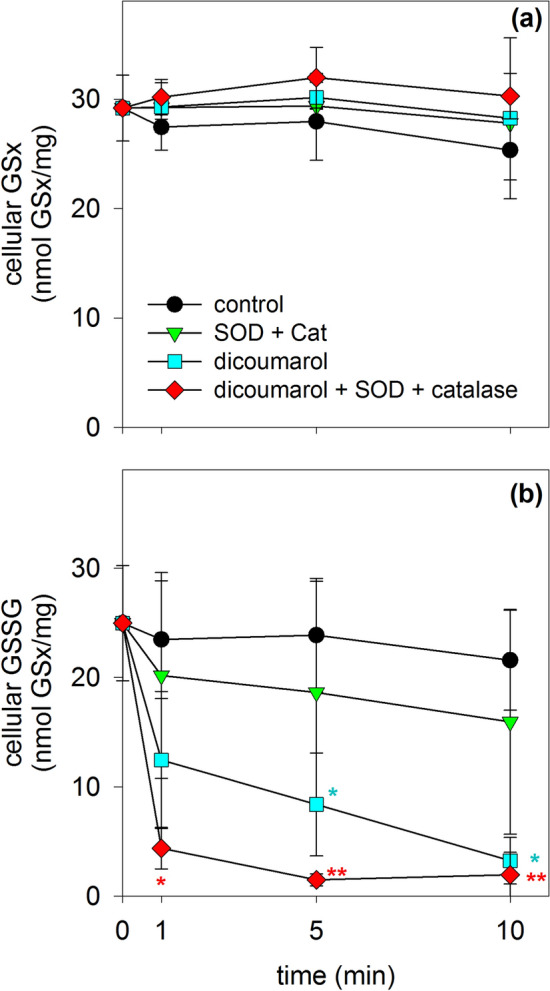
β-lapachone (β-lap) is reduced in tumor cells by the enzyme NAD(P)H: quinone acceptor oxidoreductase 1 (NQO1) to a labile hydroquinone which spontaneously reoxidises to β-lap, thereby generating reactive oxygen species (ROS) and oxidative stress. To test for the consequences of an acute exposure of brain cells to β-lap, cultured primary rat astrocytes were incubated with β-lap for up to 4 h. The presence of β-lap in concentrations of up to 10 µM had no detectable adverse consequences, while higher concentrations of β-lap compromised the cell viability and the metabolism of astrocytes in a concentration- and time-dependent manner with half-maximal effects observed for around 15 µM β-lap after a 4 h incubation. Exposure of astrocytes to β-lap caused already within 5 min a severe increase in the cellular production of ROS as well as a rapid oxidation of glutathione (GSH) to glutathione disulfide (GSSG). The transient cellular accumulation of GSSG was followed by GSSG export. The β-lap-induced ROS production and GSSG accumulation were completely prevented in the presence of the NQO1 inhibitor dicoumarol. In addition, application of dicoumarol to β-lap-exposed astrocytes caused rapid regeneration of the normal high cellular GSH to GSSG ratio. These results demonstrate that application of β-lap to cultured astrocytes causes acute oxidative stress that depends on the activity of NQO1. The sequential application of β-lap and dicoumarol to rapidly induce and terminate oxidative stress, respectively, is a suitable experimental paradigm to study consequences of a defined period of acute oxidative stress in NQO1-expressing cells.
β-拉帕醌(β-lap)可被酶 NAD(P)H:醌氧化还原酶 1(NQO1)还原为不稳定的氢醌,氢醌会自发重新氧化为β-拉帕醌,从而产生活性氧(ROS)和氧化应激。为了测试细胞对β-拉帕醌急性暴露的后果,培养的原代大鼠星形胶质细胞用β-拉帕醌孵育长达 4 小时。在高达 10 μM 的浓度下,β-拉帕醌的存在没有检测到明显的不良后果,而更高浓度的β-拉帕醌以浓度和时间依赖的方式损害星形胶质细胞的活力和代谢,在 4 小时孵育后观察到大约 15 μM β-拉帕醌的半最大效应。星形胶质细胞暴露于β-拉帕醌会在 5 分钟内引起细胞内 ROS 产生的严重增加以及谷胱甘肽(GSH)的快速氧化为谷胱甘肽二硫化物(GSSG)。GSSG 的短暂细胞积累随后导致 GSSG 输出。在 NQO1 抑制剂二香豆素存在下,完全阻止了β-拉帕醌诱导的 ROS 产生和 GSSG 积累。此外,将二香豆素应用于β-拉帕醌暴露的星形胶质细胞会导致正常高细胞 GSH 到 GSSG 比率的快速再生。这些结果表明,将β-拉帕醌应用于培养的星形胶质细胞会导致依赖于 NQO1 活性的急性氧化应激。β-拉帕醌和二香豆素的顺序应用分别快速诱导和终止氧化应激,是研究 NQO1 表达细胞中特定时间段急性氧化应激后果的合适实验范例。