Khan Muhammad, Zhao Zhihong, Arooj Sumbal, Liao Guixiang
Department of Radiation Oncology, Shenzhen People's Hospital, The First Affiliated Hospital of Southern University of Science and Technology, Shenzhen, China.
Department of Oncology, First Affiliated Hospital of Anhui Medical University, Hefei, China.
Front Oncol. 2020 Jul 23;10:1246. doi: 10.3389/fonc.2020.01246. eCollection 2020.
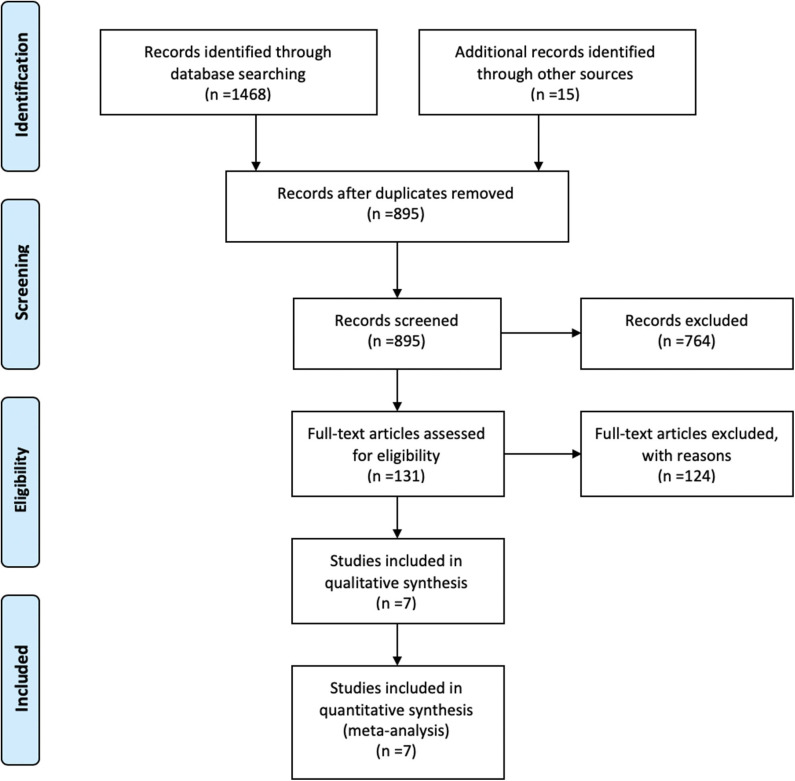
Targeted therapy has transformed the outcome for patients with metastatic renal cell carcinoma. Their efficacy and safety have also been demonstrated in brain metastatic RCC. Preclinical evidence suggests synergism of radiation and tyrosine kinase inhibitors. Consequently, several studies have compared their efficacy in the treatment of RCC brain metastases to the era of brain management with surgery/radiation only. We seek to systematically review and meta-analyze the results of those studies that involved comparative intervention groups of brain management; TKIs, and never used TKIs. Online databases (PubMed, EMBASE, Cochrane library, and ClinicalTrials.gov) were searched for comparative studies. Overall survival as the primary outcome of interest, and local brain control, distant control, and adverse events as secondary outcomes of interest were recorded for meta-analysis. Hazard ratios were pooled together using Review Manager 5.3. Fixed effects or random effects model were adopted according to the level of heterogeneity. Subgroup analysis included studies that involved SRS as the local treatment of management. Overall 7 studies ( = 897) were included for meta-analysis. TKI use was associated with better survival (HR 0.60 [0.52, 0.69], < 0.00001) and local brain control (HR 0.34 [0.11, 0.98], = 0.05). SRS subgroup also revealed significantly better survival (HR 0.61 [0.44, 0.83], = 0.002) and local brain control (HR 0.19 [0.08, 0.45], = 0.0002). Distant brain control (HR 0.95 [0.67, 1.35], = 0.79) and brain progression free survival were unaffected (HR 0.94 [0.56, 1.56], = 0.80). Only one study ( = 376) reported significantly greater 12-months cumulative incidence of radiation necrosis with TKI use within 30 days of SRS (10.9 vs. 6.4%, = 0.04). TKIs use in combination with SRS is safe and effective for treating RCC brain metastases. Larger randomized controlled trials are warranted to validate the results.
靶向治疗改变了转移性肾细胞癌患者的治疗结局。其疗效和安全性在肾细胞癌脑转移患者中也得到了证实。临床前证据表明放疗与酪氨酸激酶抑制剂具有协同作用。因此,多项研究比较了它们在治疗肾细胞癌脑转移方面与仅采用手术/放疗的脑转移治疗时代的疗效。我们旨在系统回顾和荟萃分析那些涉及脑转移治疗比较干预组(酪氨酸激酶抑制剂组和未使用酪氨酸激酶抑制剂组)的研究结果。通过检索在线数据库(PubMed、EMBASE、Cochrane图书馆和ClinicalTrials.gov)查找比较研究。将总生存期作为主要关注结局,将局部脑控制、远处控制和不良事件作为次要关注结局记录下来用于荟萃分析。使用Review Manager 5.3汇总风险比。根据异质性水平采用固定效应模型或随机效应模型。亚组分析包括涉及立体定向放射治疗(SRS)作为局部治疗的研究。总共纳入7项研究(n = 897)进行荟萃分析。使用酪氨酸激酶抑制剂与更好的生存期(风险比0.60 [0.52, 0.69],P < 0.00001)和局部脑控制(风险比0.34 [0.11, 0.98],P = 0.05)相关。SRS亚组也显示出显著更好的生存期(风险比0.61 [0.44, 0.83],P = 0.002)和局部脑控制(风险比0.19 [0.08, 0.45],P = 0.0002)。远处脑控制(风险比0.95 [0.67, 1.35],P = 0.79)和无脑转移进展生存期未受影响(风险比0.94 [0.56, 1.56],P = 0.80)。只有一项研究(n = 376)报告在SRS后30天内使用酪氨酸激酶抑制剂的放射性坏死12个月累积发生率显著更高(10.9% 对6.4%,P = 0.04)。酪氨酸激酶抑制剂联合SRS用于治疗肾细胞癌脑转移安全有效。需要更大规模的随机对照试验来验证这些结果。