Center for Spatial and Functional Genomics, The Children's Hospital of Philadelphia, Philadelphia, PA, USA.
Departments of Pediatrics and Genetics, University of Pennsylvania Perelman School of Medicine, Philadelphia, PA, USA.
Diabetologia. 2020 Nov;63(11):2260-2269. doi: 10.1007/s00125-020-05248-8. Epub 2020 Aug 14.
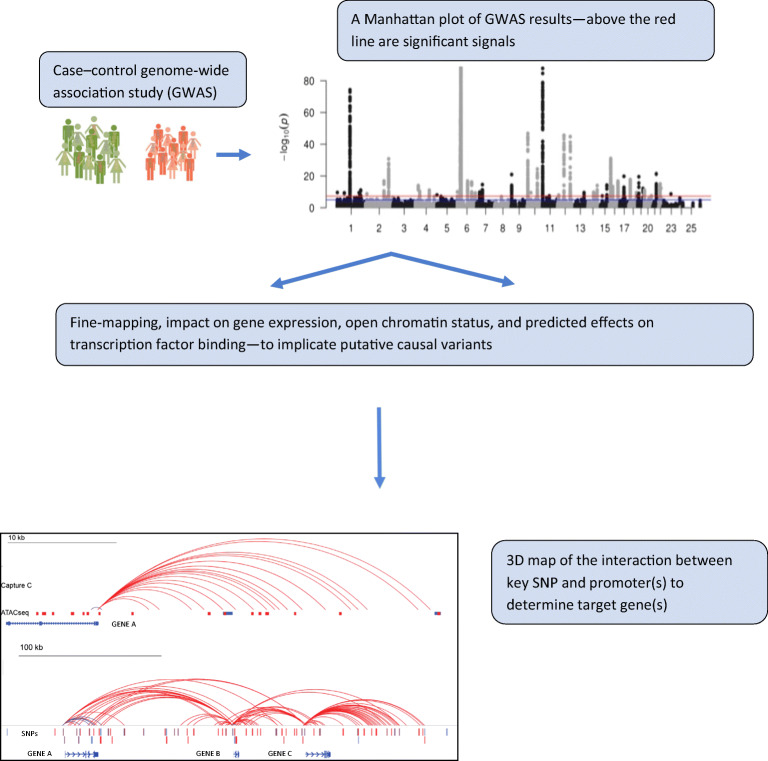
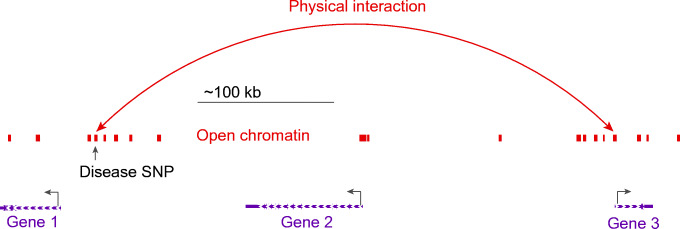
The purpose of this review is to provide a view of the future of genomics and other omics approaches in defining the genetic contribution to all stages of risk of type 1 diabetes and the functional impact and clinical implementations of the associated variants. From the recognition nearly 50 years ago that genetics (in the form of HLA) distinguishes risk of type 1 diabetes from type 2 diabetes, advances in technology and sample acquisition through collaboration have identified over 60 loci harbouring SNPs associated with type 1 diabetes risk. Coupled with HLA region genes, these variants account for the majority of the genetic risk (~50% of the total risk); however, relatively few variants are located in coding regions of genes exerting a predicted protein change. The vast majority of genetic risk in type 1 diabetes appears to be attributed to regions of the genome involved in gene regulation, but the target effectors of those genetic variants are not readily identifiable. Although past genetic studies clearly implicated immune-relevant cell types involved in risk, the target organ (the beta cell) was left untouched. Through emergent technologies, using combinations of genetics, gene expression, epigenetics, chromosome conformation and gene editing, novel landscapes of how SNPs regulate genes have emerged. Furthermore, both the immune system and the beta cell and their biological pathways have been implicated in a context-specific manner. The use of variants from immune and beta cell studies distinguish type 1 diabetes from type 2 diabetes and, when they are combined in a genetic risk score, open new avenues for prediction and treatment. Graphical abstract.
本文旨在展望基因组学和其他组学方法在确定 1 型糖尿病风险各个阶段的遗传贡献,以及相关变异的功能影响和临床应用方面的未来。近 50 年前人们认识到,遗传学(以 HLA 的形式)将 1 型糖尿病与 2 型糖尿病区分开来,技术进步和通过合作进行的样本采集已经确定了 60 多个含有与 1 型糖尿病风险相关 SNP 的基因座。这些变体与 HLA 区域基因一起,占大部分遗传风险(约总风险的 50%);然而,相对较少的变体位于影响预测蛋白变化的基因的编码区域。1 型糖尿病的绝大多数遗传风险似乎归因于参与基因调控的基因组区域,但这些遗传变体的靶效应物不易识别。尽管过去的遗传研究清楚地表明涉及风险的免疫相关细胞类型,但靶器官(β细胞)仍未受到影响。通过新兴技术,结合遗传学、基因表达、表观遗传学、染色体构象和基因编辑,出现了 SNP 如何调节基因的新景观。此外,免疫系统和β细胞及其生物学途径都以特定于上下文的方式被牵连进来。利用免疫和β细胞研究中的变体可区分 1 型糖尿病和 2 型糖尿病,当它们组合在遗传风险评分中时,为预测和治疗开辟了新途径。