Department of Biotechnology, University of Rijeka, Radmile Matečić 2, 51000 Rijeka, Croatia.
Department of Physiology and Immunology, Faculty of Medicine, University of Rijeka, Braće Branchetta 20, 51000 Rijeka, Croatia.
Oxid Med Cell Longev. 2020 Jul 30;2020:6125638. doi: 10.1155/2020/6125638. eCollection 2020.
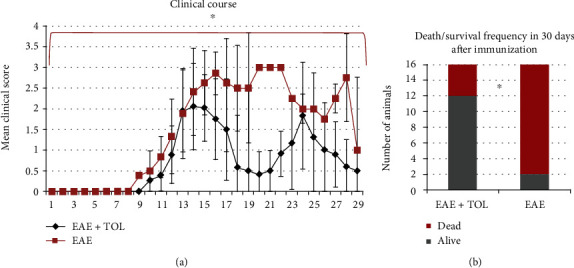
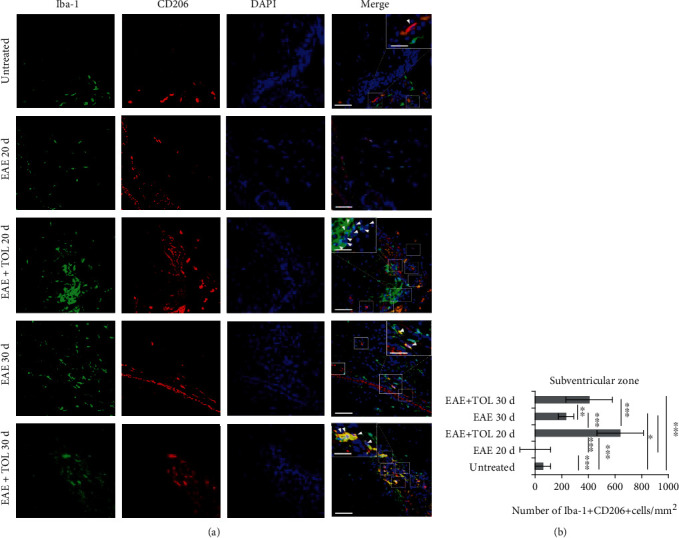
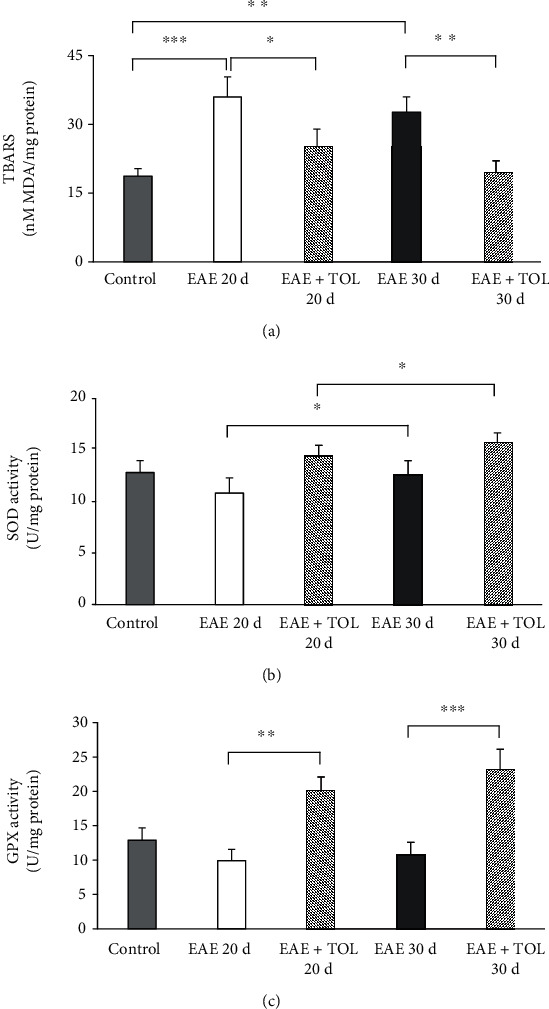
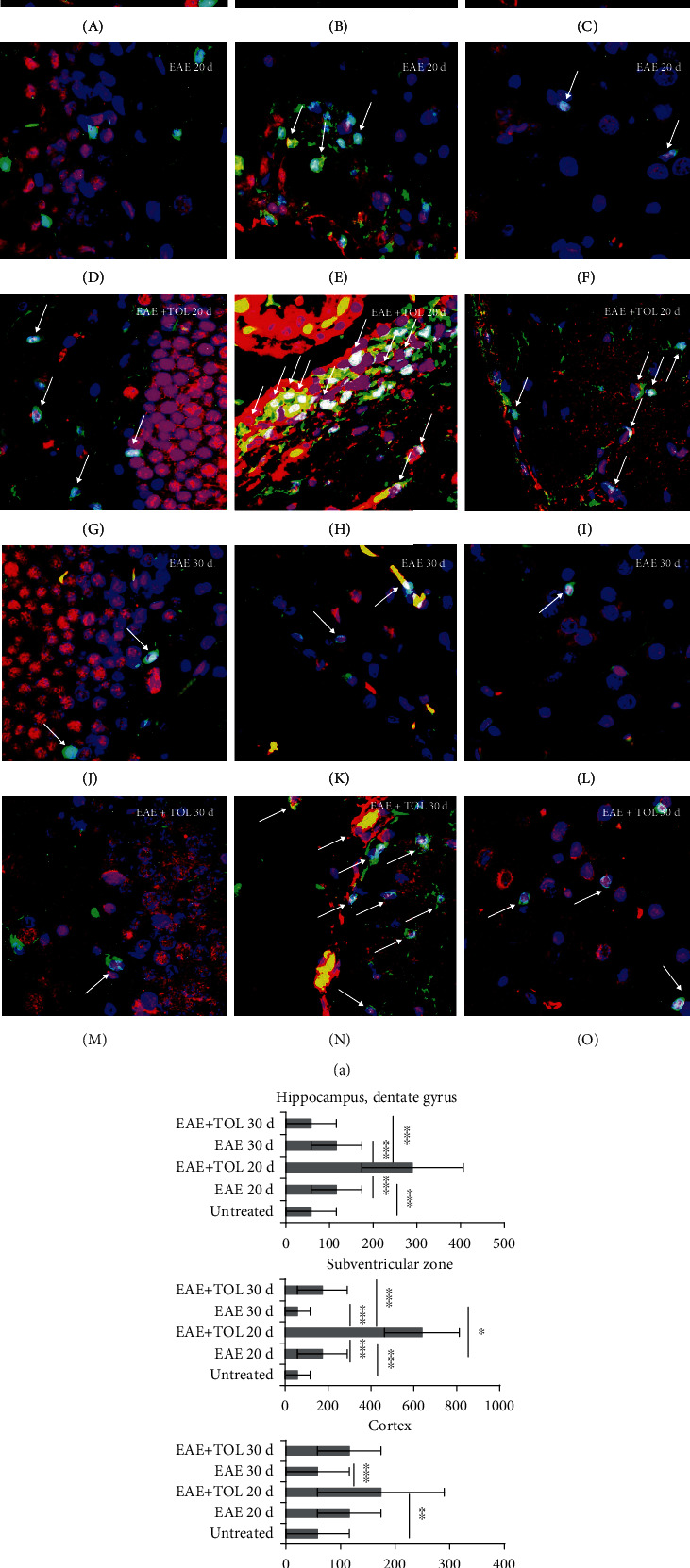
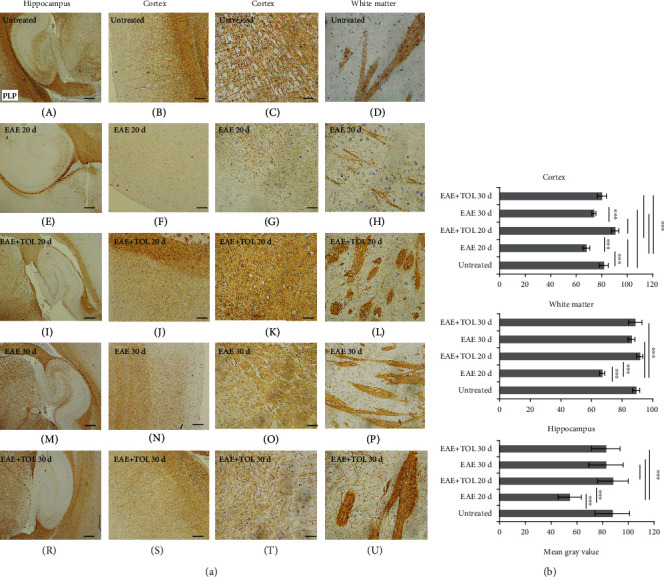
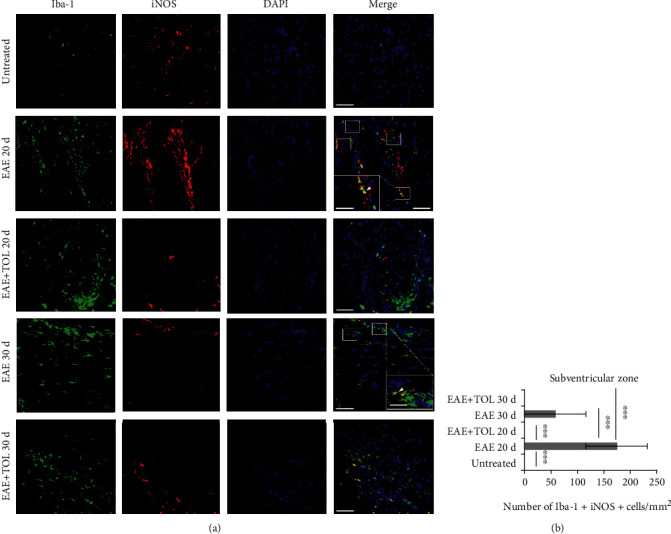
Numerous evidences suggest that plant polyphenols may have therapeutic benefits in regulating oxidative stress and providing neuroprotection in many neurodegenerative diseases, including multiple sclerosis (MS). However, these mechanisms are not yet completely understood. In this study, we investigated the effect of olive leaf polyphenols on oxidative stress through oxidation marker level and activity (TBARS, SOD, and GPX) and their protein expression (SOD1, SOD2, and GPX1), as well as the protein expression of Sirtuin 1 (SIRT1) and microglia markers (Iba-1, CD206, and iNOS) and myelin integrity (proteolipid protein expression) in the brain of rats with induced experimental autoimmune encephalomyelitis (EAE) and subjected to olive leaf therapy. Experiments were performed in male EAE DA rats, which were randomly divided into 2 main groups: EAE groups treated with the therapy of olive leaf (EAE+TOL) and untreated EAE control groups. The EAE treated groups consumed olive leaf tea instead of drinking water () from the beginning to the end of the experiment. In addition, olive leaf extract was injected intraperitoneally (.) for the 10 continuous days and started on the 8 day after EAE induction. The clinical course was monitored in both groups until the 30 day after EAE induction. Our results demonstrated that TOL attenuated the clinical course of EAE; reduced the oxidative stress (by decreasing the concentration of MDA); upregulated antioxidant enzymes (SOD1, SOD2, and GPX1), SIRT1 (overall and microglial), and anti-inflammatory M2 microglia; downregulated proinflammatory M1 type; and preserved myelin integrity. These data support the idea that TOL may be an effective therapeutic approach for treating MS and other neurodegenerative diseases.
大量证据表明,植物多酚可能对调节氧化应激和提供神经保护具有治疗益处,在许多神经退行性疾病中,包括多发性硬化症(MS)。然而,这些机制尚未完全了解。在这项研究中,我们通过氧化标志物水平和活性(TBARS、SOD 和 GPX)及其蛋白表达(SOD1、SOD2 和 GPX1)以及 Sirtuin 1(SIRT1)和小胶质细胞标志物(Iba-1、CD206 和 iNOS)和髓鞘完整性(髓鞘蛋白表达),研究了橄榄油多酚对诱导实验性自身免疫性脑脊髓炎(EAE)大鼠氧化应激的影响,并对接受橄榄油治疗的大鼠进行了研究。实验在雄性 EAE DA 大鼠中进行,这些大鼠被随机分为 2 个主要组:用橄榄油治疗的 EAE 组(EAE+TOL)和未治疗的 EAE 对照组。EAE 治疗组从实验开始到结束都用橄榄油茶代替饮用水()。此外,从 EAE 诱导后第 8 天开始,连续 10 天每天腹腔注射橄榄油提取物(.)。在两组中都监测了临床病程,直到 EAE 诱导后第 30 天。我们的结果表明,TOL 减轻了 EAE 的临床病程;降低了氧化应激(通过降低 MDA 浓度);上调了抗氧化酶(SOD1、SOD2 和 GPX1)、SIRT1(总体和小胶质细胞)和抗炎 M2 小胶质细胞;下调了促炎 M1 型;并保持了髓鞘完整性。这些数据支持 TOL 可能是治疗 MS 和其他神经退行性疾病的有效治疗方法的观点。