Department of Public Health, School of Medicine, Shihezi University, Xinjiang, China.
School of Public Health, Capital Medical University, Beijing, China.
Biomed Res Int. 2020 Jul 28;2020:9414196. doi: 10.1155/2020/9414196. eCollection 2020.
Arsenic is a toxic metalloid widely present in nature, and arsenic poisoning in drinking water is a serious global public problem. Glutathione is an important reducing agent that inhibits arsenic-induced oxidative stress and participates in arsenic methylation metabolism. Therefore, glutathione plays an important role in regulating arsenic toxicity. In recent years, a large number of studies have shown that arsenic can regulate glutathione synthesis in many ways, but there are many contradictions in the research results. At present, the mechanism of the effect of arsenic on glutathione synthesis has not been elucidated.
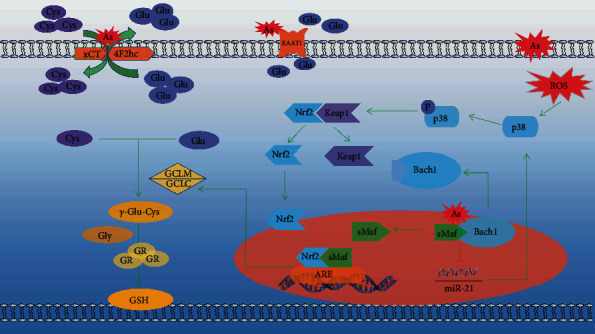
We will conduct a meta-analysis to illustrate the effects of arsenic on GSH synthesis precursors Glu, Cys, Gly, and rate-limiting enzyme -GCS in mammalian models, as well as the regulation of p38/Nrf2 of -GCS subunit GCLC, and further explore the molecular mechanism of arsenic affecting glutathione synthesis.
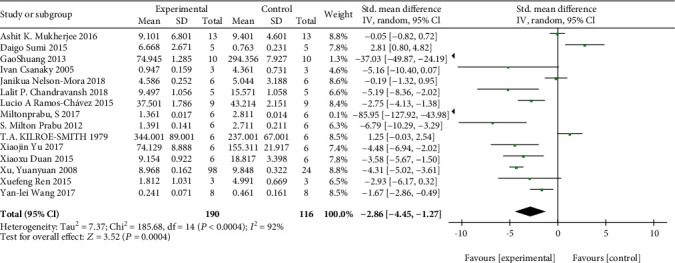
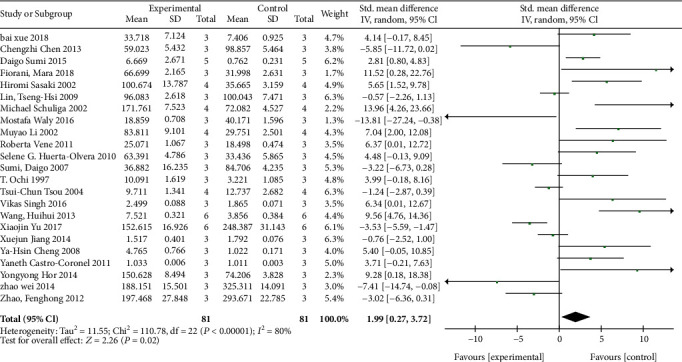
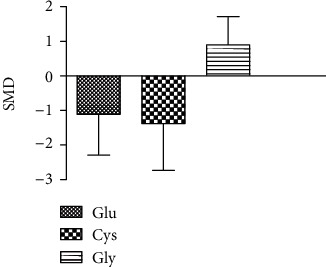
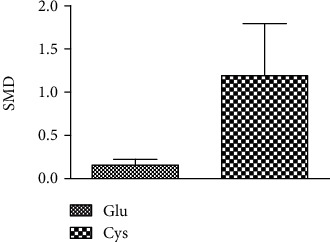
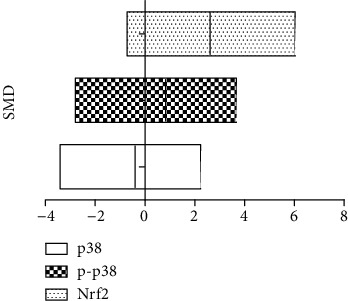
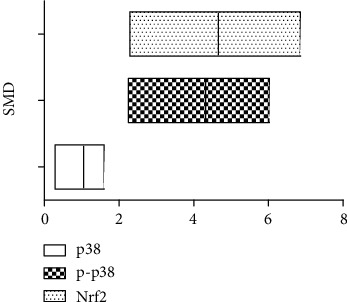
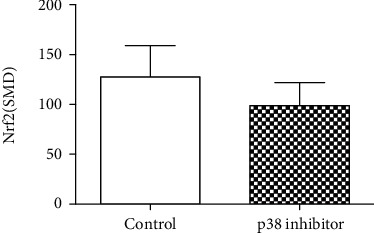
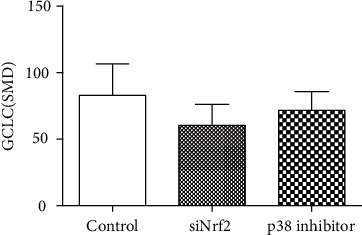
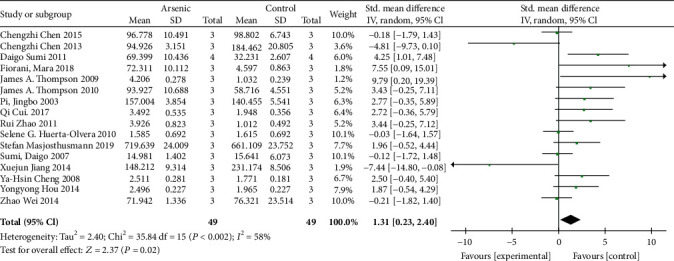
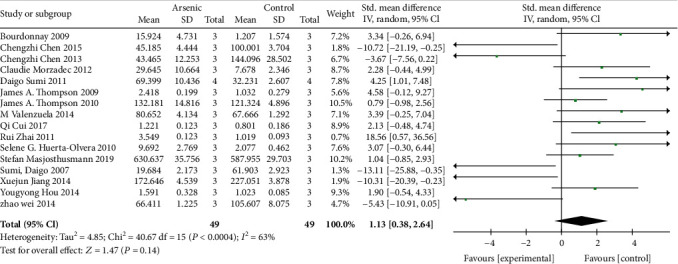
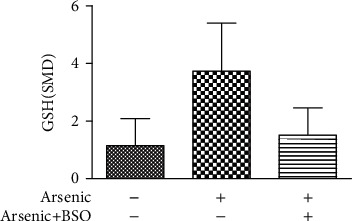
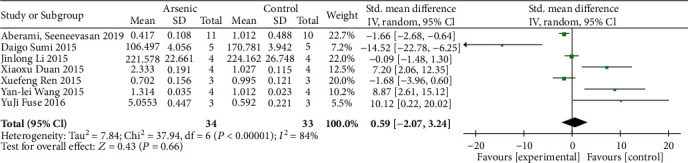
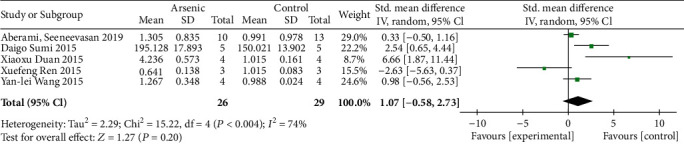
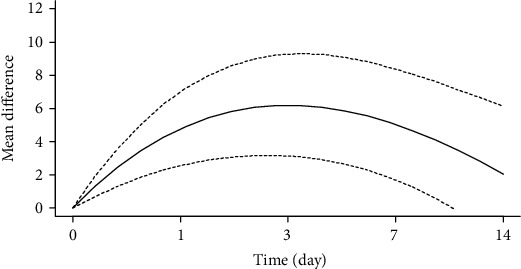
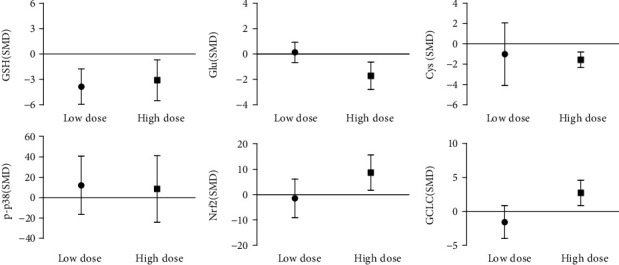
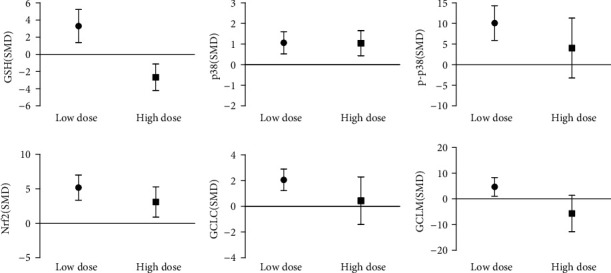
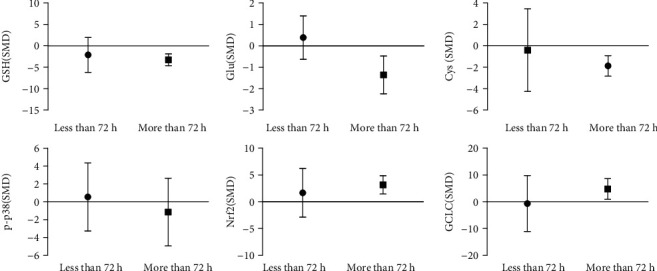
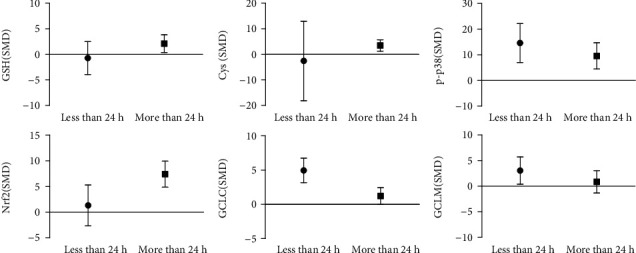
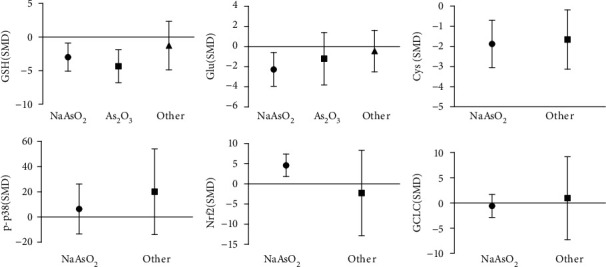
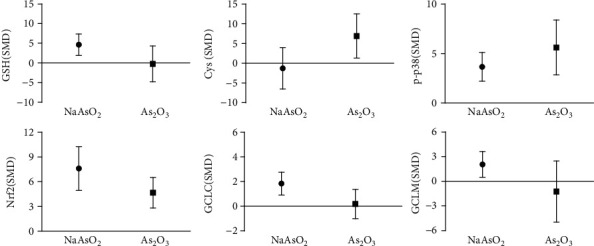
This meta-analysis included 30 studies in vivo and 58 studies in vitro, among which in vivo studies showed that arsenic exposure could reduce the contents of GSH (SMD = -2.86, 95% CI (-4.45, -1.27)), Glu (SMD = -1.11, 95% CI (-2.20,-0.02)), and Cys (SMD = -1.48, 95% CI (-2.63, -0.33)), with no statistically significant difference in p38/Nrf2, GCLC, and GCLM. In vitro studies showed that arsenic exposure increased intracellular GSH content (SMD = 1.87, 95% CI (0.18, 3.56)) and promoted the expression of p-p38 (SMD = 4.19, 95% CI (2.34, 6.05)), Nrf2 (SMD = 4.60, 95% CI (2.34, 6.86)), and GCLC (SMD = 1.32, 95% CI (0.23, 2.41)); the p38 inhibitor inhibited the expression of Nrf2 (SMD = -1.27, 95% CI (-2.46, -0.09)) and GCLC (SMD = -5.37, 95% CI (-5.37, -2.20)); siNrf2 inhibited the expression of GCLC, and BSO inhibited the synthesis of GSH. There is a dose-dependent relationship between the effects of exposure on GSH in vitro. These indicate the difference between in vivo and in vitro studies of the effect of arsenic on glutathione synthesis. In vivo studies have shown that arsenic exposure can reduce glutamate and cysteine levels and inhibit glutathione synthesis, while in vitro studies have shown that chronic low-dose arsenic exposure can activate the p38/Nrf2 pathway, upregulate GCLC expression, and promote glutathione synthesis.
砷是一种广泛存在于自然界中的有毒类金属,饮用水砷中毒是一个严重的全球性公共卫生问题。谷胱甘肽是一种重要的还原剂,可抑制砷诱导的氧化应激并参与砷的甲基化代谢。因此,谷胱甘肽在调节砷毒性方面起着重要作用。近年来,大量研究表明,砷可以通过多种方式调节谷胱甘肽的合成,但研究结果存在许多矛盾。目前,砷对谷胱甘肽合成的影响机制尚未阐明。
我们将进行荟萃分析,以说明砷对哺乳动物模型中 GSH 合成前体 Glu、Cys、Gly 和限速酶-GCS 的影响,以及对-GCS 亚基 GCLC 的 p38/Nrf2 的调节,并进一步探讨砷影响谷胱甘肽合成的分子机制。
该荟萃分析包括 30 项体内研究和 58 项体外研究,其中体内研究表明,砷暴露可降低 GSH(SMD=-2.86,95%CI(-4.45,-1.27))、Glu(SMD=-1.11,95%CI(-2.20,-0.02))和 Cys(SMD=-1.48,95%CI(-2.63,-0.33))的含量,p38/Nrf2、GCLC 和 GCLM 无统计学差异。体外研究表明,砷暴露增加细胞内 GSH 含量(SMD=1.87,95%CI(0.18,3.56))并促进 p-p38(SMD=4.19,95%CI(2.34,6.05))、Nrf2(SMD=4.60,95%CI(2.34,6.86))和 GCLC(SMD=1.32,95%CI(0.23,2.41))的表达;p38 抑制剂抑制 Nrf2(SMD=-1.27,95%CI(-2.46,-0.09))和 GCLC(SMD=-5.37,95%CI(-5.37,-2.20))的表达;siNrf2 抑制 GCLC 的表达,BSO 抑制 GSH 的合成。体外研究表明,砷暴露对 GSH 的影响存在剂量依赖性。这些表明砷对谷胱甘肽合成的体内和体外研究之间存在差异。体内研究表明,砷暴露可降低谷氨酸和半胱氨酸水平并抑制谷胱甘肽合成,而体外研究表明,慢性低剂量砷暴露可激活 p38/Nrf2 途径,上调 GCLC 表达,促进谷胱甘肽合成。