Castañeda L
Sección de Estudios de Posgrado e Investigación de la Escuela Superior de Medicina, Instituto Politécnico Nacional, Plan de San Luis y Díaz Mirón s/n, Casco de Santo Tomás, Ciudad de México, A. P. 11340, Mexico.
Heliyon. 2020 Aug 8;6(8):e04665. doi: 10.1016/j.heliyon.2020.e04665. eCollection 2020 Aug.
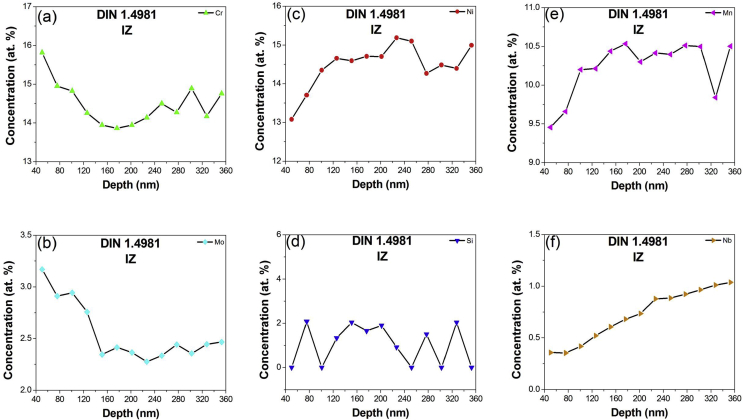
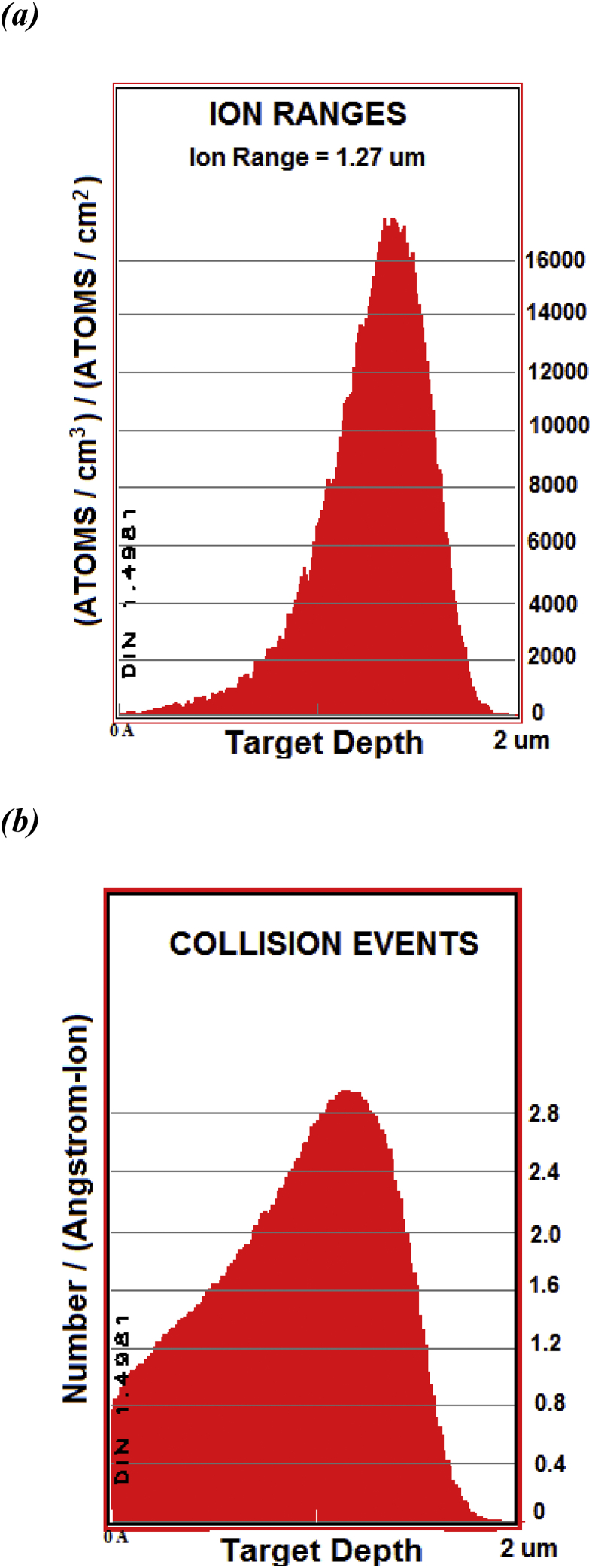
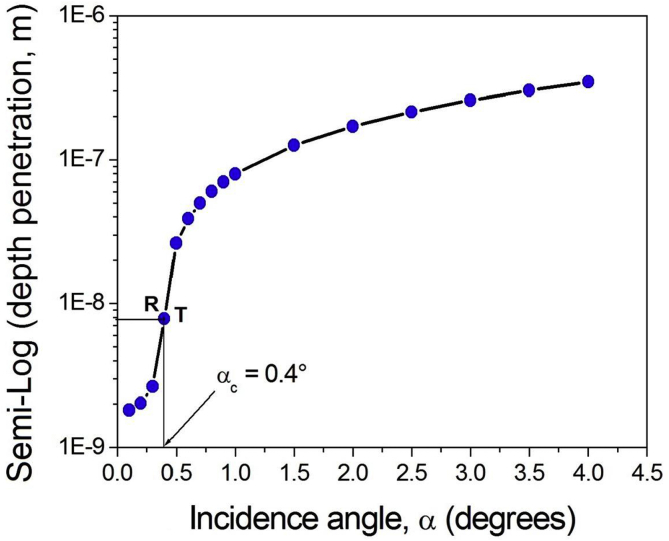
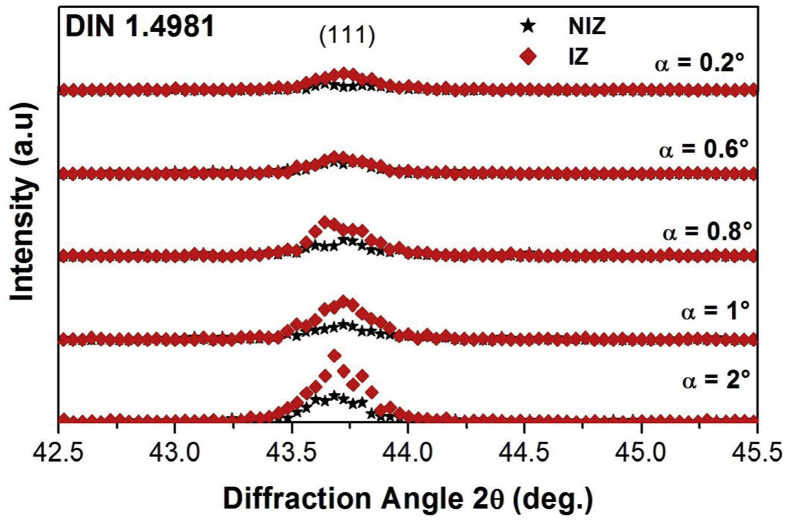
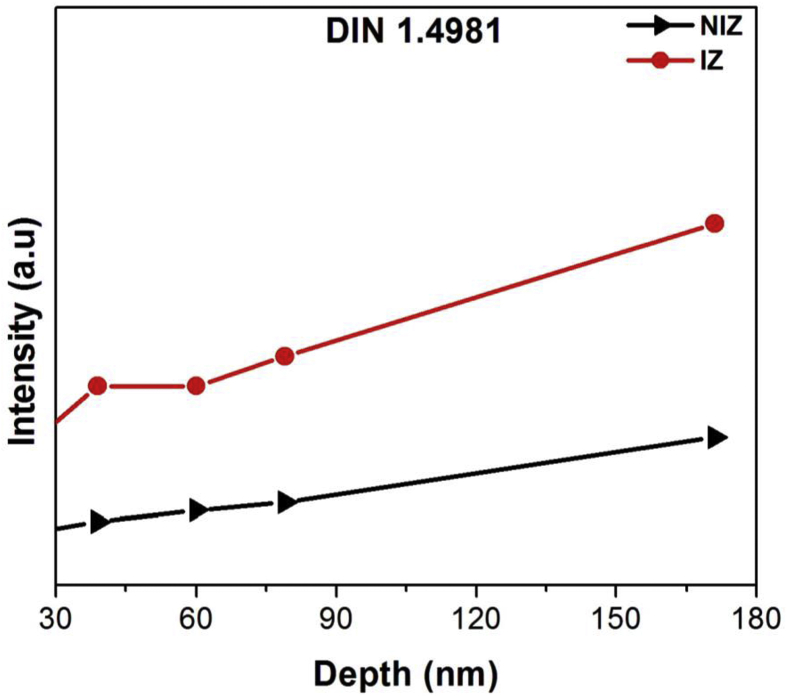
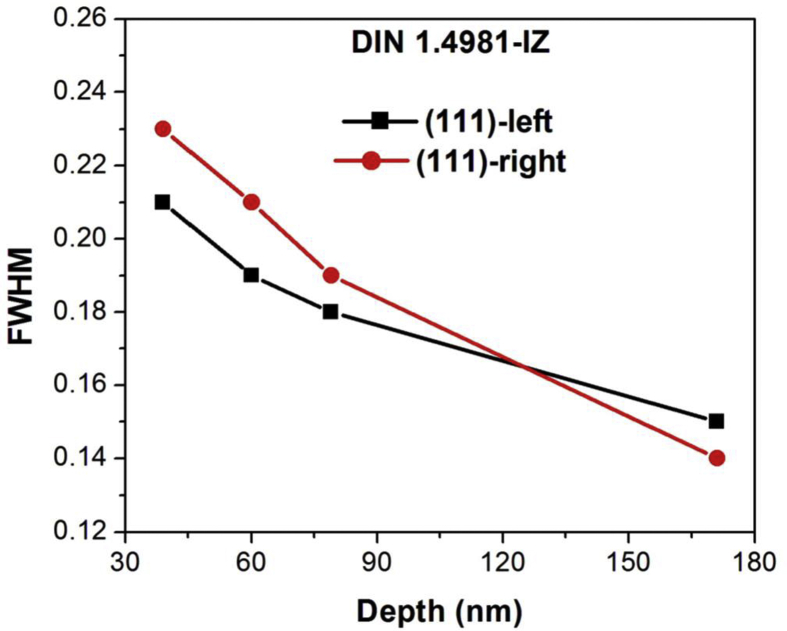
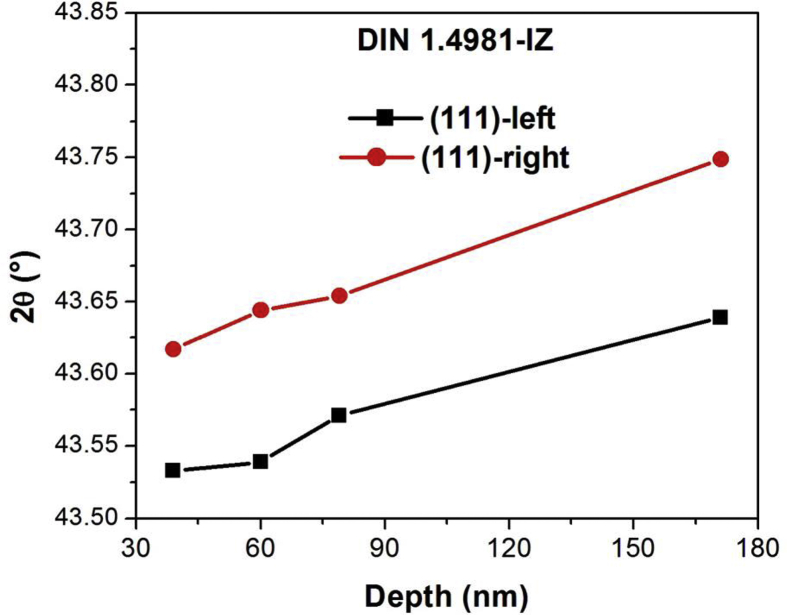
The composition changes in the close to surface of the austenitic stainless steel DIN 1.4981 irradiated at high doses. Theoretical simulations using the SRIM-2013 program show that the damage due to Nickel cation [Ni] ions irradiation of 3.66 MeV extends to up 2 μm deep in the steel under study. Then the applications of Grazing incidence X-ray Diffraction (GXRD) and X-ray Photoelectron Spectroscopy (XPS), Gallium cation [Ga] ions sputtering assisted, were necessary to detect respectively, any compositional changes with the depth. GXRD differences were recorded in the intensity and it's Full Width at Half Maximum (FWHM), of the austenite (111) diffraction peak, at different depths in the Irradiate Zone (IZ). Through XPS was found that Nickel [Ni], Niobium [Nb], and Manganese [Mn] were depleted it is important to highlight Chromium [Cr], and Molybdenum [Mo] were improved at the irradiated surface; such behavior was contrary to the element migration under irradiation reported for austenitic stainless steels irradiated at low doses.
高剂量辐照下奥氏体不锈钢DIN 1.4981近表面的成分变化。使用SRIM - 2013程序进行的理论模拟表明,3.66 MeV的镍阳离子[Ni]离子辐照造成的损伤在研究的钢中延伸至2μm深处。因此,需要应用掠入射X射线衍射(GXRD)和镓阳离子[Ga]离子溅射辅助的X射线光电子能谱(XPS)来分别检测随深度的任何成分变化。在辐照区(IZ)的不同深度处,记录了奥氏体(111)衍射峰的强度及其半高宽(FWHM)的GXRD差异。通过XPS发现,镍[Ni]、铌[Nb]和锰[Mn]减少,重要的是要强调铬[Cr]和钼[Mo]在辐照表面有所增加;这种行为与低剂量辐照的奥氏体不锈钢报道的辐照下元素迁移情况相反。