Yadav Amar Nath, Singh Ashwani Kumar, Kumar Pramod, Singh Kedar
School of Physical Sciences, Jawaharlal Nehru University, New Delhi, 110067, India.
Sri Aurobindo College, -110017, New Delhi, India.
Nanoscale Res Lett. 2020 Aug 17;15(1):166. doi: 10.1186/s11671-020-03398-7.
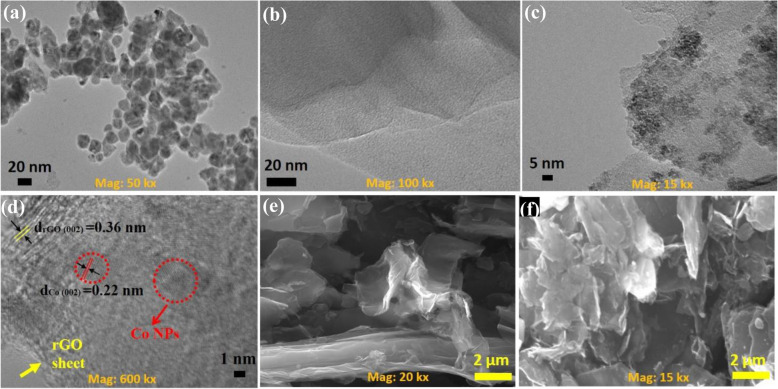
Control over the magnetic interactions in magnetic nanoparticles (MNPs) is a crucial issue to the future development of nanometer-sized integrated "spintronic" applications. Here, we have developed a nanohybrid structure to achieve room temperature ferromagnetism, via a facile, effective, and reproducible solvothermal synthesis method. The plan has been put onto cobalt (Co) NPs, where the growth of Co NPs on the surface of reduced graphene oxide (rGO) nanosheets switches the magnetic interactions from superparamagnetic to ferromagnetic at room temperature. Switching-on ferromagnetism in this nanohybrid may be due to the hybridization between unsaturated 2p orbitals of graphene and 3d orbitals of Co, which promotes ferromagnetic long-range ordering. The ferromagnetic behavior of Co-rGO nanohybrid makes it excellent material in the field of spintronics, catalysis, and magnetic resonance imaging.
控制磁性纳米粒子(MNPs)中的磁相互作用是纳米级集成“自旋电子学”应用未来发展的关键问题。在此,我们通过一种简便、有效且可重复的溶剂热合成方法,开发了一种纳米杂化结构以实现室温铁磁性。该方案已应用于钴(Co)纳米粒子,其中还原氧化石墨烯(rGO)纳米片表面上Co纳米粒子的生长在室温下将磁相互作用从超顺磁性转变为铁磁性。这种纳米杂化材料中开启铁磁性可能是由于石墨烯不饱和2p轨道与Co的3d轨道之间的杂化,这促进了铁磁长程有序排列。Co-rGO纳米杂化材料的铁磁行为使其成为自旋电子学、催化和磁共振成像领域的优异材料。