Department of Experimental Therapeutics, The University of Texas MD Anderson Cancer Center, Houston, Texas; Department of Radiation Oncology, State Key Laboratory of Oncology in South China, Collaborative Innovation Center for Cancer Medicine, Sun Yat-sen University Cancer Center, Guangzhou, Guangdong, China; Department of Thoracic Oncology, Cancer Center and State Key Laboratory of Biotherapy, West China Hospital, Sichuan University, Chengdu, Sichuan, China.
Department of Experimental Therapeutics, The University of Texas MD Anderson Cancer Center, Houston, Texas; Department of General Surgery, Fundeni Clinical Hospital, Carol Davila University of Medicine and Pharmacy, Bucharest, Romania.
Gastroenterology. 2020 Dec;159(6):2146-2162.e33. doi: 10.1053/j.gastro.2020.08.018. Epub 2020 Aug 15.
BACKGROUND & AIMS: Chromosomal instability (CIN) is a carcinogenesis event that promotes metastasis and resistance to therapy by unclear mechanisms. Expression of the colon cancer-associated transcript 2 gene (CCAT2), which encodes a long noncoding RNA (lncRNA), associates with CIN, but little is known about how CCAT2 lncRNA regulates this cancer enabling characteristic.
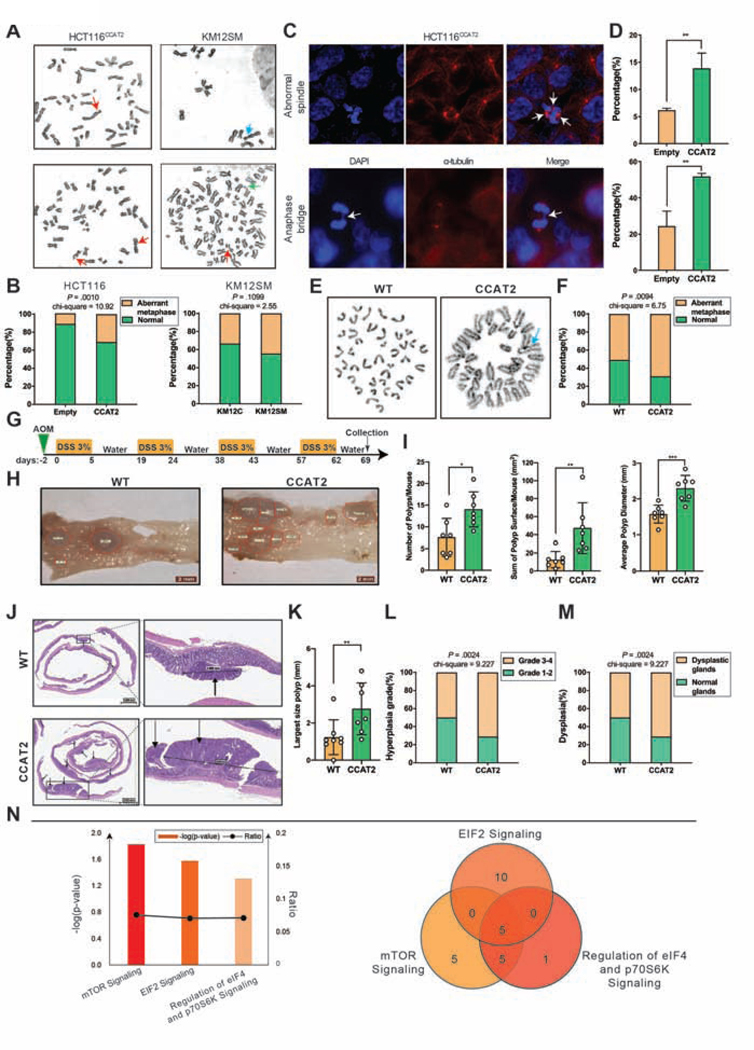
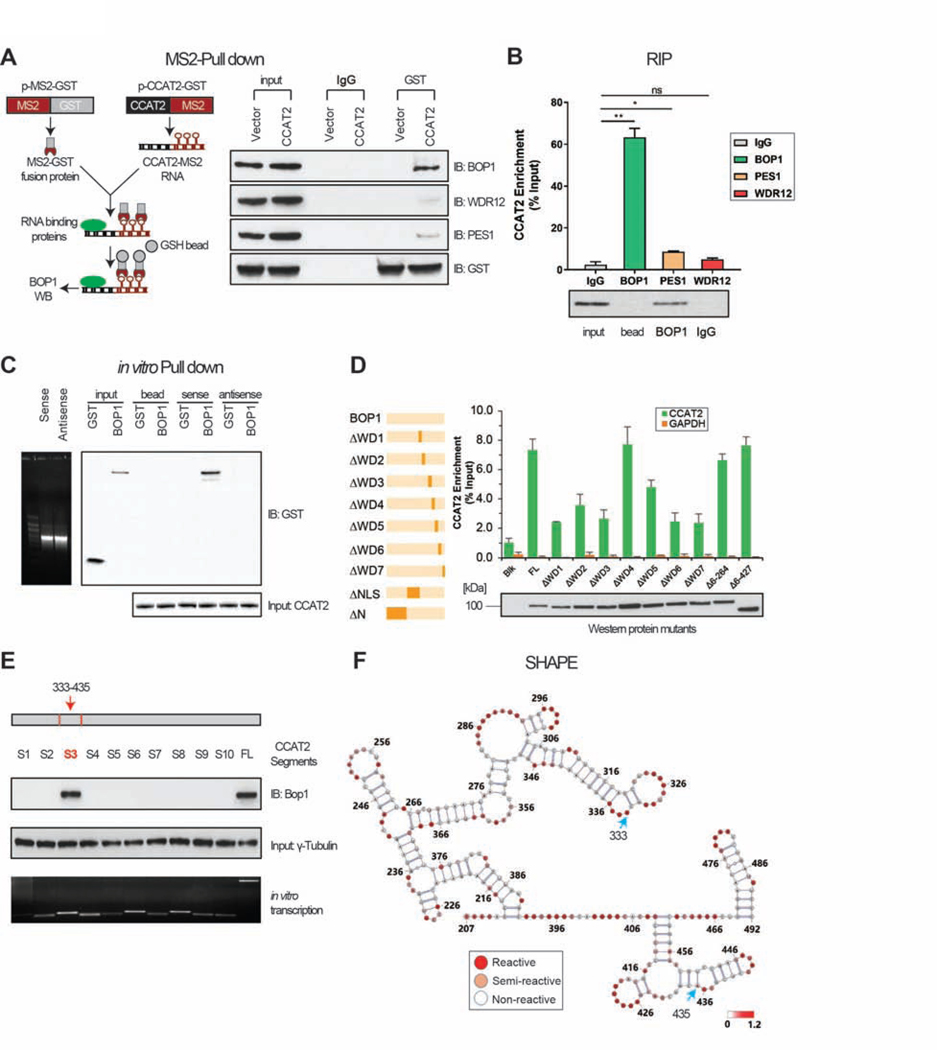
We performed cytogenetic analysis of colorectal cancer (CRC) cell lines (HCT116, KM12C/SM, and HT29) overexpressing CCAT2 and colon organoids from C57BL/6N mice with the CCAT2 transgene and without (controls). CRC cells were also analyzed by immunofluorescence microscopy, γ-H2AX, and senescence assays. CCAT2 transgene and control mice were given azoxymethane and dextran sulfate sodium to induce colon tumors. We performed gene expression array and mass spectrometry to detect downstream targets of CCAT2 lncRNA. We characterized interactions between CCAT2 with downstream proteins using MS2 pull-down, RNA immunoprecipitation, and selective 2'-hydroxyl acylation analyzed by primer extension analyses. Downstream proteins were overexpressed in CRC cells and analyzed for CIN. Gene expression levels were measured in CRC and non-tumor tissues from 5 cohorts, comprising more than 900 patients.
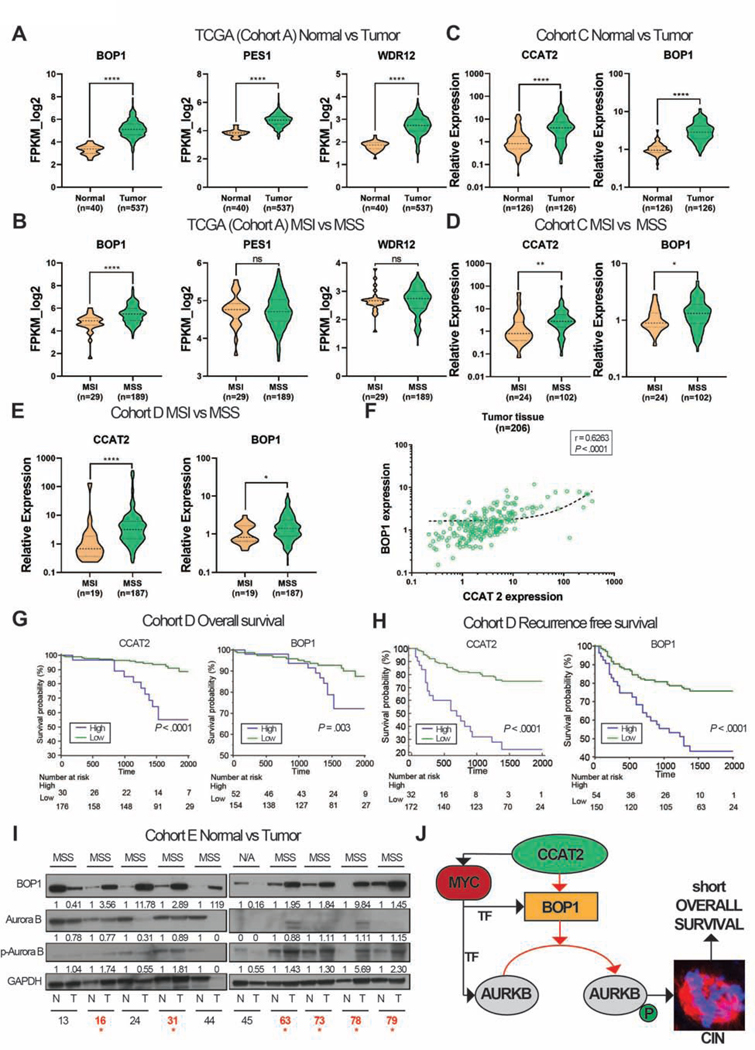
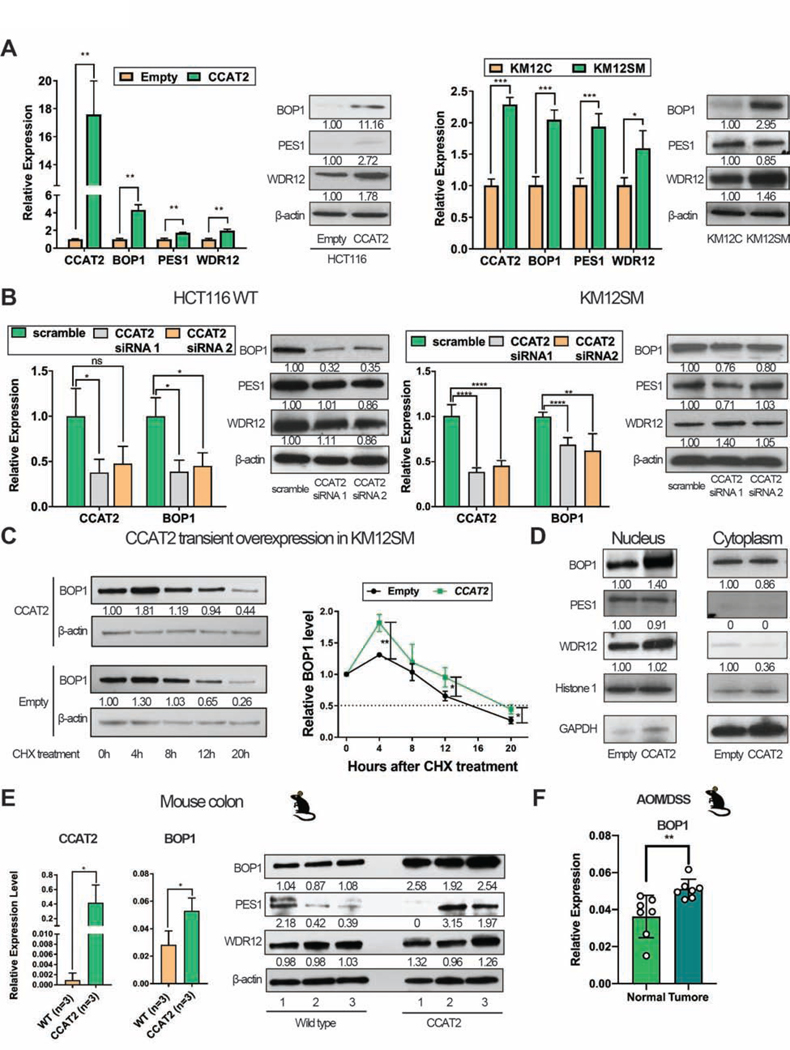
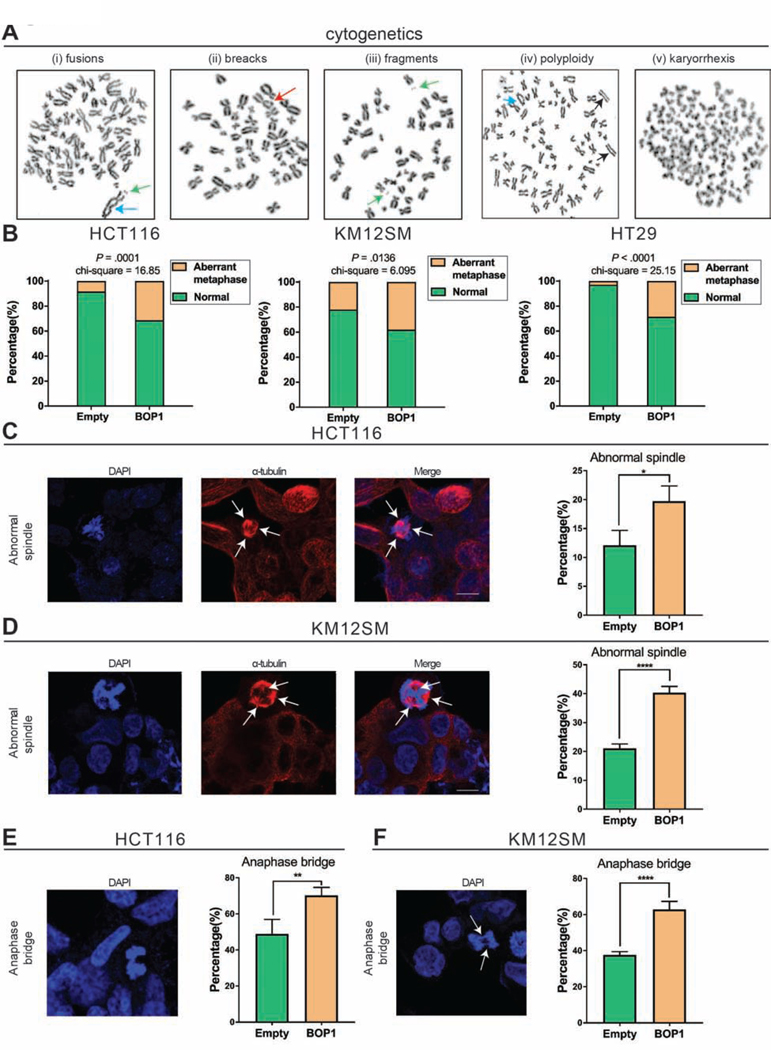
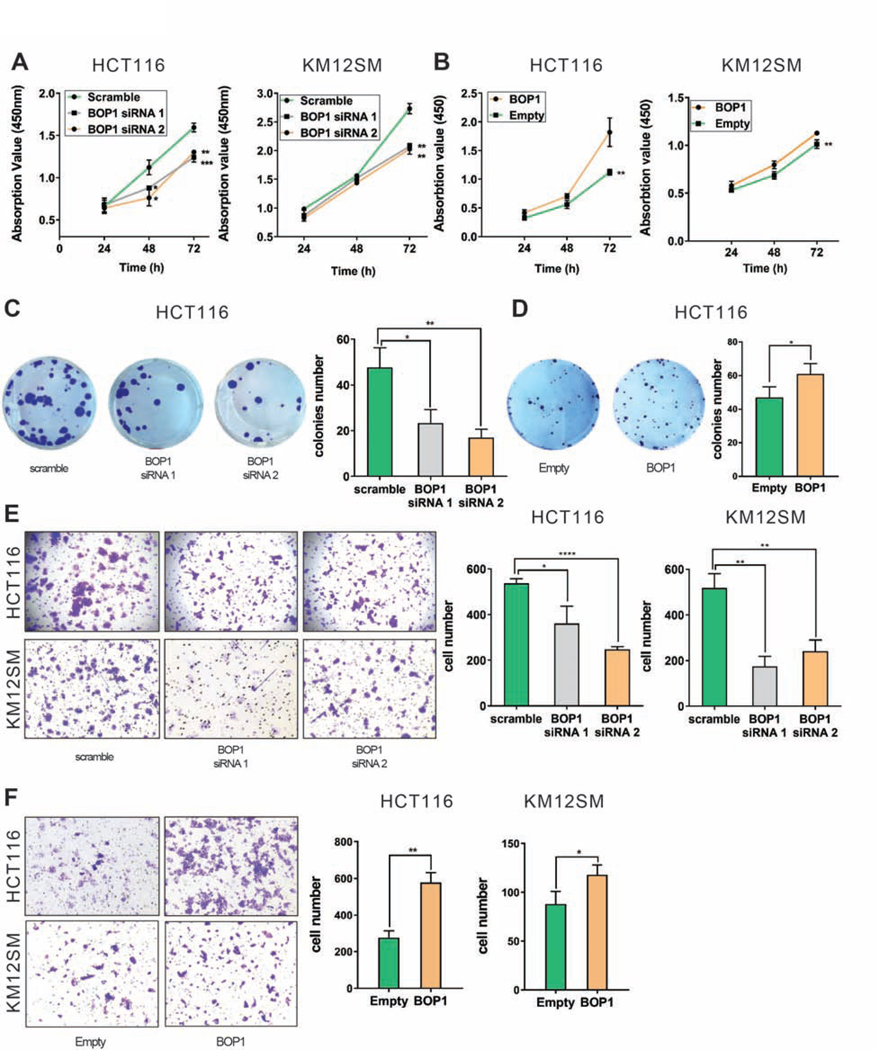
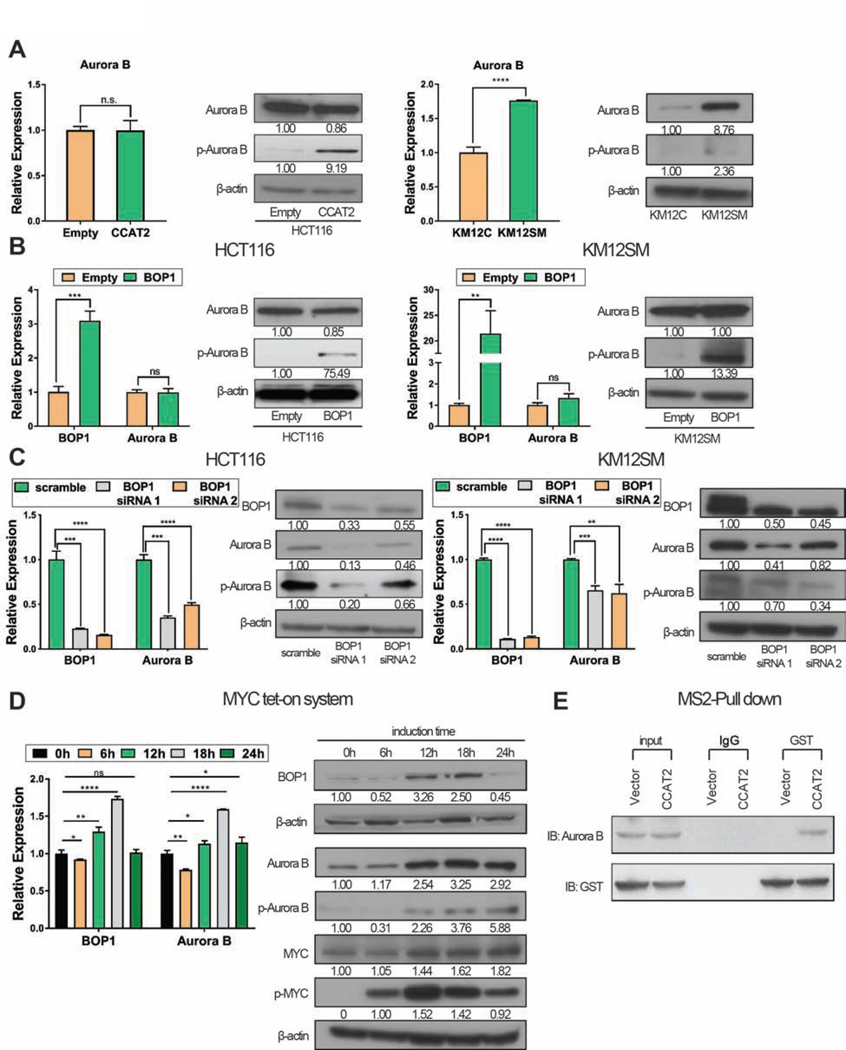
High expression of CCAT2 induced CIN in CRC cell lines and increased resistance to 5-fluorouracil and oxaliplatin. Mice that expressed the CCAT2 transgene developed chromosome abnormalities, and colon organoids derived from crypt cells of these mice had a higher percentage of chromosome abnormalities compared with organoids from control mice. The transgenic mice given azoxymethane and dextran sulfate sodium developed more and larger colon polyps than control mice given these agents. Microarray analysis and mass spectrometry indicated that expression of CCAT2 increased expression of genes involved in ribosome biogenesis and protein synthesis. CCAT2 lncRNA interacted directly with and stabilized BOP1 ribosomal biogenesis factor (BOP1). CCAT2 also increased expression of MYC, which activated expression of BOP1. Overexpression of BOP1 in CRC cell lines resulted in chromosomal missegregation errors, and increased colony formation, and invasiveness, whereas BOP1 knockdown reduced viability. BOP1 promoted CIN by increasing the active form of aurora kinase B, which regulates chromosomal segregation. BOP1 was overexpressed in polyp tissues from CCAT2 transgenic mice compared with healthy tissue. CCAT2 lncRNA and BOP1 mRNA or protein were all increased in microsatellite stable tumors (characterized by CIN), but not in tumors with microsatellite instability compared with nontumor tissues. Increased levels of CCAT2 lncRNA and BOP1 mRNA correlated with each other and with shorter survival times of patients.
We found that overexpression of CCAT2 in colon cells promotes CIN and carcinogenesis by stabilizing and inducing expression of BOP1 an activator of aurora kinase B. Strategies to target this pathway might be developed for treatment of patients with microsatellite stable colorectal tumors.
染色体不稳定性(CIN)是一种促进转移和对治疗产生耐药性的致癌事件,但具体机制尚不清楚。结肠癌细胞相关转录物 2 基因(CCAT2)的表达与 CIN 相关,该基因编码一个长非编码 RNA(lncRNA),但人们对 CCAT2 lncRNA 如何调节这种促进癌症发生的特性知之甚少。
我们对过表达 CCAT2 的结直肠癌细胞系(HCT116、KM12C/SM 和 HT29)和携带 CCAT2 转基因和不携带(对照)的 C57BL/6N 小鼠结肠类器官进行了细胞遗传学分析。我们还通过免疫荧光显微镜、γ-H2AX 和衰老测定对 CRC 细胞进行了分析。CCAT2 转基因和对照小鼠接受了氧化偶氮甲烷和葡聚糖硫酸钠处理,以诱导结肠肿瘤。我们进行了基因表达谱和质谱分析,以检测 CCAT2 lncRNA 的下游靶标。我们使用 MS2 下拉、RNA 免疫沉淀和选择性 2'-羟基乙酰化分析引物延伸分析来研究 CCAT2 与下游蛋白之间的相互作用。将下游蛋白在 CRC 细胞中过表达,并分析 CIN。我们在 5 个队列的 CRC 和非肿瘤组织中测量了基因表达水平,其中包括 900 多名患者。
CCAT2 的高表达可诱导 CRC 细胞系发生 CIN,并增加对 5-氟尿嘧啶和奥沙利铂的耐药性。表达 CCAT2 转基因的小鼠发生染色体异常,并且这些小鼠的隐窝细胞衍生的结肠类器官与对照小鼠的类器官相比,具有更高比例的染色体异常。给予氧化偶氮甲烷和葡聚糖硫酸钠的转基因小鼠比给予这些药物的对照小鼠形成更多和更大的结肠息肉。微阵列分析和质谱分析表明,CCAT2 的表达增加了参与核糖体生物发生和蛋白质合成的基因的表达。CCAT2 lncRNA 与核糖体生物发生因子 BOP1 直接相互作用并稳定其表达。CCAT2 还增加了 MYC 的表达,后者激活了 BOP1 的表达。在 CRC 细胞系中过表达 BOP1 导致染色体错分错误,并增加集落形成和侵袭性,而 BOP1 敲低则降低了细胞活力。BOP1 通过增加调节染色体分离的极光激酶 B 的活性形式来促进 CIN。BOP1 在 CCAT2 转基因小鼠的息肉组织中表达高于健康组织。CCAT2 lncRNA 和 BOP1 mRNA 或蛋白在微卫星稳定肿瘤(以 CIN 为特征)中均升高,但在具有微卫星不稳定性的肿瘤中与非肿瘤组织相比不升高。CCAT2 lncRNA 和 BOP1 mRNA 水平的升高相互关联,并与患者生存时间缩短相关。
我们发现,CCAT2 在结肠细胞中的过表达通过稳定和诱导 Aurora 激酶 B 的激活因子 BOP1 的表达,促进 CIN 和癌症发生。针对该途径的策略可能会被开发用于治疗微卫星稳定的结直肠肿瘤患者。