Department of Epidemiology and Biostatistics, Institute of Public Health, College of Medicine and Health Sciences, University of Gondar, Gondar, Ethiopia.
BMC Health Serv Res. 2020 Aug 17;20(1):760. doi: 10.1186/s12913-020-05639-y.
The high maternal mortality, home delivery, unwanted pregnancies, incidence of unsafe abortion, and unmeet family planning needs are maternal health gaps attributed to health care access barriers and responsible for the observed health care disparities. Over the last decades remarkable achievements have made in relation to maternal health problems and the reduction of health care access barriers. Thus, this study aimed to assess the decomposition and spatial-temporal analysis of health care access challenges among reproductive-age women in Ethiopia.
Secondary data analysis was conducted based on the three consecutive Ethiopian Demographic and Health Surveys (2005-2016 EDHSs). A total weighted sample of 46,235 reproductive-age women was included in this study. A logit based multivariate decomposition analysis was employed for identifying factors contributing to the overall decrease in health care access challenges over time. For the spatial analysis, ArcGIS version 10.6 and SaTScan™ version 9.6 were used to explore hotspot areas of health care access challenges in Ethiopia over time. Variables with p-value < 5% in the multivariable Logit based multivariate decomposition analysis were considered as significantly contributed predictors for the decrease in health care access challenges over time.
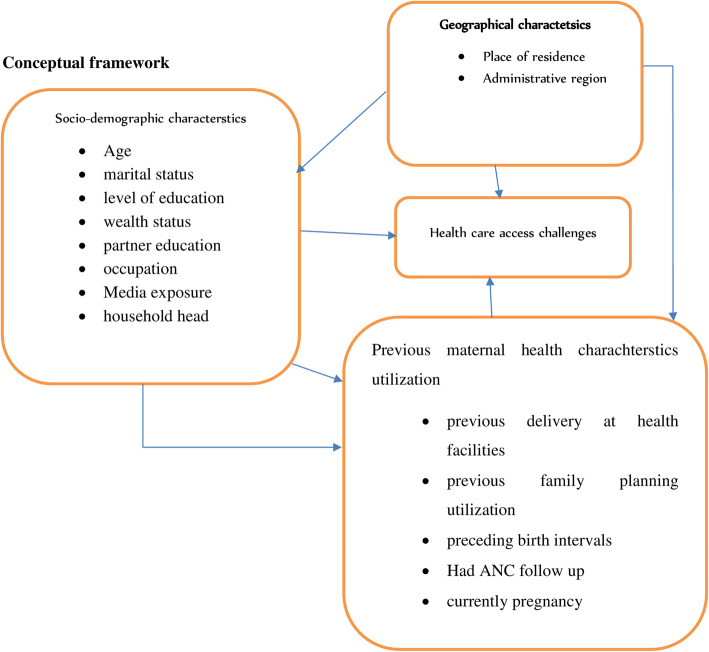
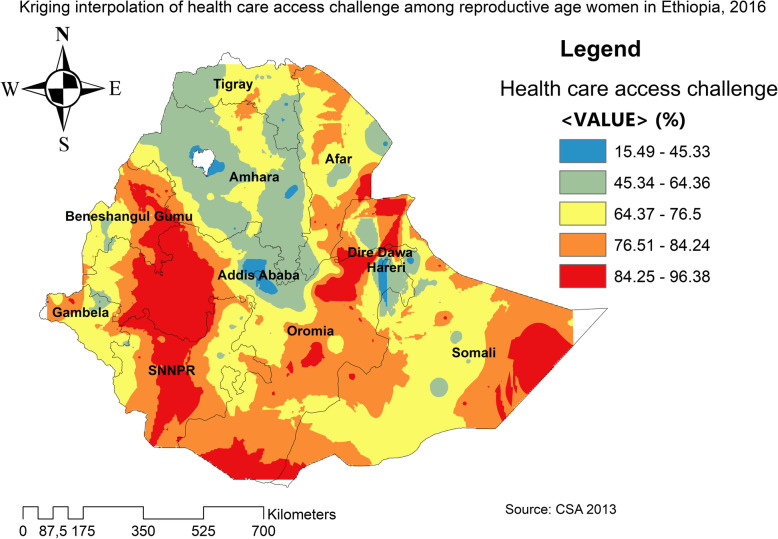
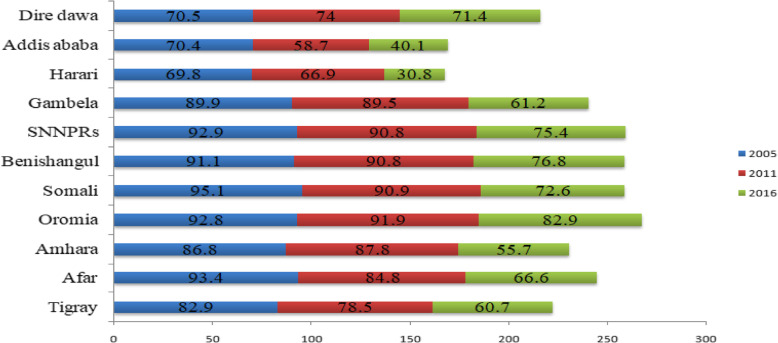
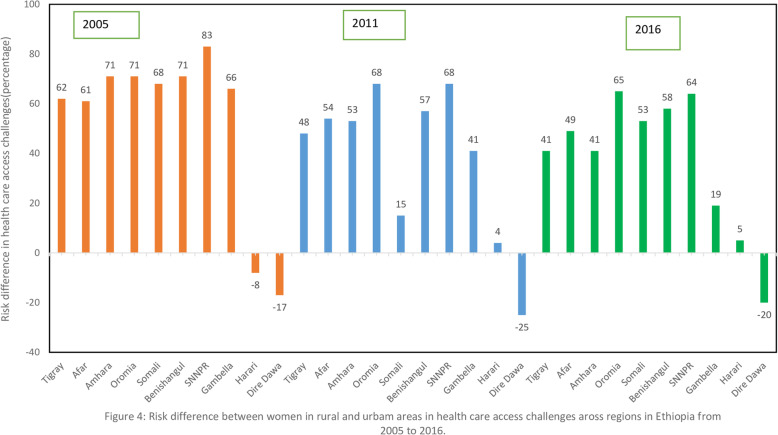
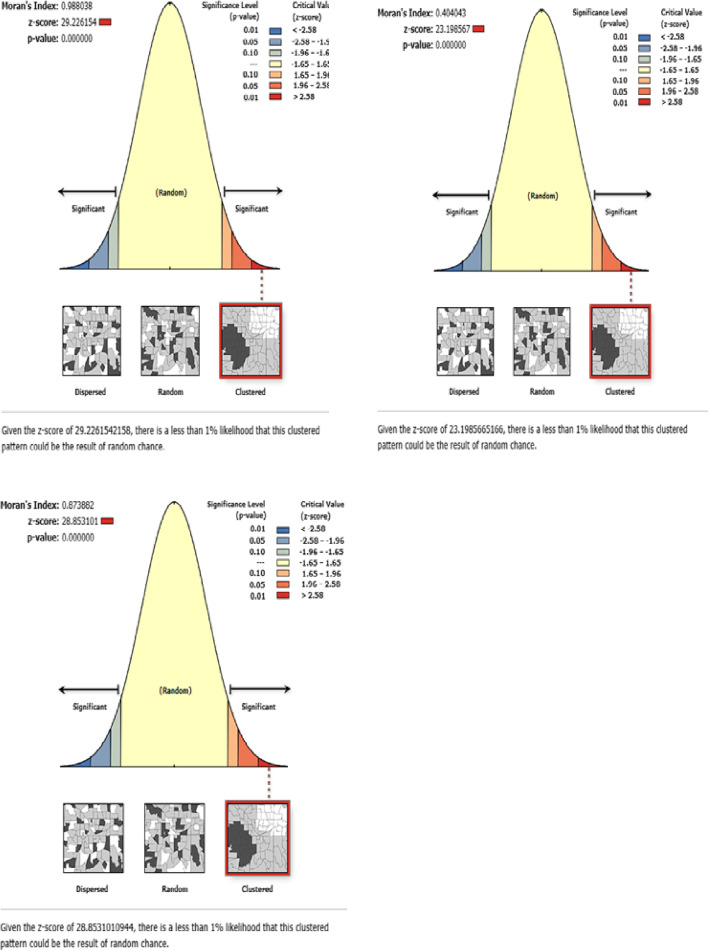
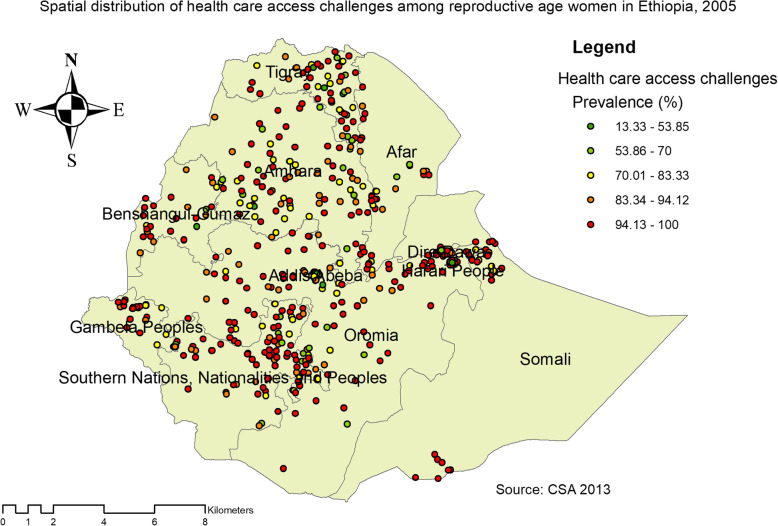
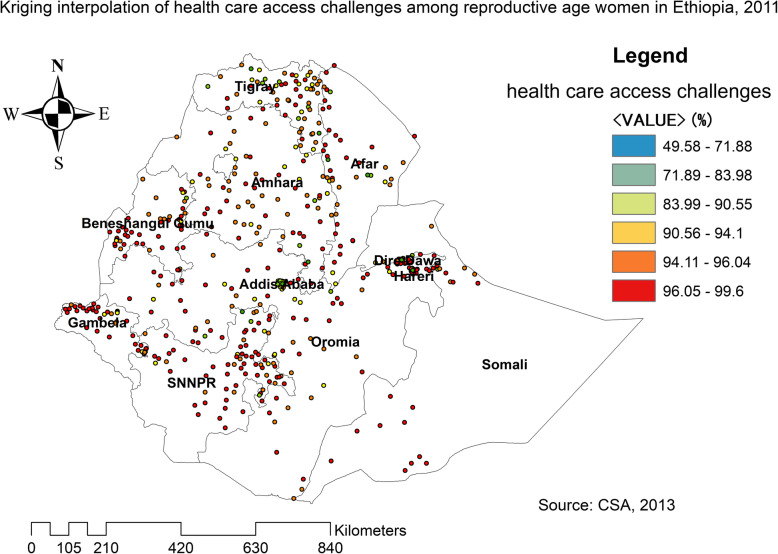
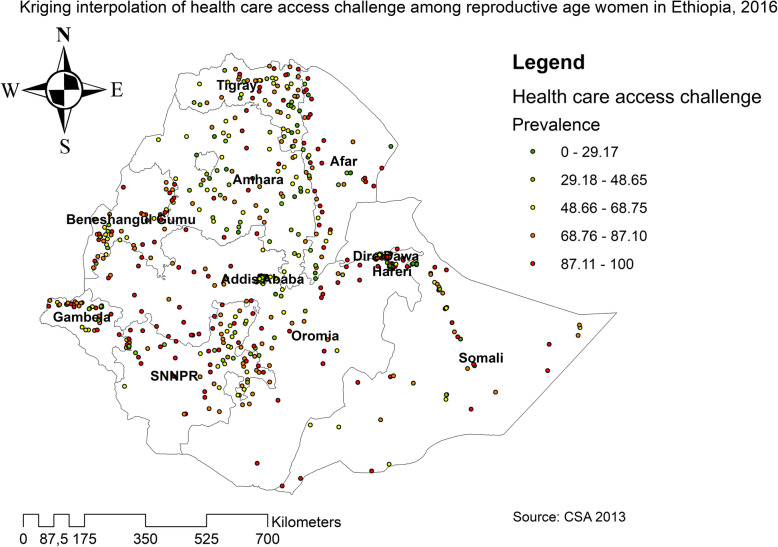
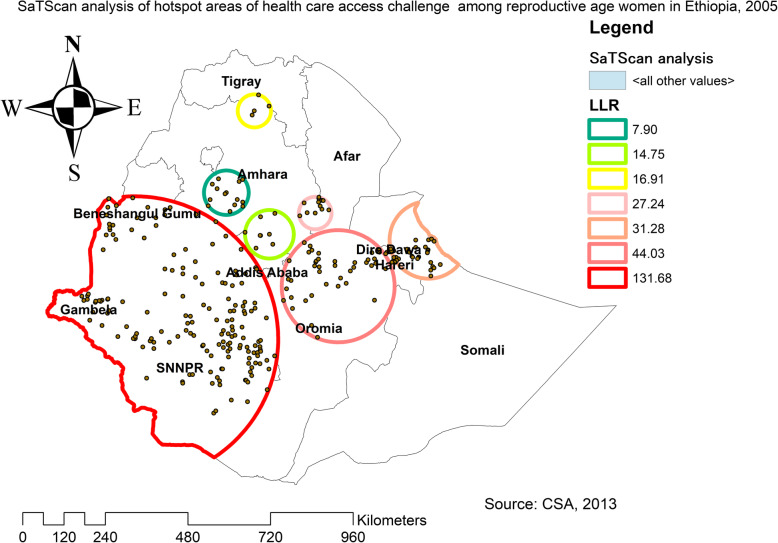
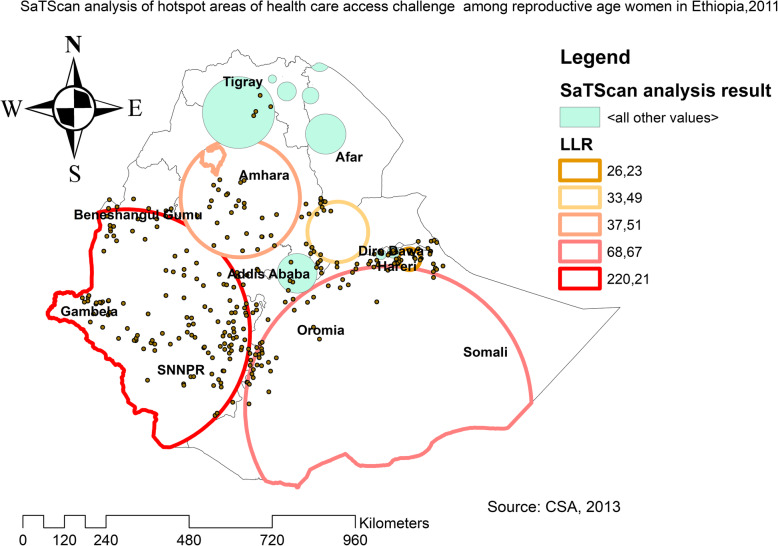
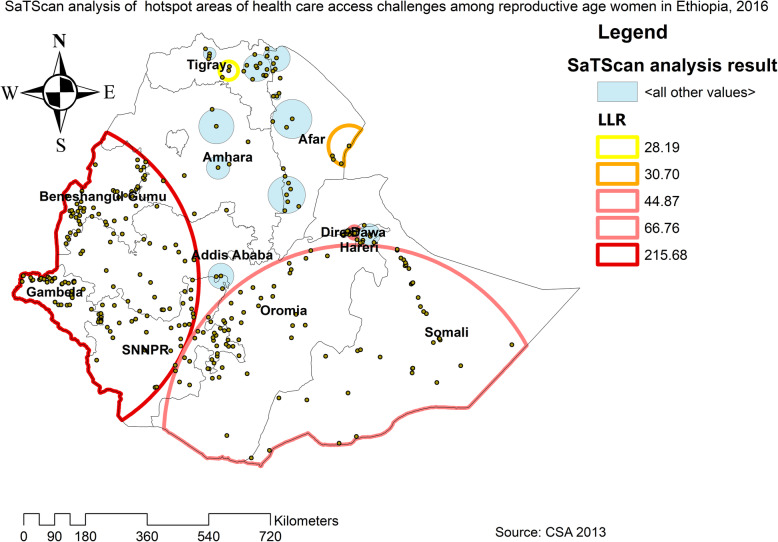
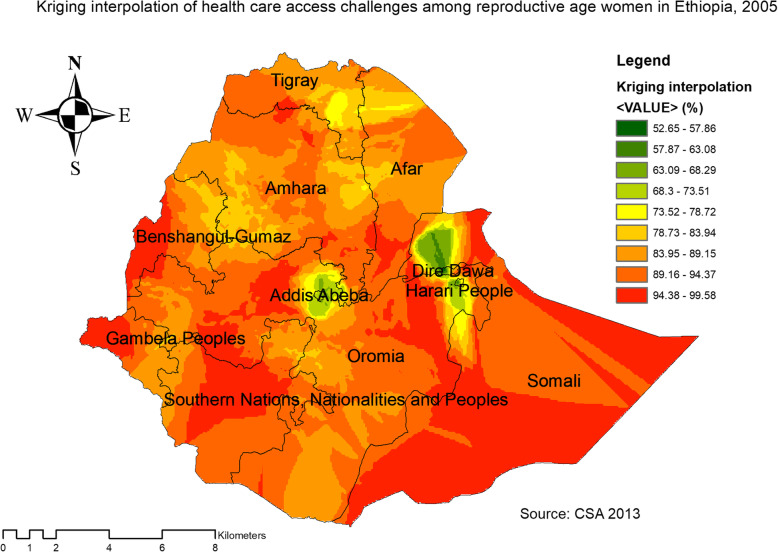
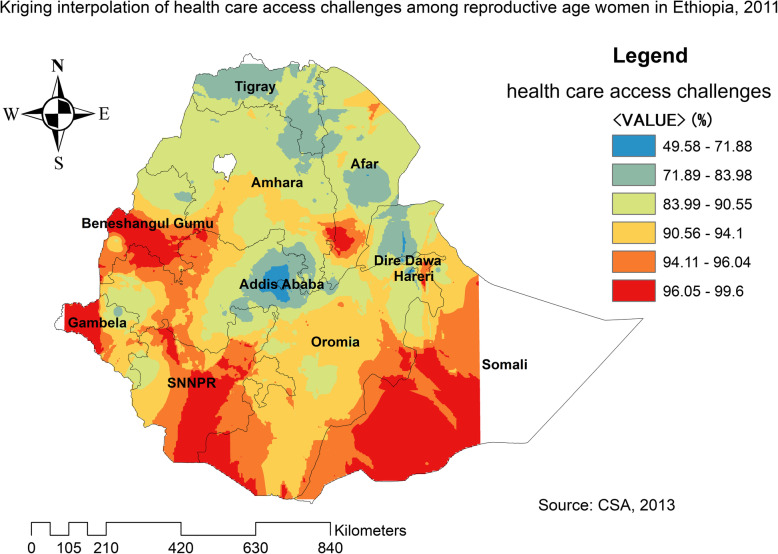
The mean age of the women was 27.8(±9.4) years in 2005, 27.7(±9.2) years in 2011, and 27.9 (±9.1) years in 2016. Health care access challenges have been significantly decreased from 96% in 2005 to 70% in 2016 with the Annual Rate of Reduction (ARR) of 2.7%. In the decomposition analysis, about 85.2% of the overall decrease in health care access challenge was due to the difference in coefficient and 14.8% were due to differences in the composition of the women (endowment) across the surveys. Socio-demographic characteristics (age, residence, level of education, female household head, better wealth and media exposure) and service utilization history before the survey (facility delivery and had ANC follow up) contribute to the observed decrease over time. The spatial analysis revealed that health care access challenges were significantly varied across the country over time. The SaTScan analysis identified significant hotspot areas of health care access challenges in the southern, eastern, and western parts of Ethiopia consistently over the surveys.
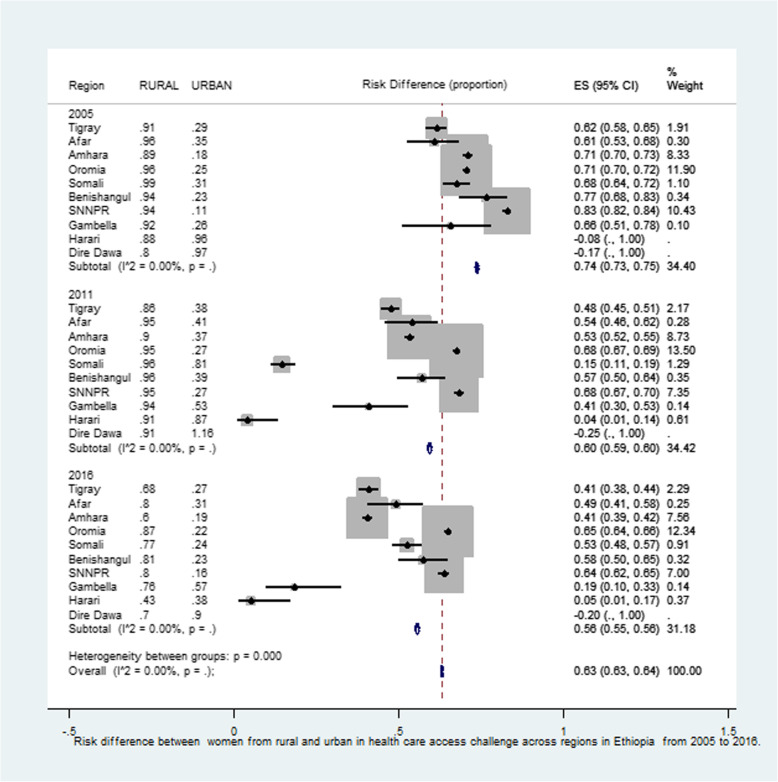
Perceived health care access challenges have shown a remarkable decrease over time but there was variation in barriers to health care access across Ethiopia. Media exposure improved mothers' health care access in Ethiopia. Public health programs targeting rural, uneducated, unemployed, and women whose husband had no education would be helpful to alleviate health care access problems in Ethiopia. Besides, improving mother's media exposure plays a significant role to improve mothers' health care access. Health care access challenges have significantly varied across the country. This suggests that further public health interventions are important for further reduction of health care access barriers through the uplifting socio-demographic and economic status of the population.
高孕产妇死亡率、家庭分娩、意外怀孕、不安全堕胎发生率以及计划生育需求未得到满足,这些都是孕产妇健康差距的原因,归咎于获得医疗保健的障碍,并导致了观察到的医疗保健差距。在过去的几十年中,在孕产妇健康问题和减少获得医疗保健的障碍方面取得了显著成就。因此,本研究旨在评估埃塞俄比亚育龄妇女获得医疗保健挑战的分解和时空分析。
基于三次连续的埃塞俄比亚人口与健康调查(2005-2016 年 EDHS)进行二次数据分析。本研究共纳入了 46235 名育龄妇女的总加权样本。采用基于对数的多变量分解分析来确定导致医疗保健获得挑战随时间整体减少的因素。对于空间分析,使用 ArcGIS 版本 10.6 和 SaTScan™ 版本 9.6 来探索埃塞俄比亚医疗保健获得挑战的热点地区随时间的变化。在基于多变量对数的多元分解分析中,p 值 < 0.05 的变量被认为是导致医疗保健获得挑战随时间减少的显著贡献预测因子。
2005 年妇女的平均年龄为 27.8(±9.4)岁,2011 年为 27.7(±9.2)岁,2016 年为 27.9 (±9.1)岁。医疗保健获得挑战从 2005 年的 96%显著下降到 2016 年的 70%,年减少率(ARR)为 2.7%。在分解分析中,医疗保健获得挑战整体减少的 85.2%归因于系数差异,14.8%归因于调查期间妇女(禀赋)构成的差异。社会人口特征(年龄、居住地、教育水平、女性户主、更好的财富和媒体接触)和调查前的服务利用情况(在医疗机构分娩并接受了 ANC 随访)有助于观察到的随时间减少。空间分析显示,医疗保健获得挑战在全国范围内随时间显著变化。SaTScan 分析一致确定了埃塞俄比亚南部、东部和西部存在医疗保健获得挑战的显著热点地区。
感知到的医疗保健获得挑战随时间显著减少,但埃塞俄比亚各地获得医疗保健的障碍存在差异。媒体接触改善了母亲在埃塞俄比亚的医疗保健获得。针对农村、未受过教育、失业以及丈夫没有教育的妇女的公共卫生计划将有助于缓解埃塞俄比亚的医疗保健获得问题。此外,提高母亲的媒体接触度对改善母亲的医疗保健获得具有重要意义。医疗保健获得挑战在全国范围内有显著差异。这表明,需要进一步的公共卫生干预措施,通过提高人口的社会人口和经济地位,进一步减少获得医疗保健的障碍。