Tebeje Tsion Mulat, Seifu Beminate Lemma, Seboka Binyam Tariku, Mare Kusse Urmale, Chekol Yazachew Moges, Tesfie Tigabu Kidie, Gelaw Negalgn Byadgie, Abebe Mesfin
School of Public Health, College of Health Science and Medicine, Dilla University, Dilla, Ethiopia.
Department of Public Health, College of Medicine and Health Science, Samara University, Afar, Ethiopia.
Heliyon. 2024 Jul 14;10(14):e34633. doi: 10.1016/j.heliyon.2024.e34633. eCollection 2024 Jul 30.
Pregnancy termination is a major public health problem, and complications of unsafe abortion are among the proximate and major causes of maternal mortality. Mapping the trend and spatiotemporal variation and identifying factors that are responsible for the changes in pregnancy termination help achieve the sustainable development goal of reducing maternal mortality in Ethiopia by understanding the epidemiology and regional variations.
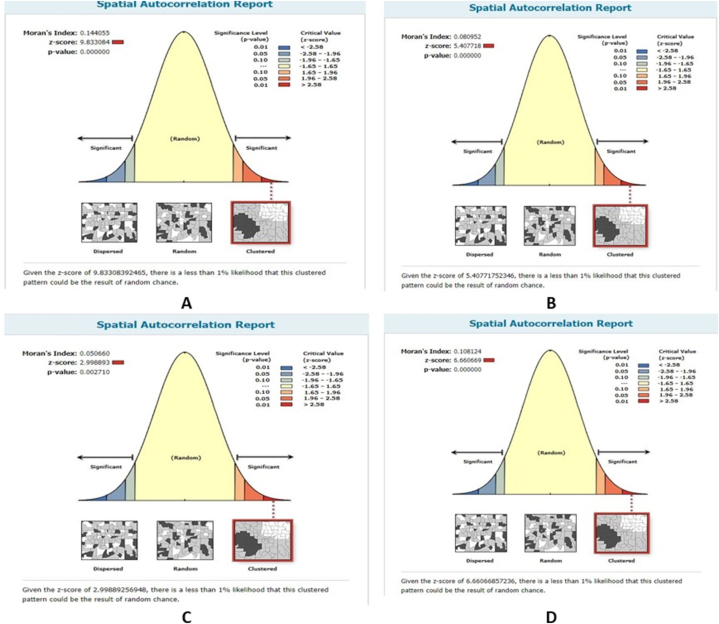
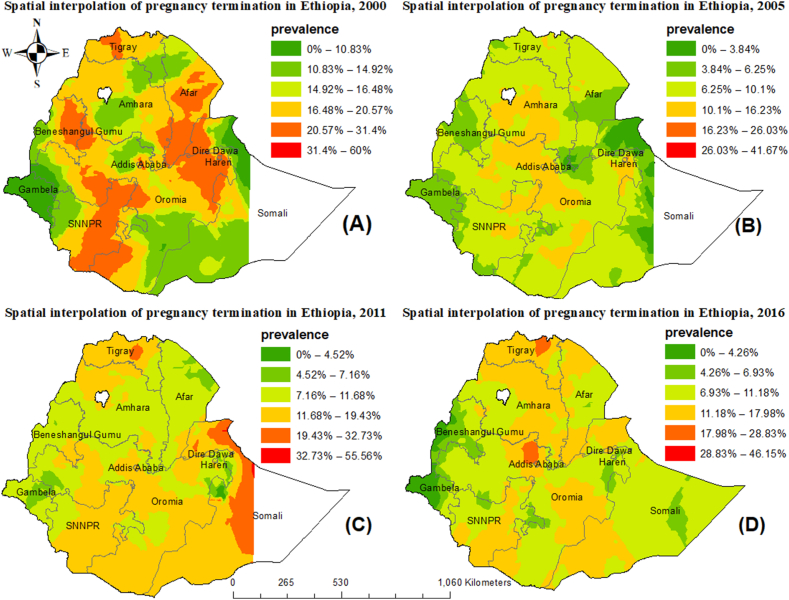
Data from the 2000-2016 Ethiopian Demographic and Health Survey were analyzed with a total weighted sample of 40,983 women of reproductive age. Variables with a p-value <0.05 in a logit multivariable decomposition analysis were considered significant predictors of the decline in pregnancy termination over time. Spatial analysis was used separately for each survey to show the changes in regional disparities in pregnancy termination in Ethiopia.
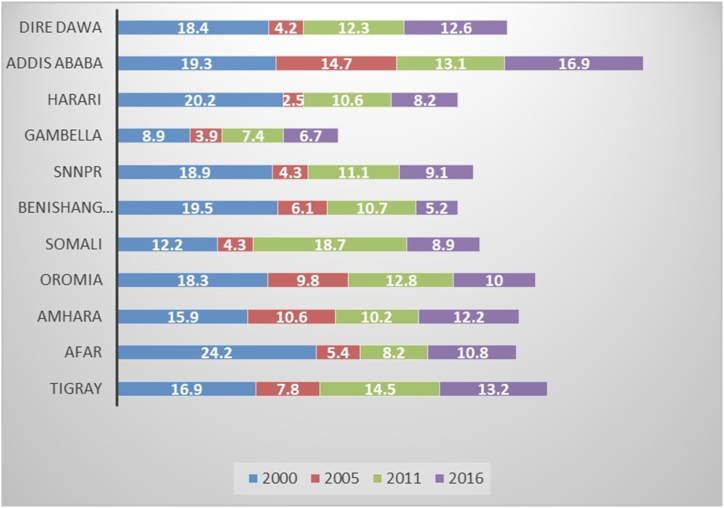
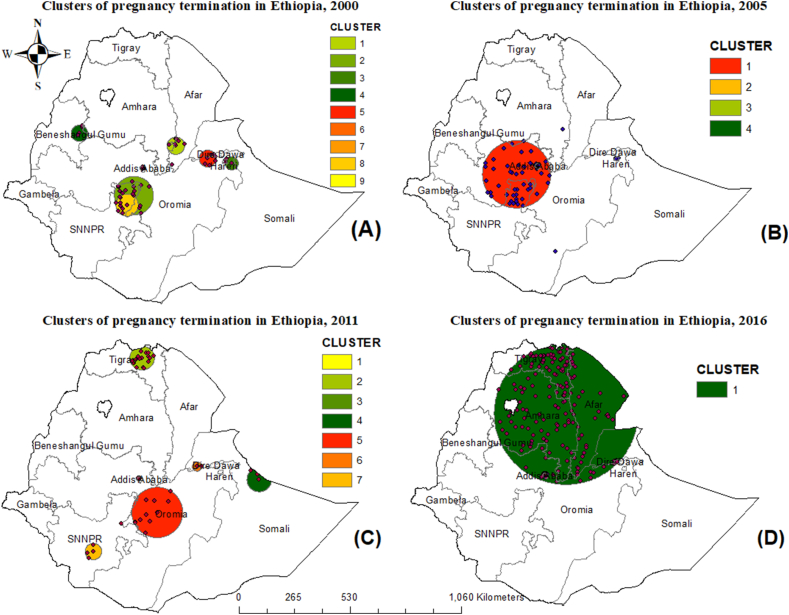
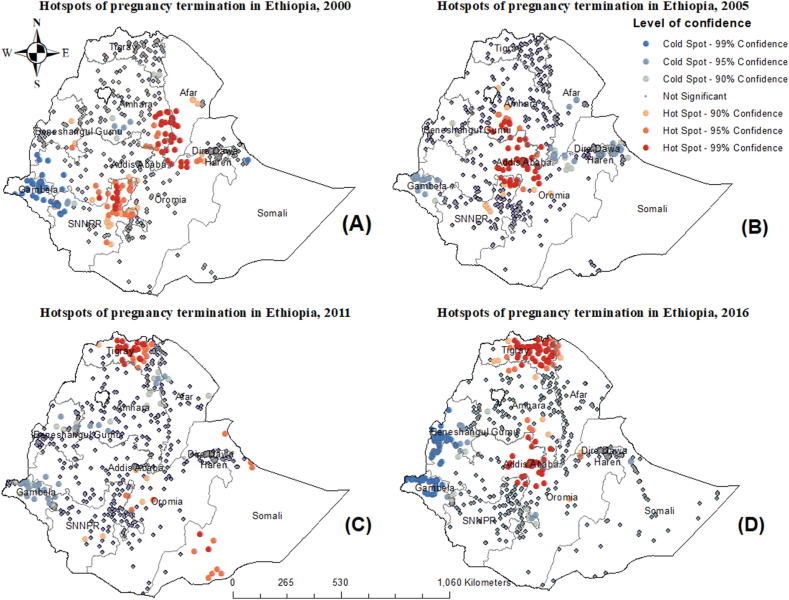
The magnitude of pregnancy termination among women of reproductive age decreased by 39.5 %, from 17.7 % in 2000 to 10.7 % in 2016. The difference in the effects of literacy, working status, marital status, age at first intercourse, age at first cohabitation, knowledge about contraceptives, and knowledge of the ovulatory cycle were the significant predictors that contributed to the change in pregnancy termination over time. Significant clusters of pregnancy terminations were observed in central and northern Ethiopia (Addis Ababa, eastern Amhara, and Tigray regions).
Despite the substantial decrease in terminated pregnancies over time in Ethiopia, the magnitude is still high. The government should focus on promoting education for girls and women, providing reproductive health education, including access to contraceptives, and raising the minimum age for girls to engage in sexual activities or marriage by implementing policies.
人工流产是一个重大的公共卫生问题,不安全堕胎的并发症是孕产妇死亡的直接和主要原因之一。通过了解埃塞俄比亚人工流产的流行病学和地区差异,绘制其趋势和时空变化图,并确定导致人工流产变化的因素,有助于实现降低孕产妇死亡率这一可持续发展目标。
对2000 - 2016年埃塞俄比亚人口与健康调查的数据进行分析,总加权样本为40983名育龄妇女。在logit多变量分解分析中p值<0.05的变量被视为人工流产随时间下降的显著预测因素。对每次调查分别进行空间分析,以显示埃塞俄比亚人工流产地区差异的变化。
育龄妇女的人工流产率从2000年的17.7%下降到2016年的10.7%,降幅为39.5%。识字率、工作状况、婚姻状况、首次性交年龄、首次同居年龄、避孕知识和排卵周期知识的影响差异是导致人工流产随时间变化的显著预测因素。在埃塞俄比亚中部和北部(亚的斯亚贝巴、阿姆哈拉东部和提格雷地区)观察到显著的人工流产聚集区。
尽管埃塞俄比亚人工流产率随时间大幅下降,但幅度仍然很高。政府应通过实施政策,专注于促进女童和妇女教育,提供生殖健康教育,包括提供避孕措施,并提高女童从事性活动或结婚的最低年龄。