Department of Medicine 1, Kussmaul Campus for Medical Research, University of Erlangen-Nürnberg, Hartmannstr.14, 91052, Erlangen, Germany.
Deutsches Zentrum Immuntherapie (DZI), Ulmenweg 18, 91054, Erlangen, Germany.
J Mol Med (Berl). 2020 Oct;98(10):1385-1395. doi: 10.1007/s00109-020-01958-z. Epub 2020 Aug 18.
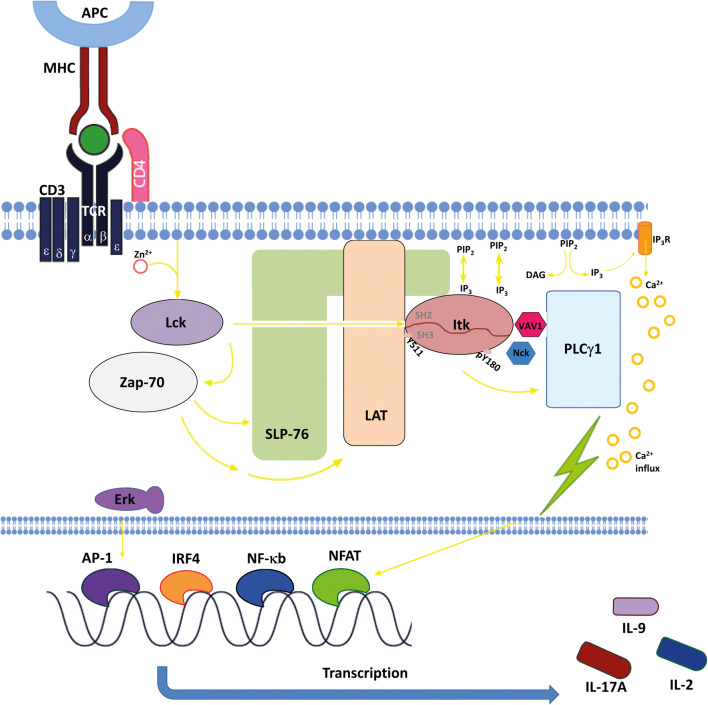
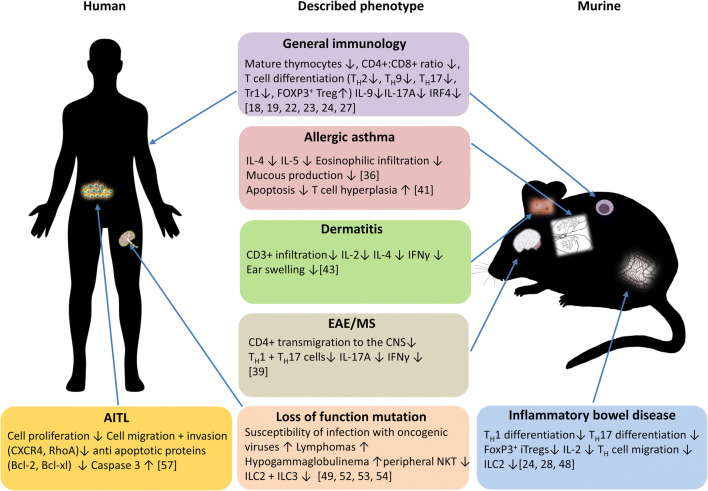
ITK (IL-2-inducible tyrosine kinase) belongs to the Tec family kinases and is mainly expressed in T cells. It is involved in TCR signalling events driving processes like T cell development as well as Th2, Th9 and Th17 responses thereby controlling the expression of pro-inflammatory cytokines. Studies have shown that ITK is involved in the pathogenesis of autoimmune diseases as well as in carcinogenesis. The loss of ITK or its activity either by mutation or by the use of inhibitors led to a beneficial outcome in experimental models of asthma, inflammatory bowel disease and multiple sclerosis among others. In humans, biallelic mutations in the ITK gene locus result in a monogenetic disorder leading to T cell dysfunction; in consequence, mainly EBV infections can lead to severe immune dysregulation evident by lymphoproliferation, lymphoma and hemophagocytic lymphohistiocytosis. Furthermore, patients who suffer from angioimmunoblastic T cell lymphoma have been found to express significantly more ITK. These findings put ITK in the strong focus as a target for drug development.
ITK(白细胞介素 2 诱导的酪氨酸激酶)属于 Tec 家族激酶,主要在 T 细胞中表达。它参与 TCR 信号事件,驱动 T 细胞发育以及 Th2、Th9 和 Th17 反应等过程,从而控制促炎细胞因子的表达。研究表明,ITK 参与自身免疫性疾病和癌症的发病机制。ITK 的缺失或其活性丧失(通过突变或使用抑制剂)导致哮喘、炎症性肠病和多发性硬化症等实验模型中的有益结果。在人类中,ITK 基因座的双等位基因突变导致单基因疾病,导致 T 细胞功能障碍;因此,主要是 EBV 感染可导致严重的免疫失调,表现为淋巴组织增生、淋巴瘤和噬血细胞性淋巴组织细胞增多症。此外,患有血管免疫母细胞性 T 细胞淋巴瘤的患者被发现表达更多的 ITK。这些发现将 ITK 作为药物开发的靶点置于重要位置。