Department of Cardiology, Nanfang Hospital, Southern Medical University, Guangzhou, China.
Department of Anesthesiology, Nanfang Hospital, Southern Medical University, Guangzhou, China.
Clin Cardiol. 2020 Nov;43(11):1326-1333. doi: 10.1002/clc.23446. Epub 2020 Aug 17.
Ganglionated plexus (GP) ablation is used to treat atrial fibrillation (AF) and vasovagal syncope (VVS). However, the comparative effects of GP ablation in treating paroxysmal atrial fibrillation (PAF) and VVS have not been well studied.
The purpose of this study was to investigate the effects of intensive GP ablation on PAF and VVS.
PAF and VVS patients were enrolled in this study. Pulmonary vein isolation (PVI) was performed in the PAF group, and additional ablation was performed at GP sites. Anatomic ablation of left atrial GPs was performed in the VVS group. The primary endpoint was freedom from AF or other sustained atrial tachycardia and syncope recurrence.
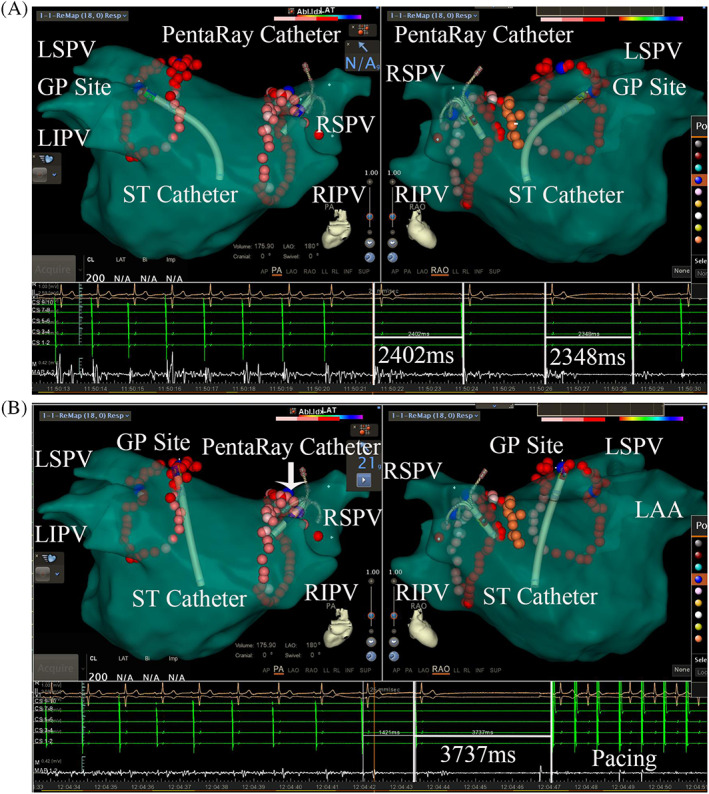
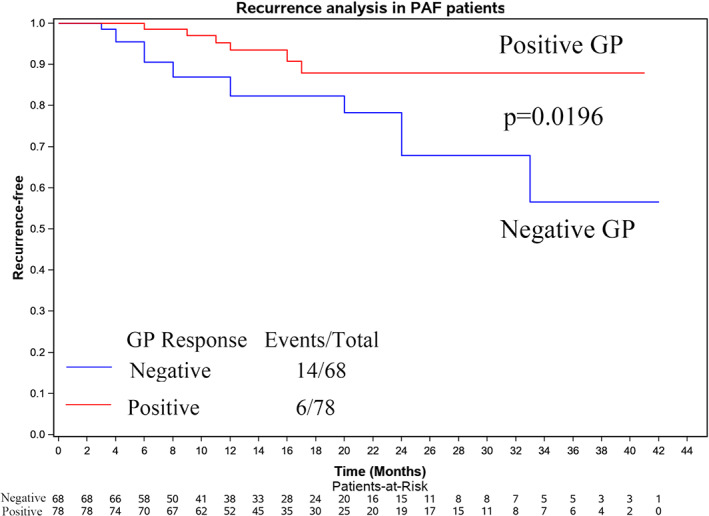
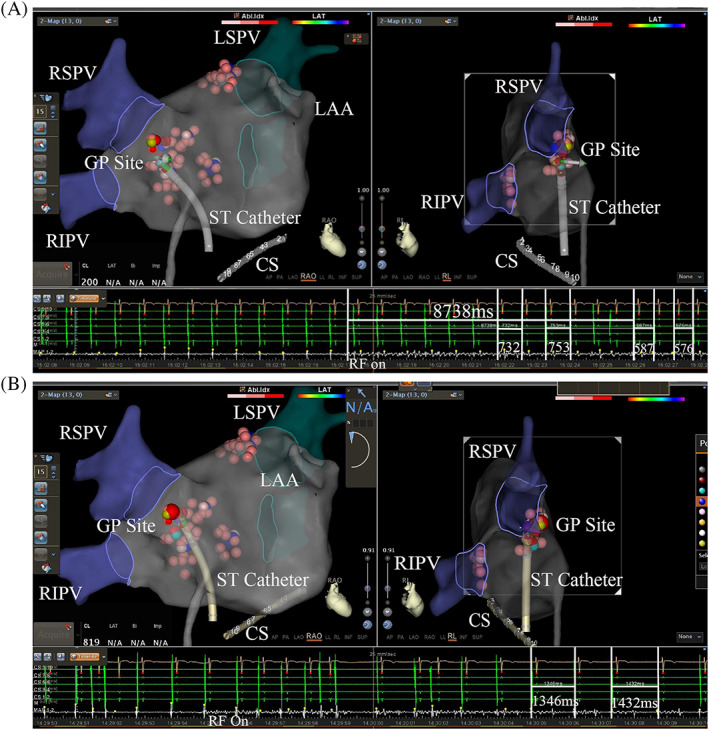
A total of 195 patients were enrolled: 146 patients with PAF, including eight patients with combined VVS (PAF group), and 49 patients with VVS (VVS group). Vasovagal response (VR) was achieved in 78 (53.4%) patients in the PAF group and 48 patients (98.0%) in the VVS group (P < .05). During the 17.8 ± 10.5 (range, 3-42) month follow-up, 126 (86.3%) patients were free of AF in the PAF group, and 45 (91.8%) patients in the VVS group had no syncope recurrence and significantly improved symptoms.
Anatomically guided intensive GP ablation showed efficient clinical outcomes for both groups of patients. Compared with PAF patients, VVS patients had more VR during ablation in the left atrium. Furthermore, VR during ablation indicated a better prognosis in PAF patients.
神经节丛消融术(GP)用于治疗心房颤动(AF)和血管迷走性晕厥(VVS)。然而,GP 消融术治疗阵发性心房颤动(PAF)和 VVS 的比较效果尚未得到很好的研究。
本研究旨在探讨密集型 GP 消融术治疗 PAF 和 VVS 的效果。
本研究纳入了 PAF 和 VVS 患者。PAF 组行肺静脉隔离(PVI),并在 GP 部位行附加消融。VVS 组行左房 GP 解剖消融。主要终点是无 AF 或其他持续性房性心动过速和晕厥复发。
共纳入 195 例患者:146 例 PAF 患者,其中 8 例合并 VVS(PAF 组),49 例 VVS 患者(VVS 组)。PAF 组中 78 例(53.4%)患者出现血管迷走反应(VR),VVS 组中 48 例(98.0%)患者出现 VR(P<.05)。在 17.8±10.5 个月(范围 3-42 个月)的随访中,PAF 组 126 例(86.3%)患者无 AF,VVS 组 45 例(91.8%)患者无晕厥复发且症状明显改善。
解剖指导的密集型 GP 消融术对两组患者均显示出有效的临床效果。与 PAF 患者相比,VVS 患者在左房消融时更易出现 VR。此外,消融时的 VR 提示 PAF 患者的预后更好。