Geisel School of Medicine at Dartmouth, Hanover, New Hampshire, United States of America.
PLoS Genet. 2020 Aug 19;16(8):e1008783. doi: 10.1371/journal.pgen.1008783. eCollection 2020 Aug.
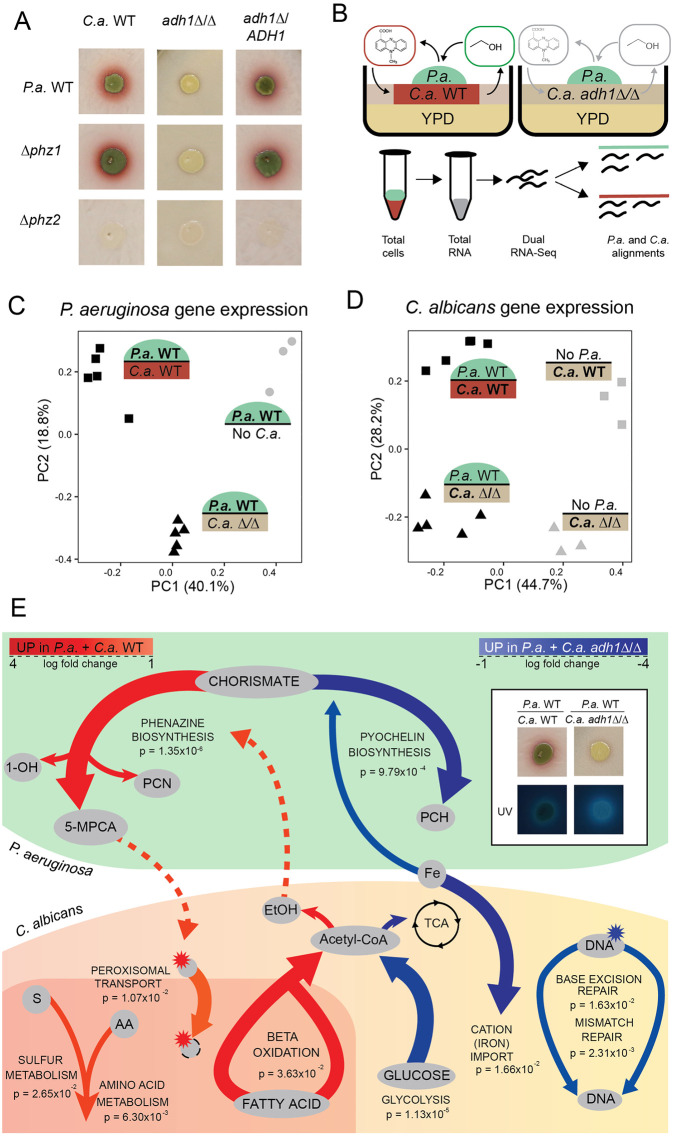
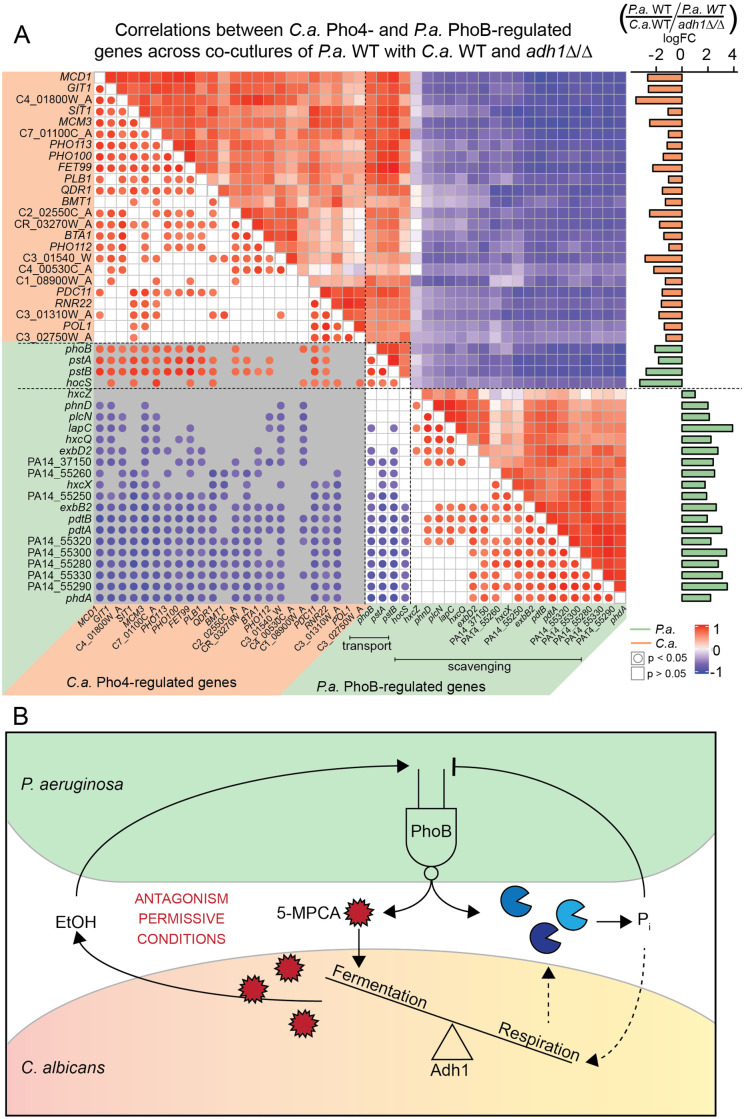
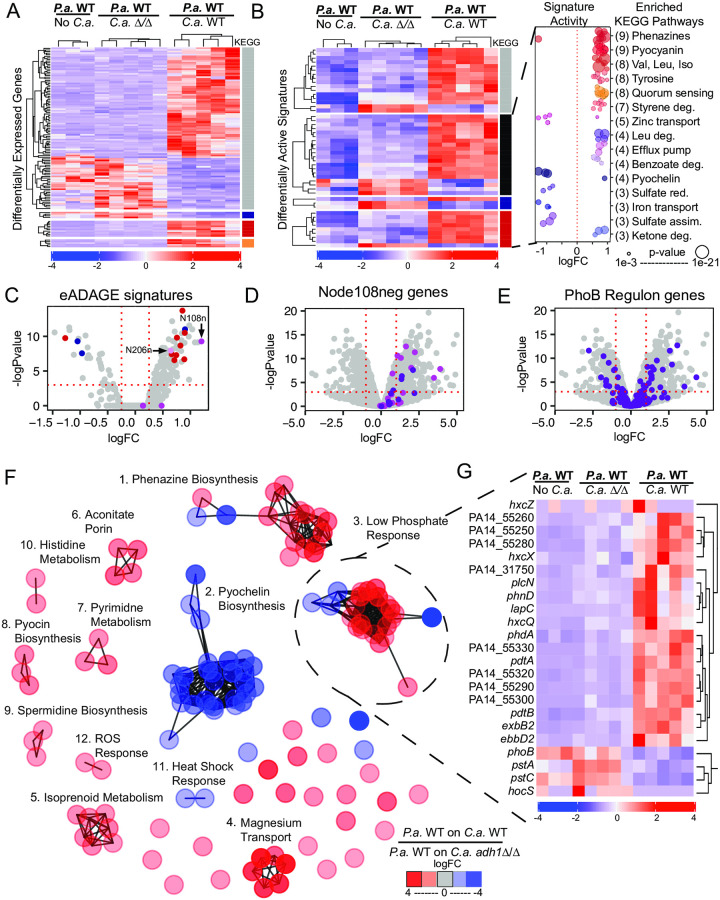
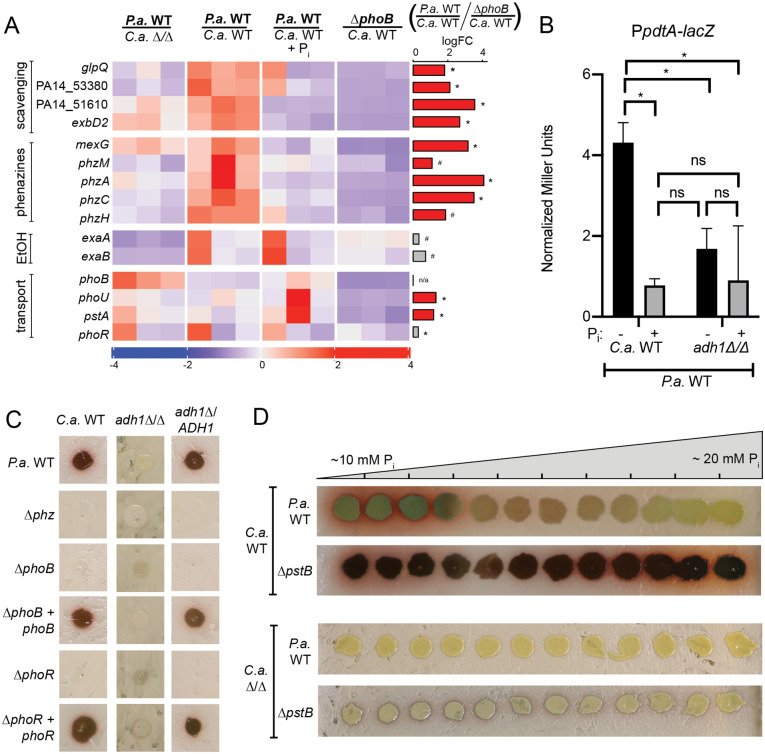
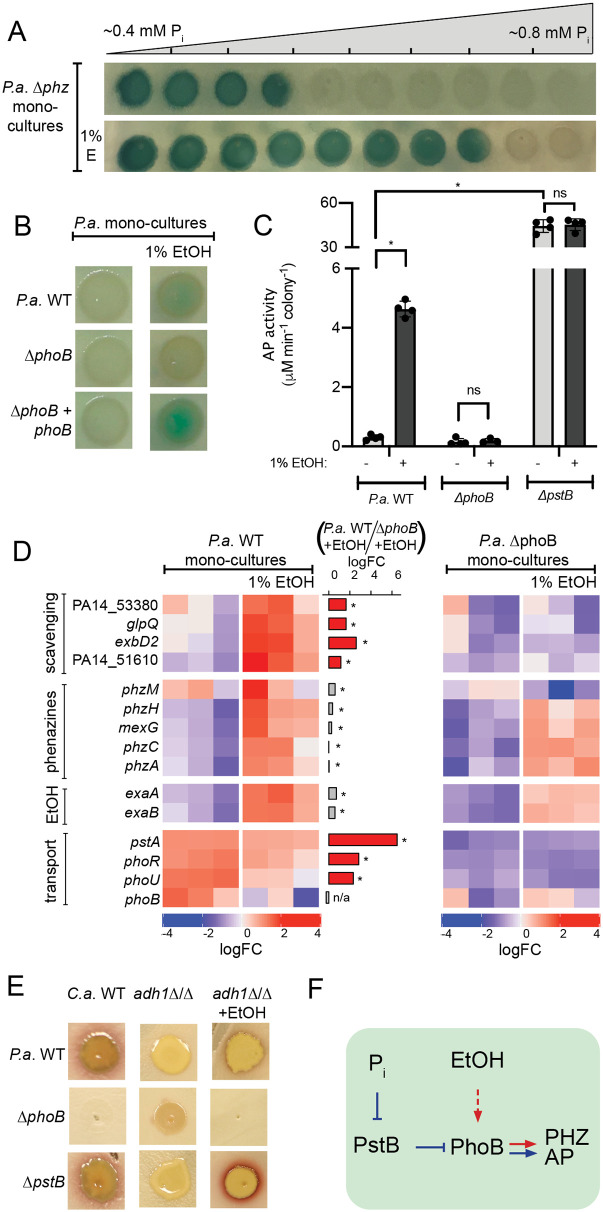
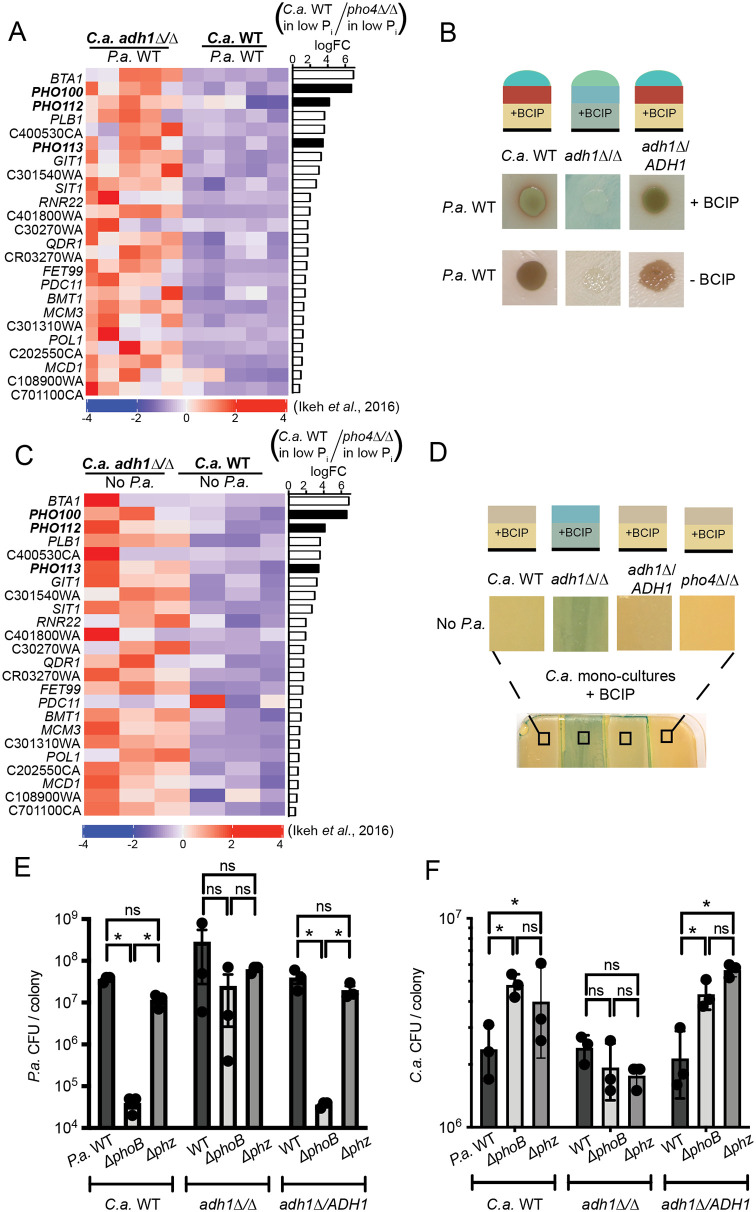
Pseudomonas aeruginosa and Candida albicans are opportunistic pathogens whose interactions involve the secreted products ethanol and phenazines. Here, we describe the role of ethanol in mixed-species co-cultures by dual-seq analyses. P. aeruginosa and C. albicans transcriptomes were assessed after growth in mono-culture or co-culture with either ethanol-producing C. albicans or a C. albicans mutant lacking the primary ethanol dehydrogenase, Adh1. Analysis of the RNA-Seq data using KEGG pathway enrichment and eADAGE methods revealed several P. aeruginosa responses to C. albicans-produced ethanol including the induction of a non-canonical low-phosphate response regulated by PhoB. C. albicans wild type, but not C. albicans adh1Δ/Δ, induces P. aeruginosa production of 5-methyl-phenazine-1-carboxylic acid (5-MPCA), which forms a red derivative within fungal cells and exhibits antifungal activity. Here, we show that C. albicans adh1Δ/Δ no longer activates P. aeruginosa PhoB and PhoB-regulated phosphatase activity, that exogenous ethanol complements this defect, and that ethanol is sufficient to activate PhoB in single-species P. aeruginosa cultures at permissive phosphate levels. The intersection of ethanol and phosphate in co-culture is inversely reflected in C. albicans; C. albicans adh1Δ/Δ had increased expression of genes regulated by Pho4, the C. albicans transcription factor that responds to low phosphate, and Pho4-dependent phosphatase activity. Together, these results show that C. albicans-produced ethanol stimulates P. aeruginosa PhoB activity and 5-MPCA-mediated antagonism, and that both responses are dependent on local phosphate concentrations. Further, our data suggest that phosphate scavenging by one species improves phosphate access for the other, thus highlighting the complex dynamics at play in microbial communities.
铜绿假单胞菌和白色念珠菌是机会性病原体,它们的相互作用涉及到分泌产物乙醇和吩嗪。在这里,我们通过双测序分析描述了乙醇在混合物种共培养中的作用。在单独培养或与产乙醇的白色念珠菌或缺乏主要乙醇脱氢酶 Adh1 的白色念珠菌突变体共培养中生长后,评估了铜绿假单胞菌和白色念珠菌的转录组。使用 KEGG 途径富集和 eADAGE 方法分析 RNA-Seq 数据,揭示了铜绿假单胞菌对白色念珠菌产生的乙醇的几种反应,包括非典型低磷酸盐反应的诱导,该反应受 PhoB 调节。白色念珠菌野生型,但不是白色念珠菌 adh1Δ/Δ,诱导铜绿假单胞菌产生 5-甲基吩嗪-1-羧酸(5-MPCA),该物质在真菌细胞内形成红色衍生物,具有抗真菌活性。在这里,我们表明白色念珠菌 adh1Δ/Δ 不再激活铜绿假单胞菌 PhoB 和 PhoB 调节的磷酸酶活性,外源性乙醇可以弥补这一缺陷,并且在允许磷酸盐水平的单一物种铜绿假单胞菌培养物中,乙醇足以激活 PhoB。共培养中乙醇和磷酸盐的交集在白色念珠菌中是相反的;白色念珠菌 adh1Δ/Δ 中受 Pho4 调节的基因表达增加,Pho4 是响应低磷酸盐的白色念珠菌转录因子,以及 Pho4 依赖性磷酸酶活性。这些结果表明,白色念珠菌产生的乙醇刺激铜绿假单胞菌 PhoB 活性和 5-MPCA 介导的拮抗作用,并且这两种反应都依赖于局部磷酸盐浓度。此外,我们的数据表明,一种物种对磷酸盐的掠夺会改善另一种物种对磷酸盐的获取,从而突出了微生物群落中发挥作用的复杂动态。