Division of Geriatric Medicine and Gerontology.
Department of Physical Medicine and Rehabilitation, and.
JCI Insight. 2020 Aug 20;5(16):136091. doi: 10.1172/jci.insight.136091.
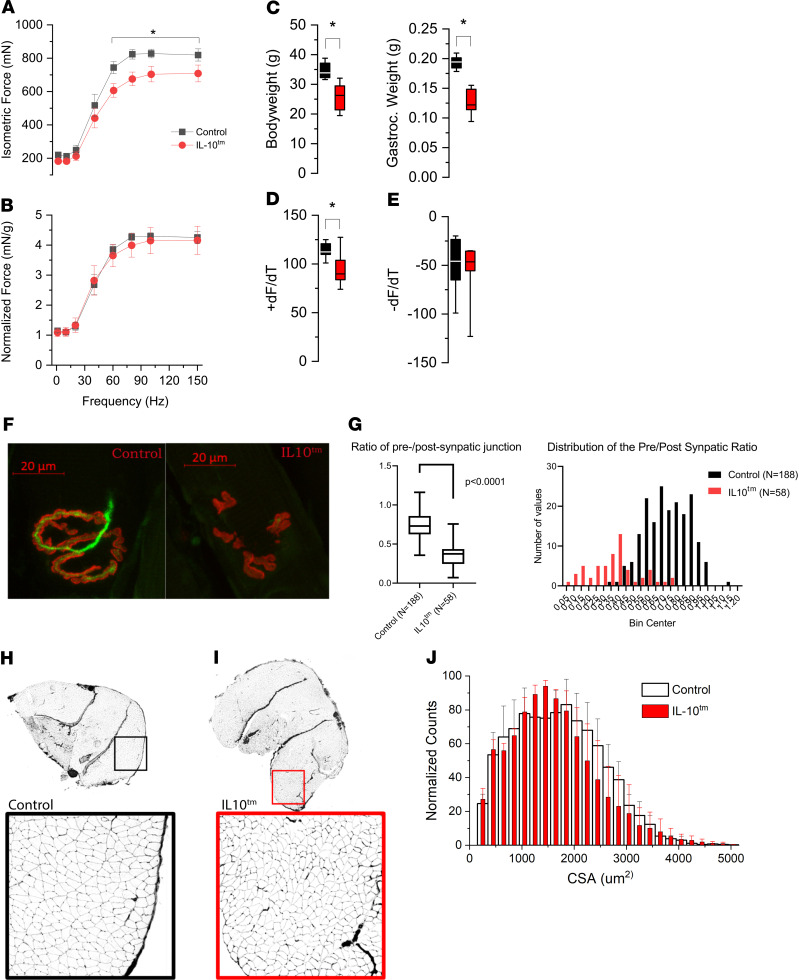
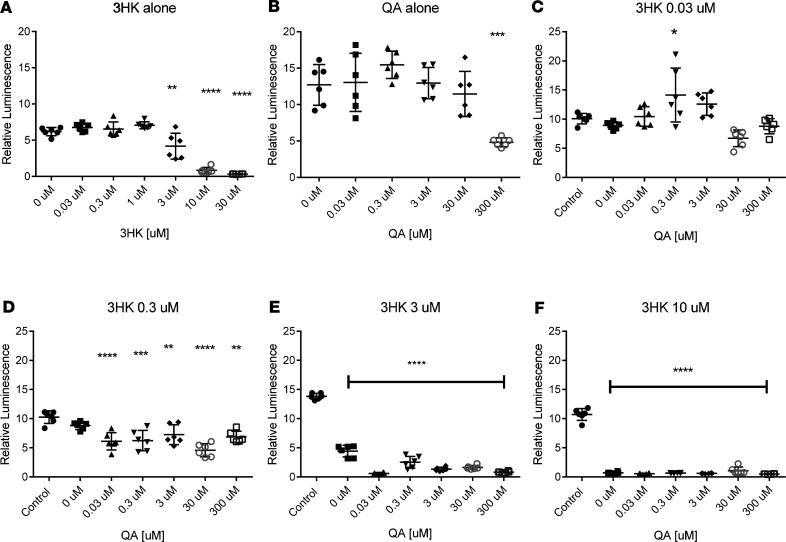
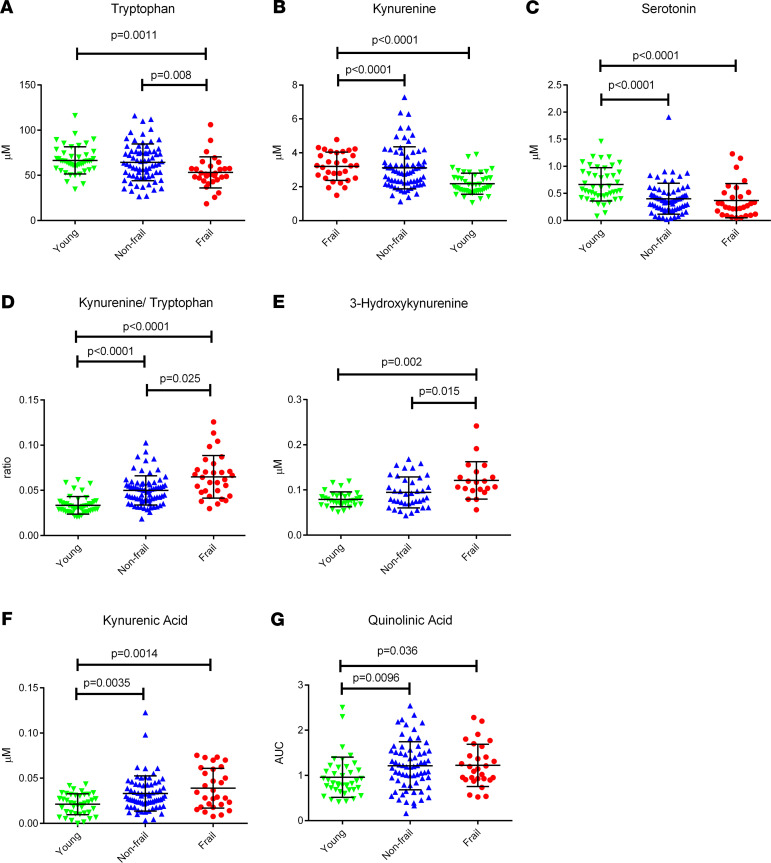
Chronic inflammation is associated with physical frailty and functional decline in older adults; however, the molecular mechanisms of this linkage are not understood. A mouse model of chronic inflammation showed reduced motor function and partial denervation at the neuromuscular junction. Metabolomic profiling of these mice and further validation in frail human subjects showed significant dysregulation in the tryptophan degradation pathway, including decreased tryptophan and serotonin, and increased levels of some neurotoxic kynurenines. In humans, kynurenine strongly correlated with age, frailty status, TNF-αR1 and IL-6, weaker grip strength, and slower walking speed. To study the effects of elevated neurotoxic kynurenines on motor neuronal cell viability and axonal degeneration, we used motor neuronal cells treated with 3-hydroxykynurenine and quinolinic acid and observed neurite degeneration in a dose-dependent manner and potentiation of toxicity between 3-hydroxykynurenine and quinolinic acid. These results suggest that kynurenines mediate neuromuscular dysfunction associated with chronic inflammation and aging.
慢性炎症与老年人的身体虚弱和功能下降有关;然而,这种关联的分子机制尚不清楚。慢性炎症的小鼠模型表现出运动功能下降和神经肌肉接头的部分去神经支配。对这些小鼠进行代谢组学分析,并在虚弱的人类受试者中进一步验证,显示色氨酸降解途径显著失调,包括色氨酸和血清素减少,以及一些神经毒性犬尿氨酸水平升高。在人类中,犬尿氨酸与年龄、虚弱状态、TNF-αR1 和 IL-6、握力减弱和行走速度变慢呈强相关性。为了研究升高的神经毒性犬尿氨酸对运动神经元细胞活力和轴突退化的影响,我们使用 3-羟基犬尿氨酸和喹啉酸处理运动神经元细胞,并观察到神经突退化呈剂量依赖性,并且 3-羟基犬尿氨酸和喹啉酸之间存在协同毒性。这些结果表明犬尿氨酸介导与慢性炎症和衰老相关的神经肌肉功能障碍。