Biomedical Science Programme and Centre for Diagnostic, Therapeutic and Investigative Studies, Faculty of Health Sciences, Universiti Kebangsaan Malaysia, Kuala Lumpur 53000, Malaysia.
Biomedical Science Programme and Center for Healthy Ageing & Wellness, Faculty of Health Sciences, Universiti Kebangsaan Malaysia, Kuala Lumpur 53000, Malaysia.
Int J Environ Res Public Health. 2020 Aug 13;17(16):5865. doi: 10.3390/ijerph17165865.
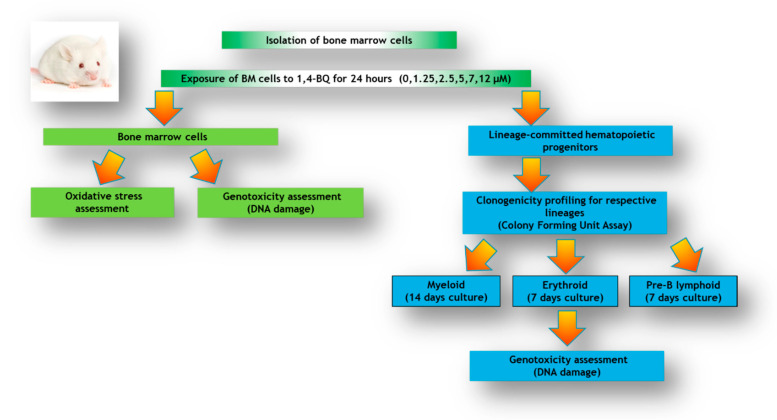
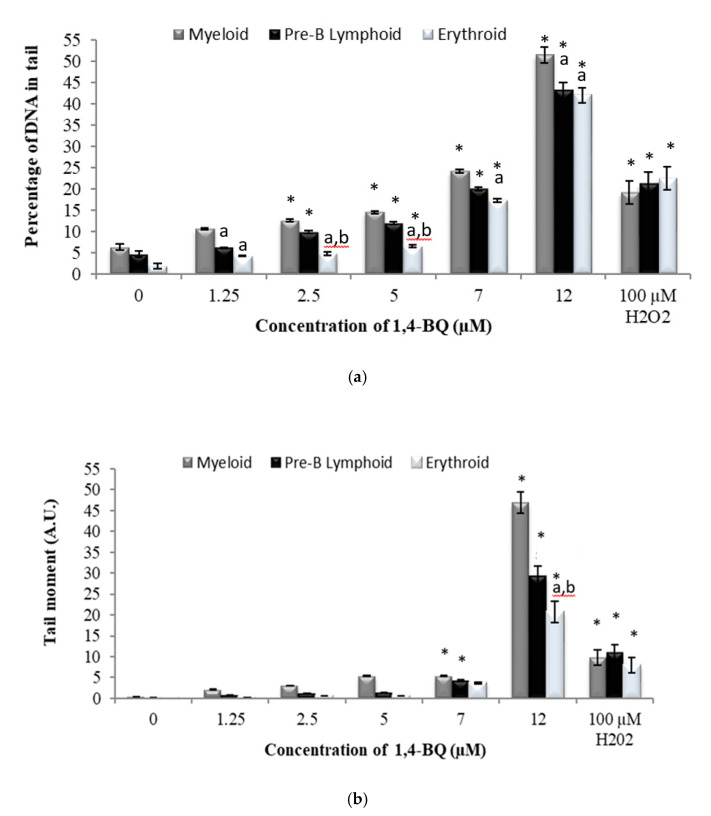
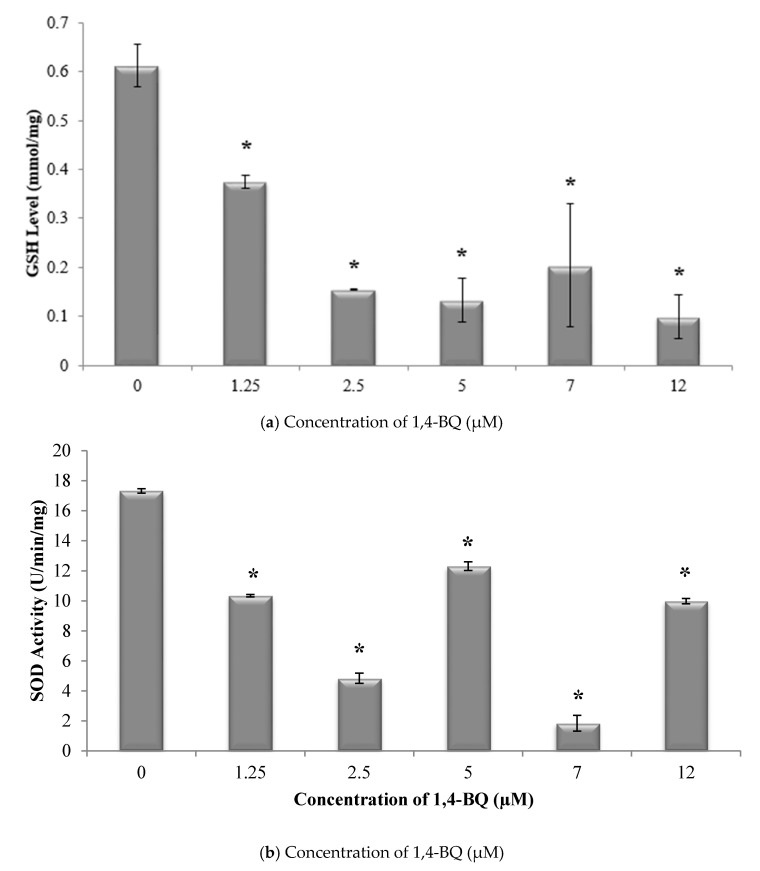
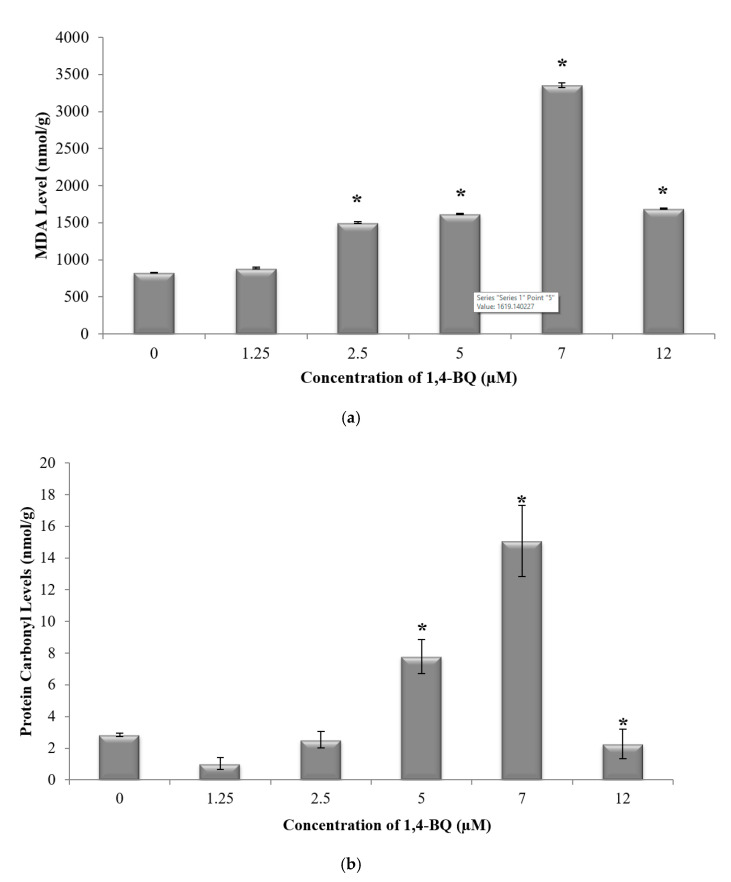
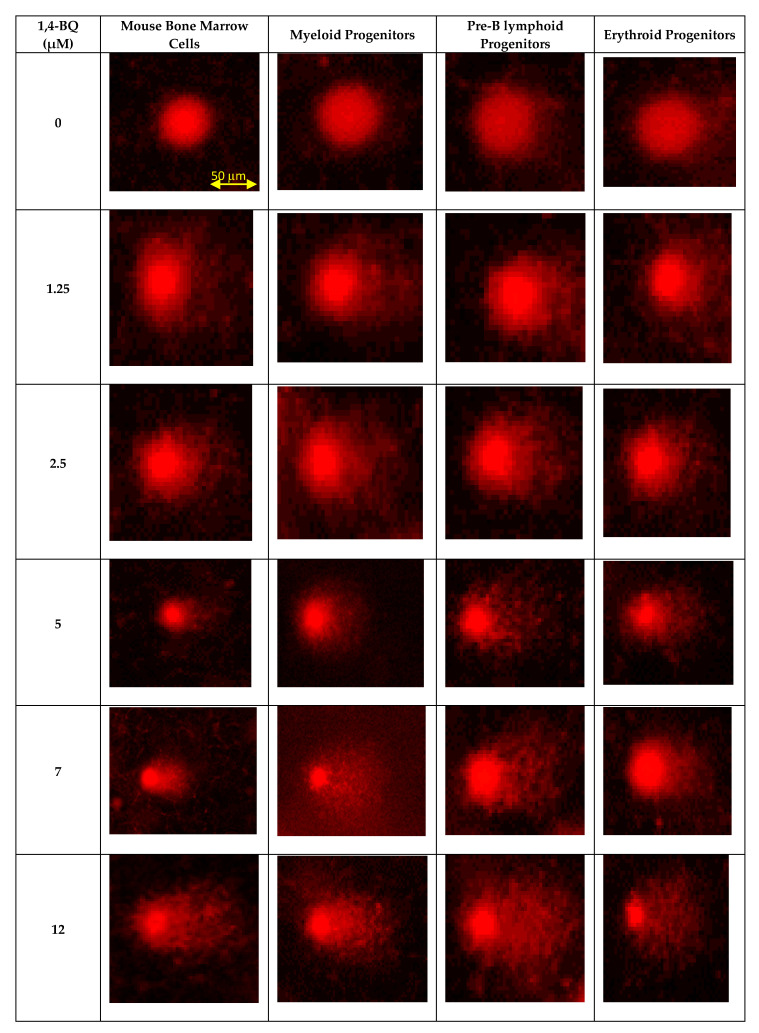
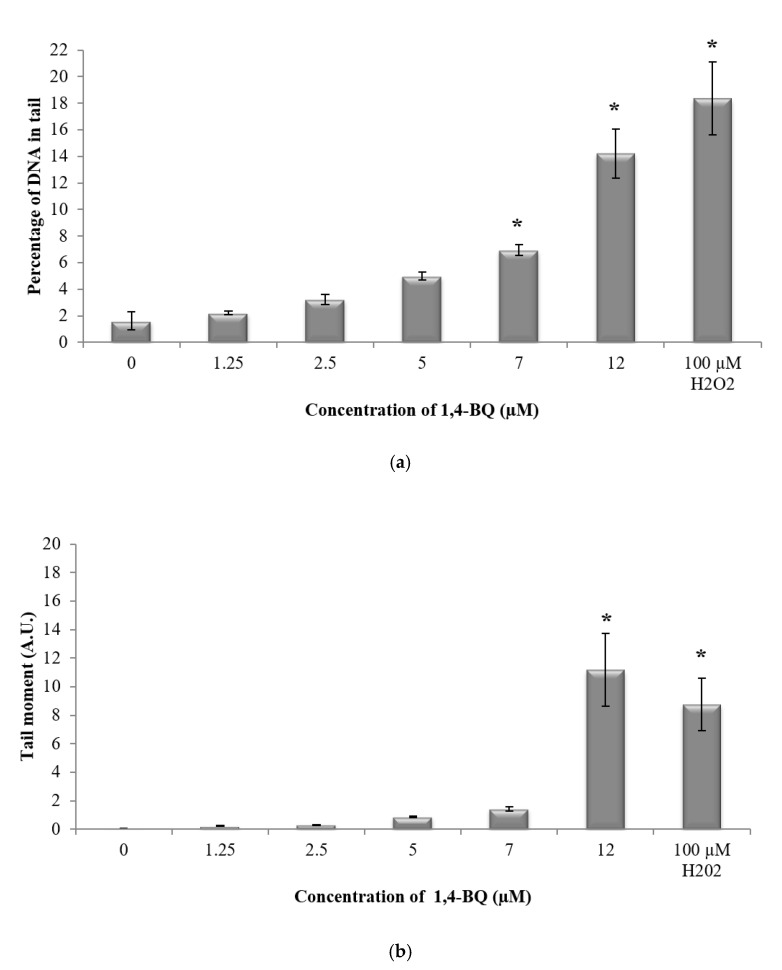
Hematopoietic stem/progenitor cells (HSPCs) are susceptible to benzene-induced genotoxicity. However, little is known about the mechanism of DNA damage response affecting lineage-committed progenitors for myeloid, erythroid, and lymphoid. Here, we investigated the genotoxicity of a benzene metabolite, 1,4-benzoquinone (1,4-BQ), in HSPCs using oxidative stress and lineage-directed approaches. Mouse bone marrow cells (BMCs) were exposed to 1,4-BQ (1.25-12 μM) for 24 h, followed by oxidative stress and genotoxicity assessments. Then, the genotoxicity of 1,4-BQ in lineage-committed progenitors was evaluated using colony forming cell assay following 7-14 days of culture. 1,4-BQ exposure causes significant decreases ( < 0.05) in glutathione level and superoxide dismutase activity, along with significant increases ( < 0.05) in levels of malondialdehyde and protein carbonyls. 1,4-BQ exposure induces DNA damage in BMCs by significantly ( < 0.05) increased percentages of DNA in tail at 7 and 12 μM and tail moment at 12 μM. We found crucial differences in genotoxic susceptibility based on percentages of DNA in tail between lineage-committed progenitors. Myeloid and pre-B lymphoid progenitors appeared to acquire significant DNA damage as compared with the control starting from a low concentration of 1,4-BQ exposure (2.5 µM). In contrast, the erythroid progenitor showed significant damage as compared with the control starting at 5 µM 1,4-BQ. Meanwhile, a significant ( < 0.05) increase in tail moment was only notable at 7 µM and 12 µM 1,4-BQ exposure for all progenitors. Benzene could mediate hematological disorders by promoting bone marrow oxidative stress and lineage-specific genotoxicity targeting HSPCs.
造血干/祖细胞(HSPCs)易受苯诱导的遗传毒性影响。然而,对于影响骨髓向髓系、红系和淋巴系定向祖细胞的 DNA 损伤反应机制知之甚少。在这里,我们使用氧化应激和谱系定向方法研究了苯代谢物 1,4-苯醌(1,4-BQ)对 HSPCs 的遗传毒性。将小鼠骨髓细胞(BMCs)暴露于 1,4-BQ(1.25-12 μM)24 h,然后进行氧化应激和遗传毒性评估。然后,通过培养 7-14 天后的集落形成细胞测定评估 1,4-BQ 在定向祖细胞中的遗传毒性。1,4-BQ 暴露会导致谷胱甘肽水平和超氧化物歧化酶活性显著降低(<0.05),同时丙二醛和蛋白质羰基水平显著升高(<0.05)。1,4-BQ 暴露通过显著增加(<0.05)7 和 12 μM 时的尾部 DNA 百分比和 12 μM 时的尾部矩来诱导 BMCs 中的 DNA 损伤。我们发现,基于尾部 DNA 百分比,根据谱系定向祖细胞的遗传易感性存在显著差异。与对照组相比,髓系和前 B 淋巴样祖细胞在低浓度 1,4-BQ 暴露(2.5 μM)时似乎已经获得了显著的 DNA 损伤。相比之下,与对照组相比,红系祖细胞在 5 μM 1,4-BQ 时就显示出显著的损伤。同时,所有祖细胞仅在 7 μM 和 12 μM 1,4-BQ 暴露时才观察到尾部矩的显著增加(<0.05)。苯可能通过促进骨髓氧化应激和针对 HSPCs 的谱系特异性遗传毒性来介导血液系统疾病。