Sun Rongli, Cao Meng, Zhang Juan, Yang Wenwen, Wei Haiyan, Meng Xing, Yin Lihong, Pu Yuepu
Key Laboratory of Environmental Medicine Engineering of Ministry of Education, School of Public Health, Southeast University, Nanjing 210009, Jiangsu, China.
Int J Environ Res Public Health. 2016 Oct 31;13(11):1068. doi: 10.3390/ijerph13111068.
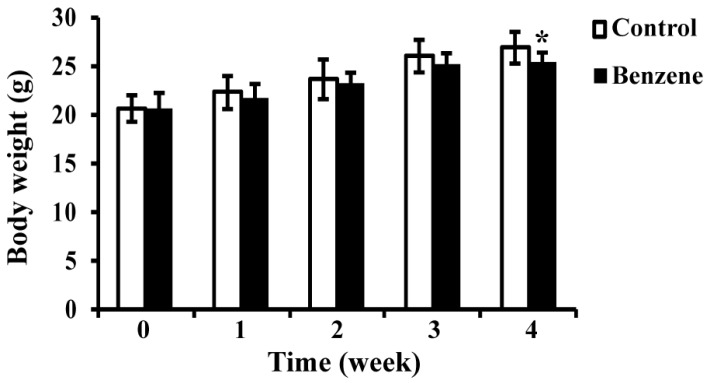
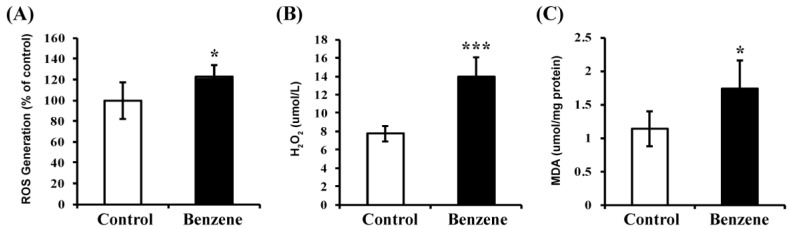
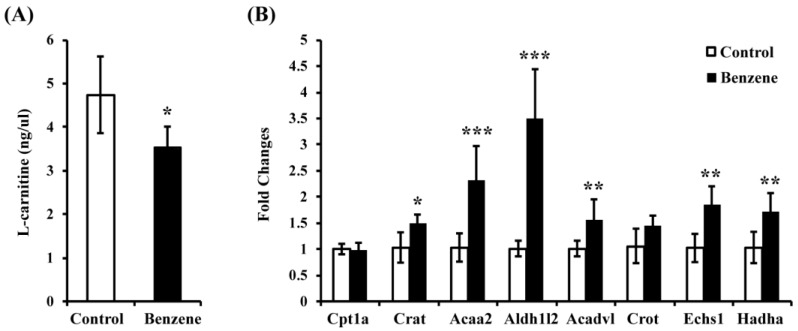
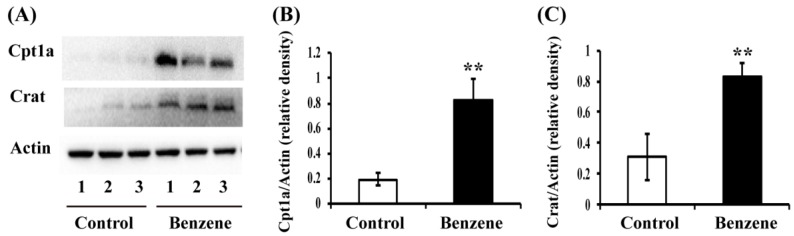
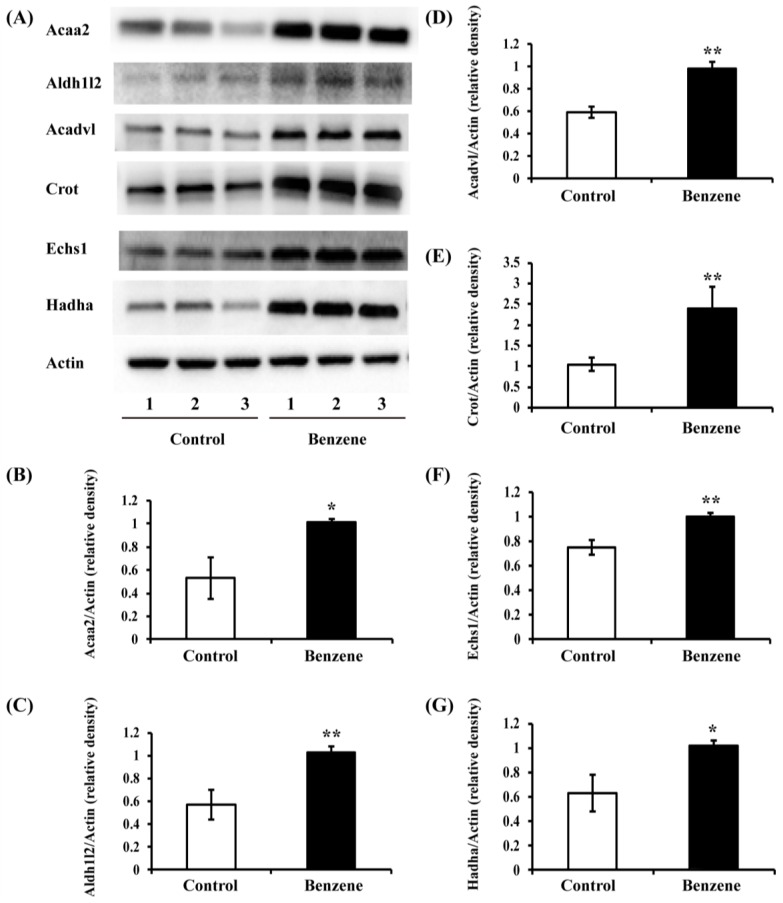
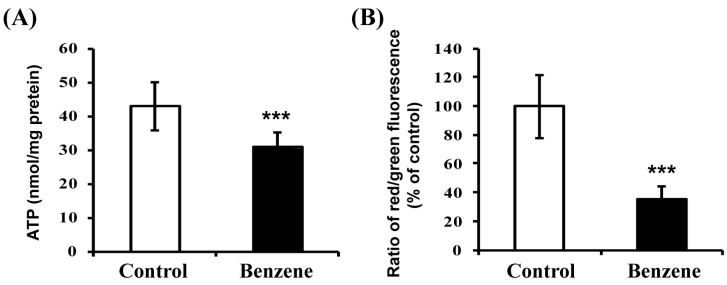
Benzene is a well-known hematotoxic carcinogen that can cause leukemia and a variety of blood disorders. Our previous study indicated that benzene disturbs levels of metabolites in the fatty acid β-oxidation (FAO) pathway, which is crucial for the maintenance and function of hematopoietic and leukemic cells. The present research aims to investigate the effects of benzene on changes in the expression of key enzymes in the FAO pathway in male C3H/He mice. Results showed that benzene exposure caused reduced peripheral white blood cell (WBC), red blood cell (RBC), platelet (Pit) counts, and hemoglobin (Hgb) concentration. Investigation of the effects of benzene on the expression of FA transport- and β-oxidation-related enzymes showed that expression of proteins Cpt1a, Crat, Acaa2, Aldh1l2, Acadvl, Crot, Echs1, and Hadha was significantly increased. The ATP levels and mitochondrial membrane potential decreased in mice exposed to benzene. Meanwhile, reactive oxygen species (ROS), hydrogen peroxide (H₂O₂), and malondialdehyde (MDA) levels were significantly increased in the benzene group. Our results indicate that benzene induces increased expression of FA transport and β-oxidation enzymes, mitochondrial dysfunction, and oxidative stress, which may play a role in benzene-induced hematotoxicity.
苯是一种著名的血液毒性致癌物,可导致白血病和多种血液疾病。我们之前的研究表明,苯会扰乱脂肪酸β-氧化(FAO)途径中的代谢物水平,而该途径对造血细胞和白血病细胞的维持及功能至关重要。本研究旨在探究苯对雄性C3H/He小鼠FAO途径中关键酶表达变化的影响。结果显示,接触苯会导致外周白细胞(WBC)、红细胞(RBC)、血小板(Pit)计数以及血红蛋白(Hgb)浓度降低。对苯对FA转运和β-氧化相关酶表达的影响进行研究发现,肉碱/有机阳离子转运体1a(Cpt1a)、肉碱乙酰基转移酶(Crat)、乙酰辅酶A酰基转移酶2(Acaa2)、醛脱氢酶1家族成员L2(Aldh1l2)、酰基辅酶A脱氢酶,长链(Acadvl)、巴豆酸酶(Crot)、烯酰辅酶A水合酶1(Echs1)和α-酮硫解酶A(Hadha)蛋白的表达显著增加。接触苯的小鼠体内三磷酸腺苷(ATP)水平和线粒体膜电位降低。同时,苯处理组的活性氧(ROS)、过氧化氢(H₂O₂)和丙二醛(MDA)水平显著升高。我们的结果表明,苯诱导FA转运和β-氧化酶表达增加、线粒体功能障碍以及氧化应激,这可能在苯诱导的血液毒性中发挥作用。