Pascottini Osvaldo Bogado, Leroy Jo L M R, Opsomer Geert
Department of Reproduction, Obstetrics and Herd Health, Faculty of Veterinary Medicine, Ghent University, 9820 Merelbeke, Belgium.
Veterinary Physiology and Biochemistry, Department of Veterinary Sciences, University of Antwerp, 2610 Wilrijk, Belgium.
Animals (Basel). 2020 Aug 14;10(8):1419. doi: 10.3390/ani10081419.
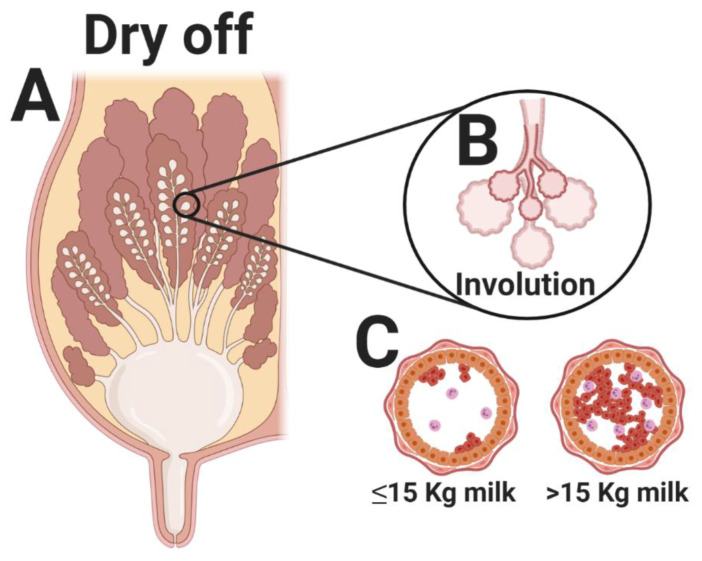
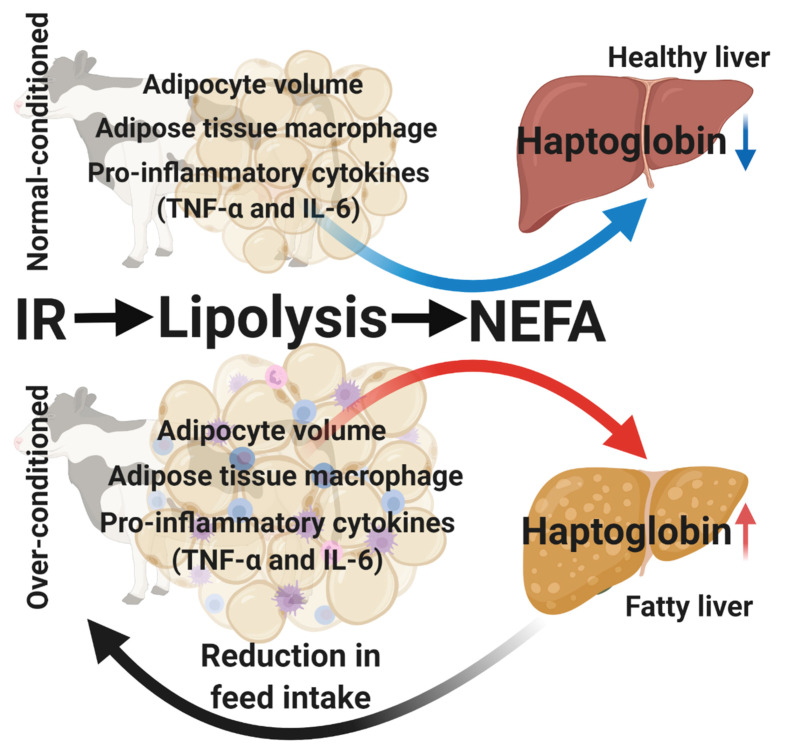
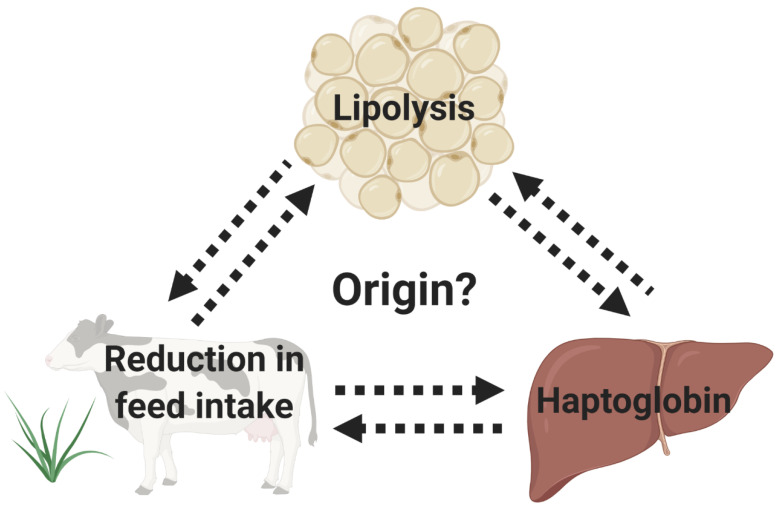
All modern, high-yielding dairy cows experience a certain degree of reduced insulin sensitivity, negative energy balance, and systemic inflammation during the transition period. Maladaptation to these changes may result in excessive fat mobilization, dysregulation of inflammation, immunosuppression, and, ultimately, metabolic or infectious disease in the postpartum period. Up to half of the clinical diseases in the lifespan of high-yielding dairy cows occur within 3 weeks of calving. Thus, the vast majority of prospective studies on transition dairy cows are focused on the postpartum period. However, predisposition to clinical disease and key (patho)physiological events such as a spontaneous reduction in feed intake, insulin resistance, fat mobilization, and systemic inflammation already occur in the prepartum period. This review focuses on metabolic, adaptive events occurring from drying off until calving in high-yielding cows and discusses determinants that may trigger (mal)adaptation to these events in the late prepartum period.
所有现代高产奶牛在围产期都会经历一定程度的胰岛素敏感性降低、能量负平衡和全身炎症。对这些变化的适应不良可能导致产后过度的脂肪动员、炎症失调、免疫抑制,最终引发代谢或感染性疾病。高产奶牛一生中高达一半的临床疾病发生在产犊后3周内。因此,绝大多数关于围产奶牛的前瞻性研究都集中在产后阶段。然而,临床疾病的易感性以及关键的(病理)生理事件,如采食量的自发减少、胰岛素抵抗、脂肪动员和全身炎症,在产前阶段就已经出现。本综述重点关注高产奶牛从干奶期到产犊期间发生的代谢性适应事件,并讨论可能在产前后期引发对这些事件(不)适应的决定因素。