Surleac Marius, Banica Leontina, Casangiu Corina, Cotic Marius, Florea Dragos, Sandulescu Oana, Milu Petre, Streinu-Cercel Anca, Vlaicu Ovidiu, Paraskevis Dimitrios, Paraschiv Simona, Otelea Dan
"Prof. Dr. Matei Bals" National Institute for Infectious Diseases, 021105 Bucharest, Romania.
Institute of Biochemistry, Romanian Academy, 060031 Bucharest, Romania.
Life (Basel). 2020 Aug 14;10(8):152. doi: 10.3390/life10080152.
The spread of SARS-CoV-2 generated an unprecedented global public health crisis. Soon after Asia, Europe was seriously affected. Many countries, including Romania, adopted lockdown measures to limit the outbreak.
We performed a molecular epidemiology analysis of SARS-CoV-2 viral strains circulating in Romania during the first two months of the epidemic in order to detect mutation profiles and phylogenetic relatedness.
Respiratory samples were directly used for shotgun sequencing.
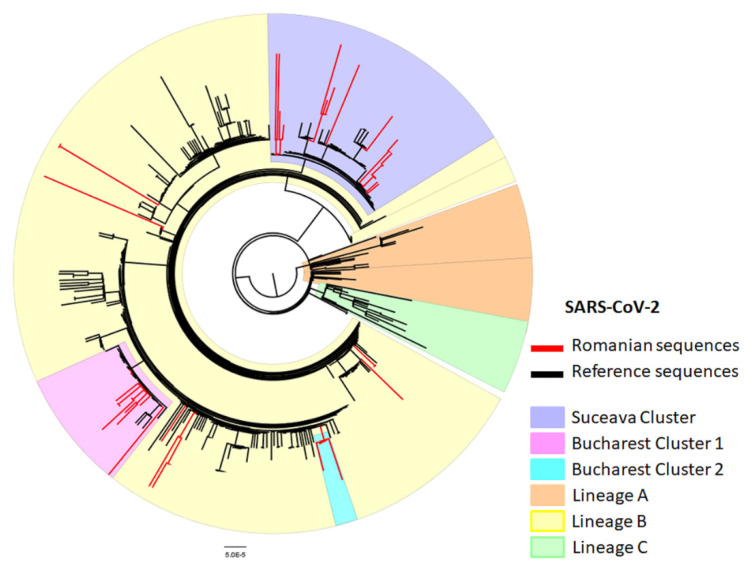
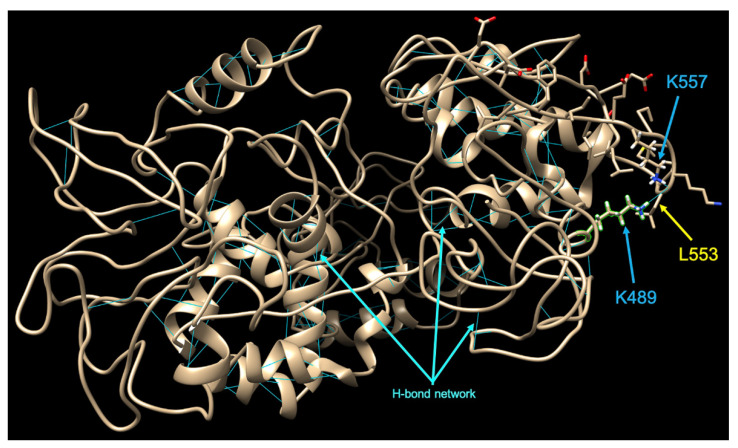
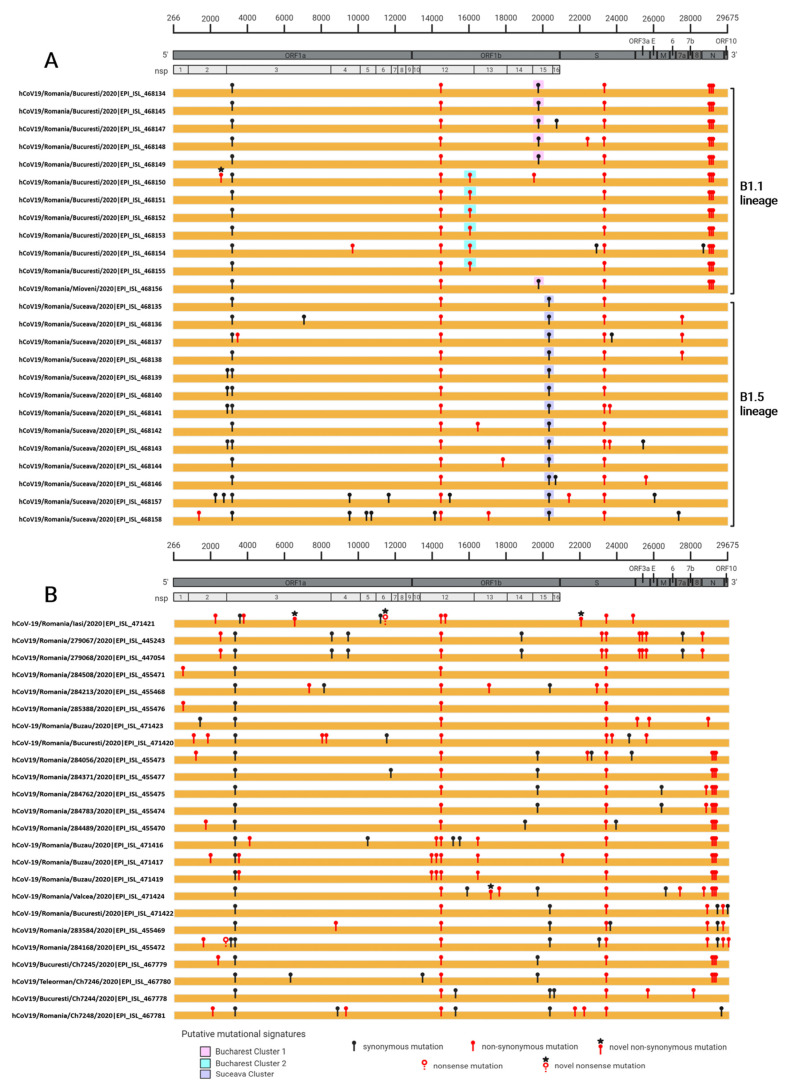
All Romanian sequences belonged to lineage B, with a different subtype distribution between northern and southern regions (subtype B.1.5 and B.1.1). Phylogenetic analysis suggested that the Romanian epidemic started with multiple introduction events from other European countries followed by local transmission. Phylogenetic links between northern Romania and Spain, Austria, Scotland and Russia were observed, as well as between southern Romania and Switzerland, Italy, France and Turkey. One viral strain presented a previously unreported mutation in the Nsp2 gene, namely K489E. Epidemiologically-defined clusters displayed specific mutations, suggesting molecular signatures for strains coming from areas that were isolated during the lockdown.
Romanian epidemic was initiated by multiple introductions from European countries followed by local transmissions. Different subtype distribution between northern and southern Romania was observed after two months of the pandemic.
严重急性呼吸综合征冠状病毒2(SARS-CoV-2)的传播引发了一场前所未有的全球公共卫生危机。在亚洲之后不久,欧洲也受到了严重影响。包括罗马尼亚在内的许多国家采取了封锁措施以限制疫情爆发。
我们对疫情头两个月在罗马尼亚传播的SARS-CoV-2病毒株进行了分子流行病学分析,以检测突变谱和系统发育相关性。
呼吸道样本直接用于鸟枪法测序。
所有罗马尼亚序列均属于B系,北部和南部地区的亚型分布不同(B.1.5和B.1.1亚型)。系统发育分析表明,罗马尼亚的疫情始于从其他欧洲国家的多次引入事件,随后是本地传播。观察到罗马尼亚北部与西班牙、奥地利、苏格兰和俄罗斯之间以及罗马尼亚南部与瑞士、意大利、法国和土耳其之间的系统发育联系。一个病毒株在Nsp2基因中出现了一个以前未报告的突变,即K489E。根据流行病学定义的聚类显示出特定的突变,这表明来自封锁期间隔离地区的毒株具有分子特征。
罗马尼亚的疫情始于从欧洲国家的多次引入,随后是本地传播。在疫情爆发两个月后,观察到罗马尼亚北部和南部的亚型分布不同。