Yang Liu, Hou Ajiao, Wang Song, Zhang Jiaxu, Man Wenjing, Guo Xinyue, Yang Bingyou, Jiang Hai, Kuang Haixue, Wang Qiuhong
Key Laboratory of Chinese Materia Medica, Heilongjiang University of Chinese Medicine, Ministry of Education, Harbin 150040, China.
School of Traditional Chinese Medicine, Guangdong Pharmaceutical University, Guangzhou 528458, China.
Evid Based Complement Alternat Med. 2020 Jul 31;2020:7460781. doi: 10.1155/2020/7460781. eCollection 2020.
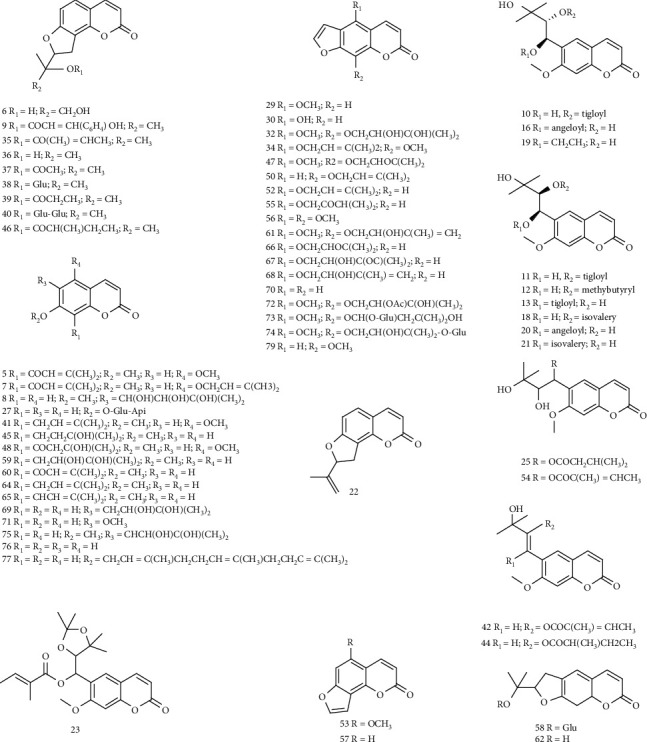
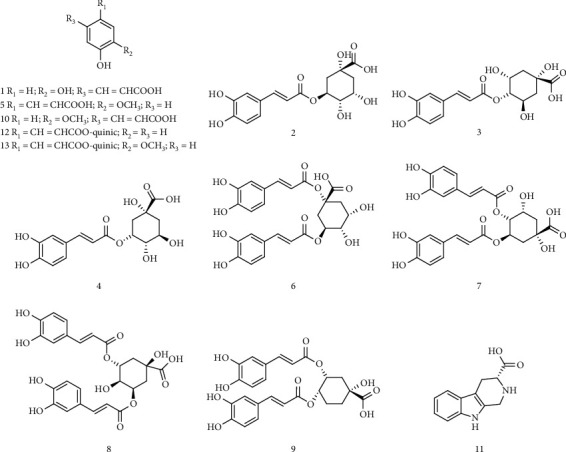
Angelicae Pubescentis Radix (AP), as a traditional Chinese medicine (TCM), has been used for thousands of years in China. In this paper, the botany, traditional use, phytochemistry, analytical methods, quality control, pharmacological effects, and toxicity of AP were reviewed. It can provide a reference for the further research and lay a foundation for the rational clinical application of AP. The relevant information on AP was collected from scientific databases (such as Baidu Scholar, CNKI, Google Scholar, PubMed, Science Direct, Web of Science, and SciFinder Scholar), Chinese herbal classics, , PhD and MSc dissertations, and so on. The components which have been isolated and identified in AP include coumarins, volatile oils, organic acids, terpenes, polysaccharides, flavonoids, sterols, and trace elements. Most of them were analyzed by HPLC and GC. A pharmacological study shows that the AP has extensive pharmacological effects, including anti-inflammatory, antirheumatism, sedative and hypnotic, neuroprotection, antioxidation, antitumor, and allergy, and it is widely used in the treatment of the rheumatoid arthritis, knee osteoarthritis, lumbar disc, ankylosing spondylitis, headaches, stroke hemiplegia, Alzheimer's, and arrhythmia. AP is a valuable natural medicinal plant. So far, significant advances have been made in phytochemistry and pharmacology. Some traditional uses have been demonstrated by modern pharmacology. However, the chemical components and pharmacological effects of AP are complex and varied, and there are different standards for the evaluation of its quality and efficacy. The mechanism of action, the structure-activity relationship among the components, and the potential synergistic and antagonistic effects remain to be studied. At the same time, there are few studies on the specific compounds related to its pharmacodynamics. In order to better develop and utilize AP, we should establish a more reasonable, reliable, and accurate quality control standard and focus on the study of bioactive constituents and the demonstration of their mechanism of action.
独活,作为一种传统中药,在中国已使用了数千年。本文对独活的植物学、传统用途、植物化学、分析方法、质量控制、药理作用和毒性进行了综述。它可为进一步的研究提供参考,并为独活的合理临床应用奠定基础。有关独活的相关信息从科学数据库(如百度学术、中国知网、谷歌学术、PubMed、Science Direct、Web of Science和SciFinder Scholar)、中草药经典著作、博士和硕士学位论文等中收集。独活中已分离鉴定出的成分包括香豆素、挥发油、有机酸、萜类、多糖、黄酮类、甾醇和微量元素。其中大多数通过高效液相色谱法(HPLC)和气相色谱法(GC)进行分析。药理研究表明,独活具有广泛的药理作用,包括抗炎、抗风湿、镇静催眠、神经保护、抗氧化、抗肿瘤和抗过敏等,广泛用于治疗类风湿性关节炎、膝关节骨关节炎、腰椎间盘突出症、强直性脊柱炎、头痛、中风偏瘫、阿尔茨海默病和心律失常。独活是一种有价值的天然药用植物。迄今为止,在植物化学和药理学方面已取得了显著进展。一些传统用途已得到现代药理学的证实。然而,独活的化学成分和药理作用复杂多样,其质量和疗效评价标准也各不相同。作用机制、成分之间的构效关系以及潜在的协同和拮抗作用仍有待研究。同时,关于其药效学相关具体化合物的研究较少。为了更好地开发和利用独活,应建立更合理、可靠和准确的质量控制标准,并重点研究生物活性成分及其作用机制的论证。