Tartaglia Thomas A, Tang Joseph N, Lado Jose L, Bahrami Faranak, Abramchuk Mykola, McCandless Gregory T, Doyle Meaghan C, Burch Kenneth S, Ran Ying, Chan Julia Y, Tafti Fazel
Department of Physics, Boston College, Chestnut Hill, MA 02467, USA.
Department of Applied Physics, Aalto University, Espoo, Finland.
Sci Adv. 2020 Jul 24;6(30):eabb9379. doi: 10.1126/sciadv.abb9379. eCollection 2020 Jul.
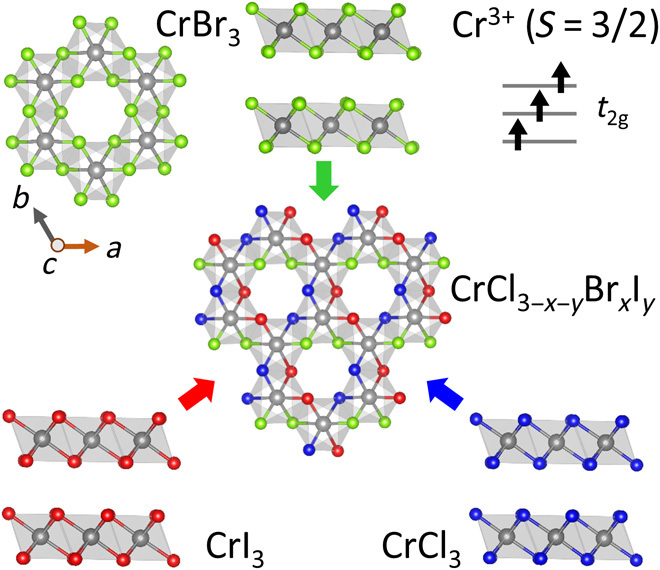
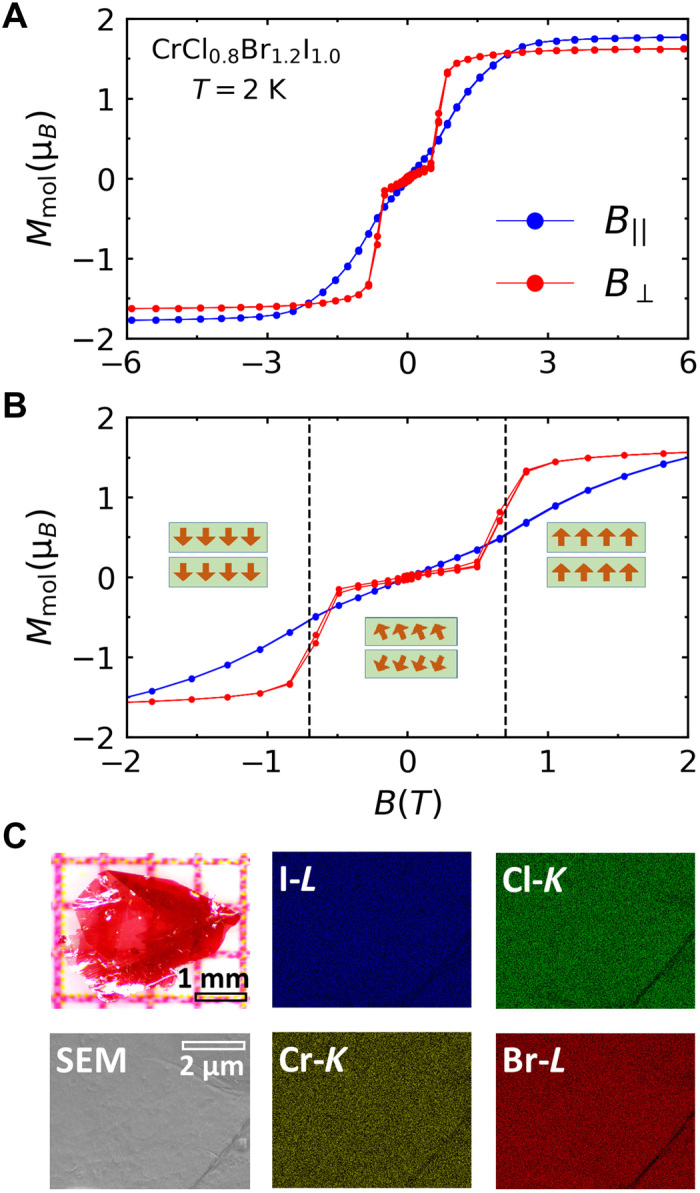
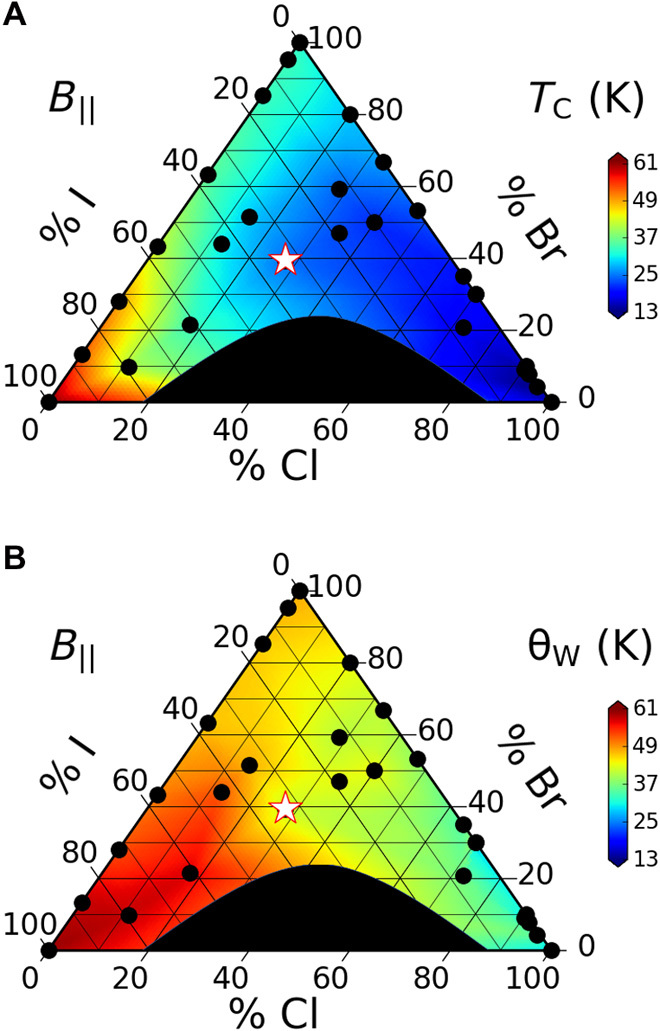
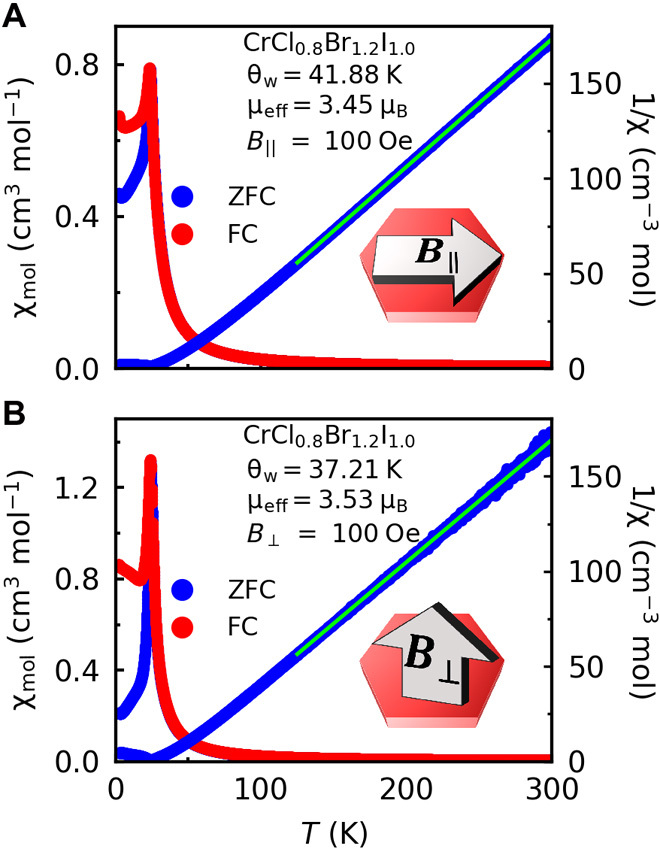
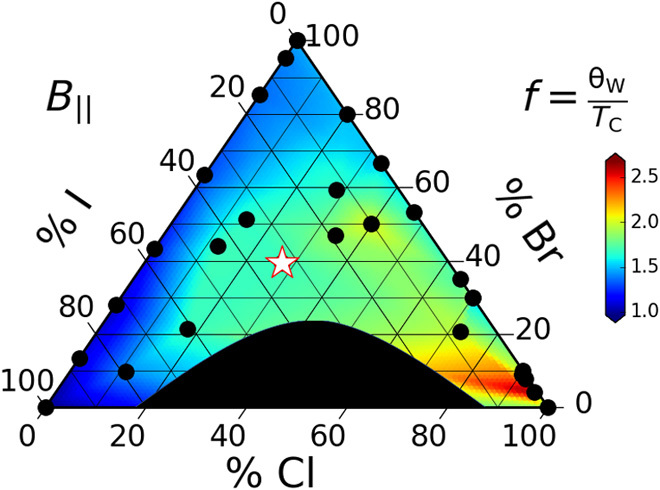
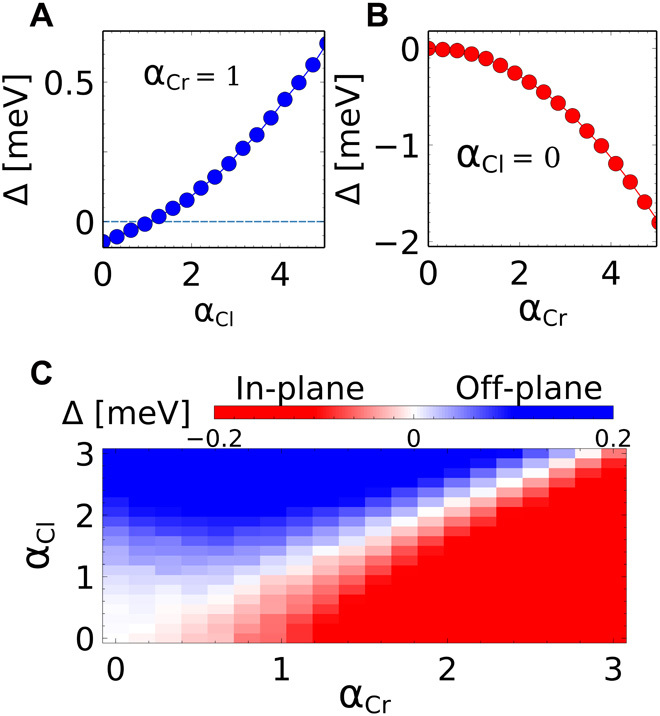
Van der Waals (VdW) materials have opened new directions in the study of low dimensional magnetism. A largely unexplored arena is the intrinsic tuning of VdW magnets toward new ground states. Chromium trihalides provided the first such example with a change of interlayer magnetic coupling emerging upon exfoliation. Here, we take a different approach to engineer previously unknown ground states, not by exfoliation, but by tuning the spin-orbit coupling (SOC) of the nonmagnetic ligand atoms (Cl, Br, I). We synthesize a three-halide series, CrCl Br I , and map their magnetic properties as a function of Cl, Br, and I content. The resulting triangular phase diagrams unveil a frustrated regime near CrCl. First-principles calculations confirm that the frustration is driven by a competition between the chromium and halide SOCs. Furthermore, we reveal a field-induced change of interlayer coupling in the bulk of CrCl Br I crystals at the same field as in the exfoliation experiments.
范德华(VdW)材料为低维磁性研究开辟了新方向。一个很大程度上未被探索的领域是将VdW磁体本征调谐到新的基态。三卤化铬提供了第一个此类例子,即剥离时出现层间磁耦合变化。在此,我们采用一种不同的方法来设计此前未知的基态,不是通过剥离,而是通过调节非磁性配体原子(Cl、Br、I)的自旋轨道耦合(SOC)。我们合成了一个三卤化物系列CrClₓBrᵧI₁₋ₓ₋ᵧ,并将它们的磁性映射为Cl、Br和I含量的函数。由此得到的三角相图揭示了靠近CrCl处的受挫区域。第一性原理计算证实,这种受挫是由铬和卤化物的SOC之间的竞争驱动的。此外,我们发现在与剥离实验相同的磁场下,CrClₓBrᵧI₁₋ₓ₋ᵧ晶体块体中存在场诱导的层间耦合变化。