Kimono Diana, Bose Dipro, Seth Ratanesh K, Mondal Ayan, Saha Punnag, Janulewicz Patricia, Sullivan Kimberly, Lasley Stephen, Horner Ronnie, Klimas Nancy, Chatterjee Saurabh
Environmental Health and Disease Laboratory, NIEHS Center for Oceans and Human Health on Climate Change Interactions, Department of Environmental Health Sciences, University of South Carolina, Columbia, SC, USA.
Department of Environmental Health, Boston University School of Public Health, Boston, MA, USA.
Neurosci Insights. 2020 Jul 27;15:2633105520942480. doi: 10.1177/2633105520942480. eCollection 2020.
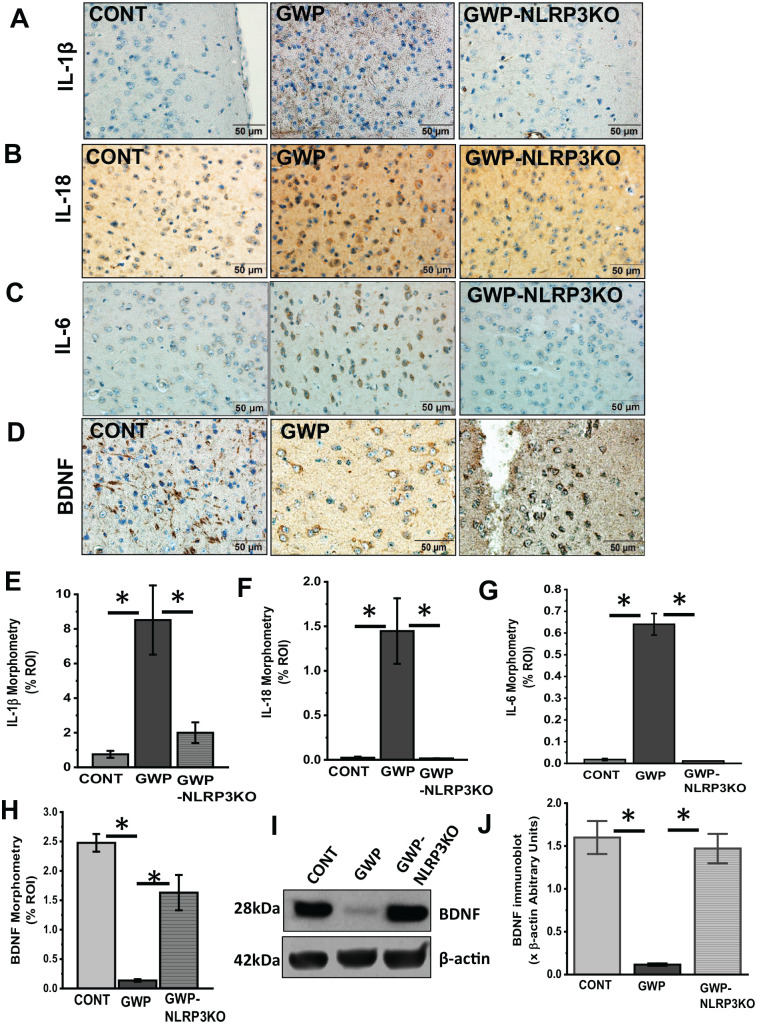
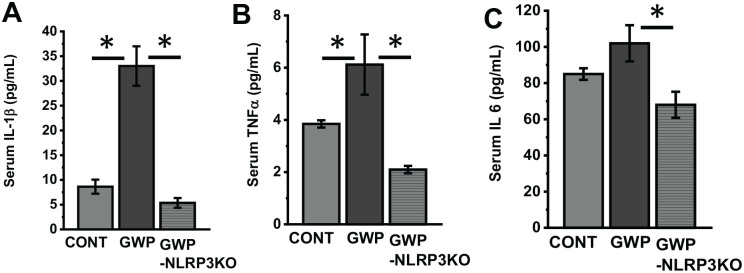
Neurological disorders are commonly reported among veterans who returned from the Gulf war. Veterans who suffer from Gulf War illness (GWI) complain of continued symptom persistence that includes neurological disorders, muscle weakness, headaches, and memory loss, that developed during or shortly after the war. Our recent research showed that chemical exposure associated microbial dysbiosis accompanied by a leaky gut connected the pathologies in the intestine, liver, and brain. However, the mechanisms that caused the symptoms to persist even 30 years after the war remained elusive to investigators. In this study, we used a rodent model of GWI to investigate the persistence of microbiome alterations, resultant chronic inflammation, and its effect on neurotrophic and synaptic plasticity marker BDNF. The results showed that exposure to GW chemicals (the pesticide permethrin and prophylactic drug pyridostigmine bromide) resulted in persistent pathology characterized by the low relative abundance of the probiotic bacteria in the gut, which correlated with high circulatory HMGB1 levels, blood-brain barrier dysfunction, neuroinflammation and lowered neurotrophin BDNF levels. Mechanistically, we used mice lacking the NLRP3 gene to investigate this inflammasome's role in observed pathology. These mice had significantly decreased inflammation and a subsequent increase in BDNF in the frontal cortex. This suggests that a persistently low species abundance of and associated chronic inflammation due to inflammasome activation might be playing a significant role in contributing to chronic neurological problems in GWI. A therapeutic approach with various small molecules that can target both the restoration of a healthy microbiome and decreasing inflammasome activation might have better outcomes in treating GWI symptom persistence.
在从海湾战争归来的退伍军人中,神经疾病屡有报道。患有海湾战争综合症(GWI)的退伍军人抱怨症状持续存在,包括神经疾病、肌肉无力、头痛和失忆,这些症状在战争期间或战后不久就出现了。我们最近的研究表明,与微生物群落失调相关的化学物质暴露,伴有肠道渗漏,将肠道、肝脏和大脑中的病变联系了起来。然而,即使在战争结束30年后,导致这些症状持续存在的机制仍让研究人员捉摸不透。在这项研究中,我们使用GWI的啮齿动物模型来研究微生物群落改变的持续性、由此产生的慢性炎症及其对神经营养和突触可塑性标志物BDNF的影响。结果表明,接触海湾战争化学物质(杀虫剂氯菊酯和预防性药物溴化吡啶斯的明)导致了持续性病变,其特征是肠道中益生菌的相对丰度较低,这与循环中高迁移率族蛋白B1水平升高、血脑屏障功能障碍、神经炎症以及神经营养因子BDNF水平降低相关。从机制上讲,我们使用缺乏NLRP3基因的小鼠来研究这种炎性小体在观察到的病变中的作用。这些小鼠的炎症明显减轻,额叶皮质中的BDNF随后增加。这表明,由于炎性小体激活导致的物种丰度持续低下以及相关的慢性炎症,可能在导致GWI的慢性神经问题中起重要作用。一种针对恢复健康微生物群落和降低炎性小体激活的各种小分子治疗方法,可能在治疗GWI症状持续方面有更好的效果。