Roskamp Institute, 2040 Whitfield Ave, Sarasota, FL, USA; Open University, Milton Keynes, UK; James A. Haley VA Hospital, Tampa, FL, USA.
Roskamp Institute, 2040 Whitfield Ave, Sarasota, FL, USA; James A. Haley VA Hospital, Tampa, FL, USA.
Brain Behav Immun. 2019 Oct;81:545-559. doi: 10.1016/j.bbi.2019.07.015. Epub 2019 Jul 17.
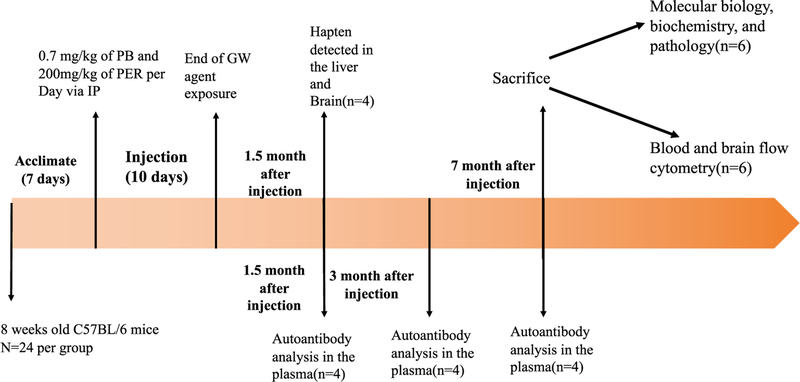
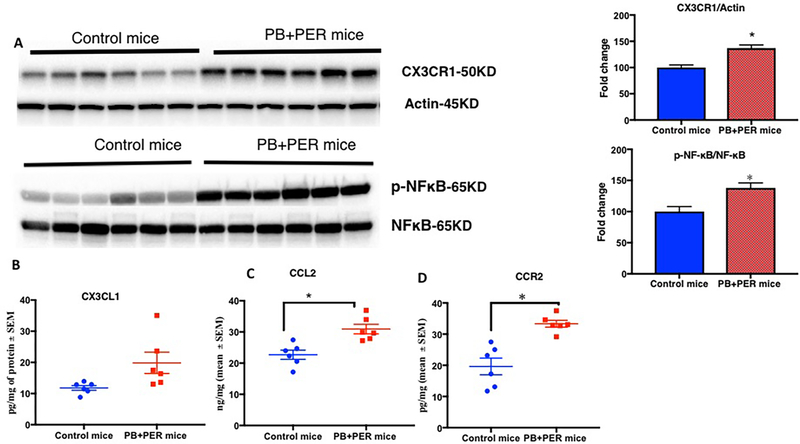
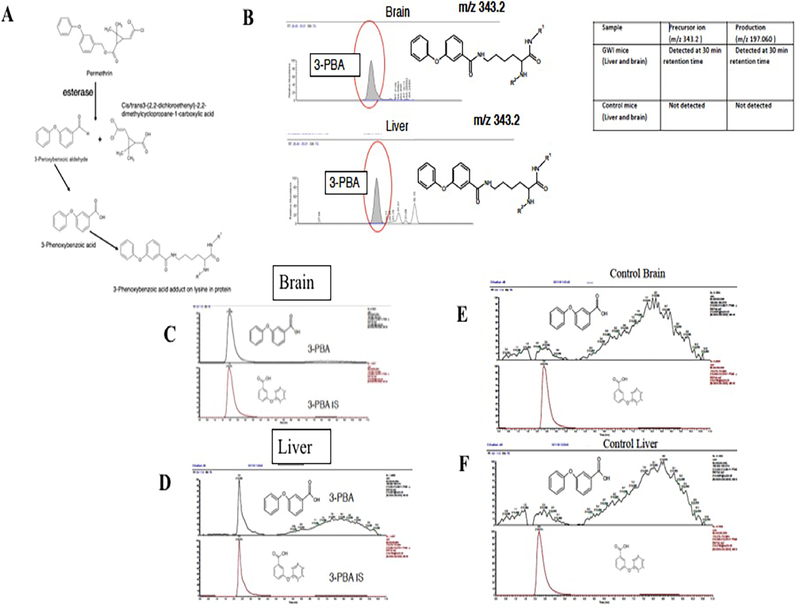
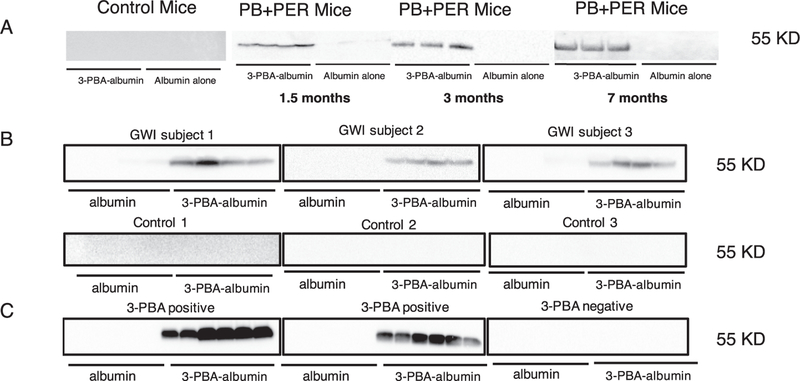
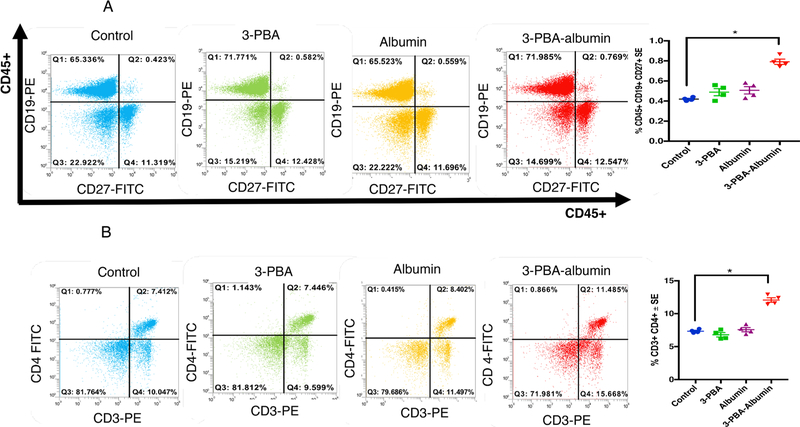
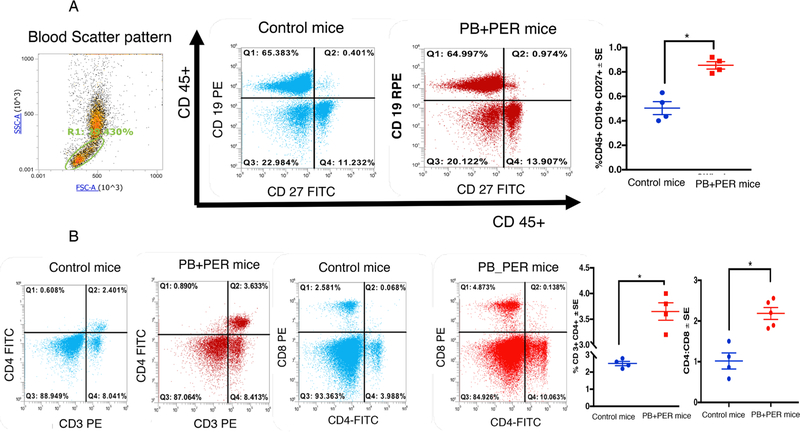
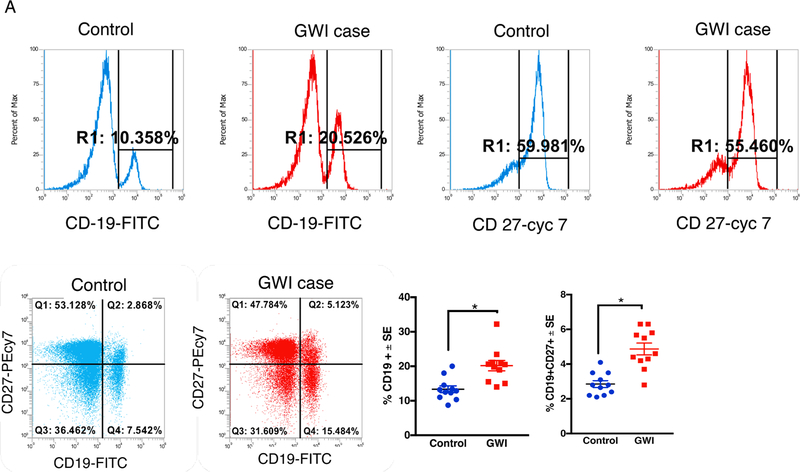
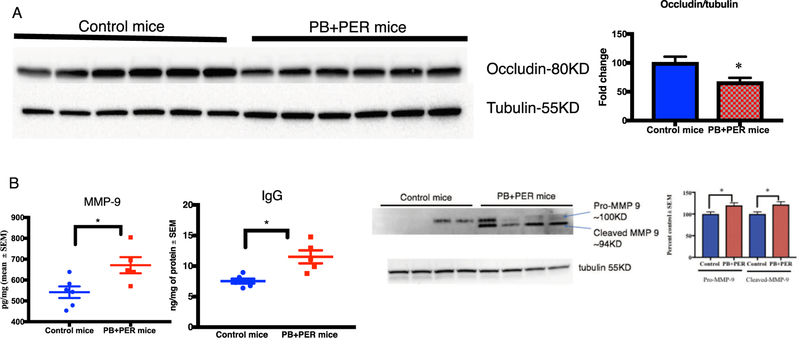
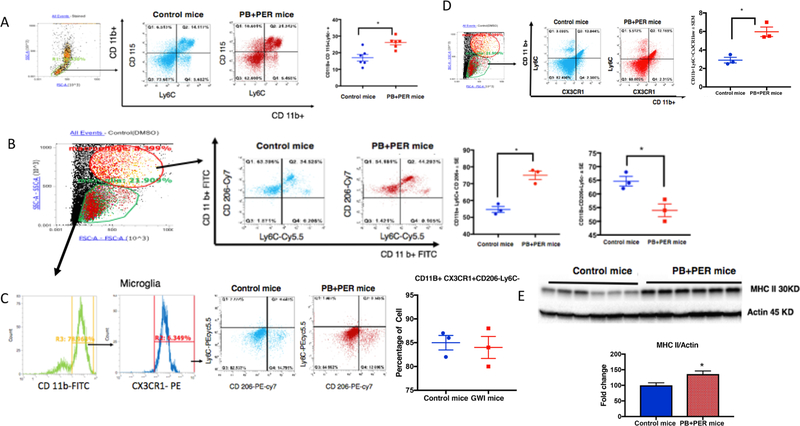
Gulf War Illness (GWI), affecting 30% of veterans from the 1991 Gulf War (GW), is a multi-symptom illness with features similar to those of patients with autoimmune diseases. The objective of the current work is to determine if exposure to GW-related pesticides, such as permethrin (PER), activates peripheral and central nervous system (CNS) adaptive immune responses. In the current study, we focused on a PER metabolite, 3-phenoxybenzoic acid (3-PBA), as this is a common metabolite previously shown to form adducts with endogenous proteins. We observed the presence of 3-PBA and 3-PBA modified lysine of protein peptides in the brain, blood and liver of pyridostigmine bromide (PB) and PER (PB+PER) exposed mice at acute and chronic post-exposure timepoints. We tested whether 3-PBA-haptenated albumin (3-PBA-albumin) can activate immune cells since it is known that chemically haptenated proteins can stimulate immune responses. We detected autoantibodies against 3-PBA-albumin in plasma from PB + PER exposed mice and veterans with GWI at chronic post-exposure timepoints. We also observed that in vitro treatment of blood with 3-PBA-albumin resulted in the activation of B- and T-helper lymphocytes and that these immune cells were also increased in blood of PB + PER exposed mice and veterans with GWI. These immune changes corresponded with elevated levels of infiltrating monocytes in the brain and blood of PB + PER exposed mice which coincided with alterations in the markers of blood-brain barrier disruption, brain macrophages and neuroinflammation. These studies suggest that pesticide exposure associated with GWI may have resulted in the activation of the peripheral and CNS adaptive immune responses, possibly contributing to an autoimmune-type phenotype in veterans with GWI.
海湾战争病(GWI)影响了 1991 年海湾战争(GW)中 30%的退伍军人,是一种多症状疾病,其特征与自身免疫性疾病患者相似。本研究的目的是确定接触 GW 相关农药(如氯菊酯(PER))是否会激活外周和中枢神经系统(CNS)适应性免疫反应。在目前的研究中,我们专注于 PER 的一种代谢物 3-苯氧基苯甲酸(3-PBA),因为它是一种常见的代谢物,以前被证明可以与内源性蛋白质形成加合物。我们观察到在匹鲁卡品溴化物(PB)和 PER(PB+PER)暴露的小鼠的大脑、血液和肝脏中存在 3-PBA 和 3-PBA 修饰的蛋白肽的赖氨酸。我们测试了 3-PBA-缀合白蛋白(3-PBA-白蛋白)是否可以激活免疫细胞,因为已知化学缀合的蛋白质可以刺激免疫反应。我们在 PB+PER 暴露的小鼠和慢性暴露后的 GW 退伍军人的血浆中检测到针对 3-PBA-白蛋白的自身抗体。我们还观察到,体外用 3-PBA-白蛋白处理血液会导致 B 和辅助性 T 淋巴细胞的激活,并且在 PB+PER 暴露的小鼠和 GW 退伍军人的血液中这些免疫细胞也增加了。这些免疫变化与 PB+PER 暴露的小鼠大脑和血液中浸润单核细胞的水平升高相对应,这与血脑屏障破坏、脑巨噬细胞和神经炎症的标志物改变相一致。这些研究表明,与 GW 相关的农药暴露可能导致外周和 CNS 适应性免疫反应的激活,可能导致 GW 退伍军人的自身免疫表型。