Princess Margaret Cancer Centre, University Health Network, Toronto, Ontario, Canada.
Fondazione Policlinico Universitario A. Gemelli IRCCS, Rome, Italy.
J Clin Oncol. 2020 Oct 20;38(30):3494-3505. doi: 10.1200/JCO.19.03107. Epub 2020 Aug 24.
To investigate quality-adjusted progression-free survival (QA-PFS) and quality-adjusted time without symptoms or toxicity (Q-TWiST) in a post hoc exploratory analysis of the phase III ARIEL3 study of rucaparib maintenance treatment versus placebo.
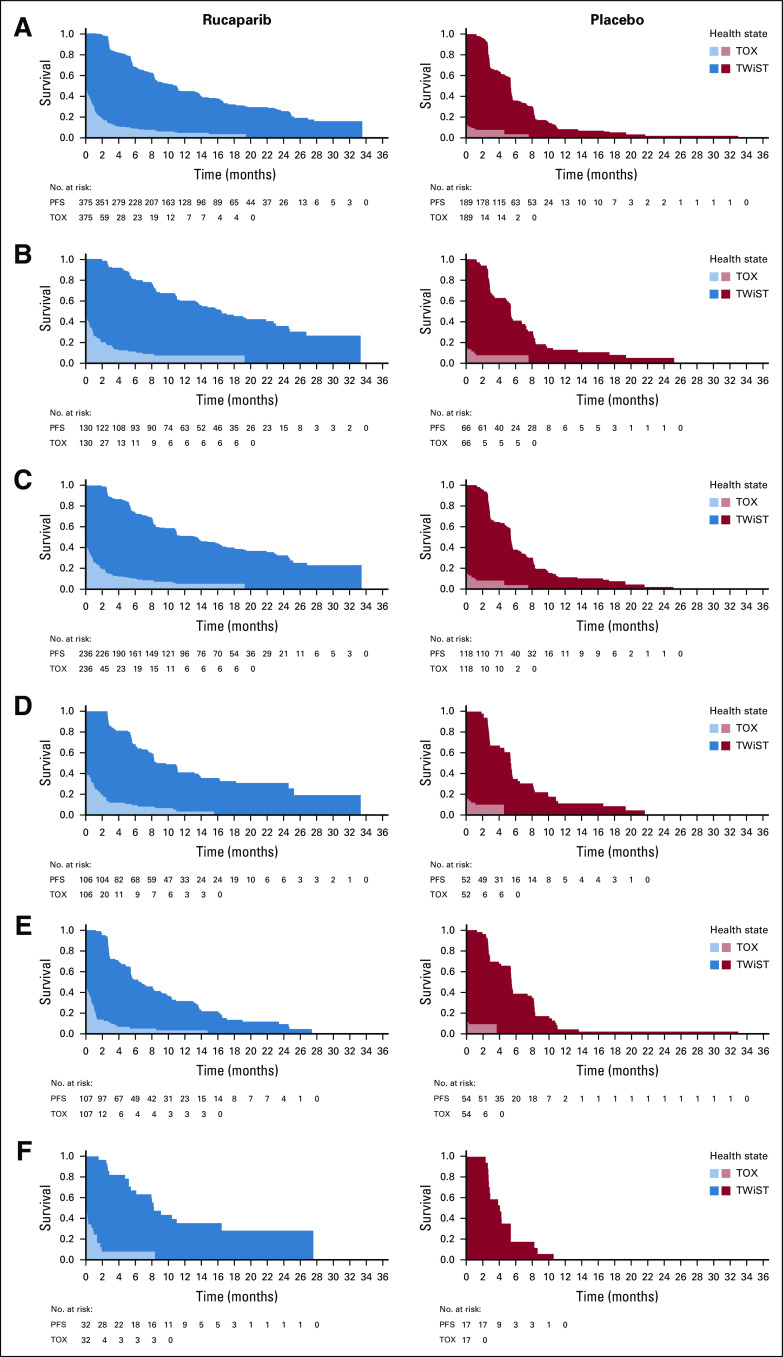
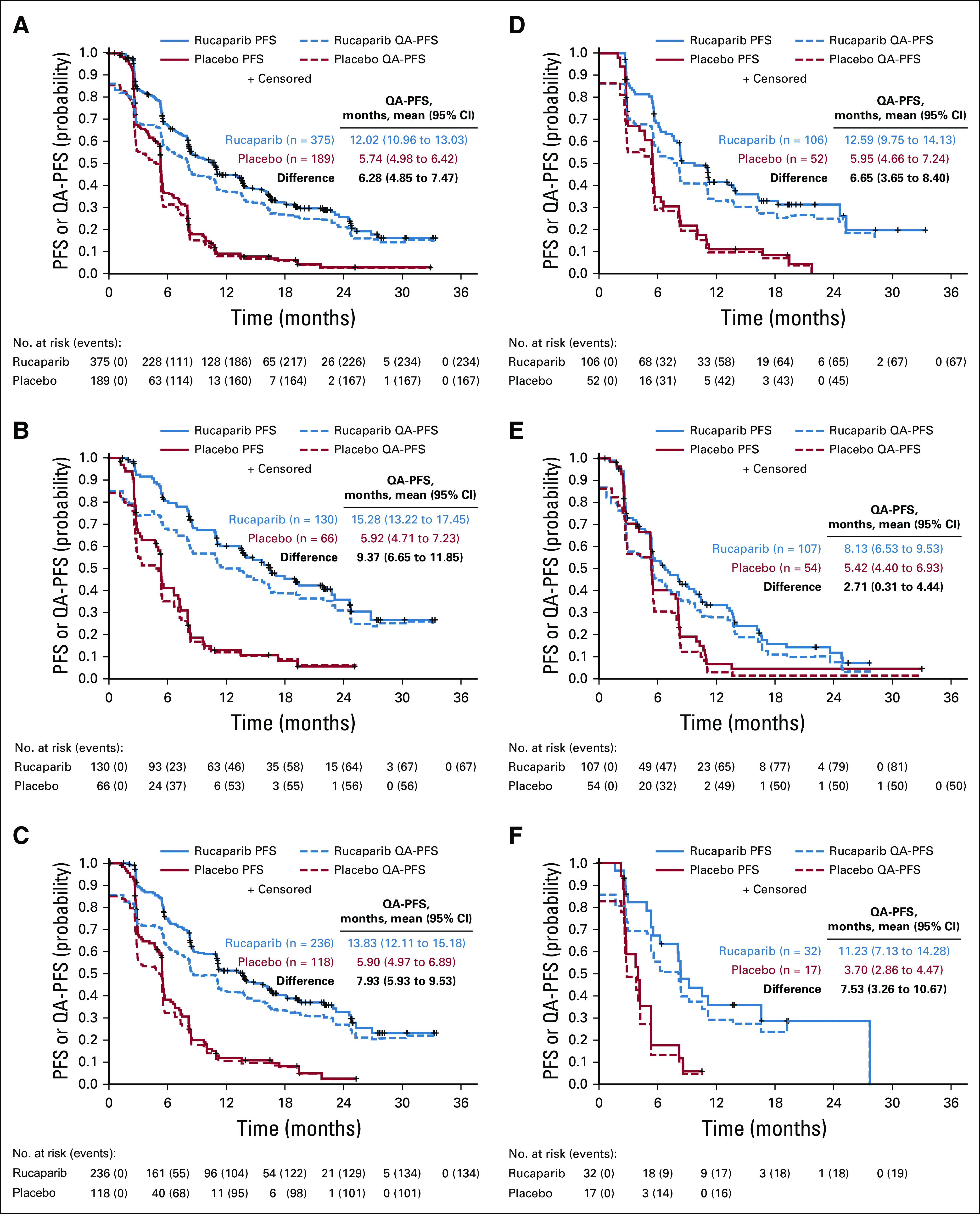
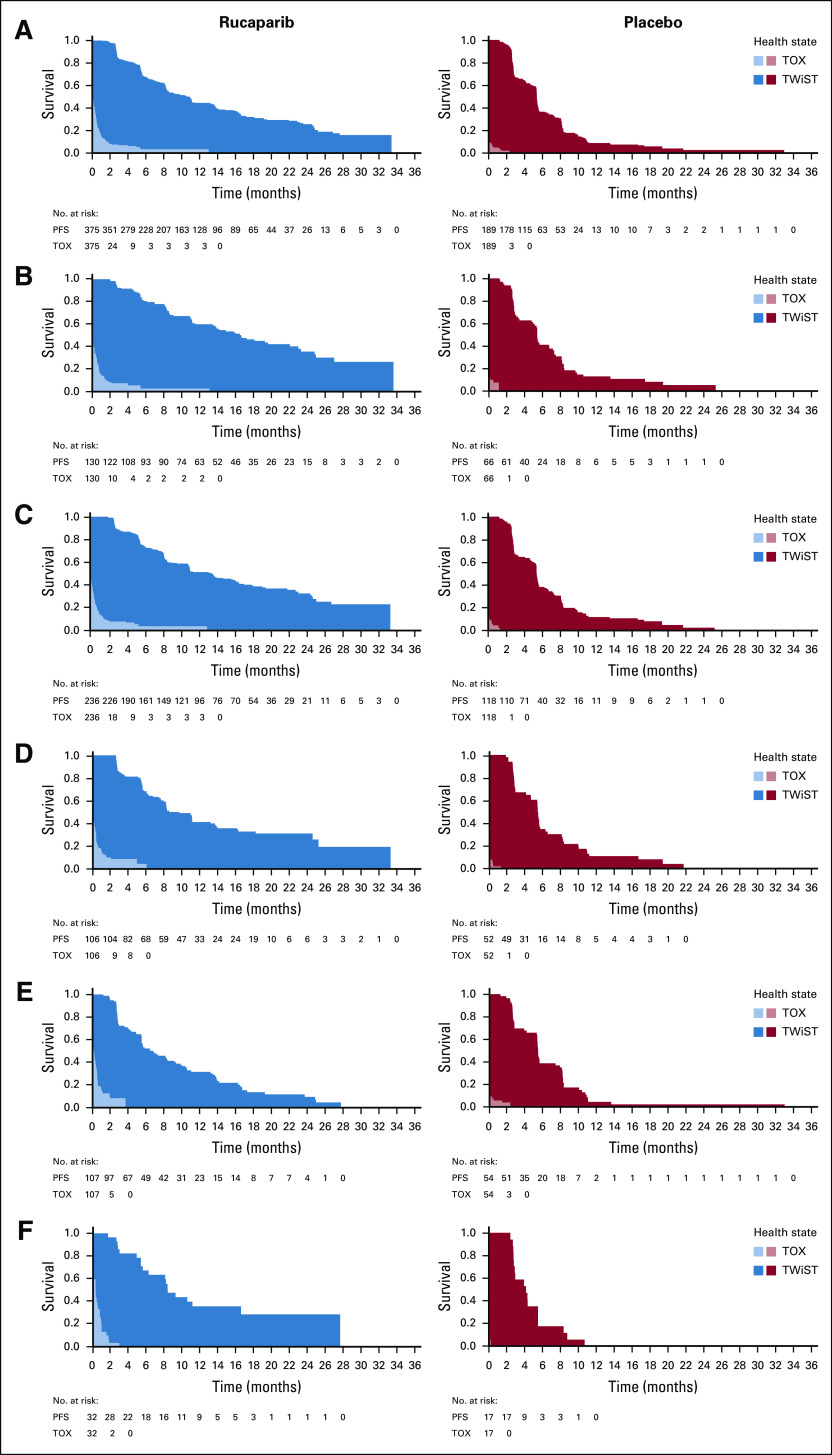
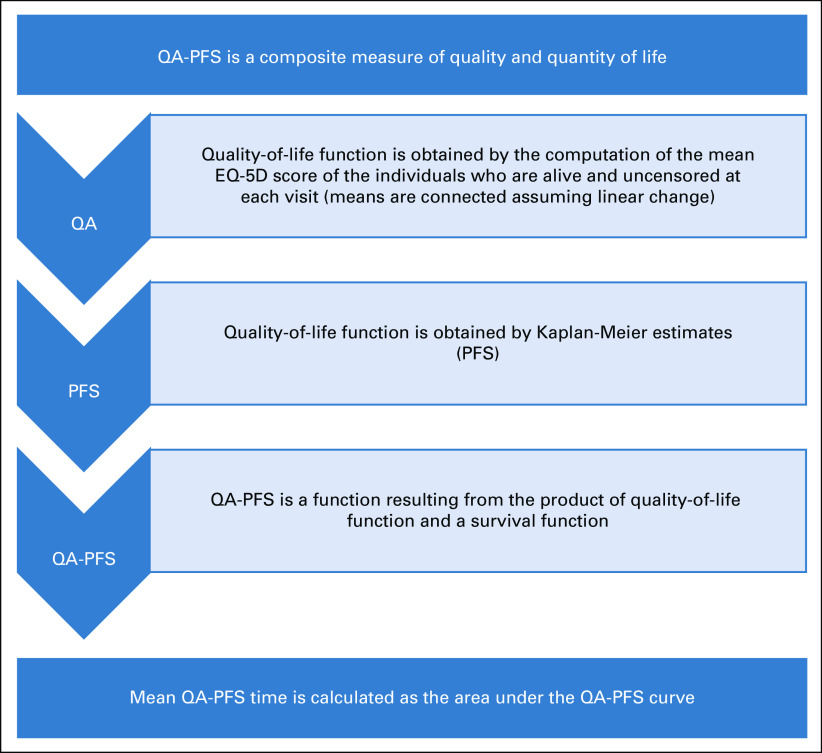
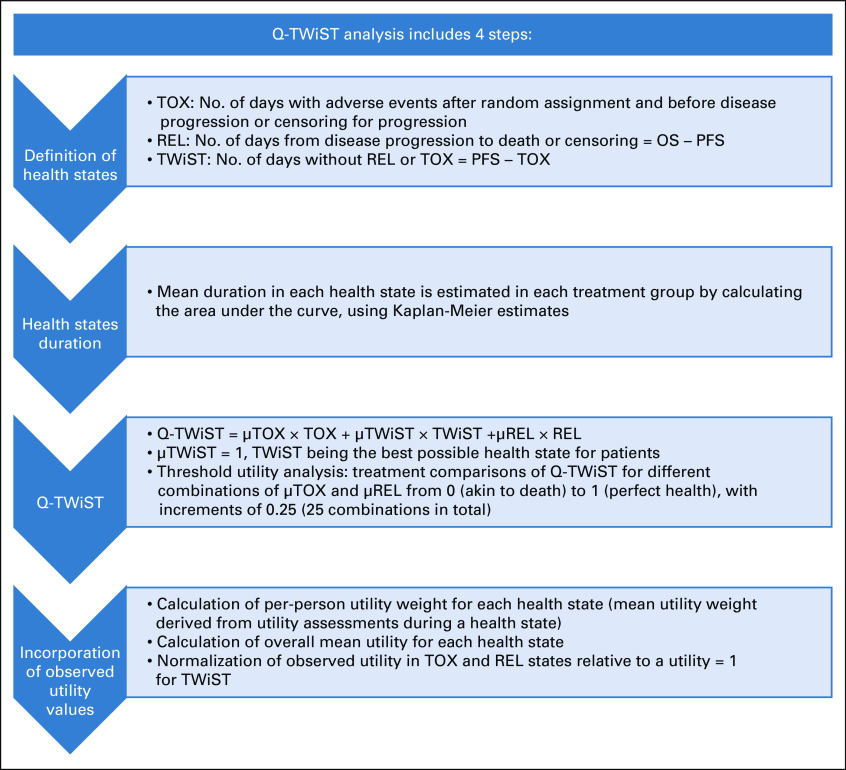
Patients with platinum-sensitive, recurrent ovarian carcinoma were randomly assigned to rucaparib (600 mg twice per day) or placebo. QA-PFS was calculated as progression-free survival function × the 3-level version of the EQ-5D questionnaire (EQ-5D-3L) index score function. Q-TWiST analyses were performed defining TOX as the mean duration in which a patient experienced grade ≥ 3 treatment-emergent adverse events (TEAEs) or the mean duration in which a patient experienced grade ≥ 2 TEAEs of nausea, vomiting, fatigue, and asthenia. Q-TWiST was calculated as μTOX × TOX + TWiST, with μTOX calculated using EQ-5D-3L data.
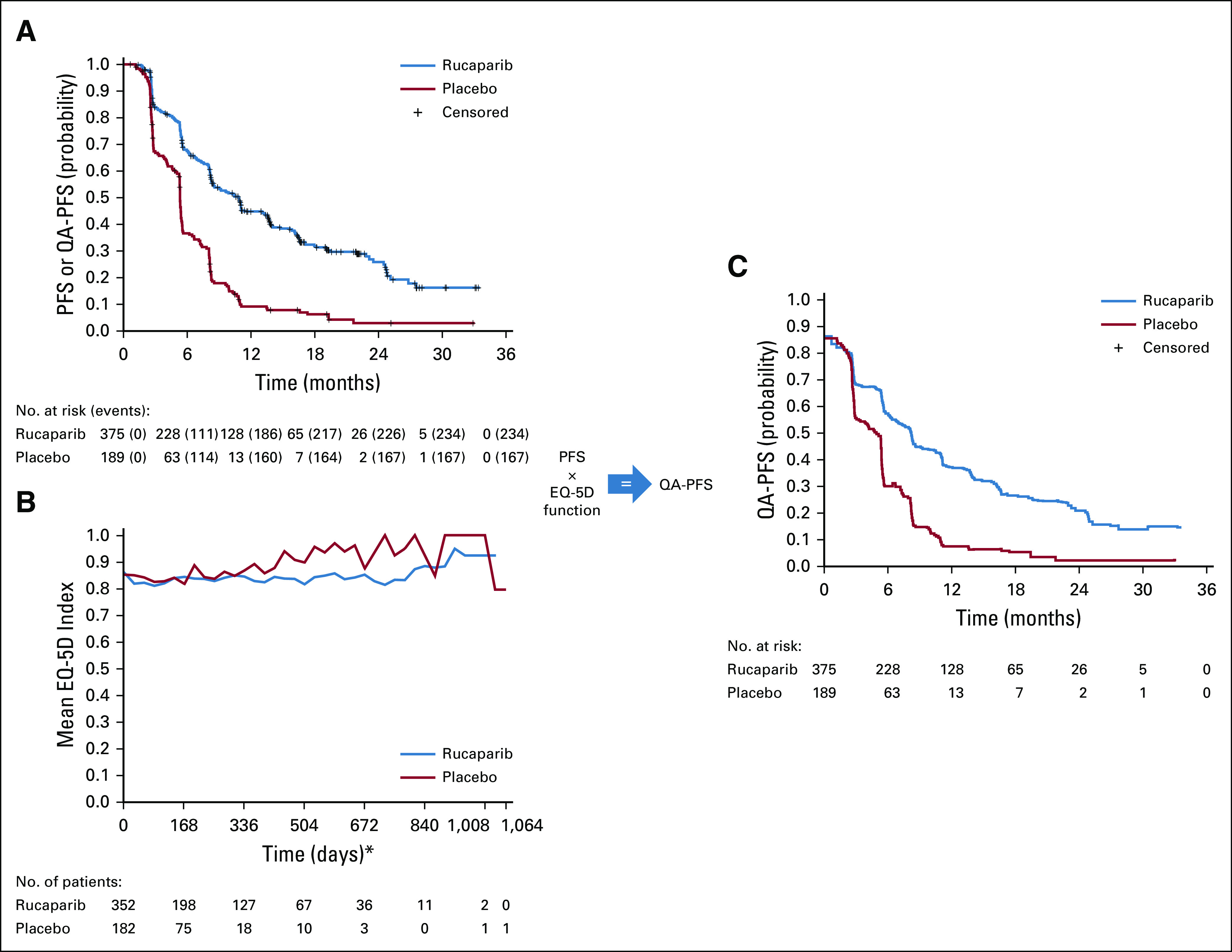
The visit cutoff was Apr 15, 2017. Mean QA-PFS was significantly longer with rucaparib versus placebo in the intent-to-treat (ITT) population (375 randomly assigned to rucaparib 189 randomly assigned to placebo; difference, 6.28 months [95% CI, 4.85 to 7.47 months]); -mutant cohort (130 rucaparib 66 placebo; 9.37 months [95% CI, 6.65 to 11.85 months]); homologous recombination deficient (HRD) cohort (236 rucaparib 118 placebo; 7.93 months [95% CI, 5.93 to 9.53 months]); and wild-type/loss of heterozygosity (LOH) low patient subgroup (107 rucaparib 54 placebo; 2.71 months [95% CI, 0.31 to 4.44 months]). With TOX defined using grade ≥ 3 TEAEs, the difference in mean Q-TWiST (rucaparib placebo) was 6.88 months (95% CI, 5.71 to 8.23 months), 9.73 months (95% CI, 7.10 to 11.94 months), 8.11 months (95% CI, 6.36 to 9.49 months), and 3.35 months (95% CI, 1.66 to 5.40 months) in the ITT population, -mutant cohort, HRD cohort, and wild-type/LOH low patient subgroup, respectively. Q-TWiST with TOX defined using select grade ≥ 2 TEAEs also consistently favored rucaparib.
The significant differences in QA-PFS and Q-TWiST confirm the benefit of rucaparib versus placebo in all predefined cohorts.
在 III 期 ARIEL3 研究的事后探索性分析中,评估鲁卡帕尼维持治疗与安慰剂相比的质量调整无进展生存期(QA-PFS)和质量调整无毒性生存时间(Q-TWiST)。
铂类敏感、复发性卵巢癌患者被随机分配至鲁卡帕尼(600mg,每日 2 次)或安慰剂组。QA-PFS 计算为无进展生存函数× EQ-5D 问卷(EQ-5D-3L)3 级版本指数评分函数。Q-TWiST 分析定义 TOX 为患者经历≥3 级治疗相关不良事件(TEAEs)的平均持续时间或患者经历≥2 级 TEAEs(恶心、呕吐、疲劳和乏力)的平均持续时间。Q-TWiST 计算为μTOX×TOX+TWiST,μTOX 使用 EQ-5D-3L 数据计算。
截止日期为 2017 年 4 月 15 日。在意向治疗(ITT)人群中,鲁卡帕尼组的 QA-PFS 显著长于安慰剂组(随机分配至鲁卡帕尼组的患者为 375 例,随机分配至安慰剂组的患者为 189 例;差异为 6.28 个月[95%CI,4.85 至 7.47 个月]);-突变亚组(鲁卡帕尼组的患者为 130 例,安慰剂组的患者为 66 例;9.37 个月[95%CI,6.65 至 11.85 个月]);同源重组缺陷(HRD)亚组(鲁卡帕尼组的患者为 236 例,安慰剂组的患者为 118 例;7.93 个月[95%CI,5.93 至 9.53 个月]);野生型/杂合性缺失(LOH)低值患者亚组(鲁卡帕尼组的患者为 107 例,安慰剂组的患者为 54 例;2.71 个月[95%CI,0.31 至 4.44 个月])。TOX 定义为≥3 级 TEAEs 时,平均 Q-TWiST(鲁卡帕尼 安慰剂)的差异分别为 6.88 个月(95%CI,5.71 至 8.23 个月)、9.73 个月(95%CI,7.10 至 11.94 个月)、8.11 个月(95%CI,6.36 至 9.49 个月)和 3.35 个月(95%CI,1.66 至 5.40 个月),分别在 ITT 人群、-突变亚组、HRD 亚组和野生型/LOH 低值患者亚组中。使用特定的≥2 级 TEAEs 定义 TOX 时,Q-TWiST 也一致有利于鲁卡帕尼。
QA-PFS 和 Q-TWiST 的显著差异证实了鲁卡帕尼与安慰剂相比在所有预先设定的队列中的获益。