Gynaecologic Cancer Programme, Vall d'Hebron Institute of Oncology (VHIO), Hospital Universitari Vall d'Hebron, Vall d'Hebron Barcelona Hospital Campus, Barcelona, Spain.
Division of Medical Oncology and Hematology, Princess Margaret Cancer Centre, University Health Network, Toronto, Canada.
Cancer Med. 2021 Oct;10(20):7162-7173. doi: 10.1002/cam4.4260. Epub 2021 Sep 21.
The efficacy and safety of rucaparib maintenance treatment in ARIEL3 were evaluated in subgroups based on best response to most recent platinum-based chemotherapy and baseline disease.
Patients were randomized 2:1 to receive either oral rucaparib at a dosage of 600 mg twice daily or placebo. Investigator-assessed PFS was assessed in prespecified, nested cohorts: BRCA-mutated, homologous recombination deficient (HRD; BRCA mutated or wild-type BRCA/high loss of heterozygosity), and the intent-to-treat (ITT) population.
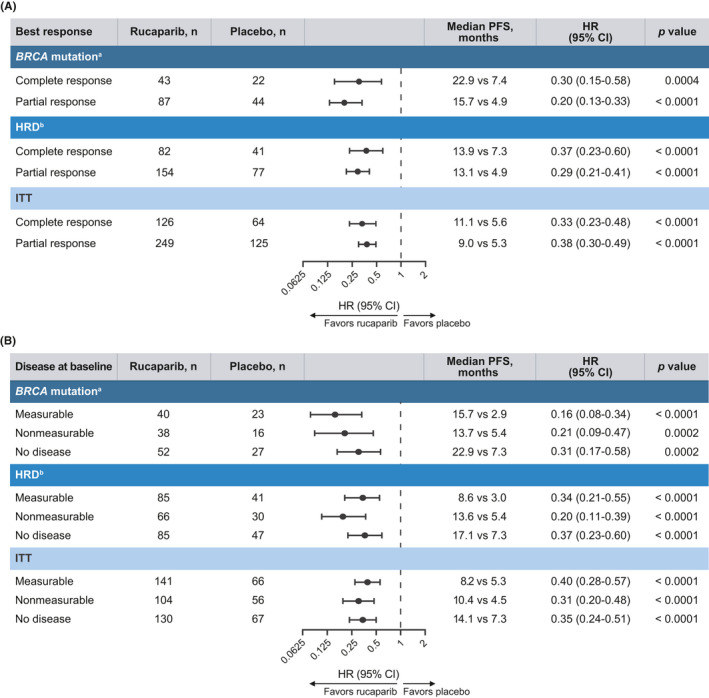
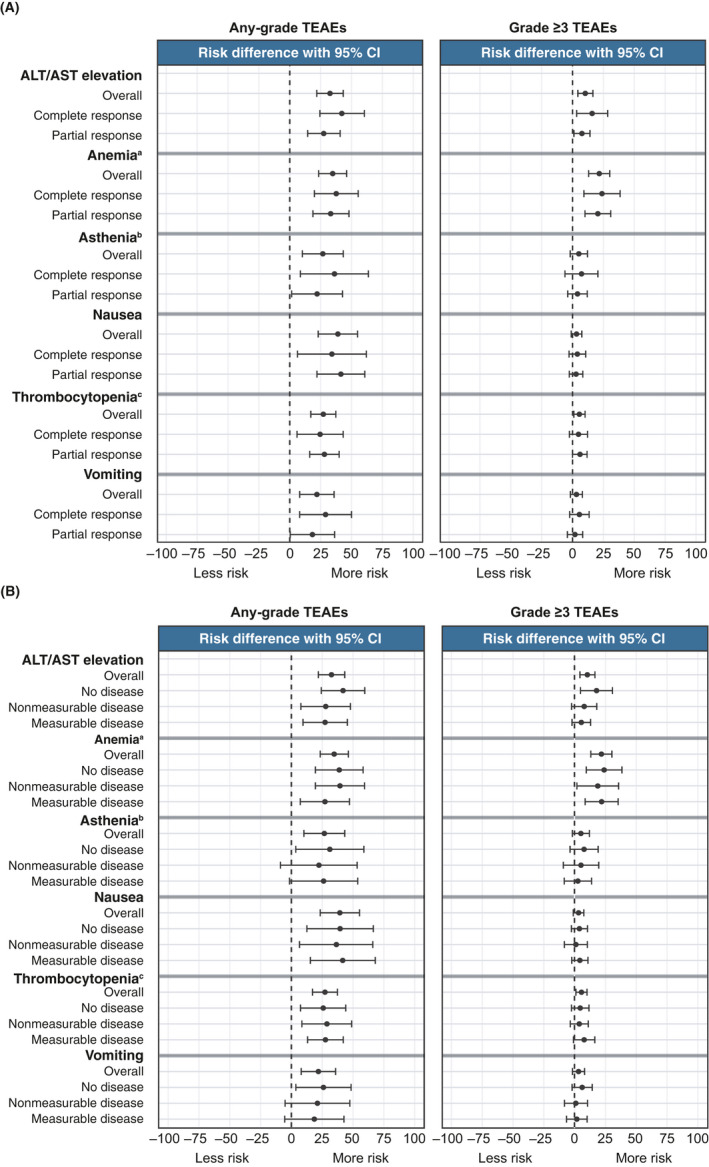
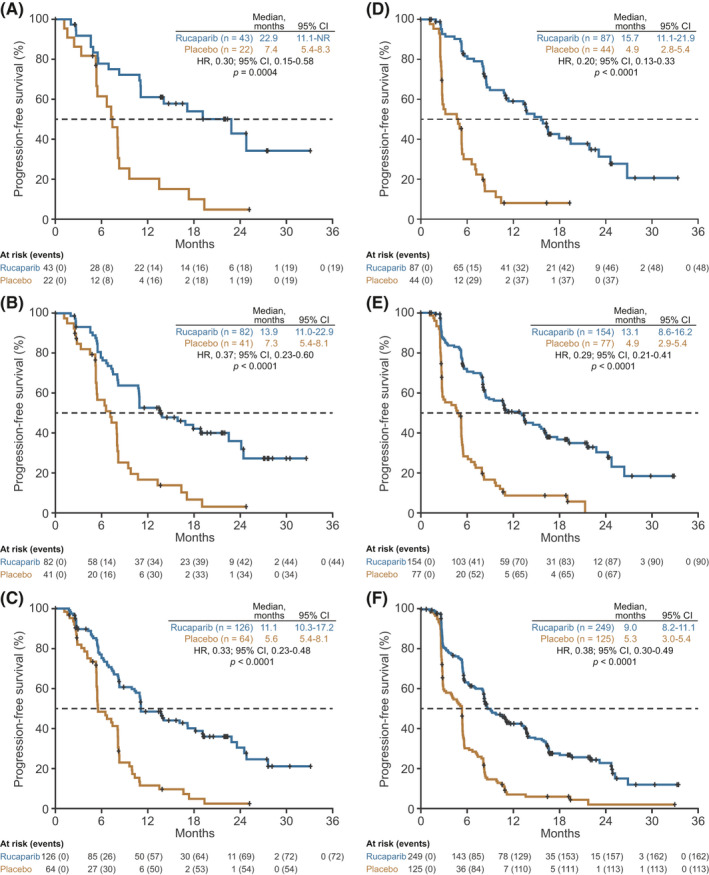
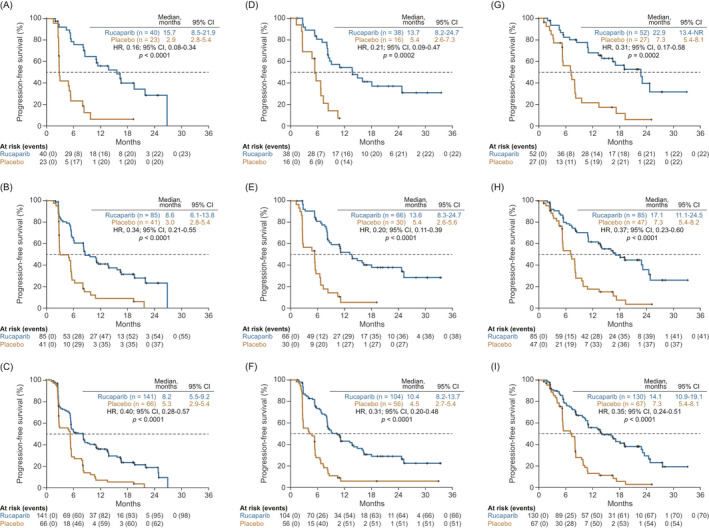
Median PFS for patients in the ITT population with a complete response to most recent platinum-based chemotherapy was 11.1 months in the rucaparib arm (126 patients) versus 5.6 months in the placebo arm (64 patients) (HR, 0.33 [95% CI, 0.23-0.48]), and in patients with a partial response (249 vs. 125), it was 9.0 versus 5.3 months (HR, 0.38 [0.30-0.49]). In subgroups of the ITT population based on baseline disease, median PFS was 8.2 versus 5.3 months (HR, 0.40 [0.28-0.57]) in patients with measurable disease (141 rucaparib vs. 66 placebo), 10.4 versus 4.5 months (HR, 0.31 [0.20-0.48]) in those with nonmeasurable but evaluable disease (104 vs. 56), and 14.1 versus 7.3 months (HR, 0.35 [0.24-0.51]) in those with no residual disease (130 vs. 67). Across subgroups, significantly longer median PFS was observed with rucaparib versus placebo in the BRCA-mutated and HRD cohorts. Objective responses were reported in patients with measurable disease and in patients with nonmeasurable but evaluable baseline disease. Safety was consistent across subgroups.
Rucaparib maintenance treatment provided clinically meaningful efficacy benefits across subgroups based on response to last platinum-based chemotherapy or baseline disease.
在基于最近铂类化疗最佳反应和基线疾病的亚组中,评估了ARIEL3 中鲁卡帕利维持治疗的疗效和安全性。
患者以 2:1 的比例随机分配接受口服鲁卡帕利 600mg,每日两次或安慰剂。研究者评估的无进展生存期(PFS)在预设的嵌套队列中进行评估:BRCA 突变,同源重组缺陷(HRD;BRCA 突变或野生型 BRCA/高杂合性丢失)和意向治疗(ITT)人群。
在 ITT 人群中,最近铂类化疗完全缓解的患者中,鲁卡帕利组的中位 PFS 为 11.1 个月(126 例),安慰剂组为 5.6 个月(64 例)(HR,0.33 [95%CI,0.23-0.48]),部分缓解的患者中(249 例对 125 例),分别为 9.0 个月和 5.3 个月(HR,0.38 [0.30-0.49])。基于基线疾病的 ITT 人群亚组中,在有可测量疾病的患者中,中位 PFS 为 8.2 个月与 5.3 个月(HR,0.40 [0.28-0.57])(141 例鲁卡帕利与 66 例安慰剂),在有不可测量但可评估疾病的患者中,为 10.4 个月与 4.5 个月(HR,0.31 [0.20-0.48])(104 例对 56 例),在无残留疾病的患者中,为 14.1 个月与 7.3 个月(HR,0.35 [0.24-0.51])(130 例对 67 例)。在各亚组中,与安慰剂相比,鲁卡帕利在 BRCA 突变和 HRD 队列中观察到的中位 PFS 明显更长。有可测量疾病的患者和有不可测量但可评估基线疾病的患者报告了客观缓解。安全性在各亚组中一致。
基于对末次铂类化疗或基线疾病的反应,鲁卡帕利维持治疗在基于反应的亚组中提供了有临床意义的疗效获益。