Research Center for Motor Control and Neuroplasticity, KU Leuven, Leuven, Belgium.
Brain Imaging and Neural Dynamics Research Group, IRCCS San Camillo Hospital, Venice, Italy.
Hum Brain Mapp. 2020 Dec 15;41(18):5187-5198. doi: 10.1002/hbm.25184. Epub 2020 Aug 25.
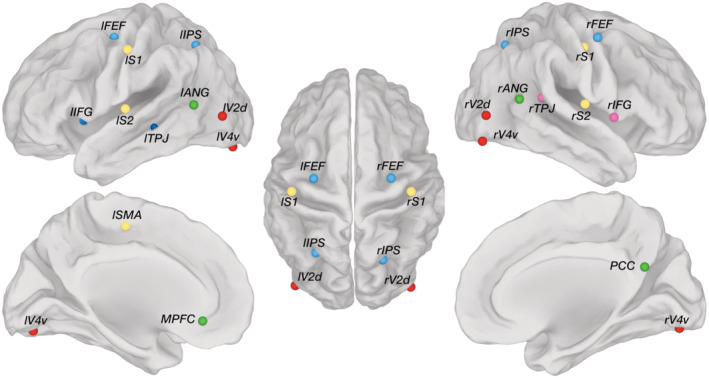
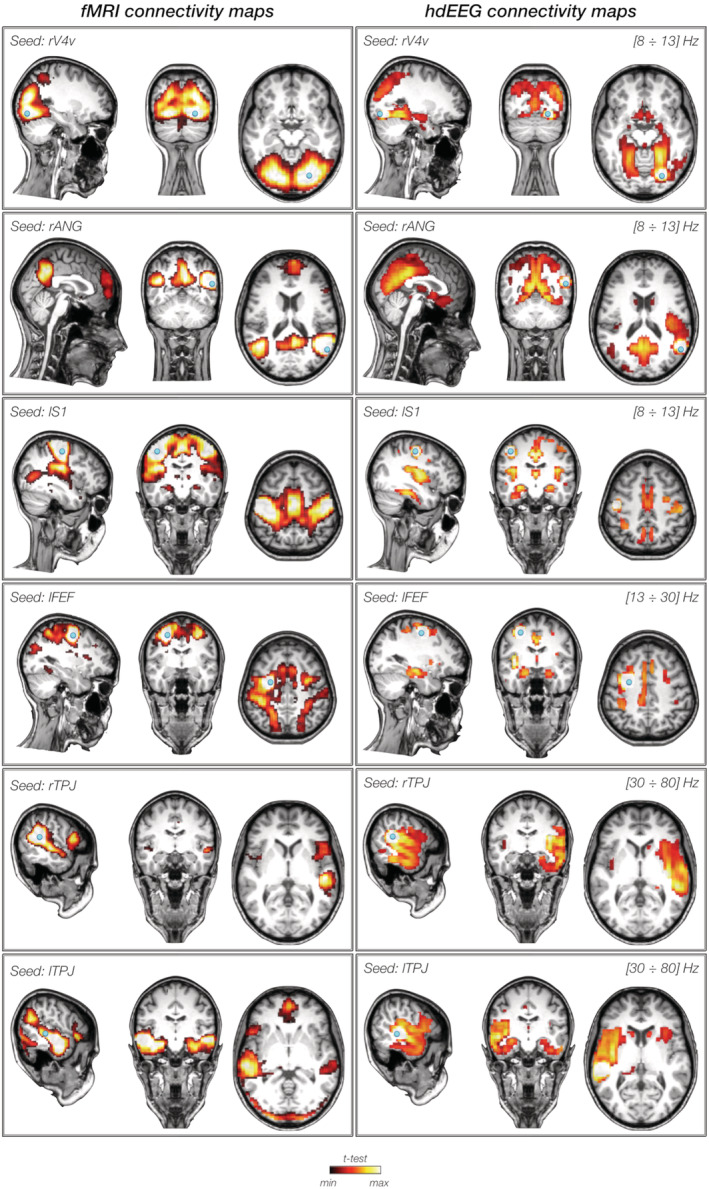
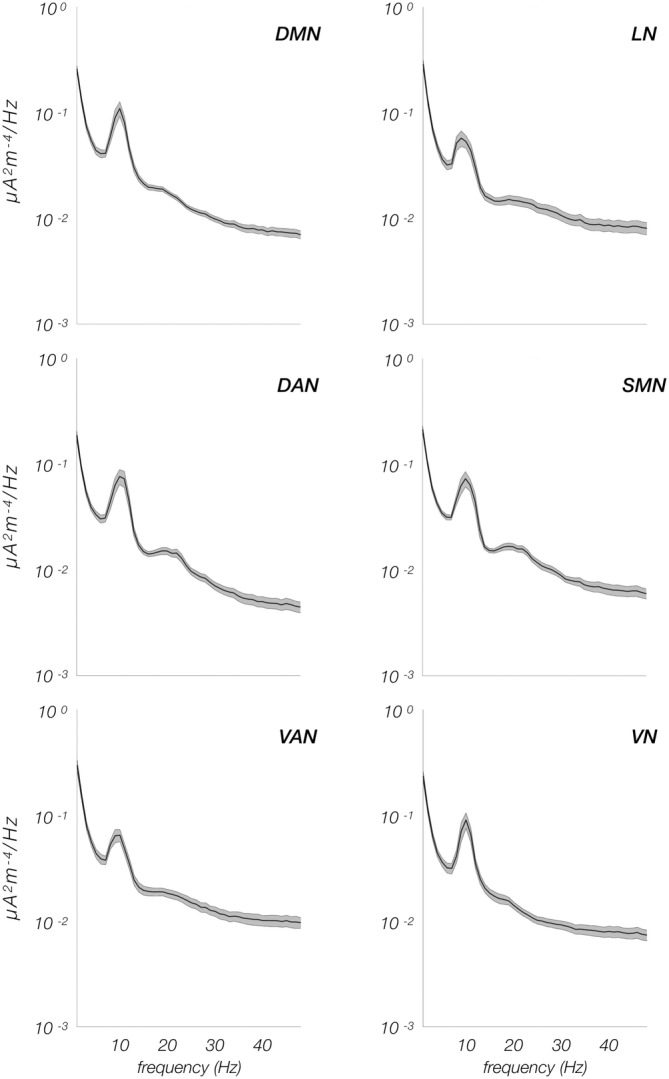
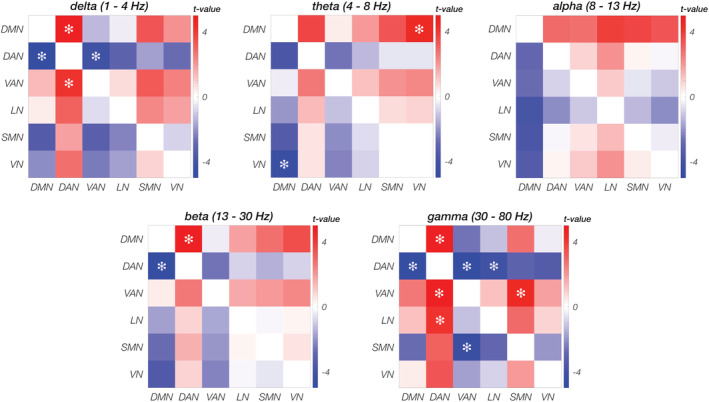
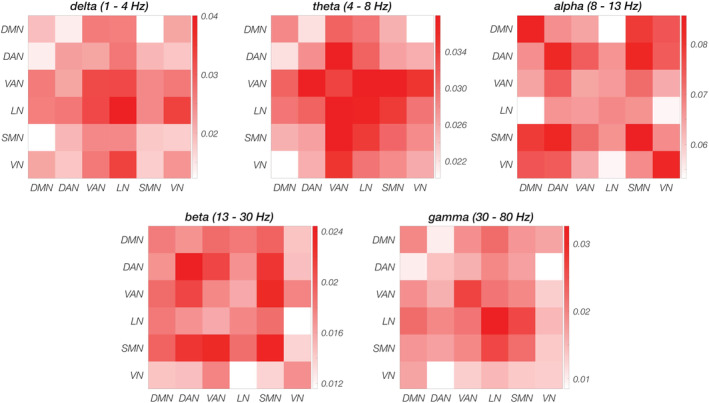
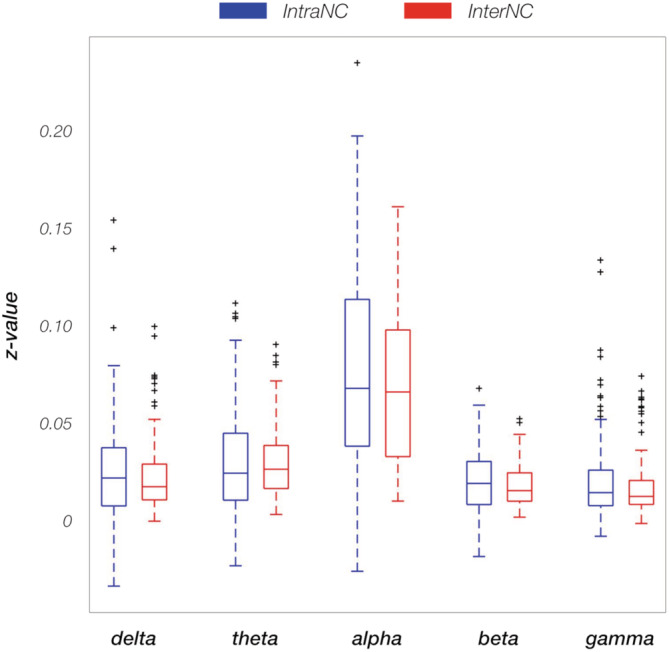
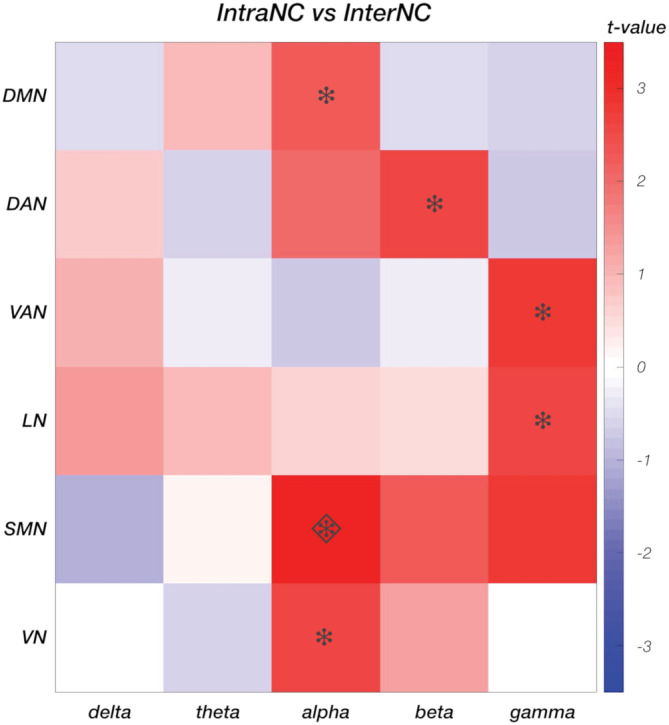
Functional magnetic resonance imaging studies have documented the resting human brain to be functionally organized in multiple large-scale networks, called resting-state networks (RSNs). Other brain imaging techniques, such as electroencephalography (EEG) and magnetoencephalography (MEG), have been used for investigating the electrophysiological basis of RSNs. To date, it is largely unclear how neural oscillations measured with EEG and MEG are related to functional connectivity in the resting state. In addition, it remains to be elucidated whether and how the observed neural oscillations are related to the spatial distribution of the network nodes over the cortex. To address these questions, we examined frequency-dependent functional connectivity between the main nodes of several RSNs, spanning large part of the cortex. We estimated connectivity using band-limited power correlations from high-density EEG data collected in healthy participants. We observed that functional interactions within RSNs are characterized by a specific combination of neuronal oscillations in the alpha (8-13 Hz), beta (13-30 Hz), and gamma (30-80 Hz) bands, which highly depend on the position of the network nodes. This finding may contribute to a better understanding of the mechanisms through which neural oscillations support functional connectivity in the brain.
功能磁共振成像研究已经证明,人类大脑在静息状态下在多个大规模网络中具有功能组织,这些网络被称为静息态网络(RSNs)。其他脑成像技术,如脑电图(EEG)和脑磁图(MEG),也被用于研究 RSNs 的电生理基础。迄今为止,尚不清楚 EEG 和 MEG 测量的神经振荡与静息状态下的功能连接之间有何关系。此外,仍有待阐明观察到的神经振荡是否以及如何与皮层上网络节点的空间分布有关。为了解决这些问题,我们检查了跨越大部分皮层的几个 RSN 的主要节点之间的频率依赖性功能连接。我们使用从健康参与者的高密度 EEG 数据中采集的带限功率相关性来估计连接。我们观察到,RSNs 内的功能相互作用的特征是在 alpha(8-13 Hz)、beta(13-30 Hz)和 gamma(30-80 Hz)频段中特定的神经元振荡组合,这强烈依赖于网络节点的位置。这一发现可能有助于更好地理解神经振荡如何支持大脑中的功能连接的机制。