Institute of Cell Biology, 37664Faculty of Medicine, University of Ljubljana, Ljubljana, Slovenia.
86684Blood Transfusion Centre of Slovenia, Ljubljana, Slovenia.
Cell Transplant. 2020 Jan-Dec;29:963689720946668. doi: 10.1177/0963689720946668.
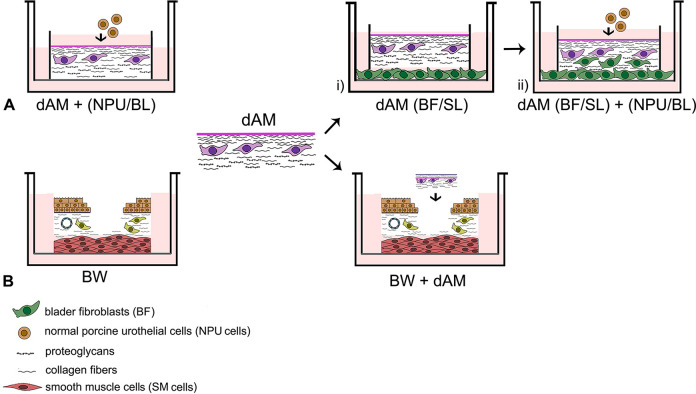
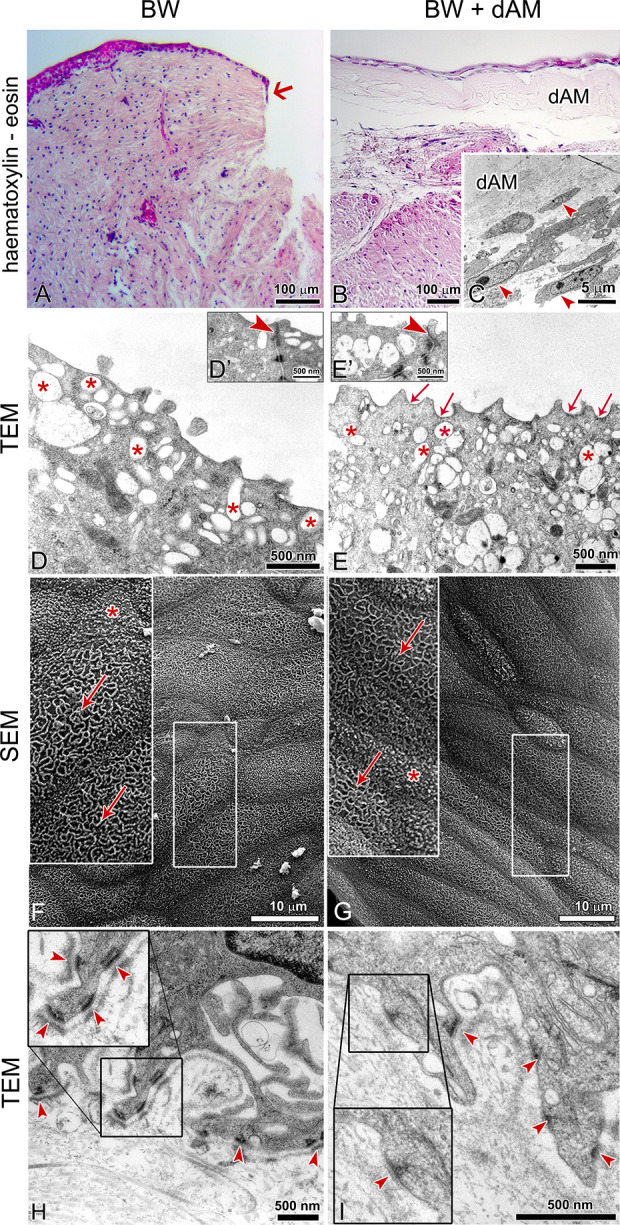
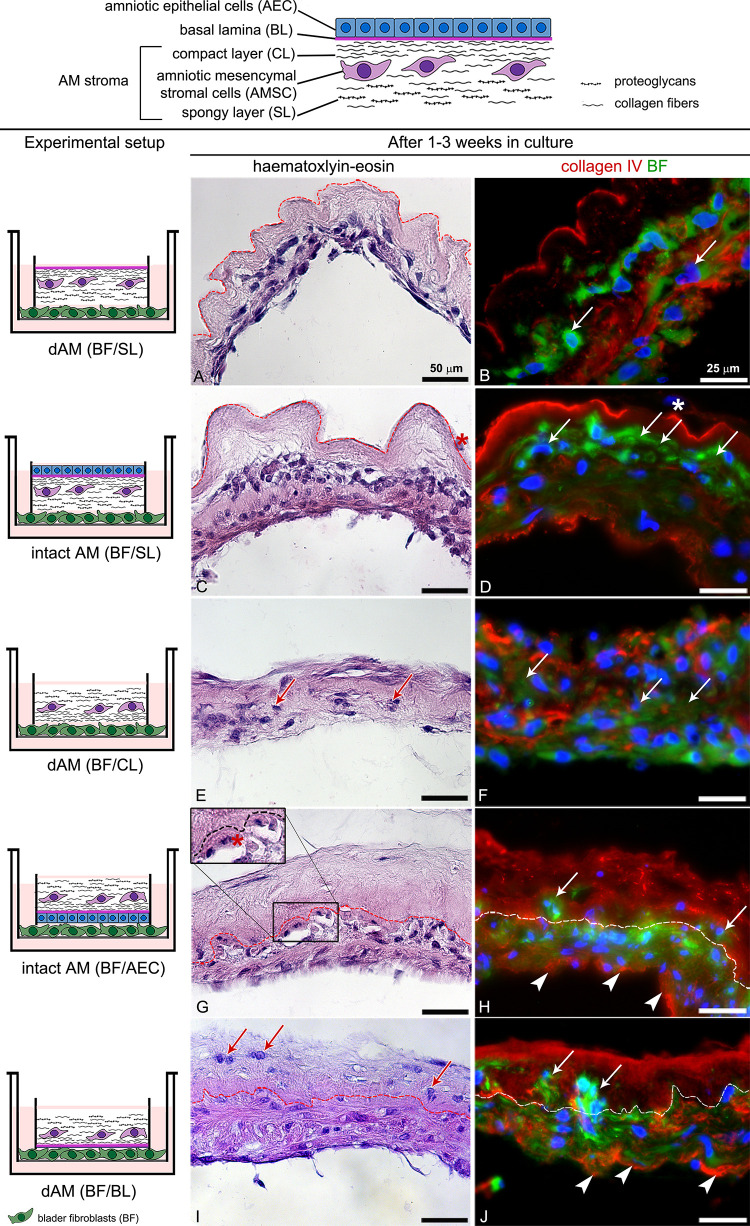
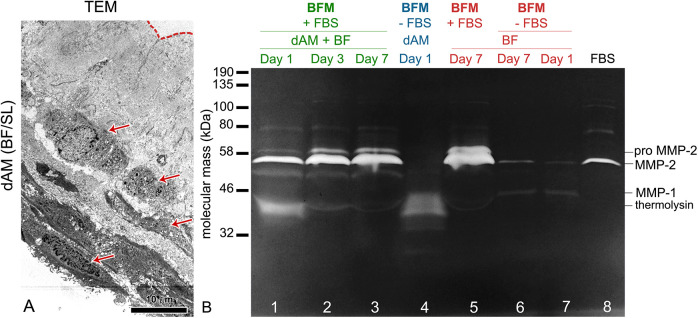
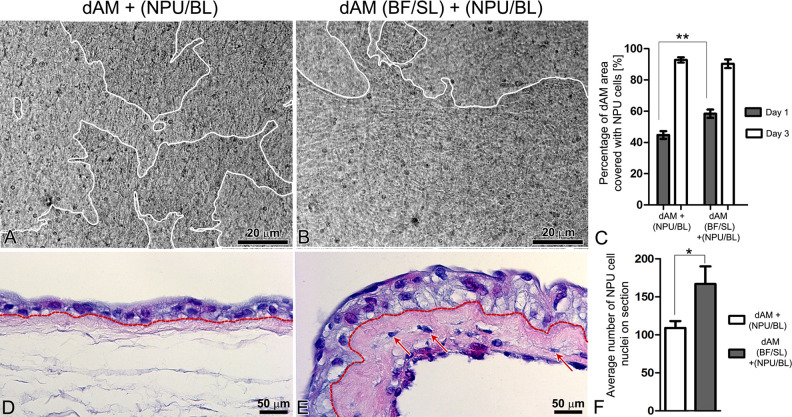
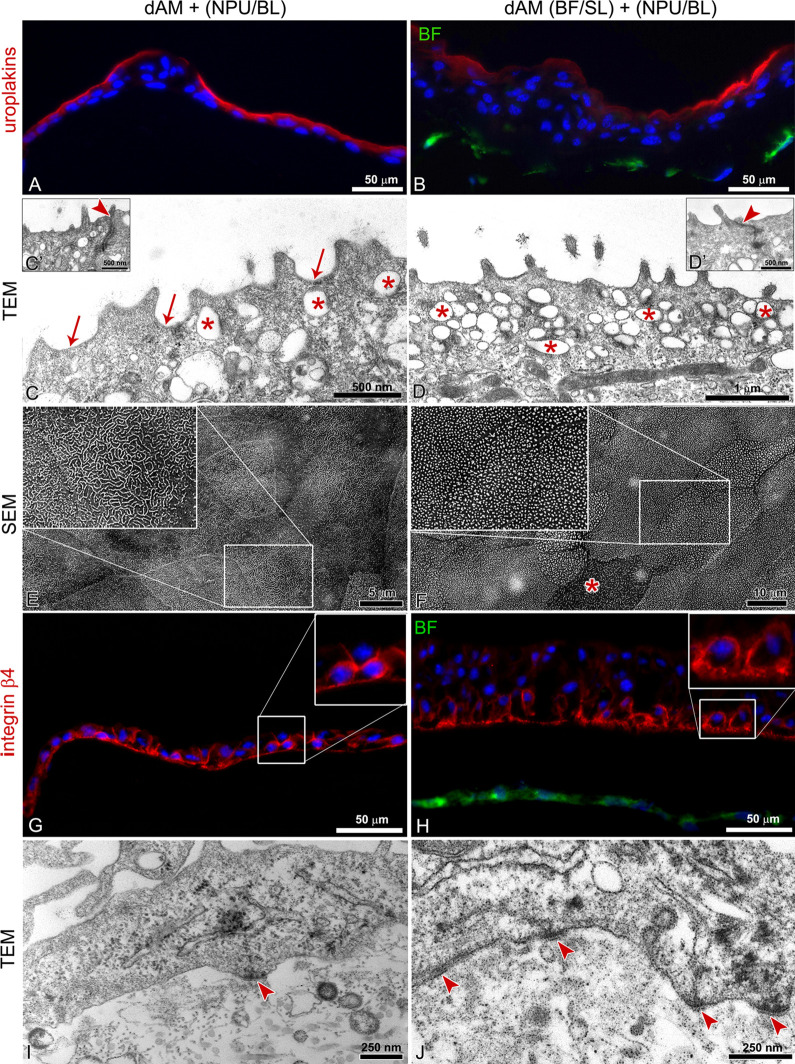
Culturing cells in three-dimensional systems that include extracellular matrix components and different cell types mimic the native tissue and as such provide much more representative results than conventional two-dimensional cell cultures. In order to develop biomimetic bladder tissue in vitro, we used human amniotic membrane (AM) extracellular matrix as a scaffold for bladder fibroblasts (BFs) and urothelial cells. Our aims were to evaluate the integration of BFs into the AM stroma, to assess the differentiation of the urothelium on BFs-enriched AM scaffolds, and to evaluate the AM as a urothelial wound dressing. First, to achieve the optimal integration of BFs into AM stroma, different intact and de- epithelialized AM (dAM) scaffolds were tested. BFs secreted matrix metalloproteinase (MMP)-1 and MMP-2 and integrated into the stroma of all types of AM scaffolds. Second, to establish urothelial tissue equivalent, urothelial cells were seeded on dAM scaffolds enriched with BFs. The BFs in the stroma of the AM scaffolds promoted (1) the proliferation of urothelial cells, (2) the attachment of urothelial cells on AM basal lamina with hemidesmosomes, and (3) development of multilayered urothelium with expressed uroplakins and well-developed cell junctions. Third, we established an ex vivo model of the injured bladder to evaluate the dAM as a wound dressing for urothelial full-thickness injury. dAM acted as a promising wound dressing since it enabled rapid re-epithelization of urothelial injury and integrated into the bladder tissue. Herein, the developed urothelial tissue equivalents enable further mechanistic studies of bladder epithelial-mesenchymal interactions, and they could be applied as biomimetic models for preclinical testing of newly developed drugs. Moreover, we could hypothesize that AM may be suitable as a dressing of the wound that occurs during transurethral resection of bladder tumor, since it could diminish the possibility of tumor recurrence, by promoting the rapid re-epithelization of the urothelium.
在包含细胞外基质成分和不同细胞类型的三维系统中培养细胞可以模拟天然组织,因此比传统的二维细胞培养提供更具代表性的结果。为了在体外开发仿生膀胱组织,我们使用人羊膜(AM)细胞外基质作为膀胱成纤维细胞(BFs)和尿路上皮细胞的支架。我们的目的是评估 BF 整合到 AM 基质中,评估富含 BF 的 AM 支架上尿路上皮的分化,并评估 AM 作为尿路上皮伤口敷料。首先,为了实现 BF 与 AM 基质的最佳整合,测试了不同完整和去上皮化的 AM(dAM)支架。BFs 分泌基质金属蛋白酶(MMP)-1 和 MMP-2 并整合到所有类型 AM 支架的基质中。其次,为了建立尿路上皮组织等效物,将尿路上皮细胞接种在富含 BF 的 dAM 支架上。AM 支架基质中的 BF 促进了(1)尿路上皮细胞的增殖,(2)尿路上皮细胞与 AM 基底膜上的半桥粒的附着,以及(3)具有表达的尿路上皮蛋白和发育良好的细胞连接的多层尿路上皮的形成。第三,我们建立了受伤膀胱的离体模型,以评估 dAM 作为尿路上皮全层损伤的伤口敷料。dAM 作为一种有前途的伤口敷料,因为它能够快速实现尿路上皮损伤的再上皮化并与膀胱组织整合。在此,开发的尿路上皮组织等效物可以进一步进行膀胱上皮-间充质相互作用的机制研究,并且可以作为新开发药物的临床前测试的仿生模型应用。此外,我们可以假设 AM 可能适合作为经尿道膀胱肿瘤切除术中发生的伤口的敷料,因为它可以通过促进尿路上皮的快速再上皮化来减少肿瘤复发的可能性。