Shirasaki Kaori, Ishihara Yoshihito, Komori Hiroki, Yamashiro Takashi, Kamioka Hiroshi
Department of Orthodontics, Graduate School of Medicine, Dentistry and Pharmaceutical Sciences, Okayama University, Okayama, Japan.
Department of Orthodontics, Okayama University Hospital, Okayama, Japan.
Dental Press J Orthod. 2020 May;25(3):e1. doi: 10.1590/2177-6709.25.3.30.e1-12.onl. Epub 2020 Aug 19.
Anterior open bite is one of the most difficult malocclusions to correct in orthodontic treatment. Molar intrusion using miniscrew anchorage has been developed as a new strategy for open bite correction; however, this procedure still has an important concern about prolonged treatment duration in the patient with anteroposterior discrepancy due to the separate step-by-step movement of anterior and posterior teeth.
This article illustrates a comprehensive orthodontic approach for dentoalveolar open bite correction of an adult patient, by using miniscrew.
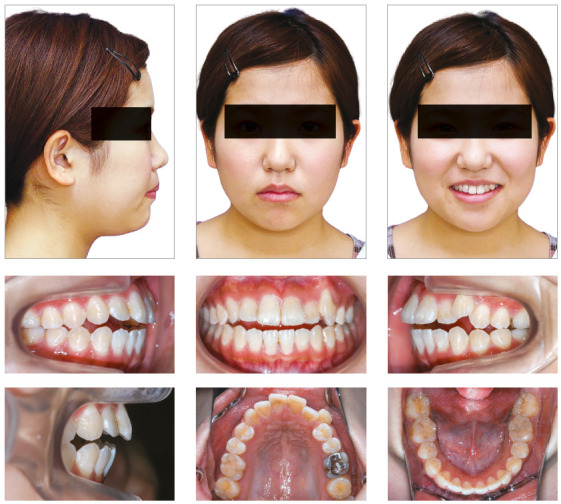
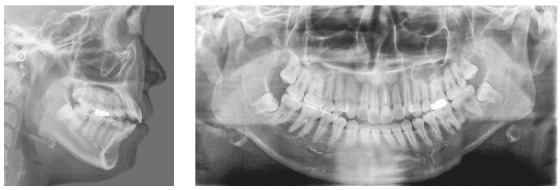
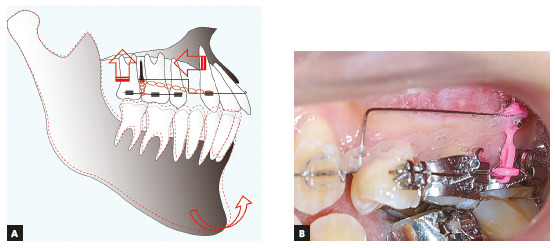
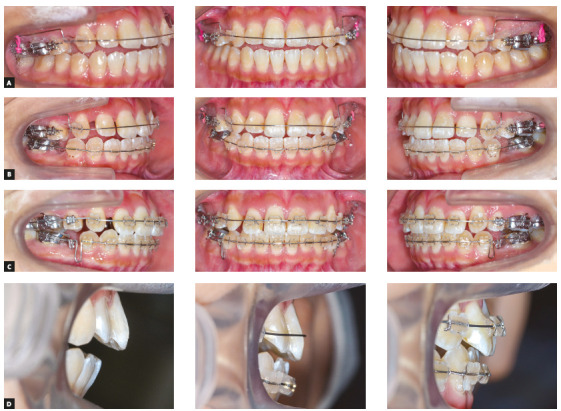
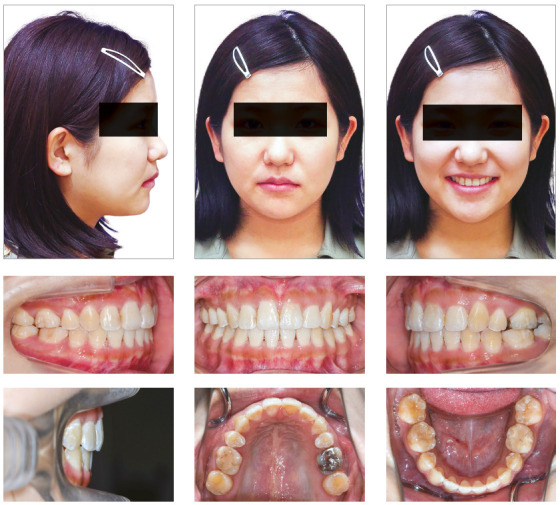
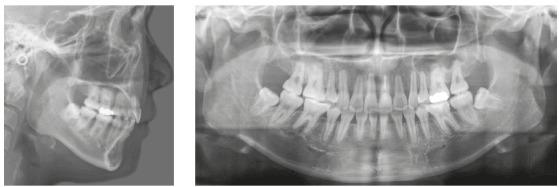
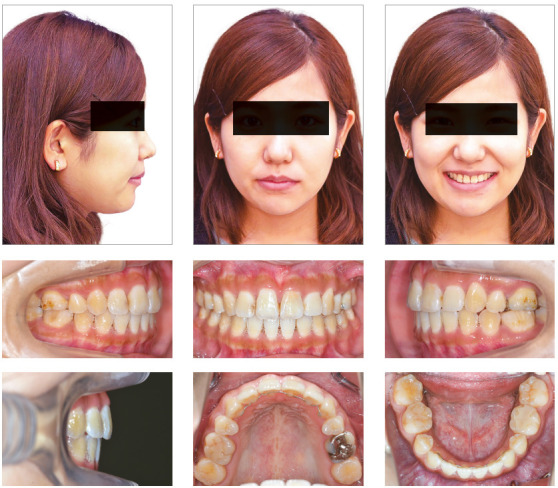
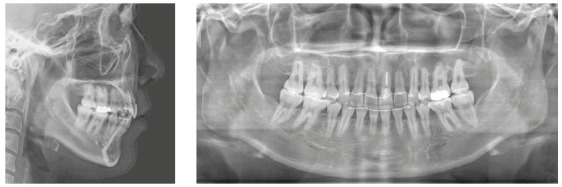
A woman 19 years and 5 months of age had chief complaints of difficulty chewing with the anterior teeth and maxillary incisor protrusion. An open bite of -2.0 mm caused by slight elongation of the maxillary molars was found. The patient was diagnosed with Angle Class II malocclusion with anterior open bite due to the vertical elongation of maxillary molars. After extraction of the maxillary first premolars, concurrent movements of molar intrusion and canine retraction were initiated with the combined use of sectional archwires, elastic chains and miniscrews.
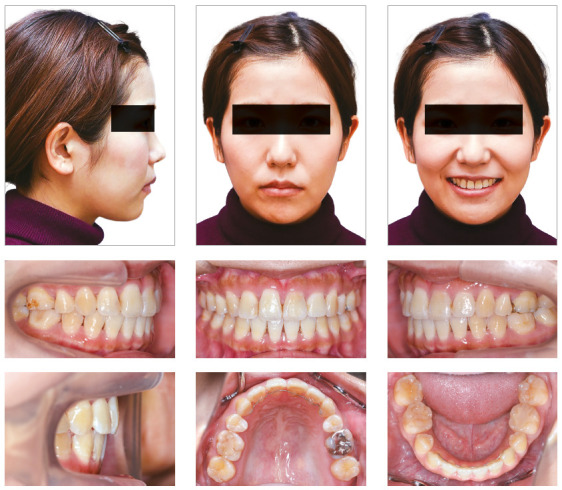
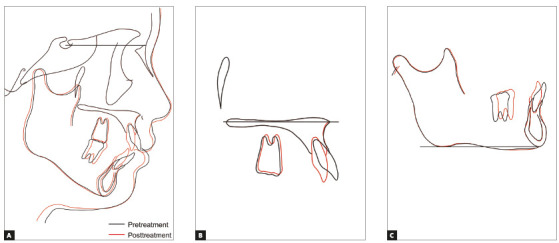
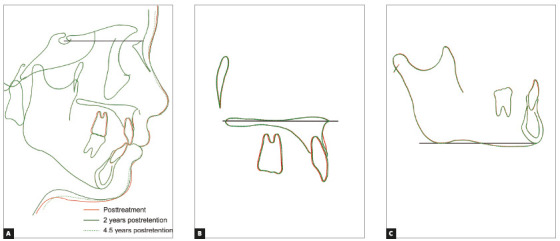
At 4 months after the procedure, positive overbite was achieved subsequent to the intrusion of maxillary molars by 1.5 mm and without undesirable side effects. Class I canine relation was also achieved at the same time. The total active treatment period was 21 months. The resultant occlusion and satisfactory facial profile were maintained after 54 months of retention.
The presented treatment shows the potential to shorten the treatment duration and to contribute to the long-term stability for open bite correction.
前牙开颌是正畸治疗中最难矫治的错牙合畸形之一。利用微螺钉支抗压低磨牙已被开发为一种矫治开颌的新策略;然而,由于前后牙的分步移动,对于存在前后牙差异的患者,该方法仍存在治疗时间延长这一重要问题。
本文阐述了一种通过使用微螺钉对成年患者牙牙槽性开颌进行综合正畸治疗的方法。
一名19岁5个月的女性,主要主诉为前牙咀嚼困难和上颌切牙前突。发现上颌磨牙轻度伸长导致开颌2.0毫米。该患者被诊断为由于上颌磨牙垂直伸长导致的安氏II类错牙合伴前牙开颌。拔除上颌第一前磨牙后,联合使用片段弓丝、弹力链和微螺钉开始同时进行磨牙压低和尖牙后移。
术后4个月,上颌磨牙压低1.5毫米后实现了正覆牙合,且无不良副作用。同时也达到了I类尖牙关系。总主动治疗期为21个月。保持54个月后,获得了满意的咬合和面部外形。
所展示的治疗方法显示出缩短治疗时间并有助于开颌矫治长期稳定性的潜力。