Department of Infectious Diseases and Microbiology, University of Lübeck, Lübeck, Germany
Department of Microbiology and Immunology, University of Iowa Carver College of Medicine, Iowa City, Iowa, USA.
mSphere. 2020 Aug 26;5(4):e00787-20. doi: 10.1128/mSphere.00787-20.
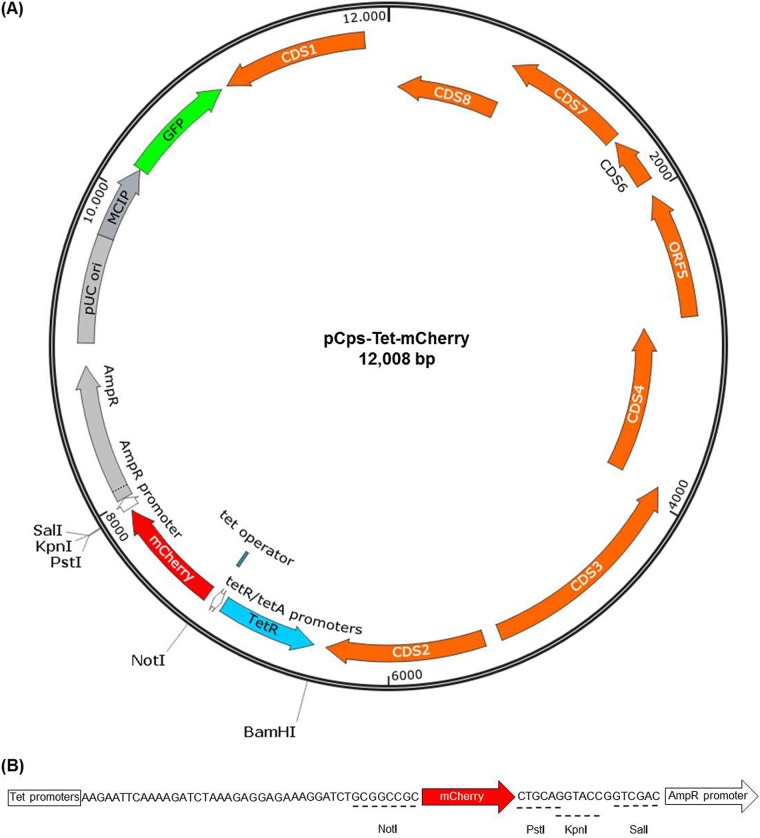
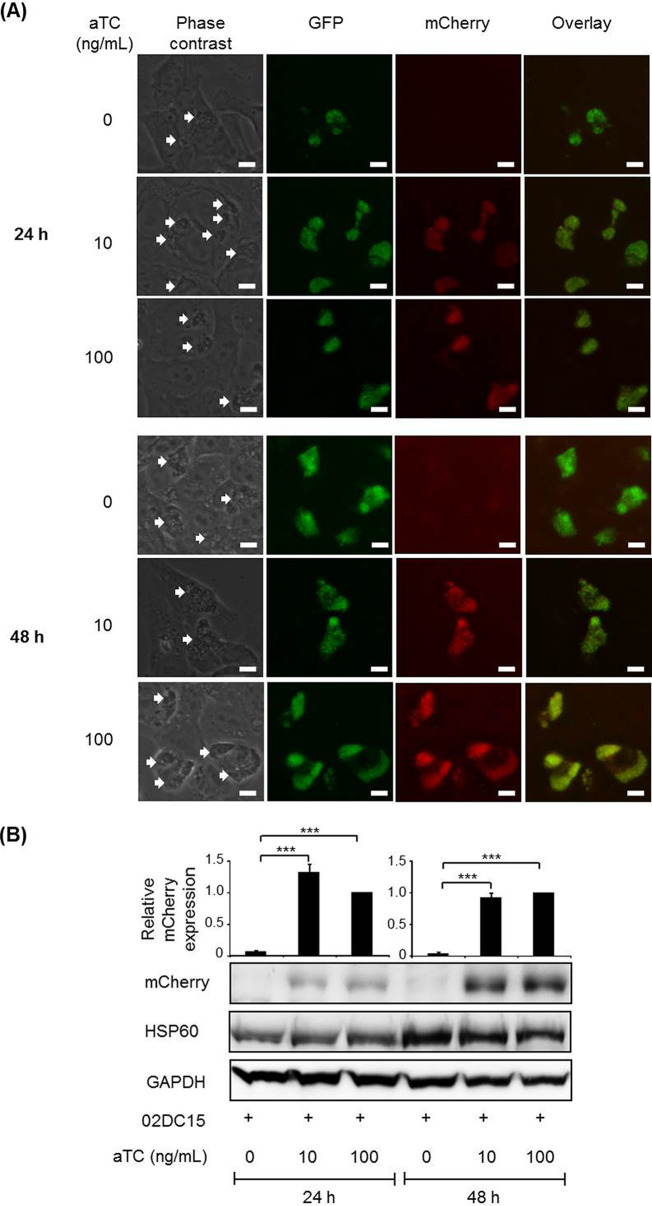
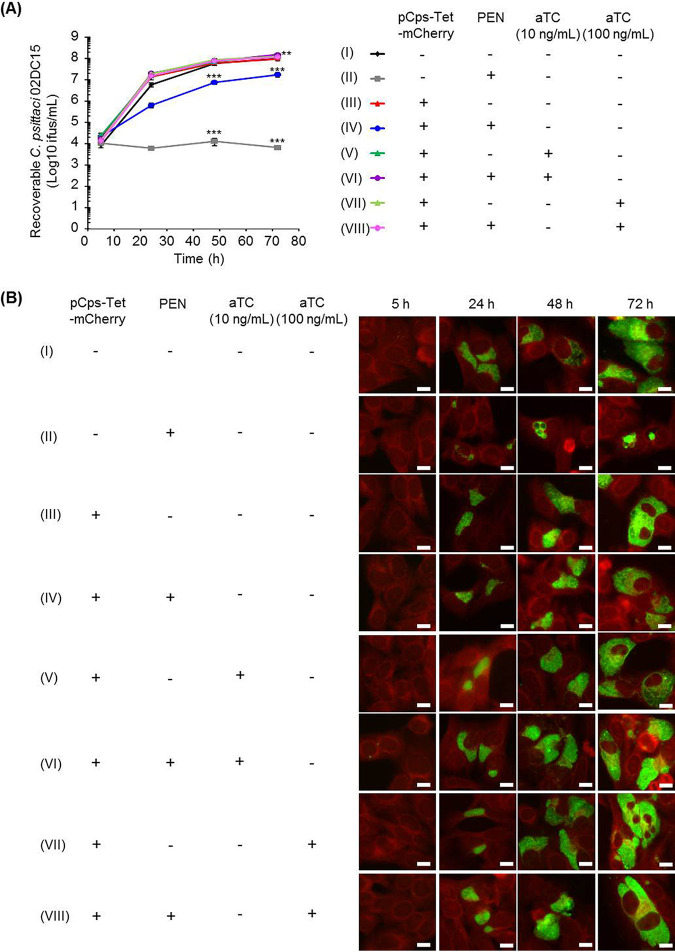
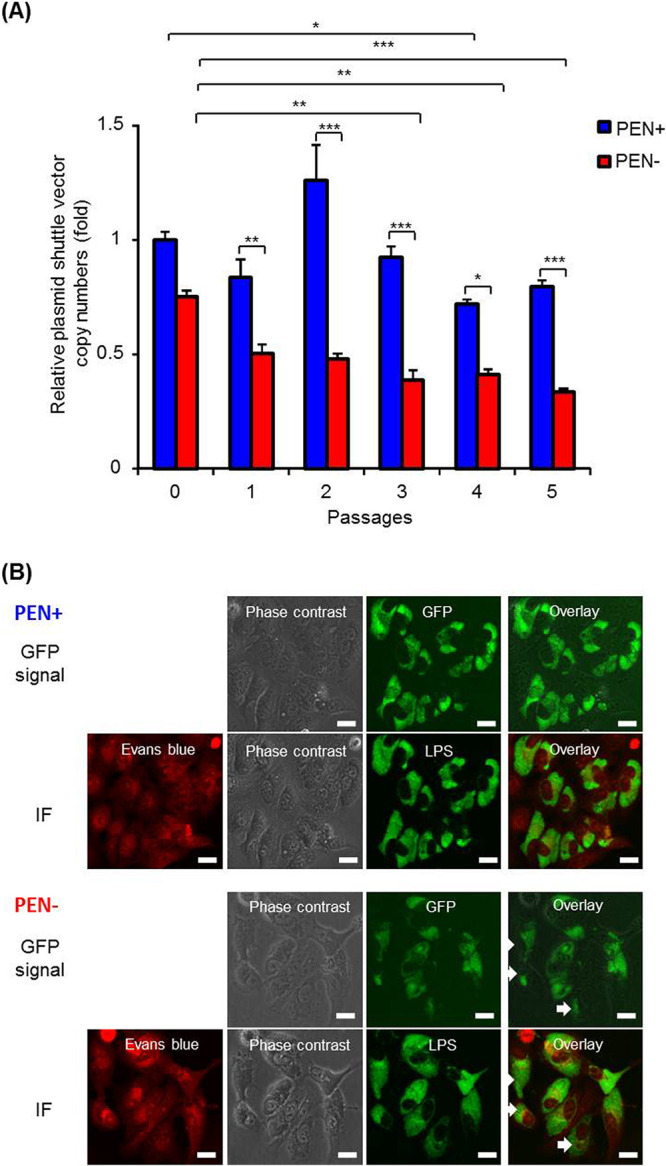
The obligate intracellular bacterium is a known avian pathogen causing psittacosis in birds and is capable of zoonotic transmission. In human pulmonary infections, can cause pneumonia associated with significant mortality if inadequately diagnosed and treated. Although intracellular manipulates host cell organelles for its replication and survival, it has been difficult to demonstrate host-pathogen interactions in infection due to the lack of easy-to-handle genetic manipulation tools. Here, we show the genetic transformation of using a plasmid shuttle vector that contains a controllable gene induction system. The 7,553-bp plasmid p01DC12 was prepared from the nonavian strain 01DC12. We constructed the shuttle vector pCps-Tet-mCherry using the full sequence of p01DC12 and the 4,449-bp fragment of shuttle vector pBOMB4-Tet-mCherry. pCps-Tet-mCherry includes genes encoding the green fluorescent protein (GFP), mCherry, and ampicillin resistance (AmpR). Target genes can be inserted at a multiple cloning site (MCS). Importantly, these genes can be regulated by a tetracycline-inducible (tet) promoter. Using the pCps-Tet-mCherry plasmid shuttle vector, we show the expression of GFP, as well as the induction of mCherry expression, in strain 02DC15, which belongs to the avian 6BC clade. Furthermore, we demonstrated that pCps-Tet-mCherry was stably retained in transformants. Thus, our plasmid shuttle vector system represents a novel targeted approach that enables the elucidation of host-pathogen interactions. Psittacosis, caused by avian , has a major economic impact in the poultry industry worldwide and represents a significant risk for zoonotic transmission to humans. In the past decade, the tools of genetic manipulation have been improved for chlamydial molecular studies. While several genetic tools have been mainly developed in , a stable gene-inducible shuttle vector system has not to date been available for In this study, we adapted a plasmid shuttle vector system to We constructed a plasmid backbone shuttle vector called pCps-Tet-mCherry. The construct expresses GFP in Importantly, exogeneous genes can be inserted at an MCS and are regulated by a tet promoter. The application of the pCps-Tet-mCherry shuttle vector system enables a promising new approach to investigate unknown gene functions of this pathogen.
专性细胞内细菌是一种已知的禽类病原体,可导致鸟类鹦鹉热,并具有人畜共患传播的能力。在人类肺部感染中,如果不能充分诊断和治疗, 可能导致与显著死亡率相关的肺炎。尽管 操纵宿主细胞细胞器进行复制和存活,但由于缺乏易于处理的遗传操作工具,因此很难在 感染中证明宿主-病原体相互作用。在这里,我们展示了使用包含可控基因诱导系统的质粒穿梭载体对 进行基因转化。质粒 p01DC12 来自非禽 株 01DC12,大小为 7553bp。我们使用 p01DC12 的全长序列和质粒穿梭载体 pBOMB4-Tet-mCherry 的 4449bp 片段构建了穿梭载体 pCps-Tet-mCherry。pCps-Tet-mCherry 包含编码绿色荧光蛋白 (GFP)、mCherry 和氨苄青霉素抗性 (AmpR) 的基因。靶基因可以插入在多克隆位点 (MCS) 中。重要的是,这些基因可以通过四环素诱导 (tet) 启动子进行调控。使用 pCps-Tet-mCherry 质粒穿梭载体,我们展示了属于禽 6BC 分支的 02DC15 菌株中 GFP 的表达以及 mCherry 表达的诱导。此外,我们证明 pCps-Tet-mCherry 在转化子中稳定保留。因此,我们的 质粒穿梭载体系统代表了一种新的靶向方法,可以阐明宿主-病原体相互作用。鹦鹉热由禽 引起,对全球家禽业造成重大经济影响,并对人畜共患传播给人类构成重大风险。在过去十年中,对衣原体分子研究的遗传操作工具得到了改进。虽然已经开发了几种遗传工具主要用于 ,但迄今为止,尚未为 开发出稳定的基因诱导穿梭载体系统。在这项研究中,我们适应了 质粒穿梭载体系统用于 我们构建了一个称为 pCps-Tet-mCherry 的 质粒骨架穿梭载体。该构建体在 中表达 GFP。重要的是,外源基因可以插入 MCS 中,并由 tet 启动子调控。pCps-Tet-mCherry 穿梭载体系统的应用为研究该病原体未知基因功能提供了一种很有前途的新方法。