Jarrin Sarah, Pandit Abhay, Roche Michelle, Finn David P
Pharmacology and Therapeutics, National University of Ireland Galway, Galway, Ireland.
Centre for Pain Research, National University of Ireland Galway, Galway, Ireland.
Front Behav Neurosci. 2020 Aug 11;14:139. doi: 10.3389/fnbeh.2020.00139. eCollection 2020.
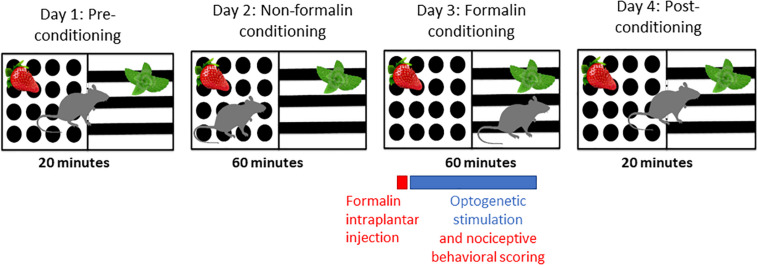
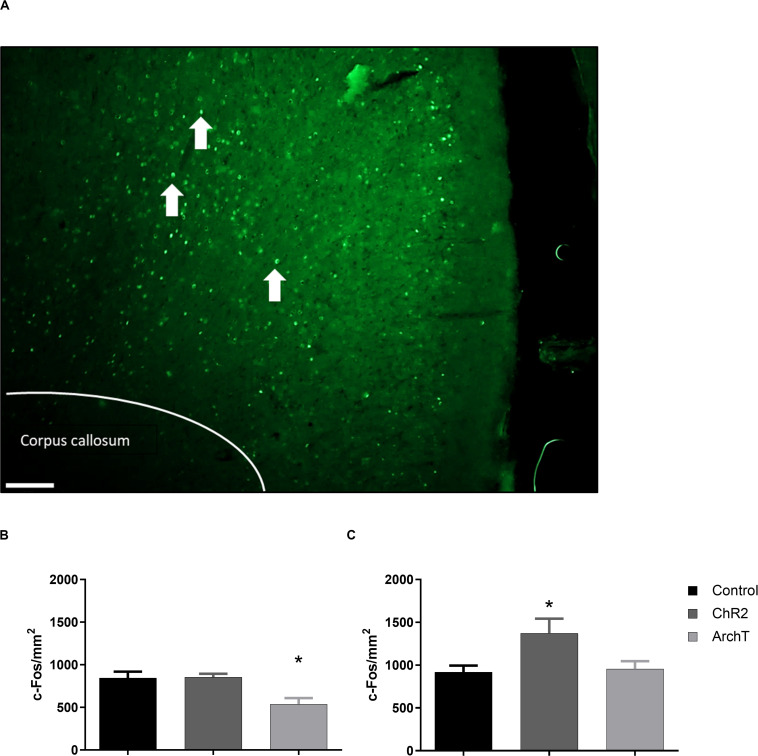
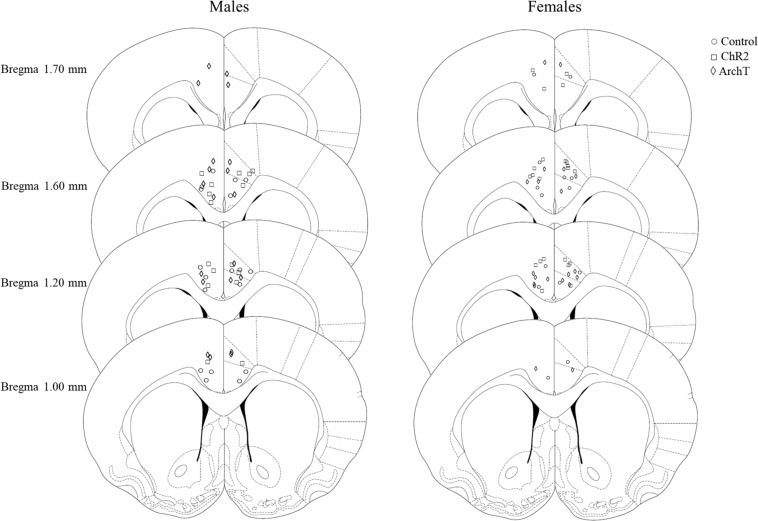
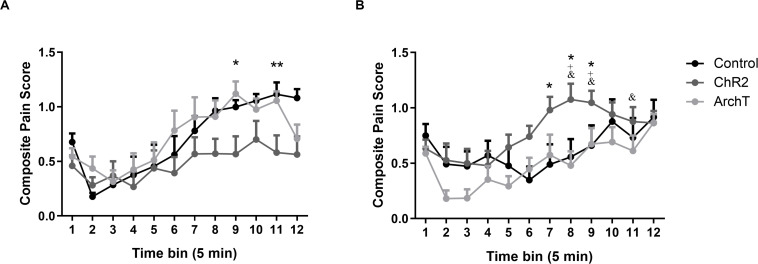
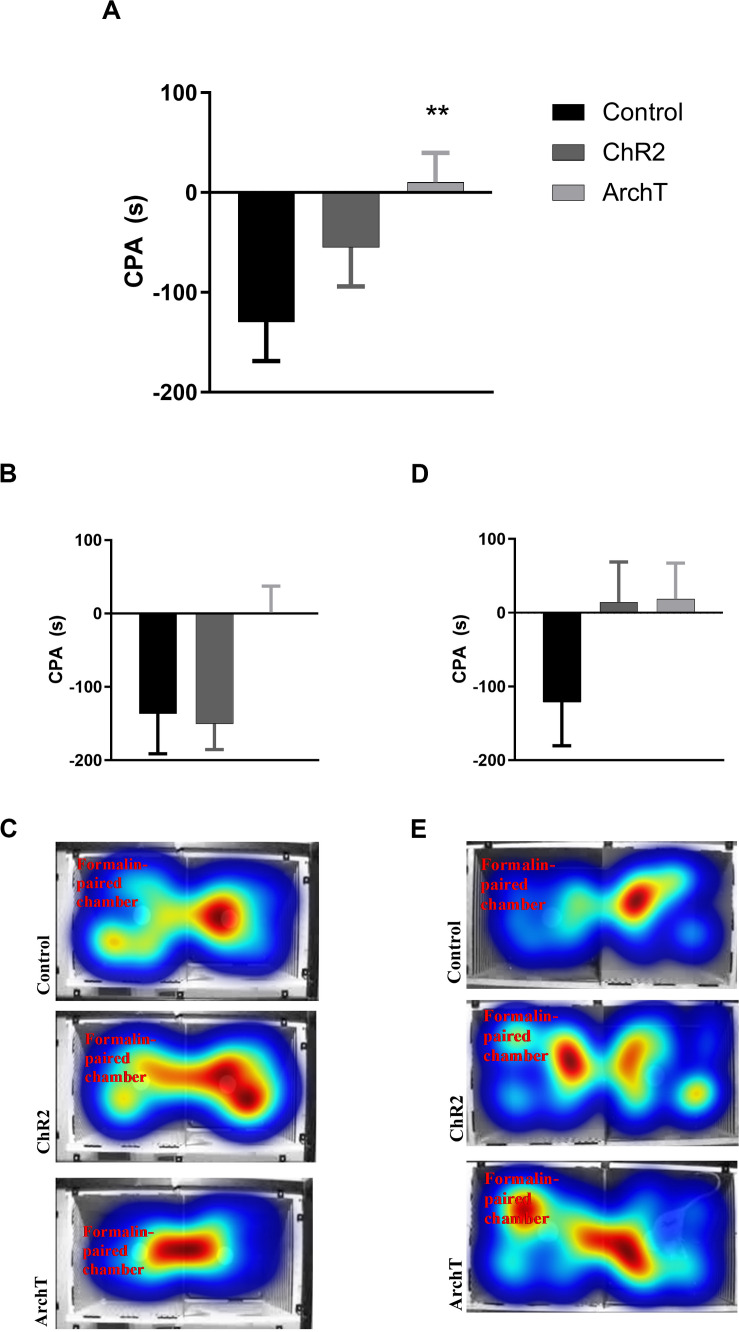
Pain is comprised of both sensory and affective components. The anterior cingulate cortex (ACC) is a key brain region involved in the emotional processing of pain. Specifically, glutamatergic transmission within the ACC has been shown to modulate pain-related aversion. In the present study, we use optogenetics to activate or silence, using channelrhodopsin (ChR2) and archaerhodopsin (ArchT) respectively, calmodulin-kinase IIα (CaMKIIα)-expressing excitatory glutamatergic neurons of the ACC during a formalin-induced conditioned place aversion (F-CPA) behavioral paradigm in both female and male adult Sprague-Dawley rats. Expression of c-Fos, a marker of neuronal activity, was assessed within the ACC using immunohistochemistry. Optogenetic inhibition of glutamatergic neurons of the ACC abolished F-CPA without affecting formalin-induced nociceptive behavior during conditioning. In male rats, optogenetic activation of ACC glutamatergic neurons decreased formalin-induced nociceptive behavior during conditioning without affecting F-CPA. Interestingly, the opposite effect was seen in females, where optogenetic activation of glutamatergic neurons of the ACC increased formalin-induced nociceptive behavior during conditioning. The abolition of F-CPA following optogenetic inhibition of glutamatergic neurons of the ACC was associated with a reduction in c-Fos immunoreactivity in the ACC in male rats, but not female rats. These results suggest that excitatory glutamatergic neurons of the ACC play differential and sex-dependent roles in the aversion learning and acute sensory components of pain.
疼痛由感觉和情感成分组成。前扣带回皮质(ACC)是参与疼痛情绪处理的关键脑区。具体而言,ACC内的谷氨酸能传递已被证明可调节与疼痛相关的厌恶情绪。在本研究中,我们使用光遗传学技术,分别通过通道视紫红质(ChR2)和古紫质(ArchT)激活或沉默成年雌性和雄性Sprague-Dawley大鼠在福尔马林诱导的条件性位置厌恶(F-CPA)行为范式中表达钙调蛋白激酶IIα(CaMKIIα)的ACC兴奋性谷氨酸能神经元。使用免疫组织化学方法评估ACC内神经元活动标志物c-Fos的表达。对ACC谷氨酸能神经元的光遗传学抑制消除了F-CPA,而不影响条件反射期间福尔马林诱导的伤害性感受行为。在雄性大鼠中,ACC谷氨酸能神经元的光遗传学激活在条件反射期间降低了福尔马林诱导的伤害性感受行为,而不影响F-CPA。有趣的是,在雌性大鼠中观察到相反的效果,即ACC谷氨酸能神经元的光遗传学激活在条件反射期间增加了福尔马林诱导的伤害性感受行为。对ACC谷氨酸能神经元进行光遗传学抑制后F-CPA的消除与雄性大鼠而非雌性大鼠ACC中c-Fos免疫反应性的降低有关。这些结果表明,ACC的兴奋性谷氨酸能神经元在疼痛的厌恶学习和急性感觉成分中发挥着不同的、性别依赖性的作用。